
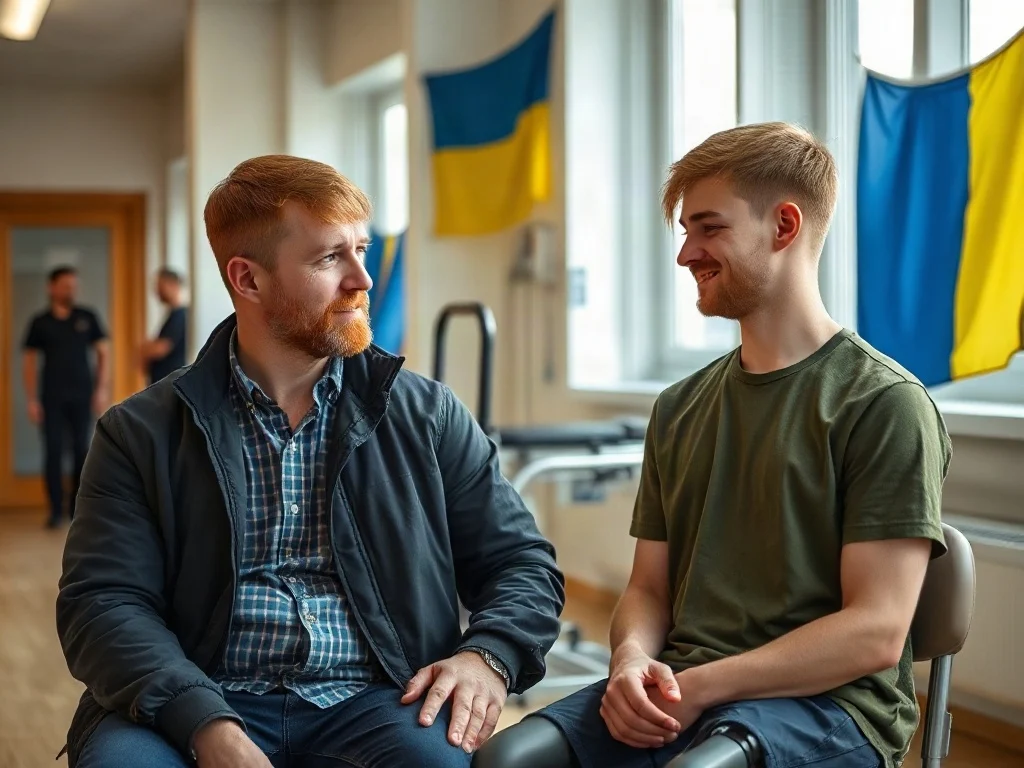
The Prince Harry Ukraine visit was a surprise trip in which the Duke of Sussex showed support for injured veterans and praised the country’s resilience. On the surface it is a short news item: a royal arrives unannounced, meets wounded soldiers, and speaks warmly about their courage. Underneath, it raises practical questions about how veteran care works in a country at war, why a figure like Prince Harry keeps returning to this cause, and what such visits actually change. This article takes a process-analysis approach. It walks through how the visit unfolds, how injured veterans move through the care system, and where symbolic support turns into lasting help.
A note on sourcing: the public report on this trip is brief. This article therefore separates what has been reported from what is general, well-documented background on rehabilitation, veteran support and royal diplomacy. Where specifics such as itineraries and meetings are not confirmed, it describes the usual process instead of asserting details.
What We Know About the Prince Harry Ukraine Visit
The core facts are simple. The trip was unannounced, and its focus was injured veterans of the war. Harry praised their strength and the wider resilience of Ukrainians. The visit follows the Russian invasion of Ukraine, which has produced large numbers of wounded service members and civilians who need long-term medical, prosthetic and psychological care.
The coverage does not give a full account of every stop or conversation. Anything beyond the reported themes, such as which facilities were visited or which officials were met, should be treated as unconfirmed until it appears in official statements or reliable reporting.
Why Did Prince Harry Visit Ukraine?
The most direct explanation is continuity. Harry served in the Army Air Corps and deployed to Afghanistan during the War in Afghanistan. In 2014 he founded the Invictus Games, an international adaptive sporting event for wounded, injured and sick service personnel and veterans. Ukrainian competitors have taken part in the Games, and the organisation’s mission is to use sport as a vehicle for physical and mental recovery. A visit focused on injured Ukrainian veterans fits that record.
A second explanation is the way public figures draw attention. Scholars of soft power argue that attention and attraction can shape international attitudes without coercion. A royal visit to a country at war is a form of attention. It does not replace aid or policy, but it can keep a topic in the news when coverage of a long conflict starts to fade.
Personal credibility versus institutional role
Harry is no longer a working member of the British royal family, so his trip does not carry the formal diplomatic weight of an official state visit. His credibility comes from his veteran status and his charity work. That matters for how the visit is received. Wounded soldiers often respond more openly to someone who has worn a uniform than to a politician offering sympathy.
How a Surprise Visit Like This Works, Step by Step
Unannounced visits to active war zones follow a predictable logistical sequence. This is a general description of the process, not a confirmed account of this trip.
- Security assessment. Teams evaluate the route, the destination and the risk of air raids or missile strikes. Secrecy is a safety measure, not a publicity trick.
- Host coordination. Charities, hospitals, military medical units or government offices agree on a limited, controlled itinerary.
- Selective participation. Patients and veterans choose whether to meet the visitor. Good practice means no one is pressured into being photographed.
- Conversations on site. The visitor speaks with patients, families and medical staff about recovery, equipment and mental health.
- Controlled announcement. Details are released after the visitor has left, which is why these trips are reported as ‘surprise’ visits.
- Follow-through. Whether the visit leads to a donation, a partnership or a policy conversation determines its lasting value.
The last step is the one that separates a symbolic gesture from meaningful support. The first five steps produce headlines. The sixth is what shows up in a rehabilitation ward months later.
The Veteran Care Pathway: From Injury to Recovery
To see what injured Ukrainian veterans face, it helps to follow their path through care. The stages below reflect standard trauma and rehabilitation medicine, not a Ukraine-specific audit.
| Stage | What happens | Common challenge |
|---|---|---|
| Emergency care | Stabilisation and evacuation from the front line | Distance, shelling, limited transport |
| Surgery and acute treatment | Wound care, amputation when required, infection control | Hospital capacity and supply shortages |
| Rehabilitation | Mobility training, physical therapy, occupational therapy | Long waits and uneven regional access |
| Prosthetics and equipment | Fitting and adjusting a prosthesis | Cost, fitting expertise, repeated adjustments |
| Psychological support | Treatment for trauma and stress | Stigma and shortage of specialists |
| Reintegration | Employment, housing, community life | Disability access and economic uncertainty |
Physical rehabilitation is a long process
Rehabilitation after a serious limb injury is not a single event. A prosthetic limb must be refitted as the residual limb changes shape, and a patient must relearn balance, gait and daily tasks. Programmes that combine medical care, equipment and coaching tend to give patients the best chance of returning to independent life. Because the war continues to generate new casualties, the demand for these services keeps growing.
The mental health dimension
Many veterans face post-traumatic stress disorder as well as physical injury. Researchers also describe moral injury, the distress that can follow events that conflict with a person’s values. Harry has spoken openly in the past about his own mental health, which makes his message to veterans credible. It also helps counter the stigma that stops many service members from seeking help.
Ukrainian War Veterans Support: What Actually Helps
Support for Ukrainian war veterans works best when it combines several elements instead of relying on one. Experts in veteran care generally point to a few recurring factors:
- Access to specialised equipment, especially modern prosthetics and mobility aids.
- Trained rehabilitation staff, because equipment is of limited use without skilled therapists.
- Peer support, where veterans learn from others who have faced similar injuries.
- Mental health services that are confidential and free from stigma.
- Employment pathways that let veterans return to a purposeful working life.
The Ukrainian Armed Forces and civil society organisations both play roles here. Government programmes cannot always meet demand during wartime, so charities, international partners and volunteers fill gaps. That is where internationally known figures can be most useful: by connecting donors, publicising effective programmes and encouraging institutions to cooperate.
Invictus Games and Veterans’ Rehabilitation in Ukraine
The Invictus Games model offers a useful lens on rehabilitation. Adaptive sport gives wounded service members measurable goals, a team environment and a reason to train. The Invictus Games Foundation describes its work as using the power of sport to inspire recovery, support rehabilitation and generate a wider understanding and respect for those who serve.
The approach has limits. Sport does not replace surgery, prosthetic fitting or clinical mental health treatment, and not every injured veteran wants to compete. But for many participants, structured physical activity improves confidence and a sense of belonging. For a country with a growing population of injured veterans, adaptive sport is an inexpensive complement to formal care.
Limits and Criticisms of High-Profile Visits
A balanced analysis has to include the criticisms. Observers raise several recurring concerns about celebrity or royal visits to conflict zones:
- Symbolism without substance. A visit may generate attention that does not translate into resources.
- Security burden. Hosting a prominent visitor takes time and protection resources from people who are already stretched.
- Patient dignity. Photography and publicity must never make patients feel like props.
- Political interpretation. Any appearance in a country at war can be read through a political lens, even when the stated focus is humanitarian.
There is also a counterargument. Attention is a scarce resource in a long war, and the people receiving the visit often say it matters to them. Whether the benefits outweigh the costs depends largely on what happens afterwards, not on the visit itself.
Practical Ways to Support Injured Veterans
Readers who want to help can move beyond headlines with a few practical steps:
- Research organisations before donating, and check whether they publish transparent financial and impact reports.
- Prefer sustained giving to one-off gestures, since rehabilitation costs recur over years.
- Support skills and employment programmes, not only medical equipment.
- Amplify veterans’ own voices rather than speaking for them.
- Follow reputable reporting to understand how needs change as the conflict evolves.
A common mistake is to focus entirely on acute battlefield medicine. The harder, longer challenge is helping people rebuild everyday lives, which takes years and is rarely visible in news coverage.
Frequently Asked Questions
Why did Prince Harry visit Ukraine?
Reports describe the trip as a show of support for injured veterans and for the country’s resilience. It is consistent with his military background and his work with the Invictus Games.
Was the visit officially announced in advance?
No. It was reported as a surprise visit, which is standard for trips to areas with active security risks.
Is Prince Harry a veteran?
Yes. He served in the British Army and completed deployments to Afghanistan. His veteran status is central to his advocacy for wounded service members.
What are the Invictus Games?
They are an international adaptive sports competition for wounded, injured and sick service personnel and veterans, founded by Harry in 2014. Their stated purpose is to aid recovery and promote public understanding of those who serve.
Do celebrity visits actually help veterans?
They can raise awareness and open doors to funding, but long-term benefit depends on follow-up action, such as sustained donations, partnerships and policy attention.
The Real Test Comes After the Cameras Leave
The most important insight from this episode is that the visit itself is the smallest part of the story. A single day of attention cannot treat a wound, fit a prosthesis or end the isolation many veterans feel. What it can do is point toward the scale of a need that will outlast the war. Rehabilitation systems, mental health services and employment programmes will be needed for decades, regardless of how the fighting ends.
The signals to watch are concrete. Look for whether the visit leads to announced partnerships, expanded adaptive sport programmes or new funding commitments. Also watch whether Ukrainian veterans are given a larger role in shaping the services designed for them. A reasonable prediction is that demand for prosthetic and psychological care will keep rising, and that the countries and charities that invest early will shape how well a generation of injured veterans reintegrates. The open question is whether international attention can be sustained long enough to match that need.
Frequently Asked Questions
Why was Prince Harry's visit to Ukraine unannounced?
Secrecy is a safety measure, not a publicity trick. Teams assess the route, the destination and the risk of air raids or missile strikes. Details are normally released only after the visitor has left, which is why such trips are reported as surprise visits.
Does Prince Harry's trip carry official diplomatic weight?
No. Harry is no longer a working member of the British royal family, so the trip is not a formal state visit. His credibility rests on his veteran status, his Army service in Afghanistan and his charity work, not on any institutional or governmental role.
What is the connection between Prince Harry and Ukrainian veterans?
Harry founded the Invictus Games in 2014, an adaptive sporting event for wounded, injured and sick service personnel and veterans. Ukrainian competitors have taken part in the Games, so a visit focused on injured Ukrainian veterans continues his existing work and mission.
Can a symbolic visit actually change anything for wounded soldiers?
A visit does not replace aid or policy, but it can keep the topic in the news when coverage of a long war fades. Lasting impact depends on follow-through, such as donations, partnerships or policy conversations that come after the cameras leave.
Do injured veterans have to meet a visiting public figure?
No. In good practice, patients and veterans choose whether to take part, and no one is pressured into being photographed. Many wounded soldiers respond more openly to someone who has worn a uniform than to a politician offering sympathy.
Which facilities and officials did Harry meet during the trip?
That has not been confirmed. The public report is brief and covers only the main themes: support for injured veterans and praise for Ukrainian resilience. Specific itineraries, facilities or officials should be treated as unverified until official statements or reliable reporting provide details.