
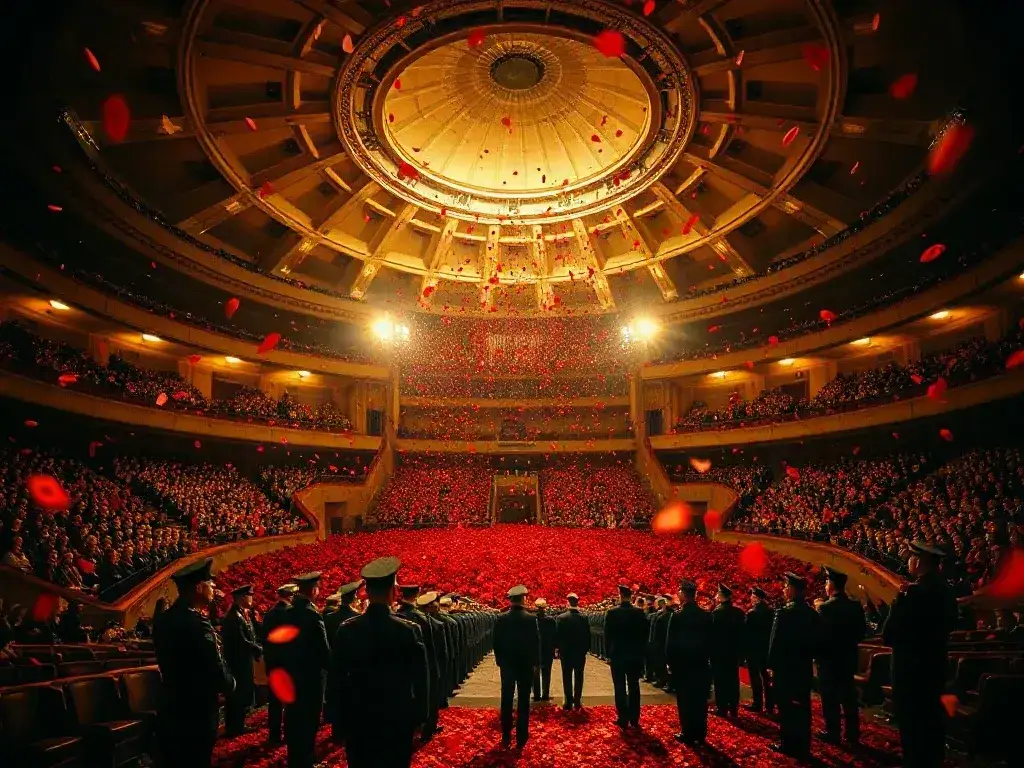
The Festival of Remembrance at London’s Royal Albert Hall is one of the most carefully staged acts of national commemoration in the United Kingdom. The senior royals joined veterans and their families at the annual event on the eve of Remembrance Sunday. Reports of the evening tend to follow a familiar template: music, silence, falling poppy petals and a royal box. This analysis looks past that template to ask what the evening does, who it serves, and where the tension between ceremony and substance lies.
What the Festival of Remembrance Is and Where It Came From
The Festival of Remembrance is organised by the Royal British Legion, the charity founded in 1921 in the aftermath of the First World War to support ex-servicemen and women. The Albert Hall has hosted the festival since 1927. It sits on the Saturday before Remembrance Sunday, the second Sunday of November, which is itself tied to Armistice Day on 11 November.
The distinction between the two events matters. Remembrance Sunday is the formal, solemn state occasion centred on the Cenotaph in Whitehall. The festival is its more theatrical counterpart: a live, broadcast-friendly evening that mixes military bands, choirs, readings and personal testimony. It is closer to a national memorial concert than a religious service, and that hybrid character is both its strength and its vulnerability.
The Core Rituals
Several elements recur each year and give the evening its structure:
- The Ode of Remembrance: the verse from Laurence Binyon’s poem For the Fallen, which is the best-known part of the Ode of Remembrance. Its lines are spoken, and the audience responds with the words ‘We will remember them‘.
- Bugle calls: the Last Post and Reveille frame a period of silence, marking the passage from death to renewal.
- The poppy petal fall: thousands of paper petals drift from the roof of the hall, a visual device that has become the evening’s signature image.
- Parades of standards and personnel: serving members of the armed forces, veterans and cadets processing into the arena.
The Royal Family and Remembrance Sunday: What Their Presence Signals
The attendance of the British royal family at the festival is far from incidental. In a constitutional monarchy, the sovereign holds no political power over the armed forces in practice, but the relationship is symbolic and historically deep. Servicemen and women swear allegiance to the Crown, and senior royals have often served in uniform. Their presence at Remembrance events therefore carries a continuity argument: the institution is visibly bound to those who served in its name.
Analytically, that signal does three things. First, it raises the event’s profile, which supports the Legion’s fundraising and its wider public standing. Second, it gives veterans a form of formal recognition that few other public occasions offer. Third, it reinforces the monarchy’s own claim to a unifying, non-partisan role. The royal family at Remembrance Sunday events functions as a reliable, apolitical fixture in a political culture that is otherwise divided on how military history should be framed.
Where the Symbolism Has Limits
A critical reading must acknowledge the limits. Royal attendance is a gesture, not a policy. It does not answer questions about veterans’ housing, mental health provision or the quality of transition support, which are matters for government and charities. The Armed Forces Covenant sets out a pledge of fair treatment for the armed forces community, but its practical delivery depends on local authorities, health bodies and employers, not ceremony. The gap between symbolic honour and practical support is the standing criticism of every high-profile commemoration, and it deserves to be stated plainly.
Veterans and Families: The Audience That Matters Most
The festival is often reported through its royal guests, but the people the evening exists for are the veterans and their families. That group has changed considerably. The generation that fought in the Second World War is now very small, and the veteran community increasingly includes those who served in the Falklands War, Northern Ireland, the Gulf, Iraq and Afghanistan, as well as people who served in peacetime. Their needs and their relationship to public commemoration differ from those of earlier generations.
Younger veterans often have different expectations. Many want recognition that is tied to concrete outcomes, such as employment pathways, healthcare access and community belonging, rather than ceremony alone. The presence of families on the evening is a useful corrective: it acknowledges that service affects partners, children and bereaved relatives for decades, long after a posting ends.
The Poppy and the Fundraising Question
The festival is inseparable from the Royal British Legion poppy appeal, the charity’s annual fundraising drive. The remembrance poppy draws on the imagery of wartime Flanders, where poppies grew across battle-scarred ground. The evening works as both tribute and promotion, and that dual role is not a flaw in itself. Charitable income is what funds practical support. It does mean the event has to balance solemnity against the need to reach and move an audience.
Debates Around the Poppy
The poppy has long attracted argument. Critics have raised concerns about social pressure to wear one, especially for broadcasters and public figures, while supporters see it as a voluntary and widely shared symbol. Some commentators argue that the symbol can be read as endorsing militarism, while the Legion has consistently framed it as remembrance and support for the living, not glorification of war. These are interpretive disagreements, not settled facts, and an honest account treats them as live.
Broadcasting, Staging and the Risk of Spectacle
The Festival of Remembrance is designed for television as much as for the people in the hall. The BBC has historically broadcast Remembrance events, and that reach is a large part of the festival’s cultural weight. It also creates an obvious tension. Staging for cameras can sharpen emotional impact, but it can also push commemoration toward spectacle, in which the choreography overshadows the memory it serves.
The strongest moments of the evening are usually the least spectacular ones: a silence held in a packed hall, a veteran’s spoken account, a reading of names. The weakest risk being rehearsed sentiment. For organisers, the practical test is whether each element serves memory or merely decorates it.
How to Engage With Remembrance Meaningfully
For readers who want more than passive viewing, there are practical ways to take part:
- Attend or watch with context. Understand the sequence of the Ode, the bugle calls and the silence before the event begins, so the structure is meaningful rather than decorative.
- Give to verified charities. Donate through official channels such as the Royal British Legion rather than informal street sellers or unverified online pages.
- Learn local history. Local war memorials and the records of the Commonwealth War Graves Commission make remembrance personal and specific.
- Support living veterans. Employers can review their approach to the Armed Forces Covenant, and individuals can volunteer locally.
A common mistake is to treat remembrance as a single day. The strongest commemoration is continuous: it shows up in how communities treat veterans in the other fifty-one weeks of the year.
Frequently Asked Questions About the Festival of Remembrance
What happens at the Festival of Remembrance?
The evening combines music, readings, parades and personal testimony. Its fixed elements include the Ode of Remembrance, the Last Post and Reveille, a period of silence, and a fall of poppy petals from the roof of the hall.
Where is the Festival of Remembrance held?
The national event is held at the Royal Albert Hall in London, the venue it has used since 1927.
Who organises it?
The Royal British Legion organises the festival as part of its broader remembrance and poppy appeal activity.
When does it take place?
It takes place on the eve of Remembrance Sunday, which falls on the second Sunday of November.
Why do the royals attend?
Their attendance reflects the long-standing links between the Crown and the armed forces, and it gives public recognition to veterans and their families. It is symbolic rather than policy-making.
The Question Remembrance Must Answer Next
The most important insight from the festival is that its authority rests on a fragile trade: the public gives attention and money, and the institutions involved owe something real in return. Royal presence and national broadcast can amplify that trade, but they cannot replace it.
Three developments are worth watching. First, as the Second World War generation passes, commemoration will rely more heavily on the stories of more recent veterans, and the festival’s tone will have to evolve with them. Second, younger audiences consume remembrance through social media and streaming, which may reward authenticity over formality; whether the festival adapts without losing solemnity is an open question. Third, ongoing conflicts and shifting security conditions in Europe may change how the public views the armed forces, and so what the evening is understood to mean. These are reasonable expectations rather than confirmed trends.
The unanswered question is whether the silence in the hall translates into attention outside it. If the number of veterans receiving timely housing, health and employment support does not improve in step with the pageantry, the festival will stay moving but incomplete. The measure of its success is not the poppy petals but what happens after they are swept away.