
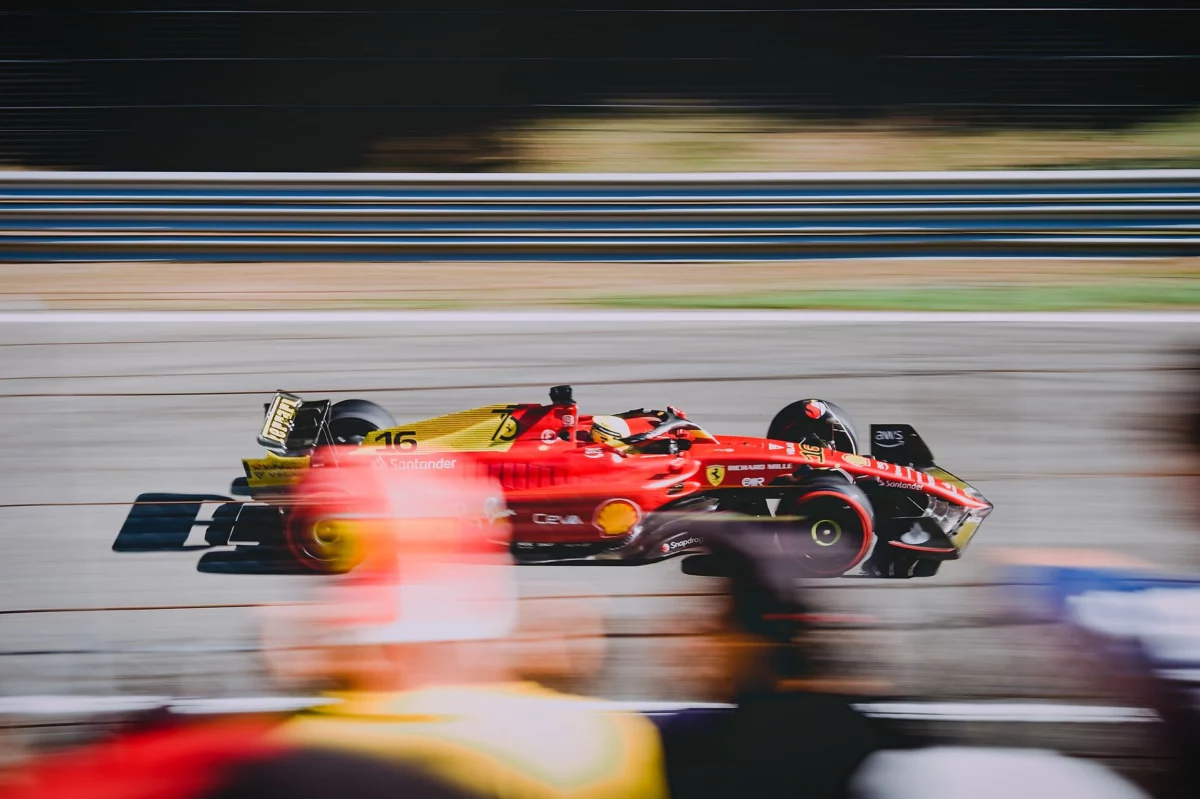
The Hamilton and Leclerc Monza controversy matters less for the headline than for what it says about pressure in Formula One. At the Italian Grand Prix in Monza, every strategic call is amplified by the crowd, the cameras, and the weight of Scuderia Ferrari. When Lewis Hamilton says he and Charles Leclerc have squashed the issue, he is doing more than calming a post-race story. He is trying to keep Ferrari’s internal focus on points, pace, and execution rather than public drama.
Why the Hamilton and Leclerc Monza controversy mattered
Monza is not just another stop on the calendar. It is Ferrari country, where the tifosi expect bold calls and clean racing, and where even a small disagreement can become a national conversation. That is especially true when the drivers involved are among the sport’s biggest names. Hamilton brings the authority of a multiple-time world champion, while Leclerc remains the homegrown face of Ferrari’s long-term project.
In that environment, a misunderstanding over pace, position, or race management can quickly look like a deeper rift. In reality, most Formula One tensions are situational: a slow pit stop, a poorly timed swap, or a split-second judgment call. What the public sees as a feud is often a blend of radio frustration, media framing, and the intense optics of elite competition.
Inside Ferrari’s pressure cooker
Ferrari lives under a brighter spotlight than almost any other team in Formula One. The team’s history, its fan base, and its status as the sport’s most scrutinized organization mean that driver relationships are never just personal; they are strategic assets. Every decision feeds into the Constructors’ Championship, where a team can lose or gain millions in prize value and momentum.
That is why team harmony matters even when the cars are not fighting for a win. Ferrari cannot afford repeated public friction between Hamilton and Leclerc because the team needs both drivers to extract clean data, protect tyre life, and respond quickly to changing conditions. In modern F1, the difference between a smart call and a costly mistake can come from telemetry, pit stop timing, or a subtle interpretation of team orders.
Why strategy disputes become public
On race weekends, the drivers experience only part of the picture. Engineers see tyre degradation, fuel targets, traffic windows, and undercut opportunities. A call that looks unfair from the cockpit may be the least bad option on the pit wall. The challenge is that public audiences rarely see the full data set, so frustration gets translated into narrative before the team has a chance to explain itself.
That is why the Hamilton-Leclerc situation is best understood as a communications test. Ferrari must show that it can align two elite drivers without forcing either to surrender dignity or competitive edge. If that balance holds, the controversy fades. If it slips, the story grows legs.
What ‘squashed’ really means for Hamilton and Leclerc
Hamilton’s message signals de-escalation, not necessarily amnesia. In Mercedes-AMG Petronas Formula One Team, he spent years in a system where clear process, repeated execution, and internal discipline were central to success. Ferrari’s environment is more emotional, but the principle is the same: trust between drivers and the race team has to survive bad calls and bad luck.
The wider significance is that Ferrari does not need perfect agreement; it needs workable professionalism. The sport has seen famous teammate tensions before, from Ayrton Senna and Alain Prost to modern examples where the fastest car still became vulnerable because the garage was divided. Hamilton and Leclerc are not that story unless the tension keeps resurfacing.
The better interpretation is simpler: both drivers understand that Ferrari’s championship hopes depend on consistency more than commentary. That makes the decision to move on less about friendship and more about competitive realism.
Why Monza magnifies every Ferrari message
Monza is built for drama. Long straights, heavy braking zones, and high average speeds mean that qualifying, clean launches, and minimal errors matter enormously. A strong pole position can shape the whole weekend, but race-day execution can still overturn the grid. For Ferrari, that pressure is compounded by the emotional presence of the home crowd and the relentless judgment that comes with racing in Italy.
That is also why a single Monza dispute can become symbolic. To outsiders, it looks like a row between two drivers. To Ferrari insiders, it is a reminder that every operational detail is being measured against the team’s biggest ambitions. The margin for error is tiny, and the tolerance for confusion is even smaller.
For readers who want broader context, official updates from Ferrari and race coverage from Formula1.com are the best starting points for separating confirmed information from speculation.
What Ferrari should protect next
- Clear race communication: drivers should know when a swap, hold, or attack is expected.
- Consistent pit-wall logic: decisions that look predictable are easier for drivers to trust.
- Fast public reset: the team should close disputes quickly before media speculation compounds them.
- Shared championship framing: Hamilton and Leclerc need to think in terms of Ferrari’s total points, not only individual positioning.
Frequently asked questions
What happened between Hamilton and Leclerc at Monza?
The available reporting suggests there was a controversy or disagreement linked to the Italian Grand Prix, but Hamilton has said the issue has now been settled. The important point is that both drivers appear to have moved past it.
Why does this matter for Ferrari?
Because Ferrari’s success depends on both speed and internal alignment. If Hamilton and Leclerc work smoothly together, the team can make better strategic calls and score more consistently in the Formula One World Championship.
Can a resolved dispute still affect future races?
Yes. Even when tension is publicly settled, trust has to be rebuilt in real time through race decisions, radio clarity, and execution under pressure. The next difficult weekend is often the real test.
What to watch after the Monza reset
The most important question is not whether Hamilton and Leclerc can say the right thing after a controversy; it is whether Ferrari can build a repeatable system that prevents the same conflict from returning. In Formula One, harmony is rarely glamorous, but it is often the hidden ingredient behind wins, podiums, and title runs. If Ferrari gets this right, the Monza controversy becomes a footnote. If it does not, it could be remembered as the moment the team’s greatest strength—two elite drivers—turned into its most delicate weakness.
SEO DATA
Primary Focus Keyphrase: Hamilton and Leclerc Monza controversy
Related Keyphrase 2: Ferrari team orders in Formula One
Related Keyphrase 3: why Hamilton and Leclerc resolved their Monza dispute
Related Keyphrase 4: what happened between Hamilton and Leclerc at Monza
Related Keyphrase 5: Ferrari driver rivalry and team unity
Primary Keyphrase Synonyms: Hamilton Leclerc dispute, Monza controversy, Ferrari teammate tension, Italian Grand Prix fallout, Formula 1 row
SEO Title: Hamilton and Leclerc Monza Controversy Explained: What It Means for Ferrari
Meta Description: Hamilton and Leclerc Monza controversy explained: why it mattered, how Ferrari handled it, and what it means for the next race.
URL Slug: hamilton-leclerc-monza-controversy
Image Filename: hamilton-leclerc-monza-ferrari-handshake.jpg
Image ALT Text: Lewis Hamilton and Charles Leclerc speaking calmly in Ferrari pit lane after Monza
Image Title: Hamilton and Leclerc Resolve Monza Tension
Image Caption: Lewis Hamilton and Charles Leclerc after the Italian Grand Prix, with Ferrari aiming to move past the Monza row.
Search Intent: Mixed intent
Frequently Asked Questions
What actually made the Hamilton and Leclerc situation at Monza feel bigger than a normal race disagreement?
Monza adds unusual pressure because it is Ferrari’s home race, where every radio message and strategy decision is amplified by the tifosi, the media, and team expectations. A routine frustration can look like a major split when it happens in that atmosphere, especially involving two high-profile drivers like Hamilton and Leclerc.
When Hamilton said the issue was 'squashed,' does that mean he and Leclerc fully agreed on what happened?
Not necessarily. 'Squashed' usually means the tension has been de-escalated and the team can move on. It does not always mean both drivers saw the incident the same way. In Formula One, clearing the air is often more important than full agreement, because the team needs focus and trust.
Why do small strategy disputes become public arguments in Formula One so often?
Because drivers only hear part of the story from the cockpit. Engineers have access to tyre data, traffic windows, fuel targets, and pit-stop options that shape decisions. What sounds like a bad or unfair call from inside the car may actually be the least damaging choice from the pit wall, and that gap creates public drama.
Could this kind of disagreement affect Ferrari’s championship chances even if the drivers stay professional?
Yes, if it keeps happening. Even without open conflict, repeated friction can hurt data sharing, race execution, and decision-making under pressure. Ferrari needs both drivers aligned to protect tyres, respond to strategy shifts, and maximise points. One-off tension is manageable, but recurring mistrust can cost performance over a season.
Why is Ferrari more sensitive to driver tension than other teams?
Ferrari carries exceptional scrutiny because of its history, its fan base, and the symbolic weight of racing at the front. At Ferrari, driver relationships are not just personal; they affect the team’s image and its results. Any visible split is quickly turned into a wider story about the team’s stability and ambition.