
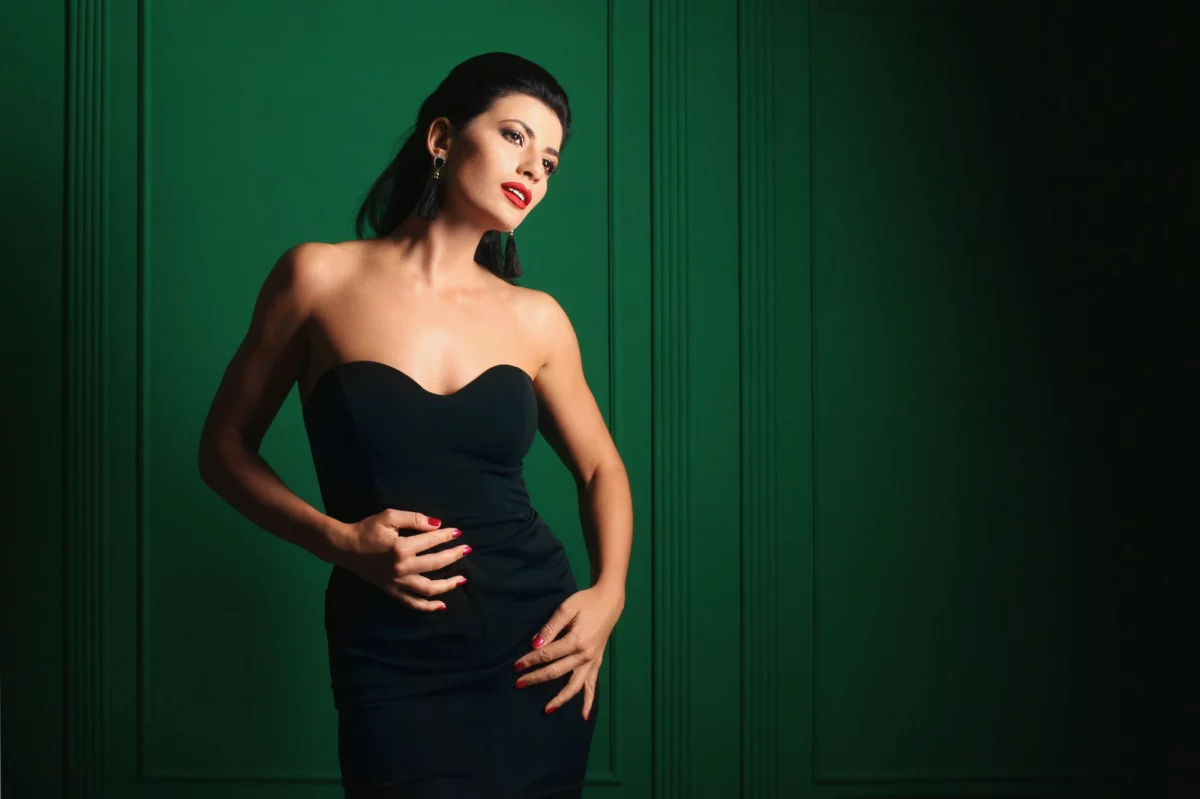
Diletta Leotta Champions League return is a useful case study in how modern sports media packages personality, style, and authority together. The tabloid phrasing around a “busty display” is less interesting than the mechanism underneath it: a recognizable Diletta Leotta reappearing in a studio environment tied to the UEFA Champions League, wearing an elegant black dress, and immediately becoming part of the conversation. That outcome is not accidental. It reflects the way live football, DAZN, television presenter culture, and Instagram attention now reinforce one another.
Why this return matters beyond a celebrity photo
Leotta is not merely a model who happens to appear on television. She is a working sports commentator and presenter whose public image has been built inside the machinery of sports journalism and modern broadcasting. That distinction matters. When a presenter returns to a high-profile competition such as the Champions League, the appearance is not simply personal branding; it is part of a live-content strategy aimed at holding audience attention in a fragmented media market.
On the surface, the headline sells glamour. In practice, it points to a deeper truth about premium football coverage: the presenter is no longer just an intermission figure. She is part of the product. That is especially true in an era when viewers switch between linear TV, apps, clips, and social feeds with little friction. A familiar face can be as valuable as a tactical breakdown or a pundit panel.
What the black dress actually signals
The black dress matters because visual language matters. On live television, clothing, posture, lighting, and framing all communicate professionalism before the first sentence is spoken. That is not vanity; it is production design. In a studio built around elite football, an elegant black outfit can project control, seriousness, and authority while still fitting the entertainment logic of a major sports broadcast.
The mistake many commentators make is to treat style and competence as opposites. In reality, they are often complementary. A presenter who understands how she will be seen on camera is doing part of the job. That is especially true for someone whose public identity also overlaps with fashion and model work. The visual component is not a side effect; it is part of the editorial ecosystem.
In modern sports media, the presenter is judged not only on delivery, but on how effectively image, timing, and credibility work together.
That is why tabloid language about body shape misses the real story. It reduces a broadcast appearance to a crude visual hook, while the more interesting question is how a presenter turns appearance into audience retention without letting it eclipse expertise.
The media mechanics behind her popularity
Broadcasting plus personal branding
Leotta’s staying power comes from a hybrid profile. She operates as a personal branding case study as much as a presenter. Her television work gives her legitimacy; her social presence amplifies that legitimacy. In the logic of social media, each on-air appearance becomes a clip, a still image, a headline, and a discussion thread.
This is why searches about her often mix biography, style, and football coverage. She is both a broadcaster and a public-facing personality, and those roles now feed each other. The entertainment value is not separate from the journalism; it is one of the ways modern sports journalism survives attention scarcity.
The football context is essential
The Champions League remains one of the most powerful properties in football, and the competition sits under the broader governance of UEFA. Premium live sport is expensive to acquire, expensive to produce, and increasingly expensive to market. That is why a presenter’s recognizability matters. On platforms like DAZN and on the official UEFA Champions League ecosystem, the goal is not just to show the match; it is to package a complete viewing experience around it.
Live coverage also increases the importance of timing and continuity. A face that audiences already know can reduce friction in the pre-match or post-match segments. That is the quiet economics behind the glamour: familiarity lowers the cost of attention.
Why fans and critics talk past each other
Much of the public discussion around Leotta splits into two camps. One camp focuses on appearance, which is the fastest way to generate clicks. The other focuses on professionalism and resists any mention of style. Both positions are incomplete.
The useful middle ground is to treat her as a media professional whose image is deliberately managed. Her role as a presenter, her visibility on Instagram, and her connection to celebrity culture all contribute to the scale of attention she receives. So does her marriage to former Liverpool goalkeeper Loris Karius, which adds another layer of public curiosity. But it would be lazy to reduce her relevance to that alone.
The same dynamic exists across modern celebrity culture. People are rarely famous for only one reason. In Leotta’s case, the overlap between presentation, beauty culture, football, and social visibility creates an unusually dense public profile.
| Lens | What it sees | What it misses |
|---|---|---|
| Tabloid lens | Dress, figure, instant attention | Broadcast skill, preparation, and audience strategy |
| Broadcast lens | Authority, continuity, live delivery | How image drives reach beyond the studio |
| Brand lens | Consistency across TV and social platforms | The risk of overdependence on visual appeal |
What broadcasters can learn from the moment
The lesson is not that every presenter should dress like a celebrity. It is that modern sports presentation is a discipline of coherence. If a broadcaster wants to keep attention, the on-air personality, visual presentation, and editorial tone must align. That applies whether the audience is watching a group-stage preview, a knockout-round analysis, or a live reaction segment.
- Use image strategically, not accidentally. Wardrobe, set design, and lighting should support the message the broadcaster wants to send.
- Protect credibility first. A strong visual identity helps, but sustained authority comes from preparation and clarity.
- Let social clips extend the broadcast. Live television should remain the core; social platforms should amplify it, not replace it.
- Expect audience segmentation. Some viewers arrive for analysis, others for personality, and many for both.
- Recognize the risk of flattening women into visuals. The industry still does this too often, especially when a presenter becomes highly visible.
These lessons apply far beyond one presenter. They describe the current condition of elite sport media, where the line between editorial performance and brand performance has become thin.
Why the controversy itself is revealing
The strongest criticism of this kind of coverage is not that it exists, but that it is often shallow. The language used by tabloids is built to reward instant reactions rather than serious analysis. Yet the fact that such headlines work tells us something real about the market. People do not merely consume football coverage; they consume the personalities attached to it. That is why presenters with strong identities often outperform anonymous studio hosts.
At the same time, there is a legitimate warning here. If a broadcaster relies too heavily on glamour, it can train the audience to notice the presenter’s body before her work. That is a reputational risk, especially for women in visible media roles. The better model is one in which style is part of a complete professional package, not a substitute for substance.
Leotta’s case is therefore useful because it exposes a tension that the industry has not resolved: broadcasters want reach, audiences want familiarity, and media outlets want easy headlines. Those goals overlap, but they are not the same.
Why her popularity endures on social platforms
If someone asks why Instagram matters so much in this story, the answer is simple. Social media turns a television presenter into a continuous presence. A studio appearance is no longer confined to the live broadcast window. It becomes a screenshot, a reel, a comment section, and a search trend.
This matters for anyone studying personal branding. A figure like Leotta can merge the credibility of sports journalism with the scale of influencer culture. That combination is powerful, but it is also fragile. If the image gets ahead of the work, the audience eventually notices. If the work outpaces the image, the audience may never arrive in the first place.
That balance is one reason her name remains persistent in football conversations. She is not operating in a vacuum; she is moving through the intersection of modeling, television, and fan-driven football culture, where visibility is both asset and obligation.
FAQ: Diletta Leotta, Champions League coverage, and media image
Who is Diletta Leotta?
She is an Italian television presenter, sports commentator, and model known for her work in football coverage, especially with DAZN.
Why did her Champions League return attract so much attention?
Because it combined a high-profile competition, a recognizable presenter, and a visually striking wardrobe choice that tabloid media turned into a headline.
Does appearance matter in sports presenting?
Yes, but not in a superficial sense. On live television, appearance is part of communication. The issue is whether style supports credibility or replaces it.
Why do people associate her with both football and social media?
Because her public identity is built across platforms. She appears in sports broadcasts, but she also maintains a strong presence on social media, where each broadcast moment can be repackaged instantly.
What to watch next in sports broadcasting
The next stage of this story is likely to be shaped by three forces: streaming competition, social-first promotion, and a growing demand for recognizable on-air talent. As rights holders and platforms fight for attention, they will keep leaning on presenters who can move between analysis, entertainment, and promotion without losing control of the frame. That makes figures like Leotta strategically valuable.
At the same time, the industry will face more pressure to explain why certain presenters become targets of visual commentary while others do not. That is not a side issue. It goes to the credibility of sports media itself. The unresolved question is whether broadcasters can keep using glamour as an attention engine without turning women into decorative assets. The answer will shape not only how Champions League coverage looks, but how seriously audiences take the people who deliver it.
The most important insight is simple: in modern football media, the presenter is no longer outside the spectacle. She is part of it. What readers should watch next is whether networks choose substance with style, or style without substance, when the next big live sports window arrives.
Frequently Asked Questions
Why is Diletta Leotta’s Champions League return considered more than just a celebrity appearance?
Because her return sits at the intersection of broadcasting, personal branding, and elite football coverage. She is not only visible as a public figure; she is part of the live sports product. In modern media, a recognizable presenter can help retain attention across TV, apps, clips, and social platforms, making the appearance strategically important.
What does the black dress symbolize in the context of a live sports studio?
The black dress signals more than fashion. In a studio setting, clothing, lighting, and framing all contribute to how authority and professionalism are perceived. An elegant black outfit can project control and seriousness while still fitting the entertainment-driven style of premium football broadcasting. It is a visual cue, not just a style choice.
Why does the article criticize tabloid language about her body?
Because it simplifies a broadcast moment into a crude visual headline and ignores the media mechanism behind it. The more relevant story is how a presenter uses image, timing, and on-camera presence to hold attention. Reducing the moment to body-focused language misses the role she plays in modern sports journalism and audience engagement.
How do DAZN and the Champions League environment shape her visibility?
Premium football platforms are designed around complete viewing experiences, not just the match itself. On DAZN and in the broader Champions League ecosystem, familiar presenters help create continuity and brand recognition. Their presence supports the broadcast’s identity, especially in a fragmented media landscape where viewers move quickly between channels and devices.
Does having a strong social media presence weaken a sports presenter’s credibility?
Not necessarily. In Leotta’s case, television credibility and social media visibility reinforce each other. A presenter can gain legitimacy through on-air work while social platforms extend the reach of each appearance. The key issue is whether the presenter still delivers authority and competence on screen, which the article suggests is part of her appeal.