
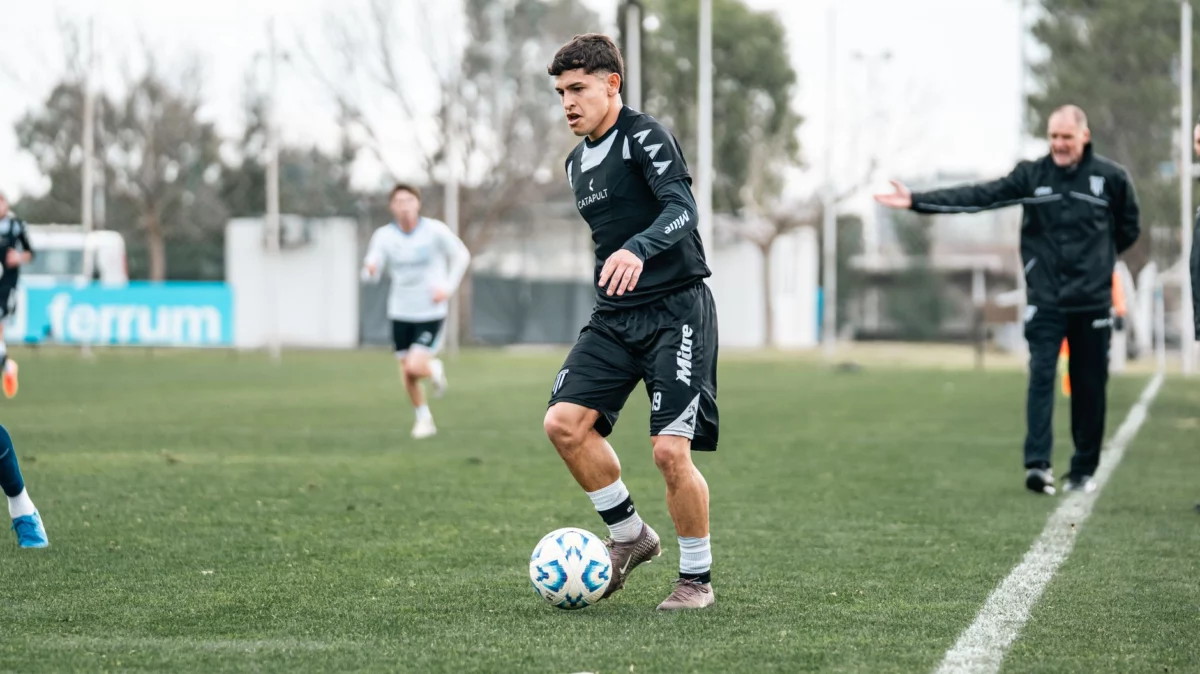
Cesc Fabregas Como tactics have become one of European football’s most compelling coaching stories. According to the BBC Sport report underpinning this analysis, the former Spain midfielder has guided Como from an ambitious Italian project into the Champions League conversation—and ultimately onto its grandest club stage. The achievement matters not only because of the club’s rapid ascent, but because it offers evidence that Fabregas can translate an elite playing education into a coherent, modern coaching model.
Como’s progress is not a simple fairytale driven by celebrity ownership, picturesque surroundings or one famous coach. It is the product of aligned recruitment, patient squad development, tactical clarity and an organization prepared to make unconventional decisions. Examining how those elements interact reveals why Fabregas is increasingly viewed as a candidate to become one of Europe’s leading coaches—and why sustaining success may prove harder than reaching it.
From elite midfielder to architect of Como’s identity
Cesc Fabregas arrived in coaching with an unusually broad tactical education. At Arsenal, he developed under Arsène Wenger in a system emphasizing technical quality, movement and combination play. At Barcelona, he worked within a positional structure shaped by the club’s possession-based tradition. His time at Chelsea exposed him to more pragmatic approaches, including controlled defending and rapid transitions.
Later experience with Monaco added another perspective: how a development-oriented club must balance young talent, competitive pressure and player trading. These influences are visible at Como, but Fabregas has not merely copied a former manager. His work reflects a synthesis of positional play, aggressive pressing and situation-specific pragmatism.
That distinction is important. Former elite players are often assumed to possess an automatic advantage in management, yet playing knowledge does not guarantee the ability to teach, organize or make decisions under pressure. Coaching requires simplifying complex ideas, managing players with different status levels and designing repeatable solutions. Fabregas’s strongest early signal is therefore not his reputation; it is the recognizable collective identity his team has developed.
The background to Como’s transformation
Como 1907 has a long history in Italian football, but financial instability and sporting decline previously took the club far from the elite. The modern project has combined substantial investment with improved infrastructure, international visibility and a deliberate attempt to build a sustainable football operation.
Fabregas joined Como as a player in 2022 before moving into coaching. That pathway gave him first-hand knowledge of the dressing room, the club’s decision-makers and the competitive demands surrounding the promotion campaign. Como returned to Serie A in 2024, ending a 21-year absence from Italy’s top flight.
The club’s rise should not be attributed to coaching alone. Financial backing can improve access to players, facilities and specialist staff. Recruitment quality, executive stability and medical performance also affect results. Nevertheless, investment does not automatically create a functioning team. Como’s competitive leap required Fabregas to turn resources into a playing model suited to Italian football, where opponents are typically adept at exploiting structural weaknesses.
How Cesc Fabregas’s Como tactics work
Building with purpose rather than possession for its own sake
Como’s approach begins with controlled construction from the back. The objective is not simply to accumulate possession statistics. Players use calculated spacing to draw opponents forward, open passing lanes and create a free player behind the first line of pressure. The goalkeeper and central defenders may invite pressure, while a midfielder drops or a full-back moves inward to alter the passing geometry.
This is closely associated with positional play: a framework in which players occupy complementary zones so that the ball carrier has multiple options. Width stretches the defensive block, players between the lines create central threats, and carefully timed rotations prevent the structure from becoming predictable.
Risk management is crucial. A short build-up can create valuable numerical advantages, but a misplaced pass near goal may immediately produce a high-quality chance for the opponent. Fabregas’s challenge is to preserve the benefits of brave circulation without turning tactical conviction into dogma. Against an intense press, a direct pass toward a forward or runner can be the correct positional-play decision because it attacks the space the opponent has vacated.
Overloads, rotations and the free player
Como often seeks to create an overload on one side before switching play or progressing through an under-defended channel. A winger may stay wide while a full-back enters midfield and an attacking midfielder drifts toward the ball. These movements can produce a passing triangle and force defenders to choose between protecting the flank and closing central space.
The most important player is frequently the one not initially involved in the overload. If several defenders shift toward the ball, a weak-side winger or advancing full-back may receive in space. This is why Como’s attacking football can appear patient and sudden at the same time: circulation manipulates the block, and acceleration follows when the structure produces an advantage.
Pressing as an attacking tool
Fabregas’s model also depends on coordinated pressure after possession is lost. The nearest players attempt to restrict the opponent’s first pass, while teammates protect central routes and anticipate the next action. Effective pressing in association football is not defined by constant running. It relies on distances, triggers and collective timing.
Typical triggers can include a backward pass, a difficult first touch or a reception near the touchline. When the press succeeds, Como can recover the ball against a disorganized defence. When it fails, however, space may appear behind advanced midfielders and full-backs. Champions League opposition is especially capable of escaping pressure with one-touch combinations, dribbling or accurate diagonal passes.
Why did Fabregas transform Como?
The answer involves more than formation diagrams. Fabregas appears to have established a clear relationship between training and match behaviour. Players are more likely to commit to demanding build-up patterns when they understand where teammates should be and why a particular risk is necessary. Tactical credibility grows when rehearsed situations repeatedly help the team escape pressure or generate chances.
His elite playing career may also strengthen communication. Fabregas operated as a midfielder responsible for reading pressure, controlling tempo and identifying runs before they fully developed. Those experiences are relevant to coaching because Como’s system asks players to recognize cues rather than follow a rigid script.
Como’s most significant achievement is not merely winning matches; it is creating a framework in which players can make faster, better-connected decisions.
Recruitment is another essential factor. A coach needs players whose attributes fit the intended style: defenders comfortable receiving under pressure, midfielders with spatial awareness, wide players capable of isolating opponents and forwards willing to press. Experienced names can add leadership, but reputation must remain secondary to tactical suitability, physical availability and motivation.
Como’s Champions League rise in context
The UEFA Champions League presents a different level of strategic and operational difficulty. Clubs face elite individual quality, varied tactical systems and a schedule that can expose limited squad depth. UEFA’s official Champions League coverage provides competition formats, fixtures and confirmed results.
For Como, European qualification changes expectations. Opponents are more likely to study specific build-up routes, pressing triggers and defensive vulnerabilities. Domestic rivals may also become more conservative, allowing Como possession while denying central space. The team must therefore develop multiple methods of winning: dominating the ball, attacking transitions, defending deeper and managing narrow leads.
The expanded Champions League format increases the variety of opposition and makes adaptability particularly valuable. A possession structure effective against a passive domestic block may need modification against a physically intense press. Conversely, a compact counterattacking plan may be preferable away against a club with superior depth. The central question is whether Fabregas can vary the method without weakening the identity.
Advantages, risks and implementation challenges
| Area | Potential advantage | Primary risk |
|---|---|---|
| Build-up | Creates a free player and controlled progression | Turnovers close to goal |
| Positional structure | Improves passing options and territorial control | Predictability if rotations are slow |
| High pressing | Produces recoveries near the opponent’s goal | Space behind the press |
| European exposure | Raises revenue, reputation and recruitment appeal | Fixture congestion and fatigue |
| Young coach profile | Modern communication and tactical openness | Limited experience during prolonged adversity |
Squad depth and workload
European competition compresses recovery and preparation time. Players who can execute a complex model when fresh may make slower decisions under fatigue. Como must rotate without losing the connections that make its football effective. That requires depth by role, not merely a larger number of players.
Sports science, injury prevention and travel planning become competitive issues. Minutes should be distributed with positional demands in mind: high-intensity wide players may require different management from central defenders or goalkeepers. Recruitment must also consider whether newcomers can absorb Fabregas’s concepts quickly enough to contribute during congested periods.
The danger of overexpansion
Champions League income and visibility can encourage rapid spending. The wiser strategy is to protect the principles that enabled progress. Expensive players who expect guaranteed status can disrupt tactical balance, while short-term contracts may create little resale value. Como must distinguish between adding European experience and collecting recognizable names.
Financial regulation is another consideration. UEFA explains its current club licensing and financial sustainability framework through its official club licensing resources. Ambitious clubs need to align wages, transfer commitments and infrastructure spending with sustainable revenue rather than assuming that qualification will recur every season.
What other clubs can learn from the Como 1907 project
- Align recruitment with the playing model. Evaluate how a player receives, scans, presses and reacts after losing possession—not only goals, assists or reputation.
- Build shared terminology. Clear language for pressing triggers, zones and rotations reduces hesitation during matches.
- Plan alternative routes. A recognizable identity should include direct attacks, deeper defending and set-piece solutions.
- Measure process as well as results. Chance quality, progression under pressure and the effectiveness of counter-pressing can reveal improvement before league position does.
- Preserve institutional knowledge. Analysis, recruitment and academy departments should understand the model so the project is not wholly dependent on one coach.
Publishers covering the club could also connect this analysis to internal resources on Serie A tactical trends, the Champions League format and how positional play works. These suggested internal links should be adapted to existing WordPress URLs before publication.
Frequently asked questions
What is Cesc Fabregas’s coaching style?
Fabregas favors proactive football built around structured possession, positional spacing, coordinated pressing and rapid attacks once an advantage appears. His approach is possession-oriented but can incorporate direct passes and defensive pragmatism when circumstances demand them.
How did Cesc Fabregas transform Como?
He helped establish a clear tactical identity, connected training exercises to match situations and worked within a broader club strategy involving investment and targeted recruitment. Como’s improvement is best understood as the interaction between coaching, squad construction and organizational alignment.
Can Como compete consistently in the Champions League?
Como can be tactically competitive, but consistency depends on squad depth, injury management, recruitment and financial discipline. European opponents will punish build-up errors more severely, while additional fixtures will test whether the team can rotate without losing cohesion.
Could Fabregas manage a larger European club?
His trajectory makes that plausible, although success at a bigger club would bring different challenges: superstar management, reduced patience, greater media scrutiny and an expectation to win immediately. His response to poor form and tactical countermeasures will provide stronger evidence than reputation alone.
The test that will define Fabregas’s next chapter
The most important insight from Como’s rise is that tactical sophistication becomes durable only when the entire institution supports it. Fabregas has supplied a clear football identity, but European competition will test whether that identity is resilient enough to survive fatigue, opponent adaptation and heightened expectations.
Observers should watch how Como defend transitions, rotate the squad and respond when opponents refuse to press their build-up. They should also monitor whether recruitment continues to prioritize role suitability over fame. These details will reveal more about the project’s future than a single glamorous result.
The reasonable prediction is that Fabregas will attract interest from wealthier clubs if Como remain organized and competitive. The unanswered question is whether his greatest achievement will be using Como as a route to an elite job—or proving that an intelligently built club outside Europe’s traditional hierarchy can establish itself there.
SEO Data
Primary Focus Keyphrase: Cesc Fabregas Como tactics
Related Keyphrase 2: Como Champions League rise
Related Keyphrase 3: positional play in Serie A
Related Keyphrase 4: how did Cesc Fabregas transform Como
Related Keyphrase 5: Como 1907 project
Primary Keyphrase Synonyms: Fabregas coaching philosophy, Como tactical system, Fabregas football strategy, Como playing style, Fabregas tactical approach
SEO Title: Cesc Fabregas Como Tactics: Inside Their European Rise
Meta Description: Explore Cesc Fabregas Como tactics, positional play, recruitment and the challenges behind the Italian club’s remarkable Champions League rise.
URL Slug: cesc-fabregas-como-tactics
Image Filename: cesc-fabregas-como-tactics-touchline.jpg
Image ALT Text: Cesc Fabregas directing Como players from the touchline during a European match
Image Title: Cesc Fabregas Directing Como in Europe
Image Caption: Fabregas’s structured possession and pressing principles have shaped Como’s rapid European rise.
Search Intent: Mixed informational and news/current event