
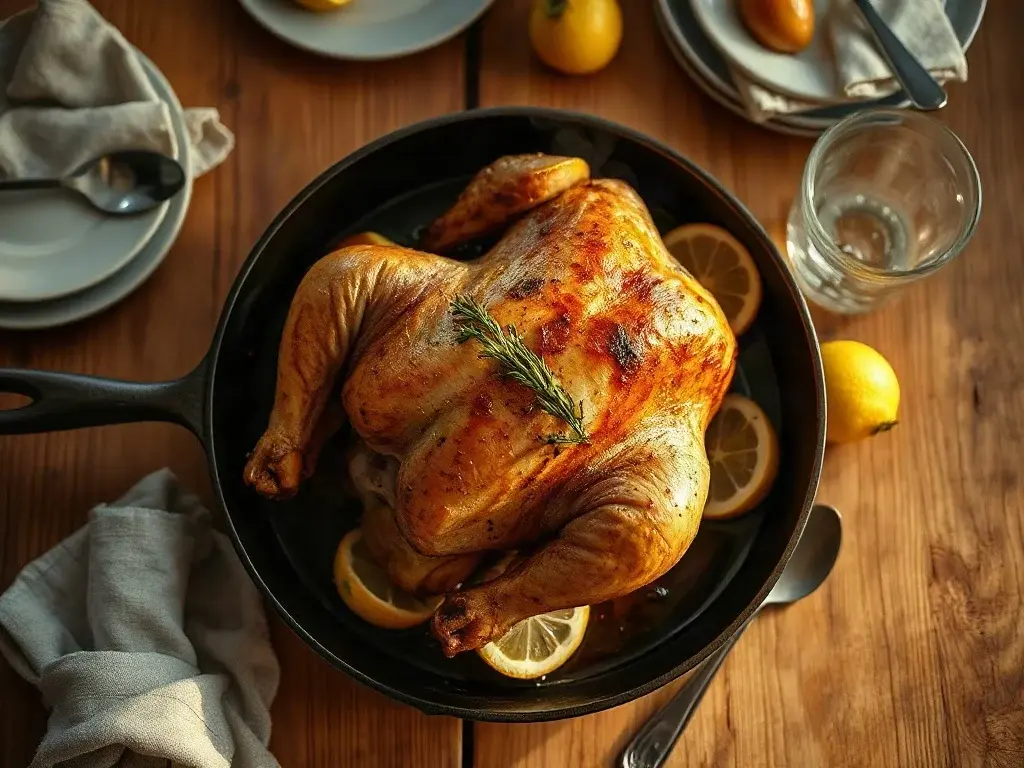
The Katie Couric 5-ingredient chicken recipe has drawn attention for a simple reason: a writer called it a personal favorite, “so delicious” that she plans to make it for her family “again and again.” The teaser says little about the method, and this article does not invent details the source does not provide. It looks instead at why a five-ingredient chicken dish from a well-known journalist resonates, and what separates a reliable short-ingredient dinner from a bland one.
Why a Five-Ingredient Chicken Recipe Gets Attention
Celebrity recipes travel quickly. Couric’s profile was built on morning television, including Today, and she now shares food ideas through Instagram and her newsletter. Her audience trusts her as a home cook rather than a professional chef, and that matters. A recipe from someone who cooks for family is easier to believe than one engineered for a test kitchen.
The five-ingredient constraint is the real draw. It promises a short shopping list, little prep, and low failure risk. That is a practical promise, not a gimmick, because meal preparation is where most weeknight plans collapse.
What We Can and Cannot Verify
The available source is a headline and a one-line endorsement. It confirms that the dish is chicken-based, uses five ingredients, and is a repeat favorite for its author. It does not confirm the exact ingredients, quantities, or cooking times. Readers should check the original publication for the full recipe before shopping. Any list circulating without that source deserves skepticism.
The Logic Behind Minimalist Chicken Dishes
Flavor Comes From Technique, Not Count
A short ingredient list works when each item does heavy lifting. Chicken is mild, so a fat, an acid, an aromatic, and a seasoning usually carry the dish. Common examples are olive oil, lemon, garlic, and salt. I cite these as typical building blocks of the format, not as Couric’s confirmed list.
Technique matters more than the shopping list. Browning drives the Maillard reaction, which produces the savory crust people associate with good chicken. Dry skin, a hot pan, and patience beat a longer pantry list.
The Trade-Offs
- Advantage: Fewer purchases, lower cost, and faster cleanup.
- Advantage: Each flavor stays legible, so errors are easy to diagnose.
- Disadvantage: Less margin for blandness. Underseasoned chicken has nothing to hide behind.
- Disadvantage: Counting rules are fuzzy. Many “five-ingredient” recipes quietly exclude salt, pepper, and oil.
How to Get Reliable Results
Choose the Cut Deliberately
Bone-in thighs tolerate heat and are forgiving. Boneless breasts dry out quickly and benefit from marinating or a shorter cook. If a recipe does not specify the cut, expect the timing to change with it.
Cook to Temperature, Not Time
Ovens and pans vary, so use a thermometer. The USDA recommends cooking poultry to an internal temperature of 165°F (74°C); see FoodSafety.gov for official guidance. This guards against Salmonella and Campylobacter, two common causes of foodborne illness linked to poultry.
Common Mistakes
- Crowding the pan, which steams the chicken instead of browning it.
- Skipping a rest period, which lets juices run out when you cut.
- Seasoning at the end rather than early, which leaves the meat flat inside.
- Washing raw chicken, which spreads bacteria around the sink and counters.
Frequently Asked Questions
What is Katie Couric’s 5-ingredient chicken?
It is a chicken dish the source article describes as a family favorite built from five ingredients. The excerpt available here does not list them, so consult the original article for specifics.
Is a five-ingredient chicken recipe healthy?
It depends on the ingredients. Chicken is a lean protein source, but butter, cream, or sugary glazes change the nutritional profile considerably.
Can I make a 5-ingredient chicken dinner ahead?
Generally yes. Most baked or pan-cooked chicken keeps refrigerated for a few days and reheats well, provided you cool it promptly and reheat it to 165°F.
What the Appeal of Simple Recipes Really Tells Us
The most telling part of this story is the phrase “again and again.” Repetition, not novelty, is the real test of a weeknight recipe. Short recipes survive because they remove friction, not because they are culinary breakthroughs. The open question is whether the five-ingredient label will stay honest. Watch whether publishers disclose pantry staples in the count, and whether readers keep rewarding a simple dish that works over a complicated one that impresses once. My prediction is that transparent, repeatable recipes will keep outperforming flashy ones in food media.