
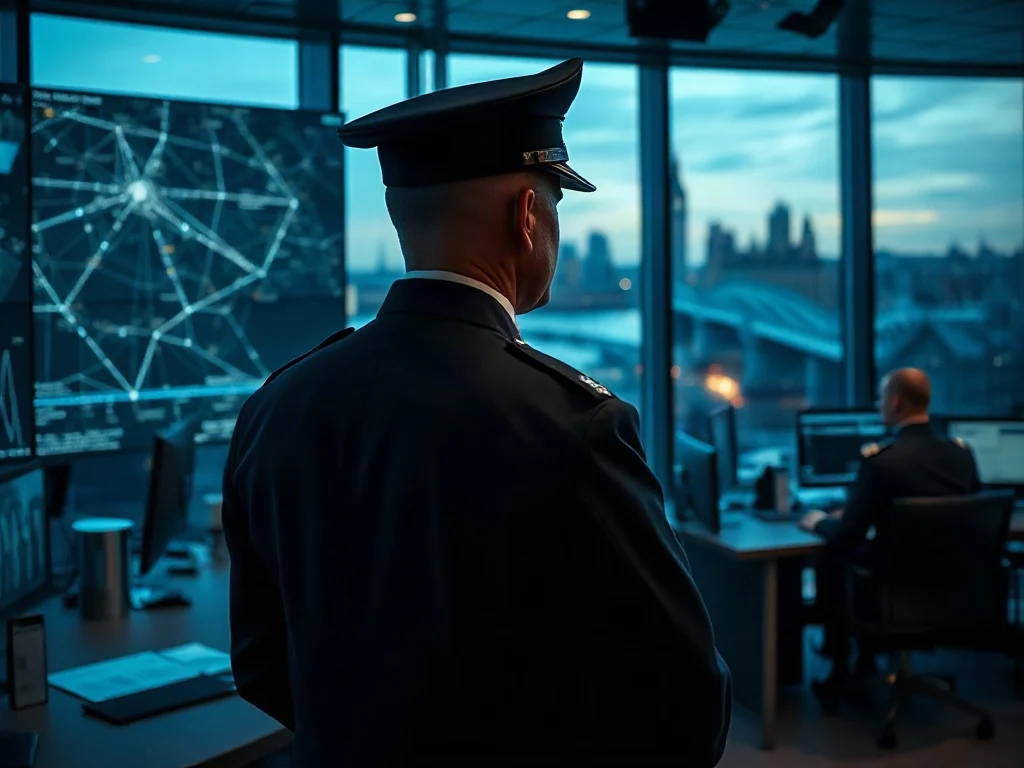
The warning from Sir Mark Rowley, the Met chief, is blunt: without policing reform, the current system is “heading for failure” because it cannot cope with the sophistication of modern criminals. Coming from the head of Britain’s largest force, that is a diagnosis of structure, not a plea for more money. This analysis tests the claim against what is publicly known about how policing in England and Wales is organised, where it is under strain, and which reforms are plausible. Only the headline argument of the speech is public so far, so claims about its detail are qualified.
Sir Mark Rowley will argue that the current system is unable to cope with the sophistication of modern criminals.
Who Is Making the Argument, and Why It Carries Weight
Mark Rowley became Commissioner of the Metropolitan Police in September 2022. He took over after the departure of Cressida Dick, in a period shaped by the murder of Sarah Everard and a collapse in public confidence. Before that, he was the senior national lead for counter-terrorism policing, which gave him direct experience of how local forces, national agencies and intelligence services fit together.
He also has an obvious institutional interest. A commissioner who says the system is failing is partly arguing for resources, powers and authority. A critic should keep that in mind without dismissing the argument. Several features of the structure he is describing are documented independently of him.
The Structural Problem: A Nineteenth-Century Model Facing Twenty-First-Century Crime
Modern British policing descends from the 1829 reforms of Robert Peel and the philosophy later summarised as the Peelian principles. That model is built on local accountability, policing by consent and geographically defined responsibility. It was designed for crimes committed by people near the victim.
Today, law enforcement in the United Kingdom still reflects that origin. England and Wales have 43 territorial police forces, each with its own chief constable, budget, procurement, IT systems and, in many cases, specialist units. Oversight comes from police and crime commissioners and from inspection by His Majesty’s Inspectorate of Constabulary and Fire & Rescue Services. National coordination sits with bodies such as the National Crime Agency and the Home Office.
The mismatch is straightforward. A fraud network operating from overseas, using stolen identities and laundering proceeds through digital channels, does not respect force boundaries. Neither does a drug supply chain, as the model of county lines exploitation shows. Forty-three separate systems must coordinate against adversaries who need not coordinate at all.
How Criminals Have Outpaced the System
Fraud and Cybercrime
The clearest evidence is in the crime statistics. The Crime Survey for England and Wales, published by the Office for National Statistics, has for several years identified fraud and computer misuse among the most commonly experienced crime types, with millions of incidents estimated annually. Yet police resources and performance measures remain weighted towards traditional offences. Reporting routes for fraud, notably the Action Fraud service run under the City of London Police, have faced sustained criticism over victim experience and low investigation rates.
This is the strongest empirical support for Rowley’s thesis. Cybercrime scales cheaply, crosses borders and generates evidence in technical forms that most local detectives are not equipped to handle. A force with a few specialist officers cannot match a network that can attack thousands of victims in a day.
Organised Crime, Encryption and Money Flows
Serious organised crime now uses commercial encryption, cryptocurrency and professional enablers to conduct money laundering. The 2020 takedown of the EncroChat encrypted phone network, which led to large numbers of arrests across Europe including in the UK, shows both sides of this. When capability is pooled nationally and internationally, results follow. It also showed how much criminal activity had been hidden behind commercial encryption.
Artificial Intelligence as an Accelerant
Artificial intelligence adds a further asymmetry. Criminals can use it for convincing phishing, voice cloning and deepfake impersonation at almost no cost. Police adoption, by contrast, is slowed by procurement, data-protection rules and a lack of public consent. The Met’s use of live facial recognition illustrates the tension. The 2020 Court of Appeal ruling in the Bridges case against South Wales Police found that force’s deployment lacked a sufficiently clear legal framework, and the question of statutory regulation has not gone away.
Why the Case Is Strong, and Where It Is Weak
What the Evidence Supports
- Fragmentation is real. Duplicated IT systems, procurement and specialist units across 43 forces are well documented and a recurring theme in inspectorate reporting.
- Crime has changed shape. The prominence of fraud and online offending in official survey data confirms that a substantial share of harm no longer fits the neighbourhood-policing template.
- Specialist skills are scarce. Digital forensics, financial investigation and data science compete with far better-paid private-sector roles.
What the Argument Leaves Open
- Reform is not the same as merger. Reducing the number of forces has been proposed repeatedly. A 2005 attempt to merge forces was abandoned, and mergers can consume years of management attention without improving detection rates.
- Funding and structure are entangled. Police budgets were squeezed during austerity. The government’s later officer-recruitment drive restored headline numbers, but new recruits are inexperienced and mostly in uniformed roles, not the specialist ones now most needed. A structural diagnosis can obscure a capacity problem.
- Trust is a separate crisis. The Baroness Casey review of the Met in 2023 found serious cultural and vetting failures. Reform that increases central power without fixing accountability could deepen mistrust.
- Local policing is still what most people see. Burglary, antisocial behaviour and violence remain core demand. Shifting resources to national capabilities risks hollowing out the part of the service the public judges it by.
What Credible Policing Reform Would Involve
Without the full text of the speech, any list is an inference from the problem rather than a description of Rowley’s proposals. Reasonable reform options fall into four groups:
- Shared national infrastructure. Common data platforms, procurement and digital forensics services, so forces stop building the same capability 43 times.
- Tiered responsibility. Clear division between local neighbourhood policing, regional organised crime units and national agencies, with funding that follows the division.
- Workforce redesign. Different pay, entry routes and career structures for specialists, including civilian experts and lateral entrants, which the College of Policing and the Police Federation would have to accept.
- Legal clarity on technology. Statutory rules for facial recognition, data use and AI tools, so deployment rests on law rather than litigation.
Common Mistakes to Avoid
Reform programmes tend to fail in predictable ways. They set structural targets (fewer forces) rather than outcome targets (more fraud cases solved). They underestimate IT integration costs. They treat accountability as an afterthought. Anyone evaluating a proposal should ask what it changes about detection rates, victim experience and democratic oversight, not just organisational charts. Inspectorate reports and ONS crime statistics are the most reliable yardsticks.
Frequently Asked Questions
Why is policing reform needed in England and Wales?
Proponents argue that a force structure designed around local geography cannot effectively tackle fraud, cybercrime and organised crime that operate nationally and internationally. Fragmented systems and scarce specialist skills are the main evidence offered.
How many police forces are there in England and Wales?
There are 43 territorial forces, plus national bodies such as the National Crime Agency and specialist forces such as the British Transport Police.
Does Mark Rowley want to merge police forces?
The headline argument is that the current system cannot cope with sophisticated criminals. Specific proposals should be checked against the full speech; this analysis does not assume merger is among them.
Is fraud really the most common crime?
ONS survey estimates consistently place fraud among the most commonly experienced offences, though police-recorded figures differ from survey estimates because many victims never report.
The Question Policing Cannot Keep Deferring
The most important insight is that Rowley’s warning is credible on the diagnosis and unproven on the cure. The mismatch between a localised structure and borderless, technology-enabled crime is documented. The claim that a particular reform will fix it is, as yet, an argument rather than a result.
Watch three things next. First, whether the Home Office responds with a funded programme or only a consultation. Second, whether reform includes accountability for the Met itself, since trust deficits could undermine any expansion of central capability. Third, whether the law on police use of AI and facial recognition is settled by Parliament or left to the courts.
A reasoned prediction: incremental consolidation of back-office and specialist functions is far more likely than a headline merger of forces, because it is politically cheaper. The unanswered question is whether incremental change can outrun criminals who are adopting new technology monthly. If it cannot, “heading for failure” may stop being a warning and become a description.
Frequently Asked Questions
Is Sir Mark Rowley simply asking for more money for the police?
No. The article describes his warning as a diagnosis of structure rather than a plea for funding. His argument is that the way policing is organised cannot cope with sophisticated criminals. However, the article also notes that a commissioner arguing the system is failing is partly seeking resources, powers and authority.
Why is having 43 police forces seen as a problem for modern crime?
Each of the 43 territorial forces in England and Wales has its own chief constable, budget, procurement, IT systems and often specialist units. Criminals such as overseas fraud networks or drug supply chains ignore force boundaries, so separate systems must coordinate against adversaries who do not need to coordinate at all.
What evidence supports the claim that criminals have outpaced the system?
The strongest evidence is fraud and cybercrime. The Crime Survey for England and Wales identifies them among the most commonly experienced offences, with millions of incidents estimated each year, yet police resources and performance measures remain weighted towards traditional crimes. Action Fraud has also faced criticism over victim experience and low investigation rates.
Why should readers treat Rowley's argument with some caution?
He has an institutional interest, since a commissioner describing failure may be advocating for more resources, powers and authority. The article says this should be kept in mind without dismissing the argument, because several structural features he describes are documented independently. Only the headline of his speech is public so far.
What does the EncroChat takedown show about how reform might work?
The 2020 takedown of the encrypted phone network EncroChat led to large numbers of arrests across Europe, including in the UK. It illustrates that when capability is pooled nationally and internationally, police can achieve results that individual local forces would struggle to match against organised crime using encryption.
Why is the Peelian model of policing considered mismatched with today's crime?
The model dates from Robert Peel's 1829 reforms and rests on local accountability, policing by consent and geographically defined responsibility. It was designed for crimes committed by people near the victim, whereas modern fraud, cybercrime and organised crime operate across borders and digital channels.