
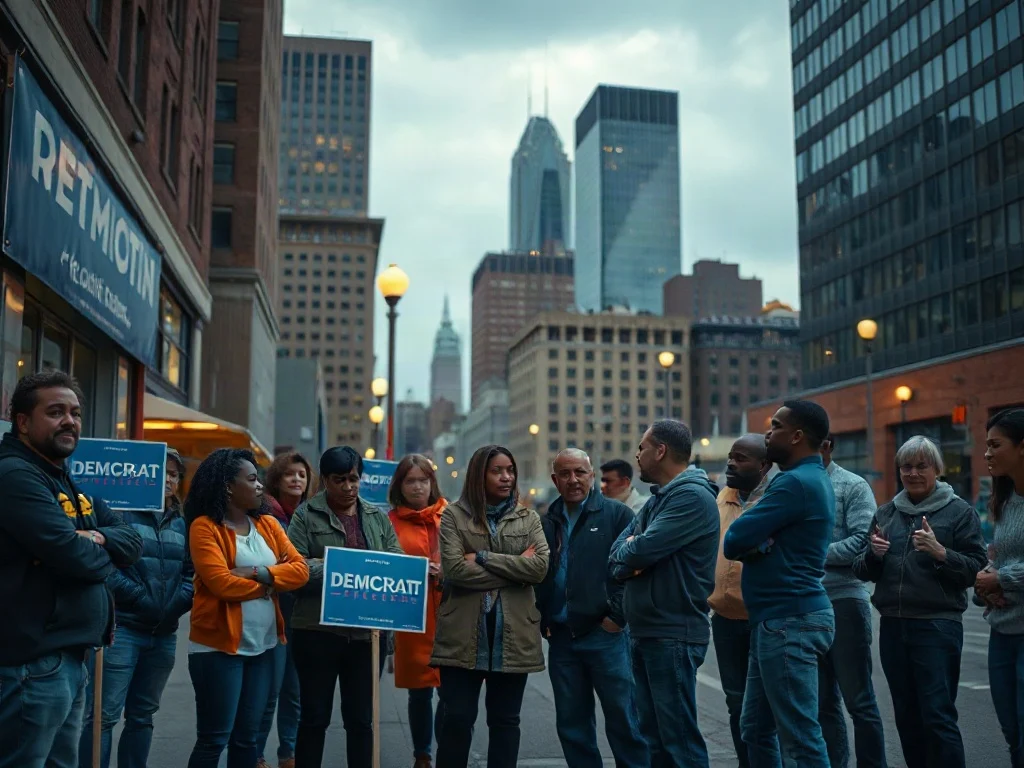
The Michigan Democratic Party divisions exposed days before the US midterms matter far beyond one state. A dispute involving a Michigan Democrat, which the BBC’s Nada Tawfik reported from Detroit, unsettled the party at the moment it most needed discipline. The public summary of that report does not itemize every detail of the quarrel, so this analysis does not claim to. It examines why a spat in this state, at this moment, carries such a high cost, and what it shows about the coalition Democrats are trying to hold together.
The thesis is simple. Late-campaign infighting is rarely about the surface issue. It usually exposes unresolved questions about coalition management: who the party speaks for, who it takes for granted, and who it can afford to lose.
Why Michigan Is Unusually Exposed to Party Infighting
Michigan is a textbook swing state in the Rust Belt. Margins here are thin, so small shifts in turnout matter. In the 2024 presidential election in Michigan, Donald Trump carried the state by roughly one and a half percentage points. Two years earlier, in the 2022 elections, Democrats under Gretchen Whitmer won the governorship comfortably and took full control of the state government for the first time in decades. The same state has produced both outcomes within a few years.
That volatility explains why a public quarrel is so costly. When the margin for error is a point or two, even a modest drop in enthusiasm among one bloc can decide a statewide race. A dispute that depresses turnout in a single city or community can therefore have statewide consequences.
The Detroit Factor
Detroit sits at the center of any Democratic path to victory in the state. According to the U.S. Census Bureau’s QuickFacts, the city has a population of roughly 630,000 and a majority African American electorate. Democrats do not need to win the city by a bigger margin so much as to turn out enough voters there. Turnout in Wayne County has long been one of the main variables in statewide results.
This is why a dispute playing out in Detroit, rather than in a suburban committee room, draws attention. It touches the part of the coalition the party can least afford to alienate.
The Fault Lines Beneath the Spat
Several structural tensions already run through Michigan’s Democratic coalition. Any one of them can turn a personal or procedural dispute into a wider crisis.
Foreign Policy and the Arab American Vote
The most visible fracture emerged during the 2024 cycle. Michigan has one of the largest concentrations of Arab Americans in the country, centered on Dearborn. Anger over the Biden administration’s approach to the Gaza war fed the Uncommitted National Movement. In the February 2024 Democratic primary, more than 100,000 Michigan voters chose “uncommitted” over Joe Biden, a share of roughly one in eight ballots.
That protest vote was a warning. It showed that a group the party had treated as a reliable constituency would withhold support when it felt ignored on a core issue. Elected officials such as Rashida Tlaib became symbols of the debate, which turned about how far a party should bend to a vocal bloc, not just about Gaza.
Establishment Versus Insurgent Energy
A second fault line separates party leaders, who prioritize electability and message discipline, from activists, who prioritize principle and accountability. Both sides have a case. Leaders argue that public dissent hands opponents free advertising material. Activists argue that suppressing dissent is exactly how parties lose trust.
The point worth stressing is that both claims can be true at once. The timing of a dispute determines which cost dominates. Days before an election, the electoral cost of visible conflict is at its highest, and the leverage of the dissenter is also at its peak. That is why late rebellions are so effective and so resented.
Independent and Hybrid Political Brands
Michigan politics also features figures who blur party lines. Mike Duggan, the Detroit mayor, built his career as a Democrat and later pursued office outside the party label. Such cases show that local brand loyalty in Detroit can sometimes outweigh national partisan identity, which weakens the party’s ability to enforce unity.
What Intra-Party Spats Actually Do to Elections
Political scientists generally find that visible party conflict can reduce enthusiasm and complicate persuasion, but the effect is not uniform. Three mechanisms are worth separating.
- Demobilization: Voters who feel the party has dismissed them may stay home rather than switch sides. This matters in a place like Detroit, where voter turnout is the decisive variable.
- Media amplification: A dispute that would be minor in a quiet month becomes national news in the final week, because journalists look for signs of weakness.
- Opponent exploitation: Rivals can recycle the quarrel as evidence of disorganization, whether or not the underlying issue is substantive.
Evidence on the size of these effects is mixed. Many voters decide on partisanship and economic conditions, not on internal squabbles. A reasonable reading is that infighting rarely changes outcomes alone but can tip a race that is already close, which describes Michigan well.
How Democrats Can Manage Late-Campaign Conflict
For campaign professionals, the practical lessons are specific, and they apply well beyond Michigan.
Best Practices
- Respond to the substance, not the personality. Answering a dissenter’s grievance directly defuses more than attacking the dissenter does.
- Keep surrogates local. In Detroit, a message from a trusted local figure carries more weight than one from a national strategist.
- Separate the grievance from the vote. Voters who disagree with a party on one issue can still be persuaded to turn out on others, if the party shows it is listening.
- Monitor early-vote data by precinct. Turnout shortfalls in specific areas are the earliest measurable sign that a dispute is causing damage.
Common Mistakes
- Treating a protest bloc as a messaging problem rather than a policy problem.
- Issuing a late, defensive statement that confirms the story instead of closing it.
- Assuming a loyal constituency will return automatically because the alternative is worse.
The last mistake is the most dangerous. The 2024 “uncommitted” vote showed that “the other side is worse” is a weaker argument than strategists assume when voters feel their core concern is being treated as an inconvenience.
Frequently Asked Questions
Why are Democrats divided in Michigan?
Divisions stem from several overlapping disagreements: foreign policy, particularly over Gaza; the balance between establishment strategy and grassroots demands; and competing local and national political brands. These tensions were visible in the 2024 primary and have not fully resolved.
Why does Michigan matter so much in the US midterm elections?
Michigan is a closely divided state with competitive statewide races and a significant role in the balance of the United States Congress. Narrow margins mean small turnout changes can alter results.
How important are Arab American voters in Michigan?
They are a concentrated and organized community, especially in and around Dearborn. In a state decided by very small margins, their votes can matter, and the 2024 primary showed they will use that leverage when they feel ignored.
Can a party dispute really change an election result?
Rarely on its own. Research and experience suggest the effect is greatest in close contests, where reduced enthusiasm in a key area can matter. It is better understood as a risk multiplier than as a decisive cause.
The Real Test Comes After the Ballots Are Counted
The most important insight is that the Detroit dispute is a symptom, not the disease. Michigan has become a laboratory for a national question: can the Democratic Party keep a coalition of Black voters in Detroit, Arab American voters in Dearborn, suburban moderates, and organized labor together when its members disagree on issues that cannot be split down the middle?
Watch three things next. First, whether turnout in Detroit and Dearborn diverges from the statewide pattern, which would give the clearest evidence of demobilization. Second, whether the party’s leadership treats the dispute as a one-off or as a prompt to restructure how it consults its constituencies. Third, how the next primary election cycle rewards or punishes those who broke ranks. If dissent proves electorally profitable, expect more of it and expect it earlier. The unresolved question is whether Democrats can build a mechanism for settling these arguments before the final week of a campaign, when every disagreement is already a headline. Reporting such as that on the BBC News site will show whether the party learned the lesson.
Frequently Asked Questions
Why does a dispute in Detroit matter more than one in a suburban committee?
Detroit anchors the Democratic path to victory in Michigan. With roughly 630,000 residents and a majority African American electorate, the city's turnout, along with Wayne County's, is a key variable. A quarrel there risks alienating the part of the coalition Democrats can least afford to lose.
How thin are the margins that make Michigan so vulnerable to infighting?
Donald Trump carried Michigan in 2024 by roughly one and a half percentage points, while Democrats won the governorship comfortably in 2022. With swings that sharp, a modest drop in enthusiasm among one bloc, or in one city, can decide a statewide race.
What was the Uncommitted movement and why is it relevant now?
In the February 2024 Democratic primary, more than 100,000 Michigan voters, about one in eight, chose "uncommitted" over Joe Biden, largely over the Gaza war. It showed that a constituency Democrats treated as reliable can withhold support, a tension that can resurface in any new dispute.
Does the article explain exactly what the Michigan Democrats were arguing about?
No. The article says the public summary of the BBC report by Nada Tawfik does not itemize every detail of the quarrel, so it does not claim to. Instead it analyzes why a spat at this moment is costly and what it reveals about coalition management.
Why are late-campaign rebellions both effective and resented?
Days before an election, the electoral cost of visible conflict is at its highest, and a dissenter's leverage peaks at the same time. Leaders see public dissent as free ammunition for opponents, while activists say suppressing it erodes trust, so both sides can be partly right.
Is late-campaign infighting usually about the issue that triggers it?
Rarely, according to the article's thesis. Surface disputes tend to expose unresolved questions about coalition management: who the party speaks for, who it takes for granted, and who it can afford to lose. Those structural tensions can turn a personal or procedural clash into a wider crisis.