
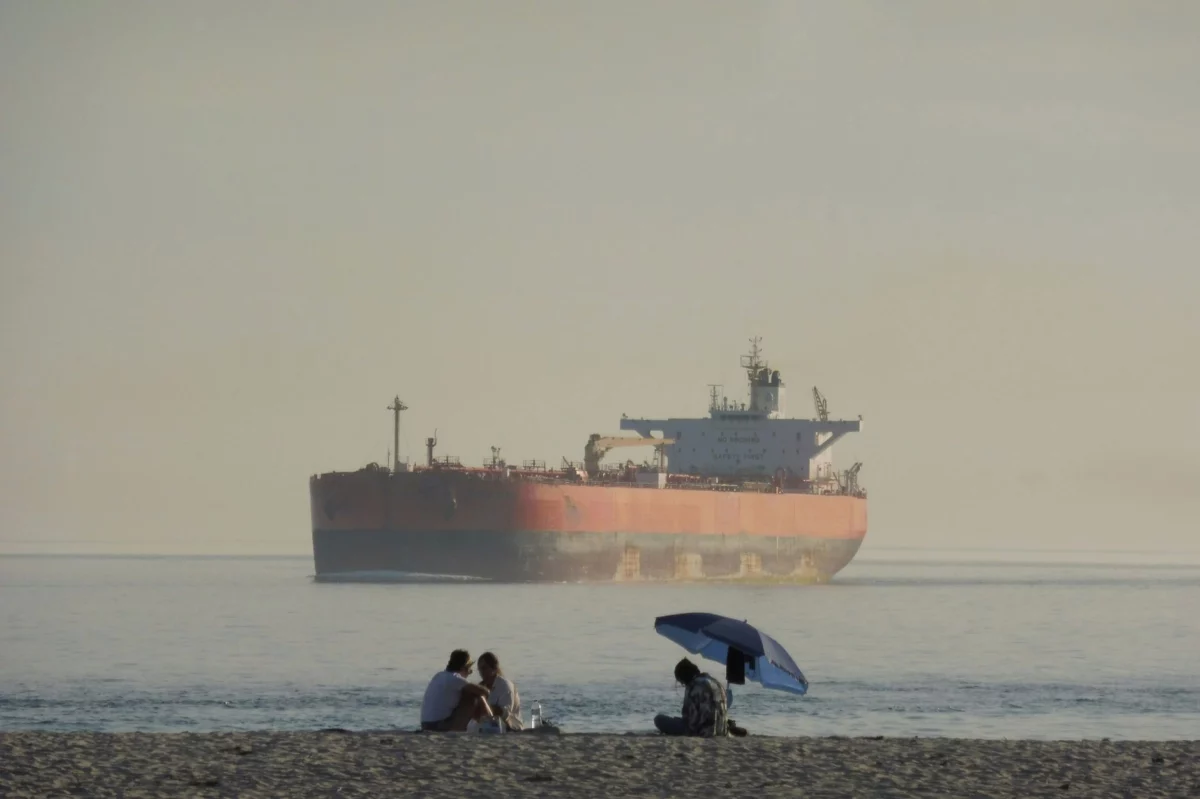
The US destruction of Iranian oil tankers, as described in a brief report stating that American forces bombed five vessels after an attack on the US Navy, would represent a potentially dangerous escalation in the long-running confrontation between Washington and Tehran. The US military reportedly released video that it says shows five Iranian crude oil tankers being destroyed. However, the limited information available does not independently establish the vessels’ identities, location, cargoes, crews, legal status, or connection to the preceding naval attack.
Those unanswered questions are not minor details. They determine whether the operation can be understood as an immediate act of self-defense, a broader retaliatory strike, an attack on military support vessels, or the destruction of civilian commercial property. They also shape the potential consequences for human life, maritime trade, energy markets, diplomacy, and the marine environment.
What Has Been Reported—and What Remains Unverified
The central claim is straightforward: the US military says its forces destroyed five Iranian crude oil tankers after its navy was attacked, and it has released video footage of the operation. Yet military video is evidence selected and presented by a party to the conflict. It may document explosions or damaged ships without conclusively proving ownership, cargo, crew status, operational purpose, or the complete sequence of events.
A rigorous assessment of the reported US attack on Iranian tankers would require several additional forms of evidence:
- Geolocated and time-verified original footage rather than edited extracts.
- Satellite imagery captured before and after the strike.
- Automatic Identification System records, while recognizing that signals can be disabled or manipulated.
- Vessel registration, ownership, insurance, and cargo documentation.
- Statements from Iran, ship operators, crew representatives, and independent maritime authorities.
- Information about casualties, survivors, fires, oil leakage, and salvage operations.
- A detailed US account of the naval attack that reportedly preceded the bombing.
Until such evidence is available, the most accurate formulation is that the United States says it destroyed the tankers. The number, ownership, and circumstances should remain attributed claims rather than independently verified facts.
Why Oil Tankers Carry Strategic Significance
A crude oil tanker is more than a cargo ship. It is a mobile component of national energy infrastructure, a high-value commercial asset, and a potential environmental hazard when loaded. Destroying one can simultaneously affect export income, shipping confidence, insurance costs, port operations, and regional security calculations.
This is especially sensitive in and around the Persian Gulf, where commercial shipping routes operate alongside heavily armed naval forces. If the incident occurred near the Strait of Hormuz, its strategic impact could extend far beyond the five reported vessels. The narrow waterway connects major Gulf oil and gas producers with global markets, making any sustained insecurity there an international concern.
The Historical Shadow of the Tanker War
The modern situation is not identical, and historical analogies should not be treated as predictions. Today’s surveillance systems, precision weapons, drones, sanctions regimes, and global information environment differ sharply from those of the 1980s. Nevertheless, the central danger remains recognizable: once commercial shipping becomes a battlefield, distinguishing economic pressure from military action becomes increasingly difficult.
How the Naval Attack Changes the Legal Analysis
The strongest potential US justification would be self-defense following an armed attack. Under Article 51 of the United Nations Charter, states retain an inherent right of individual or collective self-defense if an armed attack occurs. That right is not unlimited. The response is generally assessed through the principles of necessity and proportionality.
Necessity asks whether military force was required to stop, repel, or prevent a continuing or imminent attack. Proportionality asks whether the scale and character of the response were reasonably connected to that defensive objective. It does not require a mechanically equal exchange of damage, but it does prohibit unlimited retaliation.
Were the Tankers Military Objectives?
The legal status of the tankers is pivotal. Civilian objects are protected from direct attack unless, and for such time as, they make an effective contribution to military action and their destruction offers a definite military advantage. This distinction lies at the heart of international humanitarian law.
If the vessels were directly supporting an attack—for example, by refueling combat units, transporting military equipment, or serving an operational military function—the United States could argue that they had become lawful military objectives. If they were ordinary commercial tankers carrying civilian crude oil, destroying them would raise far more serious questions.
Ownership alone does not resolve the issue. A ship does not automatically become a lawful target merely because it is Iranian, state-owned, sanctioned, or economically important. Conversely, a commercially registered vessel may lose civilian protection if it is being used directly for military action. Reliable information about each vessel’s conduct is therefore essential.
Maritime Law and the Location of the Strike
Location also matters. Territorial seas, international straits, exclusive economic zones, and the high seas carry different legal considerations under the broader framework associated with the United Nations Convention on the Law of the Sea. The United States recognizes many convention provisions as customary international law even though it has not ratified the treaty.
A strike in international waters would not be legally unconstrained. A strike inside another state’s territorial waters could create additional sovereignty issues. Without a confirmed location, confident legal conclusions would be premature.
Military Logic Behind Targeting Tankers
From a strategic perspective, attacking tankers could be intended to achieve several objectives. US planners might seek to eliminate vessels allegedly involved in hostile operations, reduce logistical support for Iranian naval forces, demonstrate the cost of attacking American ships, or deter further action.
Iran operates conventional naval forces as well as the Islamic Revolutionary Guard Corps Navy, which is associated with asymmetric maritime tactics, smaller attack craft, missiles, mines, and drones. The United States Navy, by contrast, possesses extensive surveillance, airpower, surface warfare, and long-range strike capabilities. This imbalance can encourage each side to operate in a different way: Iran may emphasize dispersed and deniable methods, while the United States relies on superior detection and precision engagement.
Yet destroying five large vessels would also carry strategic risks. It could encourage Iranian retaliation against US bases, allied infrastructure, commercial ships, or regional partners. It might strengthen hard-line political arguments inside Iran and reduce the space for de-escalation. A tactically successful operation can therefore produce strategically destabilizing consequences.
The decisive question is not simply whether the United States could destroy the vessels, but whether doing so makes American forces, commercial shipping, and the wider region safer after the immediate battle ends.
Economic Consequences for Oil and Shipping
An isolated strike does not automatically create a global energy crisis. Oil prices respond to expected future supply, spare production capacity, inventories, shipping access, sanctions, and the probability of prolonged disruption. Markets would therefore focus less on dramatic footage than on whether the incident signals a sustained campaign.
The most immediate commercial effects could appear in maritime insurance and freight rates. War-risk premiums may rise when underwriters perceive a greater chance of vessel damage, detention, crew injury, or route closure. Shipowners may delay departures, demand higher compensation, or avoid particular waters. These responses can increase transport costs even when physical oil supplies continue to move.
Traders would monitor:
- Any restrictions affecting passage through the Strait of Hormuz.
- Warnings issued by naval or maritime security authorities.
- Changes in tanker movements, port calls, and loading schedules.
- Retaliatory threats against regional energy infrastructure.
- Insurance exclusions and war-risk premium adjustments.
- Statements from major oil-producing states and the Organization of the Petroleum Exporting Countries.
The key distinction is between a temporary risk premium and an enduring supply shock. The former reflects fear; the latter requires barrels to remain unavailable or routes to become materially constrained.
The Environmental and Human Stakes
If the tankers were loaded, their destruction could create substantial marine pollution. The severity would depend on vessel size, cargo volume, hull damage, fire behavior, weather, currents, and the speed of containment. Burning oil creates atmospheric pollution, while spilled crude can threaten coastal habitats, fisheries, desalination facilities, and wildlife.
No credible estimate of a spill can be made from the short report alone. Images of flames do not reveal how much cargo escaped, whether tanks had already been emptied, or whether containment operations began. The International Maritime Organization and relevant coastal authorities would be important sources for verified navigation warnings and pollution-response information.
The human dimension is equally important. Tanker crews are frequently multinational civilian workforces. Their presence would require precautions, warnings where feasible, and rescue efforts for survivors consistent with operational conditions. Casualty information should be treated cautiously until supported by official records, operators, or credible independent reporting.
Reading Military Video Without Mistaking It for Full Proof
Released strike footage can help establish that an engagement occurred, but it rarely provides a complete evidentiary record. Edited clips may omit the events preceding an attack, unsuccessful engagements, civilian activity outside the camera frame, or uncertainty in target identification.
Analysts seeking to verify the footage should examine coastlines, cloud patterns, sun angles, ship structures, wake direction, weapon-camera symbology, shadows, and visible damage. They should compare frames with satellite imagery and vessel databases. Original file metadata would be valuable, although public platforms often remove it.
Readers should also distinguish among three separate claims: that five ships were struck, that all five were destroyed, and that all five were Iranian crude tankers. Each proposition requires its own supporting evidence. A burning vessel may remain afloat; an Iranian-linked ship may sail under another flag; and a tanker-shaped vessel may not be carrying crude at the time.
Reliable Sources to Monitor
Because early conflict reporting is vulnerable to error, responsible analysis should rely on multiple independent channels. Official US statements can be checked through the US Department of Defense and US Central Command. These are authoritative sources for the American position, but they remain participants’ accounts rather than independent verification.
Iranian government and military statements should be evaluated under the same principle. Vessel operators, flag registries, port authorities, satellite-imagery providers, maritime security notices, established news organizations, and environmental agencies can supply corroborating evidence. Claims repeated across websites are not necessarily independent if they all originate from the same military statement or video.
Frequently Asked Questions
Did the US confirm that it destroyed five Iranian oil tankers?
The report says the US military released video and described the vessels as five Iranian crude oil tankers. Independent confirmation of their identities, ownership, cargoes, and condition is not provided in the source material.
Why would oil tankers be targeted after a naval attack?
A tanker could potentially be targeted if it were directly contributing to military action, such as providing operational logistics. A purely civilian commercial vessel would ordinarily be protected from direct attack. The legal answer depends on facts that have not yet been established publicly.
Could the attack increase oil prices?
Yes, particularly through a geopolitical risk premium, but the duration and scale would depend on whether shipping routes or production are disrupted. A single incident may have a limited effect; sustained conflict around critical export routes could have much wider consequences.
Does released video prove the US account?
Video may verify parts of the event, but it does not necessarily prove ship ownership, cargo, military use, location, or the preceding attack. Geolocation, satellite imagery, vessel records, and independent reporting are needed.
Could this lead to a wider US–Iran conflict?
It could increase that risk. The history of Iran–United States relations includes repeated cycles of pressure, indirect confrontation, and limited retaliation. Whether this incident widens the conflict depends on subsequent military decisions, diplomatic communication, and the availability of credible off-ramps.
The Next Signals Will Matter More Than the First Images
The most important insight is that the strategic meaning of the reported strike cannot be read from explosions alone. It depends on what the vessels were doing, who was aboard, where the attack occurred, whether the preceding naval assault was continuing, and how both governments act next.
Watch for verified vessel identities, casualty reports, navigation warnings, pollution assessments, satellite evidence, and precise legal explanations from Washington. Equally important will be Iran’s choice of response. A calibrated protest or limited action could preserve space for containment; attacks on commercial shipping, regional infrastructure, or US forces could push events into a self-reinforcing cycle.
The central unanswered question is whether the bombing was designed to end an immediate threat or inaugurate a broader campaign against Iranian maritime assets. If neither side creates a credible route back from retaliation, the gravest danger may not be the destruction already visible, but the next encounter produced by uncertainty, anger, and forces operating within striking distance of one another.
SEO Data
Primary Focus Keyphrase: US destruction of Iranian oil tankers
Related Keyphrase 2: US attack on Iranian tankers
Related Keyphrase 3: impact of tanker attacks on oil prices
Related Keyphrase 4: why did the US attack Iranian oil tankers
Related Keyphrase 5: Persian Gulf maritime security
Primary Keyphrase Synonyms: US strike on Iranian tankers, American attack on Iranian oil ships, bombing of Iranian crude tankers, destruction of Iran-linked tankers, US tanker strike
SEO Title: US Destruction of Iranian Oil Tankers: What the Claim Means
Meta Description: The US destruction of Iranian oil tankers could reshape Gulf security, oil markets and maritime law. Examine the evidence, risks and implications.
URL Slug: us-destruction-iranian-oil-tankers
Image Filename: us-destruction-iranian-oil-tankers.jpg
Image ALT Text: Distant oil tanker burning at sea as a naval vessel monitors the maritime security incident
Image Title: Oil Tanker Strike and Persian Gulf Maritime Tensions
Image Caption: A conceptual visualization of a tanker strike at sea amid rising US–Iran maritime tensions.
Search Intent: News/current event and informational
Frequently Asked Questions
Why is US military video insufficient to verify that five Iranian tankers were destroyed?
Military footage can confirm that explosions occurred, but not necessarily when or where they happened, which vessels were struck, who owned them, what they carried, or whether edited clips omit crucial context. Reliable verification would require original metadata, geolocation, satellite imagery, vessel records, and testimony from independent maritime authorities or crew representatives.
Would destroying the tankers qualify as lawful self-defense under international law?
That would depend on facts not yet established, including the nature and timing of the preceding naval attack, whether the tankers posed an ongoing threat, and whether the response was necessary and proportionate. If the vessels were civilian commercial property without a direct operational role, the legal justification could be substantially more difficult to establish.
Can Automatic Identification System data confirm which ships were targeted?
AIS records could help reconstruct vessel names, routes, speeds, and reported positions, but they are not conclusive by themselves. Transponders may be disabled, spoofed, or transmit inaccurate information, particularly during conflict. Investigators would need to compare AIS histories with satellite images, port records, ownership documents, radar data, and verified footage.
Could the loss of five tankers significantly affect global oil prices?
The direct loss of five vessels may matter less than the broader security signal. Prices could rise if traders expect further attacks, shipping delays, higher insurance premiums, or disruption near the Strait of Hormuz. The market impact would depend on the tankers' cargoes, location, export capacity, and whether the incident develops into a sustained regional confrontation.
What environmental consequences could result from bombing loaded crude oil tankers?
If the vessels were carrying oil, explosions could cause major spills, prolonged fires, toxic smoke, and damage to fisheries and coastal ecosystems. The severity would depend on cargo volume, hull damage, currents, weather, and response time. Salvage operations could also be dangerous if wrecks contain unexploded ordnance, fuel, or structurally unstable compartments.