
The reported US-Iran conflict escalation has opened two potentially explosive fronts: attacks involving Iranian tankers and an alleged Islamic Revolutionary Guard Corps strike on a US base in Jordan. A warning attributed to the IRGC also urges tanker crews in Kuwait and Bahrain to leave their vessels, raising the prospect that commercial shipping could become entangled in direct military retaliation. Yet the initial report provides no vessel names, attack coordinates, casualty figures, imagery, or independently verified official statements. Those omissions matter. In a fast-moving crisis, understanding what remains unconfirmed is just as important as interpreting what the claims could mean.
If corroborated, the combination of tanker attacks, threats against shipping, and action near a US installation would represent a dangerous widening of confrontation. It could expose civilian mariners, disrupt energy markets, raise marine insurance costs, and create conditions in which a misunderstood radar contact or misidentified vessel triggers further retaliation. This analysis examines the reported events without treating preliminary claims as settled facts.
Verification note: The source excerpt describes developing events but does not establish when or where the tanker strikes occurred, which ships were involved, what damage resulted, or whether the Jordan attack caused casualties. Readers should monitor official maritime alerts, military statements, satellite evidence, and reporting from multiple independent news organizations.
What the Iran Tanker Attack Report Claims
The report contains three linked claims. First, US forces allegedly struck Iranian tankers. Second, Iran’s Islamic Revolutionary Guard Corps, or IRGC, reportedly attacked a US base in Jordan. Third, the IRGC allegedly warned crews to leave tankers in Kuwait and Bahrain because ships could be targeted in retaliation.
These claims are strategically connected but must be verified separately. Evidence supporting an attack on one vessel does not automatically authenticate a warning distributed through social media, nor does it prove responsibility for an incident at a distant military installation. Credible confirmation would normally include named vessels, flag states, ownership records, geolocated imagery, port notices, crew accounts, or statements from governments and military commands.
Readers should distinguish between Iranian-owned ships, Iranian-flagged ships, sanctioned vessels carrying Iranian cargo, and tankers merely sailing to or from Iranian ports. Those categories carry different legal and diplomatic implications. An oil tanker may also be owned in one jurisdiction, managed in another, registered under a third country’s flag, insured elsewhere, and staffed by a multinational crew. A strike can therefore affect far more parties than the states conducting hostilities.
Why Kuwait, Bahrain, and Jordan Matter
A densely connected maritime theatre
Kuwait and Bahrain sit within the Persian Gulf, where energy infrastructure, naval facilities, ports, fishing grounds, and crowded commercial routes exist in close proximity. Bahrain also hosts the headquarters of the US Fifth Fleet. Kuwait is a major oil exporter and a longstanding US security partner. Threats involving tankers near either country can consequently affect military planning, port operations, and global energy expectations even before any physical attack occurs.
Much of the Gulf’s seaborne oil and petroleum products ultimately passes through or near the Strait of Hormuz. The waterway is narrow enough to make route disruption consequential, but it is not an empty corridor that can be assessed solely through military calculations. Merchant crews, pilots, tug operators, offshore workers, and coastal communities all share the same tense maritime space.
Jordan as a regional security hub
Jordan borders Syria and Iraq and has long cooperated with the United States on regional security. A confirmed IRGC attack on a US base there would be especially consequential because it could indicate direct Iranian action rather than an operation conducted by an aligned armed group. Attribution is therefore central. Weapons analysis may suggest origin or technical lineage, but that alone does not establish who selected the target, issued the order, or launched the weapon.
The distinction is politically decisive. The history of Iran–United States relations is marked by direct confrontations, covert operations, sanctions, proxy warfare, and recurring efforts to avoid an unrestricted war. Governments may respond very differently to an attack attributed directly to the IRGC than to one claimed by a militia with varying levels of Iranian support.
How to Verify Claims of US Strikes on Iranian Tankers
In breaking-war coverage, dramatic language often moves faster than physical evidence. A rigorous verification process should answer five basic questions:
- Which vessels were involved? Confirm names, International Maritime Organization numbers, flags, owners, managers, cargoes, and recent port calls.
- Where did the incident occur? Territorial waters, an exclusive economic zone, a port anchorage, and the high seas create different legal and operational contexts.
- What caused the damage? Investigators may examine fragments, blast patterns, hull penetration, fire damage, electronic records, and imagery.
- Who has claimed responsibility? An anonymous channel, partisan broadcaster, official spokesperson, and signed military communiqué do not carry equal evidentiary weight.
- Is there independent corroboration? Satellite photographs, distress transmissions, port restrictions, insurance notices, and multiple eyewitnesses can strengthen or contradict official narratives.
Authoritative channels worth checking include the US Central Command, the United Kingdom Maritime Trade Operations service, the US Maritime Administration’s Maritime Security Communications with Industry portal, flag-state advisories, and coastal authorities in the states concerned. None should be considered infallible, but comparing independent sources reduces dependence on a single combatant’s account.
Automatic Identification System data can help reconstruct a ship’s route, although it has limitations. Signals may be delayed, switched off, spoofed, or absent because of equipment and reception problems. A blank tracking screen is not proof that a ship was destroyed, seized, or engaged in covert activity.
The Legal Thresholds Behind Tanker Attacks
Commercial tankers are civilian objects unless their use, purpose, or nature turns them into military objectives under the applicable law. Even when a vessel qualifies as a military objective, attackers remain bound by rules concerning distinction, proportionality, and precautions. Crew safety cannot be dismissed merely because a ship carries strategically valuable fuel.
The location of a strike is equally important. The legal framework may involve the UN Charter, the law of armed conflict, domestic authorizations, neutral-state rights, and the international law of the sea. A belligerent’s assertion of self-defence does not end the analysis; the necessity and proportionality of force remain disputed in many real-world cases.
A warning to abandon ships does not automatically make a subsequent attack lawful. Its practical value depends on whether crews receive it, have sufficient time, possess safe evacuation options, and understand which ships or areas are threatened. Vague warnings can deepen panic without meaningfully protecting civilian life.
Military Escalation and the Risk of Miscalculation
The most alarming feature of a tanker confrontation is not only the initial exchange. It is the compressed decision-making that follows. Naval commanders may have minutes to classify approaching drones or boats. Merchant captains may receive contradictory instructions. Governments may feel compelled to respond publicly before intelligence agencies complete attribution.
History illustrates the danger. During the Iran–Iraq War, attacks on commercial shipping became known as the Tanker War. In 1988, the United States and Iran fought Operation Praying Mantis after a US frigate struck a mine. Historical comparison does not prove that today’s reported events will follow the same path, but it demonstrates how maritime incidents can move rapidly from limited coercion to open combat.
There are also competing strategic interpretations. One view holds that forceful retaliation restores deterrence by showing that attacks carry unacceptable costs. Another warns that every retaliatory rung creates new political pressure for the opponent to answer. Both dynamics can operate simultaneously: an action may deter one category of attack while provoking another in a less defended location.
Consequences for Oil, Shipping, and Civilian Crews
Energy prices may react before supplies are lost
Oil markets do not wait for a confirmed physical shortage. Prices can incorporate expectations about delayed cargoes, damaged terminals, military escorts, sanctions enforcement, and possible closure of shipping lanes. The magnitude and duration of any movement depend on whether attacks continue, whether ports remain functional, and whether exporters can use alternative routes.
Claims about immediate global shortages should nevertheless be treated cautiously. A single damaged tanker does not necessarily remove its entire cargo from the market, and strategic inventories or spare production capacity may soften temporary disruption. Conversely, repeated incidents can create cumulative delays even when physical damage remains limited.
Insurance and crewing pressures
Shipowners operating in a declared high-risk area may face revised war-risk premiums, stricter contractual conditions, rerouting demands, or difficulties securing crews. Charter-party disputes can emerge over who bears extra costs and whether a port is legally or practically unsafe. Seafarers may also confront the most painful decision of all: continue working through a conflict zone or risk income and contractual penalties by refusing.
That human dimension deserves emphasis. Tankers are not abstract symbols on a strategic map. They are workplaces filled with engineers, deck officers, cooks, technicians, and cadets who may have no connection to the governments exchanging fire.
Practical Guidance for Maritime Operators
Companies with vessels in the region should respond through disciplined risk management rather than improvised reaction:
- Verify warnings through flag states, port authorities, naval coordination centres, and company security officers.
- Review voyage-specific threat assessments instead of applying one regional risk label to every port and route.
- Maintain reliable communications while preparing alternatives if satellite or radio systems are disrupted.
- Confirm emergency mustering, firefighting readiness, medical supplies, and procedures for assisting injured personnel.
- Reduce unnecessary deck exposure in areas where drones, missiles, mines, or small-boat attacks are considered credible threats.
- Preserve voyage data, communications, photographs, and incident records for investigators without compromising crew safety.
- Coordinate changes with charterers, insurers, flag administrations, and coastal authorities before altering a voyage plan.
- Provide crews with clear, multilingual instructions and access to mental-health support after threatening incidents.
Operators should not rely on public vessel-tracking websites as their sole source of situational awareness. Nor should they circulate screenshots, audio clips, or alleged military warnings without documenting provenance. False alerts can divert vessels toward other hazards and burden emergency communication networks.
What Governments and Newsrooms Must Clarify
The immediate information gaps are substantial. Authorities and journalists should establish the tanker identities, precise location, time of attack, weapons used, crew status, pollution risk, and chain of command behind each reported operation. They should also determine whether the alleged IRGC notice was transmitted through an authenticated official channel and whether Kuwait or Bahrain ordered any evacuation or port restriction.
For the Jordan incident, essential questions include which installation was targeted, whether the weapon crossed another state’s territory, what defensive systems were activated, and whether US or Jordanian personnel were harmed. Reporting should avoid collapsing three distinct concepts—technical Iranian origin, Iranian logistical support, and direct IRGC operational control—into a single unsupported assertion.
Frequently Asked Questions
Has the United States confirmed attacks on Iranian tankers?
The supplied report does not include a verifiable US statement, vessel identification, or supporting evidence. Confirmation should come from named official sources and independent maritime reporting rather than the headline alone.
Did the IRGC directly attack a US base in Jordan?
That is the report’s claim, but direct responsibility requires corroboration. Investigators must separate weapon provenance from the identity of the force that planned and executed the attack.
Why would tanker crews in Kuwait and Bahrain be warned?
Both countries are important Gulf energy and security centres. A warning could be intended to protect crews, signal retaliatory intent, create economic pressure, or spread uncertainty. Its authenticity and exact wording are therefore crucial.
Could Iran close the Strait of Hormuz?
Iran can threaten and disrupt navigation using several military tools, but a complete, sustained closure would be an enormous operation with severe consequences for regional exporters, including Iran itself. Disruption, delays, and higher risk premiums may be more plausible than a perfectly sealed waterway.
What should readers monitor next?
Watch for named ships, geolocated imagery, navigation warnings, port closures, verified casualty reports, pollution notices, official military statements, and evidence of additional force deployments. Agreement among independent sources is more meaningful than the repetition of one unattributed claim.
The Next Decision May Matter More Than the First Strike
The defining question is no longer simply whether one tanker or one base was attacked. It is whether leaders can preserve a boundary between signalling and uncontrolled escalation. Maritime warfare is particularly unforgiving because civilian commerce, military logistics, and national prestige move through the same narrow waters.
Over the coming days, the strongest indicators will be operational rather than rhetorical: whether tankers divert, whether ports impose restrictions, whether naval escorts increase, whether verified attacks continue, and whether Washington and Tehran communicate limits through public or private channels. If the initial claims are confirmed and retaliation expands to civilian shipping, the crisis could reshape Gulf security and marine insurance long after the immediate exchange ends. If restraint follows, it may reveal that even bitter adversaries still recognize the catastrophic cost of turning a crowded commercial sea into an open battlefield.
SEO Data
Primary Focus Keyphrase: US-Iran conflict escalation
Related Keyphrase 2: US strikes Iranian tankers
Related Keyphrase 3: IRGC tanker warning in Kuwait and Bahrain
Related Keyphrase 4: Did Iran attack a US base in Jordan?
Related Keyphrase 5: Persian Gulf shipping security
Primary Keyphrase Synonyms: US-Iran military escalation, Iran-US confrontation, rising US-Iran tensions, Gulf conflict escalation, American-Iranian hostilities
SEO Title: US-Iran Conflict Escalation: Tankers and Jordan Attack
Meta Description: Examine the US-Iran conflict escalation, tanker threats, Jordan base claims, verification gaps, oil risks, and critical developments to watch.
URL Slug: us-iran-conflict-escalation
Image Filename: us-iran-conflict-escalation-tankers-gulf.jpg
Image ALT Text: Oil tankers crossing the Persian Gulf as military ships patrol beneath a smoke-filled horizon
Image Title: Tanker Security During US-Iran Conflict Escalation
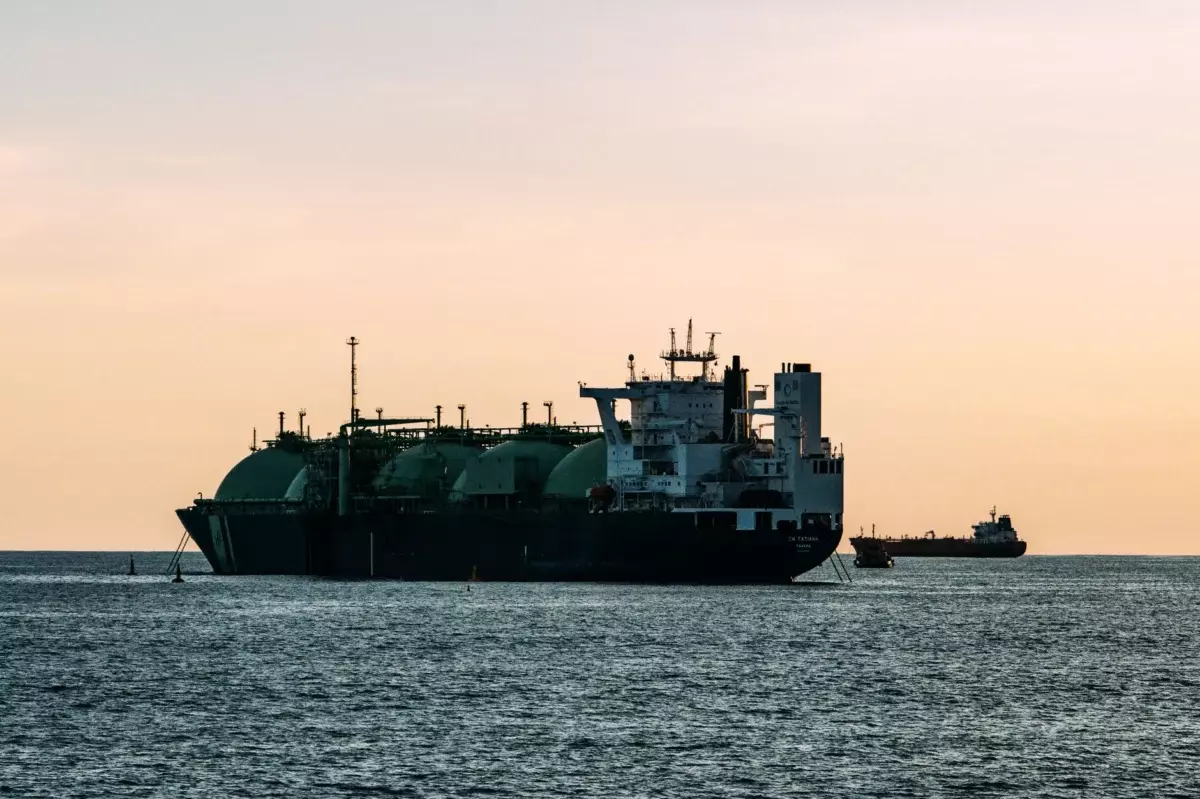
Image Caption: Tanker threats in the Persian Gulf could place civilian crews, energy supplies, and regional security under intense pressure.
Search Intent: News/current event with informational intent
Frequently Asked Questions
What evidence would confirm the reported tanker attacks and IRGC warning?
Reliable confirmation would include named vessels, coordinates, timestamps, damage assessments, crew testimony, port notices, geolocated photographs or satellite imagery, and statements from relevant governments or military commands. Maritime security alerts and reporting from several independent news organizations can provide additional corroboration. A social media post or anonymous claim alone does not establish that an attack or warning is authentic.
Why does it matter whether a tanker is Iranian-owned, Iranian-flagged, or merely carrying Iranian oil?
Each category creates different legal and diplomatic consequences. A vessel may be owned, registered, managed, insured, and crewed across several jurisdictions. Striking an Iranian-flagged ship differs from targeting a foreign vessel carrying Iranian cargo, potentially involving neutral governments, multinational crews, insurers, port authorities, and commercial companies that are not direct parties to the conflict.
Can an unverified threat against tankers disrupt shipping even if no attack occurs?
Yes. Shipowners may delay departures, change routes, restrict crew movements, or avoid certain ports as a precaution. Insurers can raise war-risk premiums, while ports and naval forces may increase security measures. These responses can slow cargo movements and influence energy prices before any physical damage occurs, especially in the congested Persian Gulf and near the Strait of Hormuz.
Why would an attack on a US base in Jordan represent a significant escalation?
Jordan is a close US security partner positioned beside Syria and Iraq, where regional military networks and armed groups operate. A confirmed IRGC-directed strike would suggest a broader confrontation extending beyond maritime incidents. Its significance would depend on the target, casualties, weapons used, attribution evidence, and whether Washington considered the action directly authorized by Iran rather than conducted by an aligned group.
What should commercial tanker crews do when warnings are circulating but remain unverified?
Crews should follow instructions from their vessel’s master, company security officer, flag state, port authority, and recognized maritime security agencies. They should maintain navigational awareness, review emergency procedures, document suspicious communications, and avoid independently acting on unauthenticated messages. Decisions to leave a vessel or port require coordination because an unnecessary evacuation can create additional safety and operational risks.
Could these reports lead to closure of the Strait of Hormuz?
The reports alone do not establish that a closure is imminent. However, confirmed attacks, mines, seizures, or sustained military operations could reduce traffic or prompt temporary restrictions. Even without a formal closure, ship diversions, naval warnings, higher insurance costs, and cautious port operations could constrain flows through the strait and affect global oil and petroleum-product markets.