
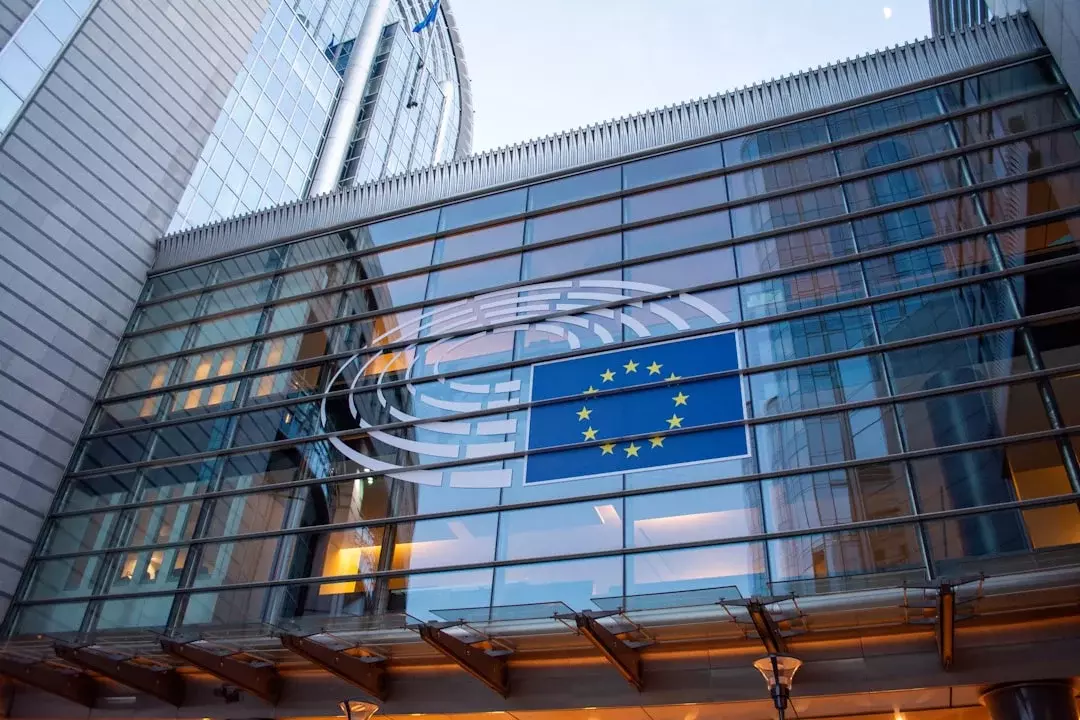
EU sanctions enforcement is moving from a technical policy issue to a test of sovereignty, intelligence-sharing, and prosecutorial nerve. As Brussels searches for sharper tools to stop companies and intermediaries from helping Moscow evade restrictions, Kaja Kallas has suggested a bold shift: let the European Public Prosecutor’s Office handle sanctions-busting cases. That would not just add another rule to the books; it could reshape how the European Union turns policy into pressure, especially amid the Russo-Ukrainian War and the continuing effort to choke off support for sanctions against Russia.
Why EU sanctions enforcement keeps hitting a wall
Sanctions are powerful on paper but messy in practice. The EU can legislate fast, yet enforcement often depends on national prosecutors, customs officials, financial intelligence units, and police forces that do not always work from the same playbook. The Council of the European Union’s sanctions framework sets the political line, but the actual chase is fragmented. That is why an allegedly simple transaction can become a maze of differing thresholds, evidentiary standards, and political appetites.
In a sanctions regime, the gap between a rule and a remedy is where the real damage happens.
The EU already showed how serious it is by adopting its 21st package of sanctions in July, tightening pressure on financial services, oil and gas, and channels linked to cryptocurrency exchanges. But the sharper the restrictions become, the more creative the evasion can get.
| Current model | Proposed EPPO model |
|---|---|
| National prosecutors handle sanctions breaches differently across capitals. | A single cross-border body could investigate cases with EU-wide reach. |
| Evidence can be lost between borders. | Case-building can follow funds, intermediaries, and shipping routes faster. |
| Outcomes vary widely. | More consistent deterrence, but also greater political sensitivity. |
How sanctions circumvention works in practice
Sanctions circumvention rarely looks dramatic. It is usually bureaucratic, layered, and boring enough to hide in plain sight: a shell corporation in one jurisdiction, a re-export route through a third country, a false end user, an insurance tweak, or a payment moved through a lightly supervised cryptocurrency exchange. In the physical economy, exporters may ship dual-use goods under a clean description while the real value sits in the components that can support the Kremlin’s military-industrial base. That is why export control specialists care as much about invoices and customs codes as they do about missiles and drones.
- Trade in dual-use parts that can be repurposed for military use.
- Use of intermediaries and front companies to obscure ownership.
- Transshipment of sensitive goods through secondary hubs.
- Payments routed through opaque financial networks.
- Revenue streams linked to oil and gas industry assets or logistics.
- Freight moved through ship transport corridors and port brokers that hide ultimate destinations.
Why EPPO is being considered
The appeal of the EPPO is obvious to anyone frustrated by fragmentation. The agency was created to investigate serious cross-border crime such as money laundering, corruption, and fraud, so its DNA is already built around tracing money across borders. If sanctions evasion were added to that remit, prosecutors could pursue networks rather than isolated transactions. That matters because sanctions busting is often an ecosystem crime, not a single bad act.
Still, expansion would not be automatic. Any major shift would have to move through the European Commission, the European Parliament, and the Council of the European Union, while respecting European Union law. EPPO is based in Luxembourg, but its legitimacy depends on what member states are willing to delegate. That is the political fault line: the EU wants faster enforcement, yet capitals guard prosecutorial power jealously.
Where the legal friction lies
Some countries treat sanctions breaches as administrative infractions, others as criminal offenses. Some have well-staffed financial crime units; others do not. And because sanctions touch foreign policy as much as criminal justice, the question is not merely legal but constitutional. The more centralized enforcement becomes, the more important it is to preserve due process, avoid political prosecutions, and prove intent rather than just paperwork errors.
What businesses should do now
For companies, this debate is not abstract. A stronger EPPO mandate would raise the odds that weak controls become visible faster and carry cross-border consequences.
- Refresh sanctions screening against official EU lists and the EPPO investigative posture.
- Map beneficial ownership, counterparties, shipping intermediaries, and payment routes end to end.
- Document end-use checks for dual-use goods and sensitive components.
- Review contracts for sanctions warranties, audit rights, and termination clauses.
- Train finance, logistics, and sales teams to flag red signals early rather than after payment.
The best compliance programs do not simply say no; they know where the pressure points are and how the risk travels. That distinction is especially important for firms exposed to oil and gas industry trade, freight forwarding, or high-tech components.
FAQ: What readers are asking about sanctions enforcement
What is sanctions circumvention?
It is the act of helping a sanctioned person, company, or state side-step restrictions through intermediaries, fake paperwork, indirect payments, or re-routed goods.
Would EPPO replace national prosecutors?
Not necessarily. The more realistic model would be a shared remit, with EPPO taking cases that clearly cross borders or affect the EU as a whole.
Why is EU sanctions enforcement so difficult?
Because sanctions are decided collectively but enforced nationally, and that split creates uneven capacity, conflicting priorities, and legal gaps.
The next test for Brussels
Brussels now faces a defining choice: treat sanctions evasion as a niche compliance problem or as the organized, adaptive, revenue-driven offense that it has become. If the EU decides that the answer is the latter, then an expanded EPPO could become one of the bloc’s most consequential enforcement tools. If not, the same familiar pattern will continue: tougher packages, cleverer evasions, and a long race between policy design and criminal ingenuity. The unanswered question is not whether sanctions matter, but whether Europe is prepared to prosecute them with the same seriousness it brings to organized crime itself.
Frequently Asked Questions
Why is sanctions enforcement harder than passing the sanctions themselves?
Because the EU can agree on restrictions at the political level much faster than it can enforce them on the ground. Enforcement depends on national prosecutors, customs, police, and financial intelligence units, each using different procedures and priorities. That fragmentation creates gaps where evidence can disappear, cases can stall, or companies can exploit uneven national thresholds.
Would the EPPO automatically be able to prosecute sanctions-busting cases?
No. The EPPO would need its mandate expanded through EU-level political and legal processes. That would require agreement among institutions such as the European Commission, the European Parliament, and the Council of the EU, as well as member states willing to delegate more prosecutorial authority. It is a political choice, not an automatic upgrade.
Why would sanctions circumvention be treated as a cross-border crime rather than a local violation?
Because the conduct usually spans several jurisdictions. A company may be registered in one country, use a transshipment hub in another, pay through a third, and hide ownership through offshore structures. The harm is also EU-wide, since circumvention can undermine a common sanctions regime and allow restricted goods or money to keep reaching sanctioned networks.
What makes sanctions evasion so difficult to detect if it often looks routine?
It is designed to blend into ordinary trade and finance. The suspicious part may be buried in invoices, customs codes, beneficial ownership records, shipping routes, or payment chains. A shipment can appear legal on paper while the real issue lies in dual-use components, false end users, or intermediary firms that conceal the final destination.
Why are some governments cautious about giving the EPPO a bigger role?
Because prosecution is closely tied to national sovereignty. Many member states are reluctant to hand over control of sensitive criminal cases, especially those touching foreign policy, intelligence, or strategic trade. They may also worry about differing legal standards, potential political backlash, and whether a central body would respect national priorities in high-stakes cases.