
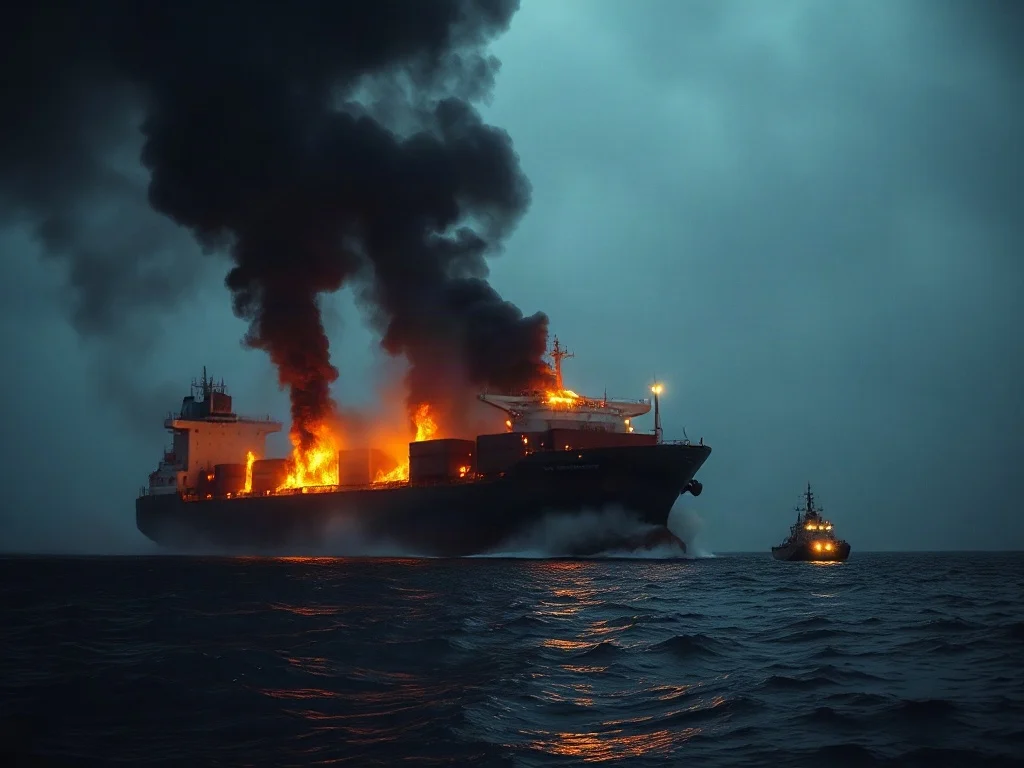
A Gulf of Finland ship attack has put one of Europe’s busiest and most politically sensitive waterways at the center of the war’s maritime dimension. A Russia-bound vessel was still on fire after being hit by a drone, and the Finnish Defence Forces said Ukraine was likely behind the strike. This analysis separates what has been reported from what remains unconfirmed, and explains why the location matters as much as the attack itself.
What is known about the Gulf of Finland ship attack
The core facts are limited. The vessel was heading to Russia, it was attacked by a drone in the Gulf of Finland, and it was still burning after the strike. Finnish military officials assessed that Ukraine was likely responsible. The word “likely” is important. It signals an assessment, not a formal attribution backed by public evidence.
Details such as the ship’s cargo, ownership, flag, damage and crew condition should be checked against official statements and maritime authorities before being treated as established. Early reporting on incidents at sea is often revised.
Why the Gulf of Finland matters
The gulf is a narrow arm of the Baltic Sea bordered by Finland, Estonia and Russia. It carries traffic to Saint Petersburg and to Russian terminals such as Primorsk and Ust-Luga. Since Finland joined NATO, the gulf has been bordered almost entirely by NATO members and Russia.
This geography makes any Ukraine drone attack on a ship there different from strikes in the Black Sea. A burning vessel near Finnish and Estonian waters raises immediate questions about search and rescue, pollution response and spillover risk for NATO states.
The role of drones in maritime warfare
Cheap unmanned aerial vehicles have changed how states project force during the Russian invasion of Ukraine. They let a country strike economic targets far from the front line at low cost. Commercial ships are slow, large and hard to defend, which makes them vulnerable.
Why a fire is hard to fight
Fires on merchant ships can persist because of fuel, cargo and limited access for firefighters. If the vessel carries oil or other hazardous goods, the environmental risk in a shallow, ecologically sensitive sea is serious. Whether that applies here has not been confirmed in the available reporting.
Legal and diplomatic questions
Attacks on merchant shipping raise issues under the United Nations Convention on the Law of the Sea and the principle of freedom of navigation. Where the incident occurred matters. It may have been within an exclusive economic zone, in territorial waters or in international waters, and each carries different obligations for coastal states.
Ukraine and its supporters can argue that vessels serving Russian trade help fund the war, particularly given sanctions intended to limit that revenue. Critics, including some of Ukraine’s partners, may worry that attacks near NATO coastlines increase accidents, pollution and escalation. Both views are plausible, and the legal assessment depends on facts not yet public.
Implications for Baltic Sea shipping security
For Baltic Sea shipping security, the main concern is precedent. The incident may lead to higher insurance premiums, more cautious routing and closer naval monitoring. It also fits into a wider pattern of hybrid warfare and maritime security concerns in the region. Those predictions are reasoned expectations, not confirmed outcomes.
What shipping professionals should monitor
- Official statements from Finnish, Estonian and Russian authorities on the ship’s location and condition.
- Notices from the International Maritime Organization and regional coastal authorities.
- Changes in war-risk insurance terms for Baltic routes.
- Evidence supporting the Finnish assessment of responsibility.
Frequently asked questions
Who attacked the ship in the Gulf of Finland?
The Finnish Defence Forces said Ukraine was likely behind the drone attack. This is an assessment, and Ukraine’s official position should be checked in primary statements.
Is the Russia-bound ship still on fire?
According to the report, the vessel was still burning after the attack. Conditions at sea change quickly, so follow official updates.
Does this affect Finland directly?
Possibly. The incident happened in a waterway Finland shares, so Finnish authorities may face rescue, environmental and security responsibilities. The extent of any such role is not detailed in the available reporting. The Finnish Defence Forces publish official information.
The question the burning ship leaves open
The most important insight is that the war’s economic front is moving closer to NATO’s own shores. A single burning vessel is a tactical event, but its location turns it into a test of how allies respond when Ukraine’s operations against Russian trade take place in waters they patrol and depend on.
Watch for three things: whether Finland publishes evidence to support its attribution, whether NATO members voice public concern or quiet acceptance, and whether insurers and shipowners change their behavior. If those signals point toward restraint, the Gulf of Finland may stay an exception. If they do not, the Baltic could become a standing theater of economic warfare.
Frequently Asked Questions
Does the Finnish statement officially confirm that Ukraine carried out the attack?
No. The Finnish Defence Forces said Ukraine was "likely" behind the strike, which is an assessment rather than a formal attribution backed by public evidence. Readers should look for Ukraine's own position and any evidence Finland publishes before treating responsibility as established.
Why is an attack in the Gulf of Finland different from strikes in the Black Sea?
The gulf is bordered almost entirely by NATO members, namely Finland and Estonia, plus Russia. A burning ship near their waters raises direct concerns about rescue operations, pollution and spillover risk for NATO states, which a Black Sea strike does not raise in the same way.
Why can a fire on a merchant ship keep burning for so long?
Fuel, cargo and limited access for firefighters can all keep a fire going on a merchant vessel. If hazardous goods or oil are on board, the blaze is even harder to control. The reporting has not confirmed what this ship was carrying.
Does the exact location of the attack change its legal implications?
Yes. The vessel may have been in territorial waters, an exclusive economic zone or international waters. Each carries different obligations for coastal states under the UN Convention on the Law of the Sea and the principle of freedom of navigation, so the legal assessment depends on facts not yet public.
What could this incident mean for Baltic Sea shipping?
Possible effects include higher war-risk insurance premiums, more cautious routing and closer naval monitoring. These are reasoned expectations, not confirmed outcomes. The main concern is precedent, since attacks near NATO coastlines could encourage further incidents in an already tense hybrid-warfare environment.
Is there an environmental risk from the burning vessel?
Potentially. The Baltic is shallow and ecologically sensitive, so a spill of oil or other hazardous cargo could be serious. However, the available reporting does not confirm whether the ship carried such goods, so the actual risk remains unclear until authorities provide details.