
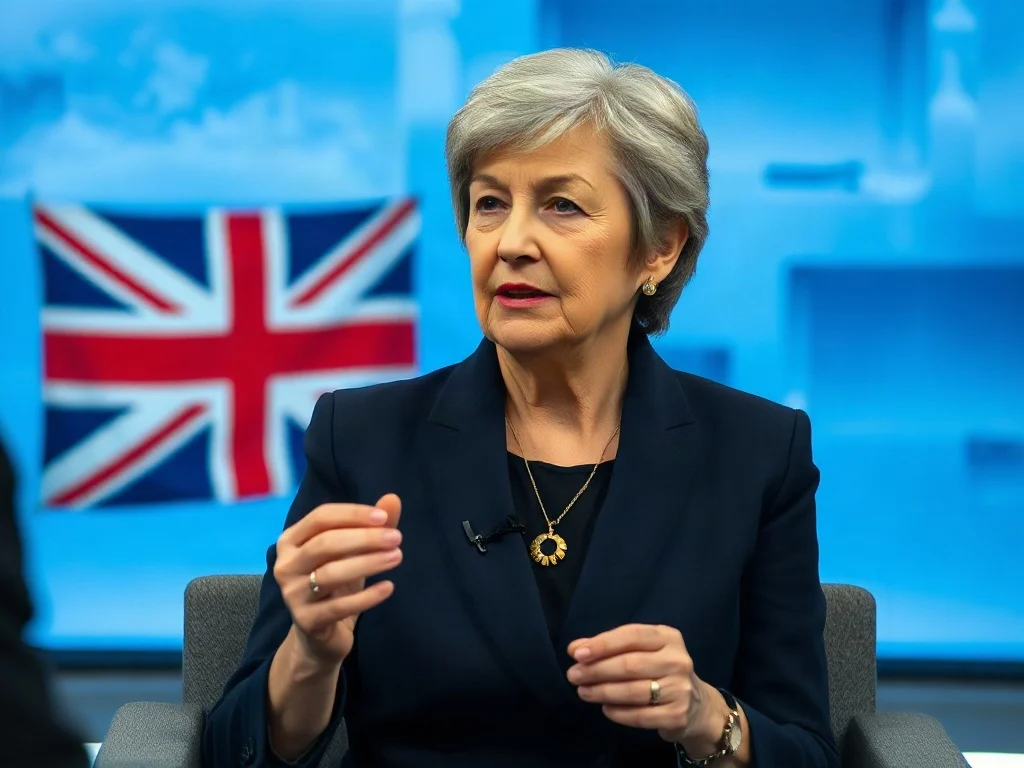
The row over Theresa May and Burnham’s EU plans has reopened one of the most divisive debates in modern British politics. Speaking to the BBC’s Laura Kuenssberg, the former prime minister said she was ‘aghast’ at the proposals attributed to Andy Burnham. Her advice was blunt: ‘Just accept Brexit and move on.’ This analysis looks at what the intervention means, why it carries weight, and where the argument may go next.
What Theresa May Actually Said
The facts available from the interview are limited, so it helps to separate them from interpretation. May said she was aghast at Burnham’s EU plans and argued that Brexit is done. The rest of this article is context and analysis, not a claim about the details of Burnham’s proposals, which readers should check against his own statements and the full BBC interview.
Why May’s Voice Carries Weight
Theresa May became prime minister after the 2016 EU referendum. She had backed Remain, but she then led the government that triggered Article 50 in 2017. Her Chequers plan and her withdrawal agreement were repeatedly rejected by Parliament, and she resigned in 2019.
That history gives her a particular credibility. She is a former Remainer who tried to deliver Brexit and knows how hard it was. Her message is therefore not simply a Leave campaigner’s.
Who Is Andy Burnham and Why Do His EU Views Matter?
Burnham is the Mayor of Greater Manchester and a senior figure in the Labour Party. He has a national profile and is often discussed as a possible future leadership contender. Any Andy Burnham EU policy therefore matters beyond regional politics, because it can shape expectations of what Labour might do after Keir Starmer.
Is Brexit Done? The Legal Reality
In legal terms, May’s claim is easy to defend. The UK left the EU on 31 January 2020 under a deal negotiated by Boris Johnson. The transition period ended on 31 December 2020, and the EU–UK Trade and Cooperation Agreement now governs the relationship.
Politically, the question is more open. ‘Done’ can mean three different things:
- Legally complete: the UK is outside the EU, and rejoining would need a new accession process.
- Politically settled: the major parties accept that the referendum result stands, at least for now.
- Economically resolved: the costs, benefits and trade frictions of the new relationship are still being debated.
The Spectrum of Closer EU Ties
The phrase ‘EU plans’ can cover very different ideas, and the distinctions matter in the rejoining the EU debate:
- Targeted cooperation: agreements on areas such as security, research or veterinary standards, within the existing trade deal.
- Single market alignment: closer regulatory ties with the European single market, which would reduce trade friction but constrain domestic rule-making.
- Customs union membership: joining the EU customs union, which would limit the UK’s independent trade policy.
- Full membership: the most far-reaching option, with consequences for sovereignty, budgets and free movement.
The Starmer government has pursued a ‘reset’ with Brussels while saying it will not rejoin the single market or customs union. Critics of that position on the Remain side argue it leaves growth on the table. Critics on the Leave side fear it is the first step back towards membership.
The Case For and Against May’s Position
Arguments for ‘accept and move on’
Reopening the constitutional question risks prolonged uncertainty for businesses and investors. It could also distract from public services and the cost of living. May’s own experience shows how consuming Brexit negotiations were: it dominated her premiership and consumed Parliament’s time.
Arguments for continued debate
Democratic mandates are not permanent, and public opinion can shift. The long-running problems of the Northern Ireland Protocol show that the post-Brexit settlement has needed repeated adjustment. Supporters of closer ties argue that debating trade-offs is normal, not a betrayal of the referendum.
What This Means in Practice for Labour and the Conservatives
For the Conservative Party, May’s intervention is a reminder that Brexit remains a unifying and dividing issue. For Labour, it exposes a tension. The party must reassure former Leave voters that it respects the result while appealing to voters who want a closer relationship with Europe. Any Labour figure who goes beyond the current red lines will face attacks from opponents and pressure from within.
Frequently Asked Questions
What did Theresa May say about Andy Burnham’s EU plans?
She told the BBC she was ‘aghast’ at them and urged people to ‘just accept Brexit and move on’, saying that Brexit is done.
Is Brexit done?
Legally, yes: the UK left the EU in 2020 and the transition period ended that year. Politically and economically, the relationship is still evolving.
Can the UK rejoin the EU?
A European state can apply for membership under EU treaty rules, but accession needs the agreement of existing member states and a lengthy process. No such process is under way.
The Question That Outlasts the Interview
May’s argument rests on a simple idea: a decision, once implemented, should be treated as settled. The counter-argument is that a decision is only as settled as the public’s willingness to leave it alone. The most important insight is that ‘Brexit is done’ is true as law but unproven as politics.
Watch for three things. First, whether Burnham clarifies which model of closer EU ties he actually favours. Second, how Labour’s leadership responds without abandoning its stated red lines. Third, whether polling shows any durable shift in attitudes. It is reasonable to predict that the argument will return at the next general election, in the form of a debate about trade-offs rather than a rerun of 2016. Whether either side can keep it there is the unanswered question.
Frequently Asked Questions
Why does Theresa May's opinion on Brexit carry particular weight?
May backed Remain in 2016 but then led the government that triggered Article 50 and negotiated the withdrawal agreement, which Parliament rejected repeatedly before she resigned in 2019. Because she knows how hard delivery was, her message is not simply that of a Leave campaigner.
Is Brexit really 'done' in legal terms?
Legally, yes. The UK left the EU on 31 January 2020, the transition period ended on 31 December 2020, and the Trade and Cooperation Agreement now governs relations. Rejoining would require a new accession process, so May's claim is easy to defend legally, even if politically contested.
What can 'closer EU ties' actually mean?
The phrase covers a spectrum: targeted cooperation on security, research or veterinary standards; single market alignment; customs union membership; or full membership. Each carries different trade-offs for sovereignty, regulation, budgets and free movement, so the details of any proposal matter far more than the label.
Does the article confirm what Andy Burnham's EU plans actually are?
No. The article stresses that the available facts are limited to May saying she was aghast and that Brexit is done. It does not detail Burnham's proposals, so readers should check his own statements and the full BBC interview with Laura Kuenssberg for specifics.
Why do Andy Burnham's views on the EU matter beyond Greater Manchester?
Burnham is Mayor of Greater Manchester, a senior Labour figure with a national profile and often mentioned as a possible future leadership contender. His stance can therefore shape expectations of what Labour might do on Europe after Keir Starmer, well beyond regional politics.
How does the Starmer government's 'reset' with Brussels fit into this debate?
The government is seeking closer cooperation with the EU while ruling out rejoining the single market or customs union. Remain-leaning critics say this sacrifices growth, while Leave-leaning critics fear it is a first step back towards membership, so the reset is attacked from both sides.