
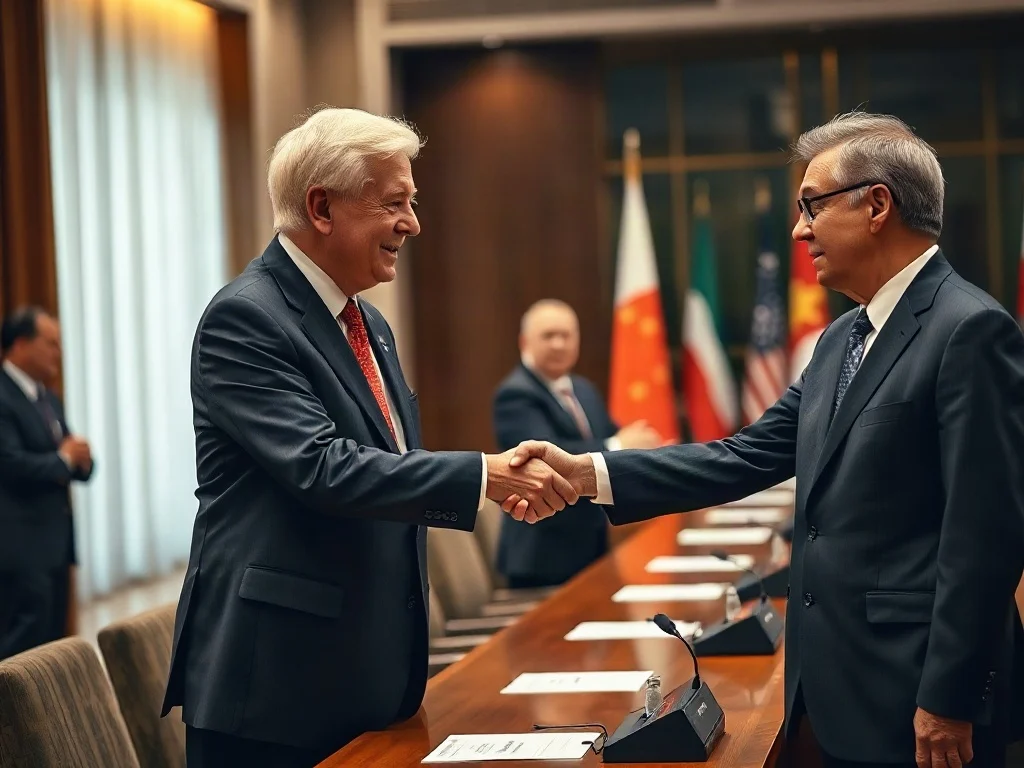
The Trump Putin handshake was brief, but it drew immediate attention. According to the short report, Donald Trump greeted Vladimir Putin as
Frequently Asked Questions
Does Trump calling Putin 'my friend' mean U.S. policy toward Russia is changing?
Not necessarily. A greeting is a public gesture, not a policy decision. Leaders often use warm language for optics or to set a tone. Real shifts show up in official statements, sanctions decisions, negotiated agreements, or formal changes in diplomatic positions, not in a single handshake.
Why does a brief handshake matter ahead of a meeting involving Xi Jinping?
Body language and wording before a multi-leader meeting can signal how cordial the atmosphere will be and how each leader wants to be seen. Observers read it as a hint about tone. It does not predict what will be agreed, since outcomes depend on the negotiations themselves.
Is it unusual for Trump to use friendly language with leaders he disagrees with?
No. Trump has often used personal, familiar terms with foreign leaders, including rivals and adversaries, as part of a deal-oriented style. Because of that habit, a phrase like 'my friend' is better read as a style choice than as proof of a closer alliance.
How much can we conclude from a short report about the greeting?
Very little. A brief report usually covers only the wording and the visible moment, not what was discussed privately or the context around it. Before drawing conclusions, wait for official readouts from each government and for fuller coverage that confirms the details.
What should readers watch for instead of the handshake itself?
Look for concrete outcomes: joint statements, announced agreements, changes in trade or sanctions policy, and how each government describes the talks afterward. Differences between the public warmth and the official readouts often reveal more than the greeting does.