
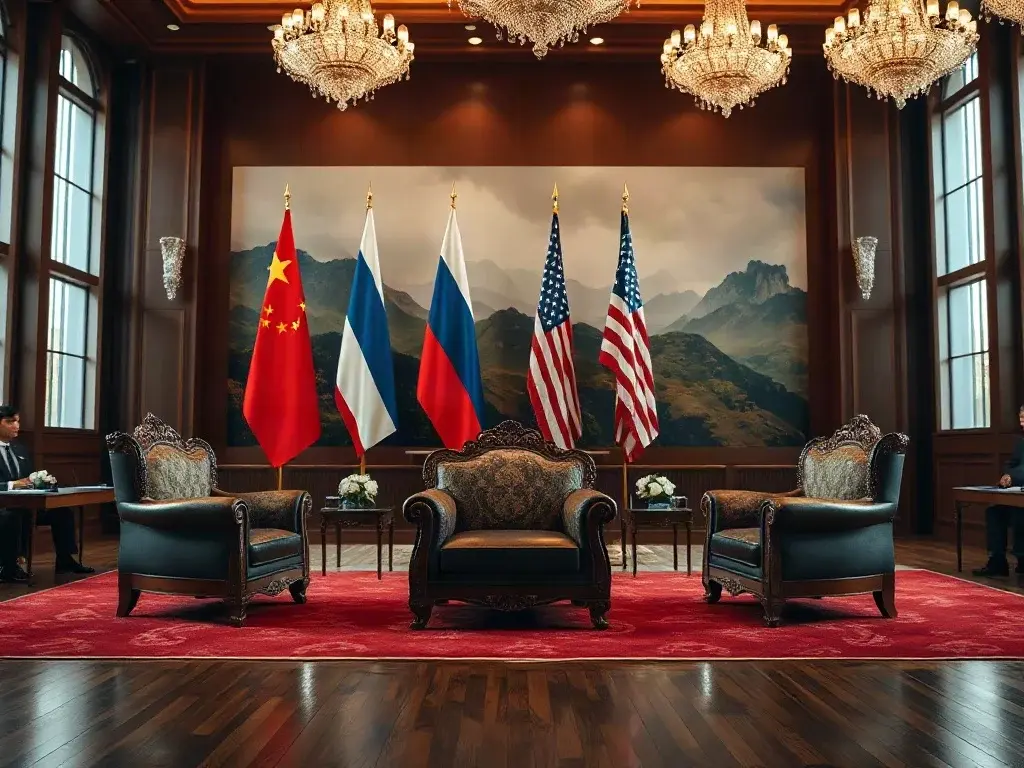
The Xi Putin Trump meeting puts China’s leader at the center of global diplomacy in a way few Xi Jinping summits have. Hosting or engaging both Vladimir Putin and Donald Trump signals that Beijing is a necessary party to the world’s biggest disputes. Yet the same reporting notes that Xi does not appear keen to discuss certain topics with either man. This analysis looks at why the moment is valuable for China, where the risks lie, and what to watch next. Details of the talks are still emerging, so interpretation is flagged as such.
Why This Is a Remarkable Diplomatic Moment
Modern diplomacy rarely gives one leader simultaneous access to Moscow and Washington. For Beijing, the optics matter as much as the agenda. Being courted by both capitals supports a long-standing Chinese claim that the world is shifting toward multipolarity, in which no single power sets the rules.
The moment also echoes older great power maneuvering. During the Cold War, the Sino-Soviet split let Washington exploit divisions between Beijing and Moscow. Today the geometry is reversed: China is the strongest economy of the three outside the United States, and both others want something from it.
What Each Leader Wants From Xi
Putin: Economic and Political Cover
Russia has leaned on China since the Russian invasion of Ukraine. Western sanctions pushed Moscow toward Asian buyers of its energy, and projects such as the Power of Siberia gas pipeline symbolize that dependence. China-Russia relations are close, but they are not symmetrical: Russia needs China more than China needs Russia.
Trump: Trade, Ukraine and Leverage
Washington’s priorities are likely to center on the US-China trade war, tariffs, supply chains and access to rare earth elements, along with pressure on Beijing to influence Moscow over Ukraine. Broader China-United States relations depend on whether these files can be separated or are bundled into one bargain.
What Xi May Not Want to Discuss
The headline premise is that some subjects are unwelcome. The reporting does not need to be over-read, but analysts would reasonably expect the following to be sensitive. This is interpretation, not confirmed fact.
- Ukraine and Russian sanctions: China presents itself as neutral, so detailed commitments could expose it to secondary sanctions or to accusations of enabling Moscow.
- Taiwan: Beijing treats the status of Taiwan as a core sovereignty matter, not a negotiating chip.
- Arms control: Beijing has historically resisted trilateral arms control talks, in part because its nuclear arsenal is smaller than those of the other two powers. The future of New START makes this issue harder to avoid.
- Trade concessions: Large purchase pledges or market-access changes can create domestic costs and set precedents.
The Pitfalls of Being in the Middle
Entanglement Risk
Closeness to Putin can undermine any deal with Trump, and closeness to Trump can irritate Moscow. China’s long-standing approach of avoiding formal alliances preserves flexibility, but a three-way meeting reduces room for ambiguity. Language in a joint statement, or its absence, will be read in both capitals.
Expectation Risk
Being seen as the indispensable broker raises demands that China may be unwilling or unable to meet. If Washington expects Beijing to restrain Russia, and Moscow expects Beijing to resist Washington, Xi risks disappointing both. Institutions that China helps lead, such as the Shanghai Cooperation Organisation and BRICS, give it influence, but they do not give it control over either leader.
Image Risk
The prestige of the summit can be undone by one awkward exchange. Soft power gains are fragile, and public disagreement or a visible snub could turn a diplomatic win into a story about the limits of Chinese influence.
How to Read the Outcome
- Compare the readouts. Official summaries from each government often emphasize different topics. The gaps are informative.
- Watch the economic follow-through. Tariff adjustments, energy contracts and export-control decisions matter more than summit rhetoric.
- Track Ukraine-related language. Any shift in how Beijing describes the war would be significant.
- Consult primary sources. Official statements from the US Department of State and think-tank analysis such as that from the Council on Foreign Relations help separate substance from spin.
FAQ
Why is the Xi Putin Trump meeting important?
It brings together the leaders of three nuclear-armed powers whose relationships shape the war in Ukraine, global trade and regional security in Asia.
What does Xi not want to discuss?
Reporting suggests there are topics Xi is reluctant to raise. Analysts would expect Ukraine commitments, Taiwan and arms control to be likely candidates, but this is inference, not confirmed fact.
Does China favor Russia or the United States?
China’s behavior suggests it favors its own strategic autonomy. It keeps a close partnership with Russia while remaining economically tied to the United States.
The Real Test Comes After the Handshakes
The most important insight is that Xi’s strength in this moment comes from being wanted, and that strength lasts only as long as he avoids being pinned down. Summits reward ambiguity, but outcomes reward commitments, and those two things pull in opposite directions. The key question is whether Beijing can convert attention into concrete gains, such as tariff relief or a better position on technology controls, without paying for it with its partnership with Moscow.
Watch for three signals in the coming months: whether trade measures are actually eased, whether China changes its public position on the Ukraine war, and whether any trilateral arms control channel emerges. If none of these moves, the meeting will have been remarkable mostly as theater. If even one does, it may mark the point at which China shifted from a power courted by others to one that sets the terms.
Frequently Asked Questions
Why would Xi avoid discussing Taiwan with Trump or Putin?
Beijing treats Taiwan as a core sovereignty issue, not a bargaining chip. Discussing it in a three-way setting could imply the status is negotiable or invite outside commitments. This is analyst interpretation based on the reporting, not confirmed fact about what was actually said.
Is China-Russia relations really an equal partnership?
No. The article describes the relationship as close but asymmetrical. Western sanctions pushed Russia toward Asian energy buyers, and projects like the Power of Siberia pipeline show that dependence. Russia needs China more than China needs Russia, which gives Beijing leverage but also raises expectations.
Why is arms control a difficult topic for Beijing?
China has historically resisted trilateral arms control talks, partly because its nuclear arsenal is smaller than those of the United States and Russia. With the future of New START uncertain, the issue is harder to sidestep, but joining talks could limit China's strategic options.
What does the Cold War comparison add to this meeting?
During the Cold War, the Sino-Soviet split allowed Washington to exploit divisions between Beijing and Moscow. The article says the geometry is now reversed: both Moscow and Washington want something from China, which is the strongest economy of the three outside the United States.
What are the main risks for Xi in being the middle party?
The article names three: entanglement, where closeness to one leader harms ties with the other; expectation, where both capitals demand things China cannot deliver; and image, where one awkward exchange or visible snub could turn a diplomatic win into a story about limited influence.
How can readers judge whether the summit succeeded?
The article suggests comparing each government's official readout, since differing emphasis reveals gaps. It also advises watching economic follow-through, such as tariff adjustments, energy contracts and export-control decisions, which show whether words turn into concrete policy changes.