
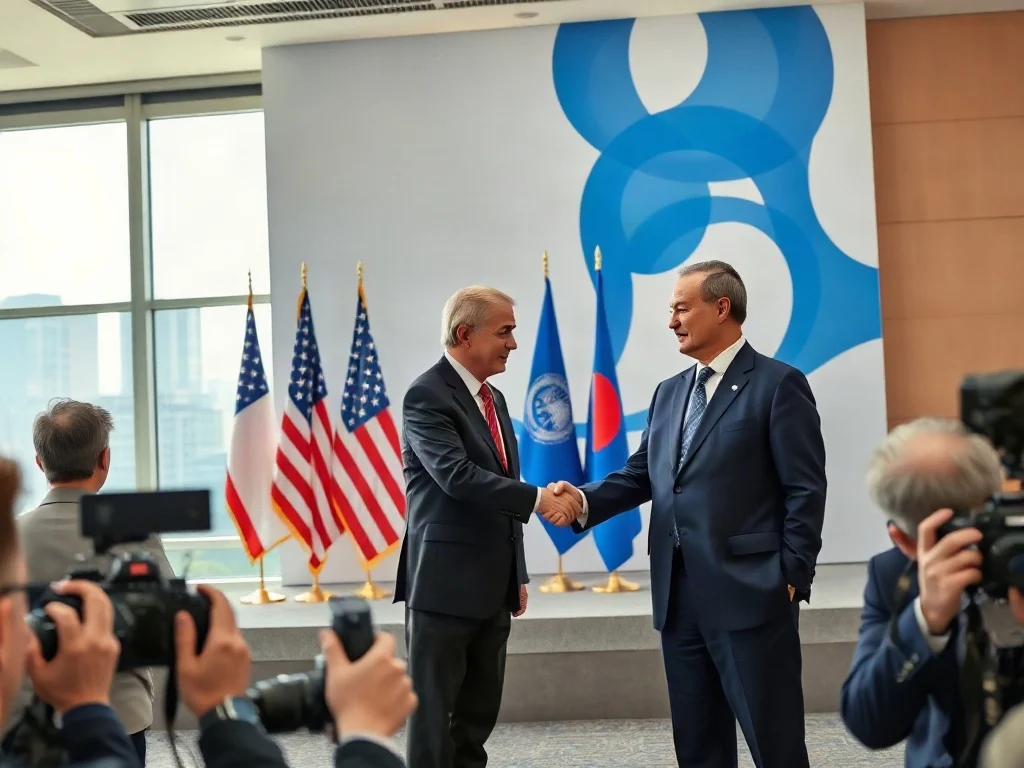
The Trump Putin meeting on the sidelines of the Asia-Pacific Economic Co-operation (APEC) summit in Shenzhen has put one of the most closely watched relationships in world politics back in view. US President Donald Trump met Russian President Vladimir Putin in the southern Chinese city and said the two have a ‘great relationship’. Only a few details of the talks were available at the time of writing, so this analysis separates what is reported from what is interpretation, and explains why the setting matters as much as the words.
What Is Confirmed About the Trump Putin Meeting
The confirmed facts are limited. The two leaders met on the margins of the Asia-Pacific Economic Cooperation forum in Shenzhen, and Trump publicly described the relationship as ‘great’. Nothing in the available reporting establishes an agreement, a joint statement or a change in policy. The remark is a signal, not a deliverable.
Why a Sideline Meeting Matters
A sideline meeting is a bilateral conversation held around a larger multilateral gathering. It is a standard tool of diplomacy because it is flexible, carries lower political cost than a formal state visit and can be arranged at short notice. It also lets leaders test positions without committing to a full negotiating track.
The Significance of the Shenzhen Setting
APEC is primarily an economic forum. The official APEC website describes its focus on trade and investment cooperation across the Asia-Pacific. Shenzhen, in Guangdong province, is a symbol of China’s manufacturing and technology rise, and the host country shapes the atmosphere of the summit.
Hosting leaders from Washington and Moscow in the same place gives Xi Jinping‘s government visibility as a convener. Observers differ on how much Beijing has encouraged or merely hosted such contacts, and without official statements this remains interpretation. Beijing’s own ties with both capitals, from China–Russia relations to the China–United States trade war, form the backdrop to any three-way dynamic.
Reading a ‘Great Relationship’ Statement
Leaders’ praise for one another can mean very different things. Analysts generally weigh three readings.
- Personal diplomacy: Trump has long favoured leader-to-leader channels, and warm language is part of his negotiating style.
- Strategic signalling: Public warmth can be aimed at third parties, including allies, rivals and markets.
- Rhetoric without substance: Friendly words have not always led to policy changes in past US–Russia contacts.
The caution is warranted because the broader Russia–United States relationship is shaped by institutions, security concerns and domestic politics, not only by personal rapport.
The Issues Likely to Shape Any Follow-Up
The War in Ukraine
The Russian invasion of Ukraine remains the central obstacle to normalised relations. Any US–Russia dialogue is judged by whether it advances a ceasefire or settlement, and by whether Ukraine and European governments are included. A friendly tone that excludes Kyiv could raise alarm among allies, while a tone that leads to real negotiations could be a significant development. Which of these applies cannot be known from a single remark.
Sanctions and Economic Ties
Western sanctions on Russia affect energy, finance and technology flows. Because APEC is an economic forum, watchers will look for any hint of sanctions relief, which would require coordination with allies and, in some cases, legislative action. Any such change would be visible in official notices rather than in summit commentary.
Nuclear Arms Control
The future of arms control is another pressure point, including the status of New START, the treaty limiting deployed strategic nuclear weapons. Leader-level contact is often a prerequisite for any renewed framework, though technical talks would still be needed.
What Readers Should Monitor
- Official readouts: Compare the White House and Kremlin accounts. Differences in emphasis often reveal real disagreements.
- Follow-up working groups: Named negotiators and scheduled talks matter more than warm language.
- Allied reactions: Statements from European capitals and Kyiv indicate how the meeting is being received.
- Market and sanctions notices: Formal regulatory changes are the clearest evidence of policy movement.
Frequently Asked Questions
Where did Trump and Putin meet?
They met on the sidelines of the APEC summit in Shenzhen, in southern China.
What did Trump say about Putin?
Trump said the two have a ‘great relationship’. Reporting available so far does not detail any agreements reached.
Does a friendly meeting change US policy on Russia?
Not automatically. Policy changes such as sanctions adjustments or treaty commitments require formal decisions, often involving allies and Congress.
The Real Test Comes After the Handshake
The most important insight is that the meeting’s value will be measured by what follows, not by what was said in Shenzhen. A ‘great relationship’ is an asset only if it converts into verifiable steps: a negotiating timetable, a ceasefire framework or a renewed arms-control channel. The open question is whether personal rapport can overcome structural disagreements over Ukraine, sanctions and security guarantees that have resisted earlier summitry. A reasonable expectation, though not a certainty, is that any progress will be incremental and contested by allies. Watch the official readouts and the first scheduled follow-up talks: if none emerge, the Shenzhen meeting will likely be remembered as atmosphere rather than breakthrough.
Frequently Asked Questions
Did the Trump Putin meeting in Shenzhen produce any agreement?
Nothing in the available reporting shows an agreement, a joint statement or a policy change. The only confirmed facts are that the two leaders met on the margins of APEC and that Trump called the relationship 'great'. The remark is a signal, not a concrete outcome.
Why does a sideline meeting count as meaningful diplomacy if nothing is signed?
Sideline meetings are flexible, can be arranged at short notice and cost less politically than a formal state visit. They let leaders test positions and gauge intentions without committing to a full negotiating track, which can pave the way for later, more formal talks.
Does the choice of Shenzhen and China as host change how the meeting should be read?
The host shapes the summit's atmosphere, and bringing Washington and Moscow together gives Xi Jinping's government visibility as a convener. Analysts disagree on whether Beijing actively encouraged the contact or merely hosted it, and without official statements that question remains interpretation.
How should Trump's 'great relationship' comment be interpreted?
Analysts weigh three readings: personal diplomacy, reflecting Trump's preference for leader-to-leader channels; strategic signalling aimed at allies, rivals and markets; or rhetoric without substance. Warm words have not always led to policy shifts in past US–Russia contacts, so caution is warranted.
Could the meeting lead to sanctions relief for Russia?
Not from a single remark. Sanctions relief would require coordination with allies and, in some cases, legislative action. Because APEC is an economic forum, observers will watch for hints, but any real change would appear in official notices rather than in summit commentary.
What should readers watch for after the meeting to see if it mattered?
Compare the White House and Kremlin readouts, since differences in emphasis often reveal real disagreements. Also look for named negotiators and follow-up working groups, plus movement on Ukraine talks that include Kyiv and Europe, and on arms control such as New START.