
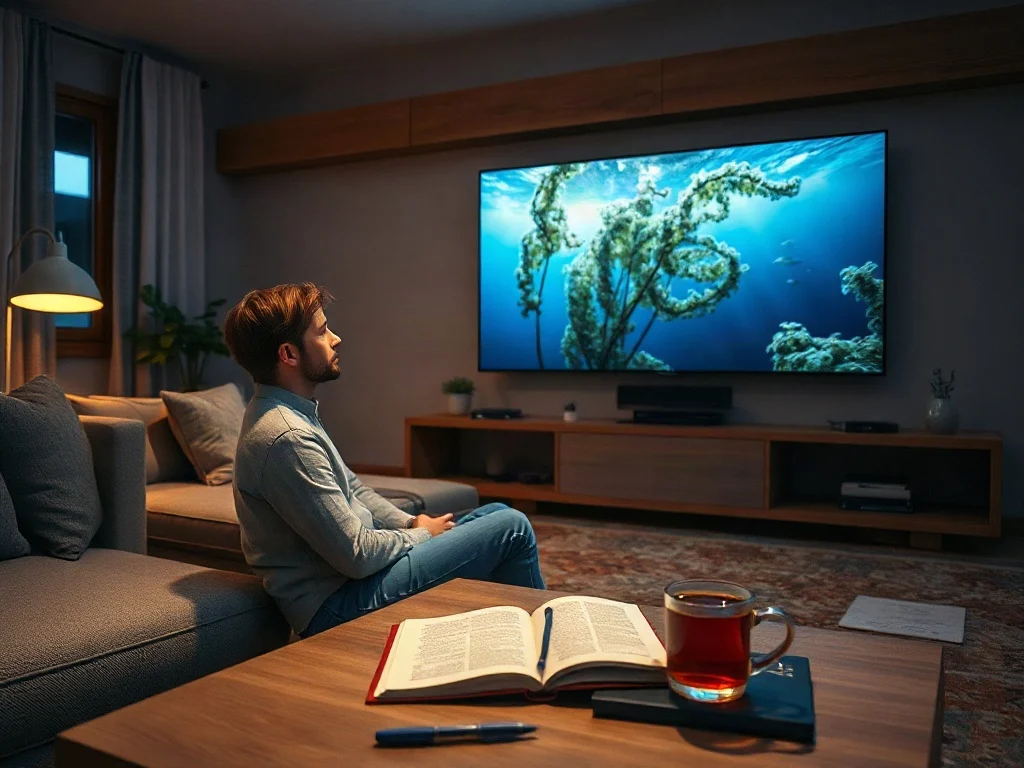
Any list of the best documentaries on Netflix promises more than entertainment. The premise of the 32-film roundup is that these titles can inspire a commitment to lifelong learning. That is an ambitious claim, and it deserves scrutiny. A well-made documentary film can open a subject to millions of viewers. It can also flatten complexity, favor narrative over evidence and leave viewers feeling informed without making them so.
This analysis does not reproduce the full list. It examines what makes a documentary educational, where Netflix is strong and weak as a platform for that purpose, and how to turn passive viewing into lifelong learning. Catalogs change by region and by month, so the principles outlast any individual ranking.
What a List of the Best Netflix Documentaries Actually Promises
Editorial roundups bundle several different promises: quality, importance, accessibility and inspiration. These do not always coincide. A film can be beautifully shot and intellectually thin. Another can be rigorous and visually dull. When a list claims to inspire learning, the useful question is whether a film gives you something you can test, extend or challenge afterward.
Documentaries on streaming services fall into rough categories:
- Investigative films that reconstruct events or expose institutions.
- Nature and science films that translate research into spectacle.
- Personal and character-driven films that teach through one life or relationship.
- Serialized true-story productions that trade depth for suspense across many episodes.
Each category teaches differently and misleads differently. Investigative films risk selective framing. Nature films risk sentimentality. Character studies risk generalizing from one story. Serialized true crime risks turning real people into plot devices.
Why Documentaries Work as a Learning Tool
Strengths: attention, empathy and entry points
The core strength of documentary is emotional access. A viewer who would never open a policy paper on mass incarceration may watch Ava DuVernay’s 13th, which connects the Thirteenth Amendment to the American prison system. The film does not replace scholarship. It gives a general audience a structured argument and a vocabulary to pursue further.
Documentaries also compress time. A viewer can grasp the shape of a subject in ninety minutes, then decide whether it deserves a book or a course. This works best when the film is treated as an entry point rather than a destination.
Limits: persuasion disguised as information
Most documentaries are arguments. Editing, music, interview selection and narration all steer interpretation. That is not a flaw, but it becomes a problem when viewers mistake a point of view for a neutral survey. Research on confirmation bias suggests that people tend to accept material that fits their existing beliefs with less scrutiny. A documentary that flatters your priors teaches less than one that unsettles them.
Treat media literacy as part of the viewing, not an optional extra.
Reading the Netflix Catalog Critically
Originals versus licensed titles
Netflix’s documentary shelf mixes titles it financed or acquired with licensed films whose availability can lapse. This matters for anyone building a viewing plan. A list published today may be partly unavailable in your country next quarter, so confirm availability before committing. Netflix’s own original programming is more stable, though still subject to removal.
The algorithm problem
The platform’s recommender system optimizes for engagement, not intellectual range. If you watch one crime series, expect more of the same. Curated human lists, like the one this article responds to, partly counteract that narrowing, but only if you step outside your usual row.
Awards as a rough signal
Recognition can help triage. Several Netflix-distributed films have won the Academy Award for Best Documentary Feature, including Icarus, American Factory and My Octopus Teacher. The Academy of Motion Picture Arts and Sciences rewards craft and impact, not factual completeness. An Oscar is a reason to watch, not proof of accuracy.
Five Films and What They Teach
The examples below are well-known Netflix documentaries chosen to illustrate different learning outcomes. They are not a reconstruction of the 32-film list, and availability varies.
My Octopus Teacher: attention as a skill
Directed by Pippa Ehrlich and James Reed, the film follows a diver’s year-long relationship with a wild octopus in a South African kelp forest. Its lesson is observational patience. Its limit is that one animal and one narrator cannot stand in for marine biology, and some viewers find the anthropomorphic framing overdone.
Our Planet: scale and stakes
Produced with the World Wide Fund for Nature and narrated by David Attenborough, Our Planet pairs cinematography with an explicit conservation message. It shows the strength of nature filmmaking as advocacy, and it is worth remembering that the advocacy is stated, not hidden.
The Social Dilemma: useful alarm, contested framing
The Social Dilemma features former technology insiders discussing the design of social platforms. It popularized concerns about attention and manipulation. Critics argued that its dramatized segments and sweeping causal claims outran the evidence on social media’s effects. Watching it alongside its critics is more educational than watching it alone.
American Factory: economics through people
Julia Reichert and Steven Bognar document a Chinese-owned manufacturing plant in Ohio. The film teaches how globalization, labor relations and cultural friction look on a factory floor. Its strength is observation rather than thesis, which makes it a good model for evidence-led documentary.
Crip Camp: history from the margins
Crip Camp traces a summer camp for teenagers with disabilities to the wider disability rights movement. It illustrates how archival material can recover histories textbooks often skip.
A Method for Turning Viewing Into Learning
The gap between watching and learning is a matter of habit. A practical sequence for any title:
- State the claim. Write one sentence describing what the film argues.
- Identify the evidence. Separate documents, data and firsthand testimony from narration and music.
- Find the dissent. Search for credible criticism from named experts or institutions.
- Check one fact. Verify a single specific claim against a primary or authoritative source.
- Go one layer deeper. Read one book, paper or long-form article on the subject.
This takes perhaps an hour beyond the runtime. It is also what separates a viewer who recalls a vivid story from one who can explain the topic to someone else.
Common Mistakes When Using Documentaries to Learn
- Treating one film as settled fact. Controversial titles such as Seaspiracy drew public criticism from some scientists over specific claims, which shows why cross-checking matters.
- Confusing serialization with depth. Series like Making a Murderer or Wild Wild Country are compelling, but long runtimes do not guarantee balanced coverage.
- Watching only within one genre. Breadth is the point of a lifelong learning habit.
- Skipping the credits and sources. Reputable films often name consultants, archives and funders. Those details reveal incentives.
- Ignoring the funder. A film made with an advocacy partner is not invalid, but its framing deserves extra attention.
Docudrama, Reenactment and the Honesty Question
Many streaming documentaries borrow techniques from drama, including reenactments, scored tension and cliffhanger endings. The boundary with docudrama is blurry, and the observational tradition of cinéma vérité sits at the opposite end. Neither approach is inherently more truthful. What matters is whether the film signals its constructions clearly. When it does not, the viewer bears the burden of detection.
Frequently Asked Questions
What are the best documentaries on Netflix for learning?
There is no single answer, because availability and quality vary. Look for films with named experts, verifiable sources and a clear central question. Award recognition and critical reviews help narrow the field, but cross-checking claims matters more.
How do I choose a good documentary?
Check who made it, who funded it and whether it cites sources. Read at least one critical review. A good documentary leaves you with questions you can pursue, not only a conclusion to adopt.
Are Netflix documentaries accurate?
Accuracy varies by title. Some are carefully researched, while others have been publicly challenged over specific claims. Treat each as an argument to verify rather than a reference work.
Can documentaries replace books or courses?
No. They are strong for orientation and motivation but weak for nuance, citation and sustained argument. They work best as a first step toward deeper reading.
The Real Test Comes After the Credits
The most important insight is that a documentary’s educational value is not fixed in the film. It depends on what the viewer does next. A list of the best documentaries on Netflix can supply the spark, but only a habit of verification, comparison and follow-up reading turns that spark into knowledge.
Watch for two developments. First, streaming catalogs are volatile, so the titles worth building a learning routine around may be the ones you can access reliably or find through libraries and other sources. Second, as generative tools make synthetic footage easier to produce, the documentary’s authority will depend more on transparent sourcing than on visual realism. The open question is whether platforms will build that transparency into the viewing experience or leave audiences to supply it themselves.