
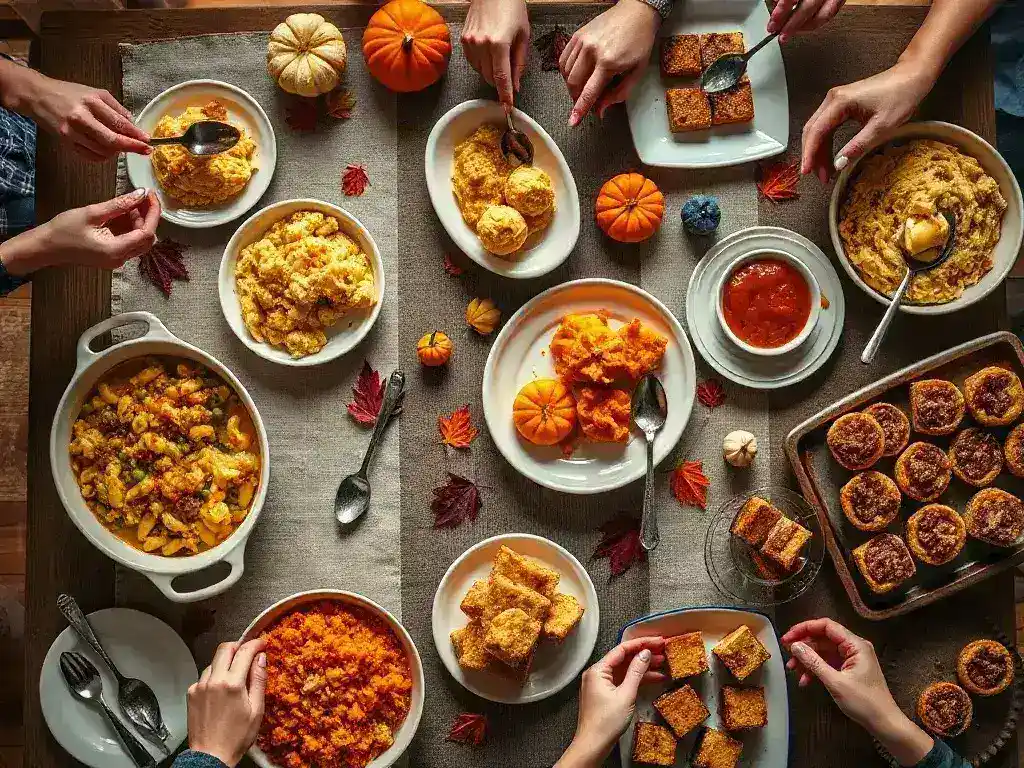
A roundup of 24 Thanksgiving potluck recipes spanning appetizers to desserts raises a question that recipe lists rarely answer: why do some dishes empty first while others come home untouched? The answer is less about culinary brilliance than about logistics, familiarity, and portion design. This analysis breaks down the mechanics behind a successful contribution to a Thanksgiving spread, so you can choose and execute a dish with intent.
Why a Potluck Is a Different Cooking Problem
A potluck is a shared-resource system. Each guest contributes one dish, and the host controls neither the menu balance nor the kitchen timeline. That shifts the goal from cooking something impressive to cooking something that survives transport, tolerates imperfect reheating, and appeals to a mixed crowd.
The original roundup’s range, from starters to sweets, reflects this. Every category has a different failure mode, and knowing it separates a dish that vanishes from one that sits cold.
The Four Traits of Dishes That Go First
1. Easy to Serve and Eat
Guests at a buffet often hold a plate in one hand. Dishes that need a knife, careful plating, or a final assembly step create friction. Finger foods such as deviled eggs, or a scoopable dip with sturdy dippers, remove that barrier.
2. Familiar With a Twist
Guests typically fill plates with traditional anchors first: mashed potatoes, stuffing, cranberry sauce. A dish that recognizably belongs to this canon but adds one distinctive element, such as browned butter or a crisp topping, earns attention without asking guests to take a risk. This is interpretation based on how buffets generally work, not a measured finding.
3. Stable at Room Temperature
Potluck dishes spend time in transit and on the table. Baked pasta such as macaroni and cheese, a well-built casserole, and cornbread hold texture far better than anything fried or dressed with delicate greens.
4. Scaled for Sampling
People take small portions of many dishes. Bite-sized desserts, such as bars, mini tarts, and squares, disappear faster than a whole cake that requires someone to cut the first slice.
Make-Ahead Thanksgiving Potluck Dishes and Travel Logistics
Oven space on the day is the scarcest resource. The strongest make-ahead Thanksgiving potluck dishes are assembled the day before and finished with minimal effort. A green bean casserole or sweet potato casserole can be built ahead, with the crunchy or marshmallow topping added just before baking so it stays crisp.
A slow cooker solves the reheating problem for hot sides, provided the host has an outlet available. Confirm this in advance rather than assuming.
Choosing Potluck Dishes That Travel Well
- Use a lidded, leak-resistant container, and bring your own serving utensil.
- Keep sauces and toppings separate when texture matters.
- Label dishes with common allergens such as nuts, dairy, and gluten.
- Bake in the dish you will serve from to avoid transferring and damaging the dish.
Food Safety Is Not Optional
Buffets create real risk. The USDA’s Food Safety and Inspection Service advises that perishable food should not sit in the temperature range of roughly 40°F to 140°F, often called the danger zone, for more than two hours. Bacterial growth in that range is a leading cause of foodborne illness. Additional guidance is available at FoodSafety.gov.
Practically, that favors dishes that tolerate being served hot from a warmer or safely chilled, and penalizes cream-based or mayonnaise-heavy items left out for hours.
What to Bring to a Thanksgiving Potluck
If you are asking what to bring to a Thanksgiving potluck, coordinate before you shop. Duplicate dishes are the most common structural failure, and a table of five potato dishes serves no one. Ask the host which categories are uncovered. Hosts usually handle the turkey, so guests typically fill gaps in sides, appetizers, and desserts.
Thanksgiving Dessert Recipes for a Crowd
Desserts are the most competitive category. A classic pumpkin pie, pecan pie, or apple pie will likely be duplicated. Handheld alternatives, such as brownies or cheesecake bars, stand out and serve easily.
Common Mistakes
- Overambitious technique: a fragile recipe attempted for the first time on the day.
- No reheating plan: assuming the host’s oven is free.
- Wrong scale: bringing a dish for four to a table of twenty.
- Ignoring dietary needs: a single vegetarian-friendly side often gets eaten first.
Frequently Asked Questions
What are the best Thanksgiving potluck recipes to make ahead?
Casseroles, baked pasta, cornbread, and bar desserts hold up best. Assemble them the day before and finish in the oven.
How do I keep potluck food warm safely?
Use a slow cooker, insulated carrier, or warming tray, and aim to keep hot food above 140°F.
How much should I make for a potluck?
Plan for small samples from every dish. A standard family-sized baking dish usually serves a group of eight to twelve when many other dishes are present.
The Real Test Is the Empty Dish
The most useful insight is that the dishes that disappear first are rarely the most sophisticated; they are the ones that remove effort for both cook and eater. Recipe roundups like the 24-recipe list that inspired this piece are best treated as menus of starting points, not guarantees. Watch your own results: note which dish returns empty and which returns full, and adjust accordingly. The open question is whether potlucks will keep shifting toward dietary-specific and allergen-aware cooking. If they do, the winning dish of the next few years may be the one that quietly works for everyone at the table.