
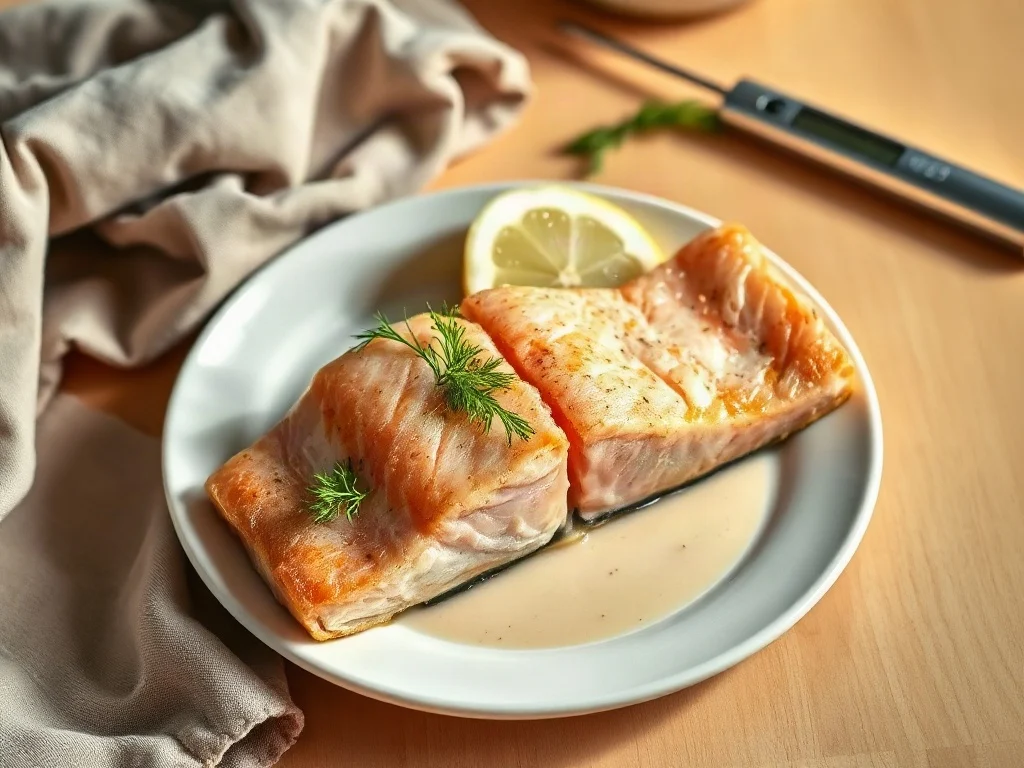
Few home cooks get salmon right consistently. The fish moves quickly from silky and translucent to dry and chalky, often within a minute or two of the target temperature. Martha Stewart’s approach to cooking salmon addresses this problem directly by changing how heat reaches the fillet, rather than relying on precise timing alone. The method yields extremely tender salmon every time, and its logic is grounded in basic food science that makes it worth examining closely.
Why Salmon Overcooks So Easily
Salmon is a fatty fish with a relatively low connective tissue content compared with red meat, which is why it is often prized for tenderness. The difficulty lies in its protein structure. Fish proteins, particularly myosin and actin, begin to denature and contract at relatively low temperatures. As the muscle fibers tighten, they squeeze out moisture and fat, producing the dry, flaky texture many people associate with overcooked fish. The narrow window between underdone and overdone is the central challenge of salmon fillet preparation.
Conventional advice, such as cooking to an internal temperature of 125 to 130 degrees Fahrenheit for a moist center, is useful but hard to execute consistently. The residual heat effect, where the internal temperature continues rising after the fish leaves the heat source, means that a fillet pulled at the correct moment can still overshoot. This is the failure point Stewart’s technique is designed to avoid.
The Core Technique
The method relies on lowering the cooking temperature and extending the cooking time so that the fillet heats more evenly. Rather than searing aggressively over high heat, the fish is cooked gently, allowing the interior to reach the desired doneness without the outer layers becoming overcooked. This approach aligns with the principles of low-temperature cooking, where precise, moderate heat produces uniform results.
Temperature Control
The key variable is the cooking temperature, not the duration alone. Gentle heat narrows the gradient between the surface and the center of the fillet. When the difference is smaller, the window for ideal doneness becomes wider, so a few extra seconds or a slightly delayed removal does not ruin the texture. This is why the technique is more forgiving than high-heat searing.
Resting and Carryover Heat
Resting the fish after cooking allows the internal temperature to stabilize and the juices to redistribute. Because the heat is applied gently, carryover cooking is less aggressive, which reduces the risk of overshoot. Professionals often recommend removing fish slightly before the target temperature for exactly this reason.
Evaluating the Claims
The phrase “extremely tender every time” should be read with appropriate caution. Results depend on fillet thickness, starting temperature, pan or oven characteristics, and the fat content of the fish. Wild and farmed salmon differ meaningfully in fat distribution, and farmed Atlantic salmon, which is more widely available, tends to tolerate gentle cooking well because of its higher intramuscular fat. Thin tail-end pieces will cook faster than thick center cuts, so the technique is best applied with uniform portions.
Food safety also matters. The food safety guidance from authorities such as the United States Department of Agriculture recommends cooking fish to 145 degrees Fahrenheit for safety, though many chefs deliberately serve salmon below that level. Readers should weigh texture preferences against their own risk tolerance and the guidance applicable to vulnerable groups such as pregnant women and immunocompromised individuals.
Practical Application
- Choose fillets of similar thickness so they cook at the same rate.
- Pat the surface dry to support even heat transfer and better texture.
- Use a reliable instant-read thermometer rather than relying on color or timing alone.
- Remove the fish a few degrees before the target temperature and allow it to rest.
- Avoid crowding the pan, which lowers surface temperature and extends cooking time unevenly.
Common Mistakes
The most frequent error is applying high heat in the belief that it produces a better crust, which undermines the gentle-cooking principle. Another is failing to account for carryover heat, leading cooks to leave the fish on the heat source too long. Cooks also underestimate how much a thin fillet changes in the final minute, so frequent monitoring matters.
Future Developments in Home Cooking
Consumer interest in precision cooking is growing, supported by inexpensive wireless thermometers and sous-vide circulators. It is reasonable to expect that gentle, temperature-controlled methods like this one will become more common in home kitchens over the next few years. What remains uncertain is whether the convenience of such tools will outweigh the traditional sensory cues that experienced cooks rely on. The most useful insight from this technique is not a single trick but a principle: lower, steadier heat gives a cook more control than speed ever will.
FAQ
Does this method work for skin-on salmon?
Yes, though the skin should be started skin-side down in a pan so it renders and crisps. The gentle approach then finishes the interior evenly.
What internal temperature should salmon reach?
Many cooks target 125 to 130 degrees Fahrenheit for a moist center. Those seeking full food-safety assurance may prefer 145 degrees Fahrenheit, as recommended by official guidance.
Can I use this technique for frozen salmon?
Fully thaw the fish in the refrigerator before cooking. Uneven thawing causes uneven cooking and undermines the method’s consistency.
Frequently Asked Questions
Why does salmon become dry and chalky so quickly?
Salmon proteins such as myosin and actin begin to denature and contract at relatively low temperatures. As the muscle fibers tighten, they squeeze out moisture and fat, which creates the dry, flaky texture. The window between perfectly moist and overcooked is narrow, which is why salmon is so easy to ruin.
Does carryover cooking really matter for salmon?
Yes. Fish keeps cooking after it leaves the heat because internal temperature continues to rise. A fillet pulled at the perfect moment can overshoot its target. Removing it a few degrees early and letting it rest helps stabilize the temperature and preserves tenderness.
Is it safe to serve salmon below 145 degrees Fahrenheit?
Official guidance from the USDA recommends 145 degrees Fahrenheit for safety, and many chefs deliberately serve salmon at lower temperatures for texture. Pregnant women and immunocompromised people should follow the stricter guidance. Readers should weigh their own risk tolerance before choosing a lower doneness.
Does wild salmon respond to gentle cooking the same way farmed salmon does?
Not exactly. Farmed Atlantic salmon has higher intramuscular fat, which helps it tolerate gentle, low-temperature cooking and stay moist. Wild salmon is leaner, so it can dry out more easily and may require closer temperature monitoring and shorter cooking times.
Why should fillets be cut to similar thickness?
Thin tail-end pieces cook much faster than thick center cuts, so mixing them in one pan leads to uneven results. Choosing fillets of similar thickness ensures they reach the target doneness at the same time, making the technique far more consistent.
Can I rely on color or cooking time instead of a thermometer?
Color and timing are unreliable because they vary with fillet thickness, starting temperature, and the cooking equipment used. An instant-read thermometer gives a precise reading and is the most dependable way to know when salmon has reached the desired doneness.