
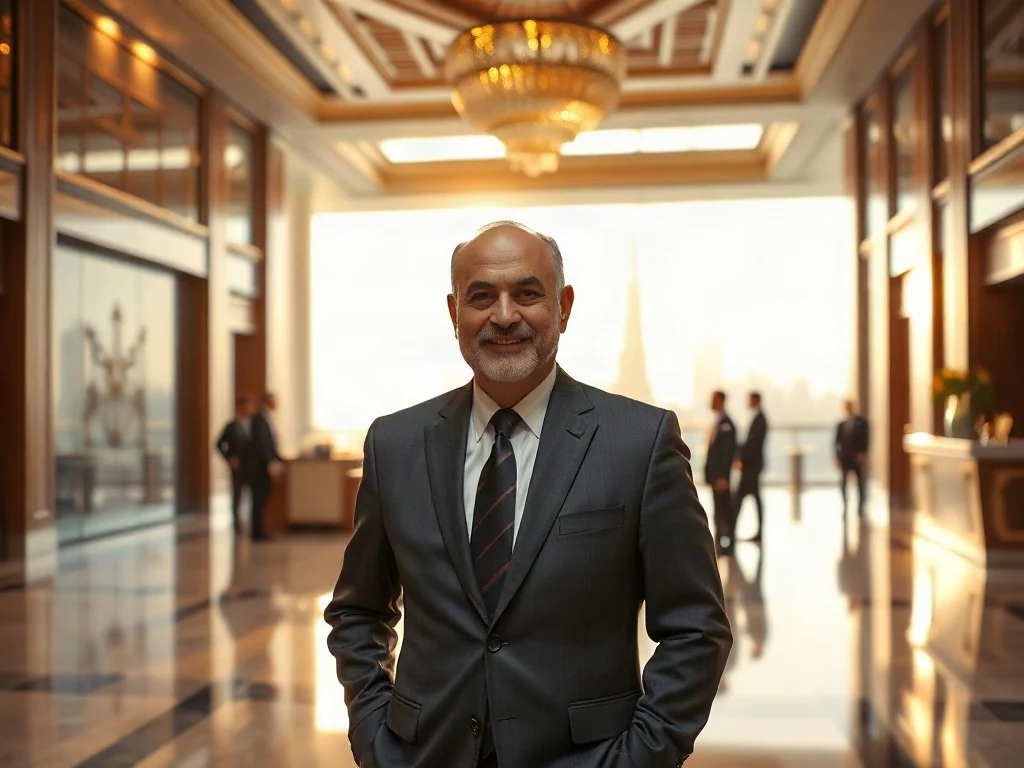
When Andrew Abram closes his chapter as general manager of Mandarin Oriental Al Faisaliah, Riyadh, the departure marks more than a routine change at the top of a five-star hotel. It is the end of a career arc that, as reported by Breaking Travel News, stretches from the Burj Al Arab to the Saudi capital. Along the way it helped put Dubai on the luxury travel map, revived one of Jakarta’s best-loved hotels and left fellow hoteliers with a lesson they still pass on. This article looks at what a career like that reveals about modern luxury hospitality, and why the story matters now.
A note on sourcing: the public summary of Abram’s career is brief. This analysis therefore draws only on what that summary states and on well-documented industry context. It does not invent dates, quotes or figures. Where interpretation is needed, it is labelled as interpretation.
Who Is Andrew Abram and Why Does His Career Matter?
Hotel general managers rarely become household names. Their work is deliberately invisible: the flawless arrival, the room that anticipates a need, the team that seems to move as one. Yet the general manager is the person on whom all of this depends. Abram’s trajectory is notable because it touches three very different moments in global hospitality.
- Dubai’s rise as a luxury destination. The emirate went from an emerging Gulf trading hub to one of the world‘s most recognisable tourism destinations.
- The revival of a beloved city hotel in Jakarta. Restoring an established property requires a different skill set from opening a new one.
- Saudi Arabia’s hospitality expansion. The Kingdom is now a major focus of international hotel investment and ambition.
Few careers span all three. The common thread, as the headline puts it, is that he made the world feel welcome. That is a simple phrase for one of the hardest things to deliver at scale.
The Burj Al Arab Era: Helping Dubai Earn Its Luxury Reputation
Few buildings have defined a destination’s image the way the Burj Al Arab did for Dubai. Its sail-shaped silhouette on the Jumeirah coastline became shorthand for ambition, and it is widely associated with the arrival of ultra-luxury hospitality in the Gulf. The property belongs to the Jumeirah hotel group.
Architecture alone does not create a reputation, though. A landmark draws the first visit, and service earns the second. Anyone associated with that era helped answer a hard question: could a young destination deliver the consistency that seasoned luxury travellers expect from long-established European and Asian capitals?
Why Early Luxury Leadership Shapes a Destination
My reading of the broader pattern, which is interpretation rather than reported fact, is that destinations become credible in luxury when three things converge:
- A signature property that creates global attention.
- Operational discipline that matches the promise made by the marketing.
- A generation of managers who later carry those standards elsewhere.
That third element is often overlooked. Dubai’s hospitality culture was exported as much through people as through brands, and careers like Abram’s are part of that diffusion.
Jakarta: Bringing a Beloved Hotel Back to Life
The Burj Al Arab story is about building a legend. The Jakarta chapter, according to the report, is about reviving one. Jakarta is a sprawling, energetic metropolis and the capital of Indonesia. Its best-loved hotels are not just accommodation; they are social institutions where weddings, business deals and family traditions have unfolded for decades.
Turning around such a place is delicate. The challenges are different from those of a new opening.
The Particular Difficulty of a Hotel Revival
- Emotional ownership. Loyal guests and local staff already feel the hotel belongs to them. Change has to feel like renewal rather than erasure.
- Legacy systems and habits. Longstanding ways of working can be both a treasure and a handbrake.
- Competitive pressure. Newer rivals arrive with fresh design and technology, so the old favourite must justify its place.
- Team morale. A hotel in need of revival often carries uncertainty. Restoring confidence is as important as restoring rooms.
The detail that matters most in the report is the phrase “brought back to life”. It suggests the work was cultural as much as commercial. A hotel can be renovated in months, but the sense that it matters to a city takes far longer to restore.
Mandarin Oriental Al Faisaliah, Riyadh: Hospitality at the Centre of a National Shift
The final leg of the journey, Mandarin Oriental Al Faisaliah in Riyadh, placed Abram in one of the most closely watched hospitality markets in the world. The hotel sits within the Al Faisaliyah Center, one of the capital’s best-known landmarks. The wider context is a national transformation.
Vision 2030 and the Tourism Opportunity
Saudi Arabia’s Saudi Vision 2030 programme aims to diversify the economy beyond oil, and tourism in Saudi Arabia is a stated pillar of that strategy. The country has opened its doors to international leisure visitors in ways that were unthinkable a generation ago, while business travel to Riyadh continues to grow as companies establish regional operations there.
For a luxury general manager, that creates a distinctive set of demands:
- Cultural fluency. Hospitality must respect local customs and traditions while meeting international expectations.
- Talent development. A fast-growing market needs a deep pipeline of trained hospitality professionals, so leaders inevitably become teachers.
- Competition. International brands are arriving in numbers, and established properties must keep proving their value.
Leading an established luxury hotel through this period means balancing heritage with change. It is an echo of the Jakarta experience, now at the scale of a national agenda.
The Lesson Fellow Hoteliers Still Pass On
The most intriguing line in the report is that Abram gave fellow hoteliers “a lesson they still pass on”. The summary does not spell out the lesson, and it would be irresponsible to guess at the exact words. What can be said is that a lesson passed from hotelier to hotelier is almost always about people, not property.
Hospitality is the rare industry in which the product is a feeling, and that feeling can only be produced by the people on the floor.
That sentiment is my own framing, not a quotation from Abram. It captures why mentorship matters so much here. In a sector where the guest experience is created in thousands of small moments, a manager’s greatest legacy is the habits and values instilled in others. Mentorship is how organisational culture survives the departure of any single leader.
What Aspiring Hotel Leaders Can Take From This Career
- Move toward difficulty. Opening a landmark, reviving a legacy hotel and entering a transforming market are all hard assignments, and each builds a different strength.
- Respect local context. Each of the three cities demands a different expression of welcome.
- Teach openly. If your lessons are still being repeated years later, your influence has outlasted your tenure.
- Treat service as culture, not procedure. Checklists help, but a welcoming atmosphere comes from conviction.
What This Story Says About Luxury Hospitality Today
Three broader themes emerge from this career, and they are worth separating from the facts of the report.
Careers Now Follow Markets
The geography of luxury has shifted. Talent that once gravitated toward Europe and North America now follows investment into the Gulf and Southeast Asia. The route from Dubai to Jakarta to Riyadh mirrors where the industry has built, restored and expanded.
Experience Outweighs Amenity
Guests can find a beautiful lobby in almost any major city. What they remember is whether they were treated as individuals. The modern customer experience is built on personal recognition, and that comes from leadership and training rather than capital expenditure alone.
Resilience Is a Leadership Skill
The COVID-19 pandemic tested every hotel manager in the world. Leaders who had already navigated openings, turnarounds and shifting markets were better prepared for disruption. It is reasonable to infer, though not to claim as reported fact, that a varied career builds exactly that adaptability.
Frequently Asked Questions
Who is Andrew Abram?
Andrew Abram is a veteran hotelier who has been general manager of Mandarin Oriental Al Faisaliah, Riyadh. According to Breaking Travel News, his career runs from the Burj Al Arab in Dubai through the revival of a well-loved Jakarta hotel to his role in the Saudi capital.
Is Andrew Abram leaving Mandarin Oriental Al Faisaliah?
The report describes him as closing his chapter as general manager of the hotel. Readers seeking details about a successor or timeline should consult official announcements from Mandarin Oriental.
Why is the Burj Al Arab important to Dubai’s luxury reputation?
The Burj Al Arab became a global symbol of Dubai’s ambition and is widely linked to the emirate’s emergence as a luxury travel destination. Its service standards helped persuade international travellers that the Gulf could compete with established luxury capitals.
What makes a hotel turnaround different from a new opening?
A turnaround must preserve the emotional bond between a hotel and its loyal guests and staff while modernising operations. A new opening builds from a blank slate, but a revival must respect everything people already love.
Why is Riyadh important for luxury hospitality?
Riyadh sits at the centre of Saudi Arabia’s economic diversification. Growing business travel and an expanding tourism strategy are drawing international brands and increasing demand for high-quality hotel talent.
The Legacy That Outlasts the Title
The most important insight in Andrew Abram’s story is that a hotelier’s real work is not measured by the buildings he has run. It is measured by what remains after he leaves: the standards still observed, the colleagues he trained, the lesson that others repeat. A landmark in Dubai, a revived favourite in Jakarta and a flagship in Riyadh are the visible chapters. The unseen one is the generation of hoteliers who learned from him.
Watch two things next. First, who succeeds him in Riyadh, and whether the hotel keeps its identity as the Kingdom’s hospitality landscape grows more crowded. Second, how Saudi Arabia builds its own pipeline of homegrown hospitality leaders. If that pipeline matures, the next Andrew Abram may well be someone born and trained in the Kingdom. That would be the strongest proof that the welcome he helped extend was learned, not merely delivered.