
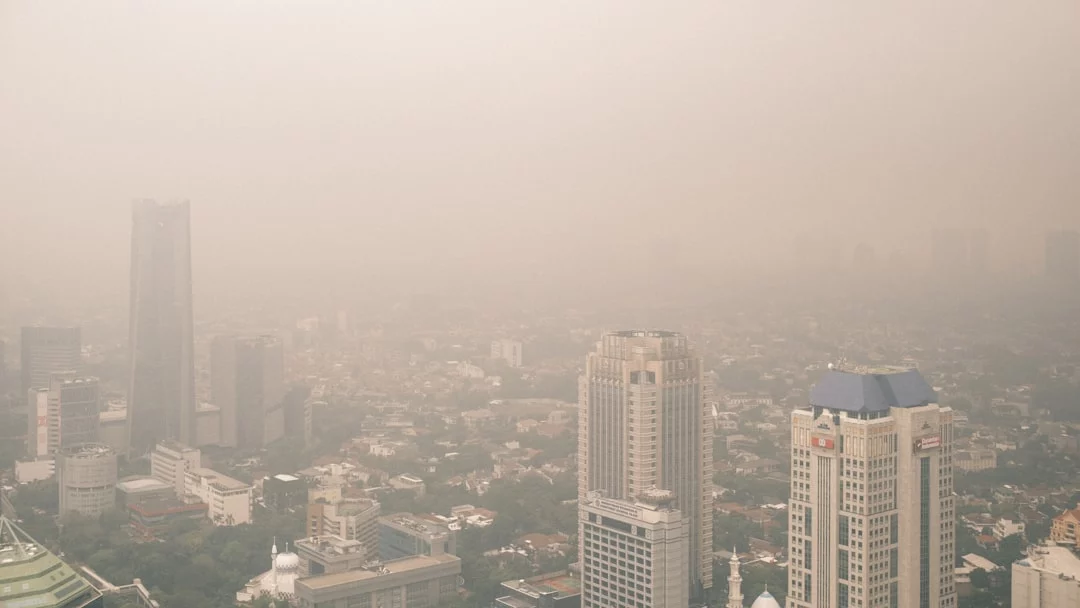
Indonesia wildfire smoke has become an immediate public-health concern after roughly 50,000 respiratory infections were reported only one month into the fire season. The figure signals substantial pressure on communities and health services, but it requires careful interpretation: reported respiratory cases are not necessarily unique patients, and smoke exposure does not prove that every diagnosed infection was caused by fire. Even so, intense, difficult-to-control blazes combined with the prospect of stronger El Niño conditions create a credible risk of worsening air pollution across Indonesia and neighboring countries.
The central problem is not simply the number of fires. Health consequences depend on where they burn, whether they reach carbon-rich peat, how long smoke remains near populated areas, and which way the wind carries the plume. This analysis examines those mechanisms, the limits of the available health figures, the weaknesses of seasonal fire control, and the measures that can reduce exposure before smoke becomes a regional emergency.
Why Indonesia’s Fire Season Can Escalate Rapidly
Fire is not new to Indonesia’s agricultural and forest landscapes. It has long been used to clear vegetation because it is fast and comparatively inexpensive. The danger rises when controlled burning escapes into degraded forests or drained peat. Unlike an ordinary surface fire, a peat fire can smolder underground, spread through dry organic material, and continue despite rainfall or conventional suppression efforts.
Indonesia’s geography adds complexity. Fires can occur across large, fragmented territories where road access, water supplies, firefighting personnel, and monitoring capacity vary sharply. Satellite detections may identify heat anomalies, but a hotspot is not automatically a confirmed wildfire. Cloud cover can also obstruct observations, while underground peat combustion may be difficult to assess remotely. Effective response therefore requires satellite intelligence, aerial surveillance, field verification, local reporting, and reliable land-ownership records.
The Role of Land Use and Peat Drainage
Indonesia’s fires cannot be explained by weather alone. Agricultural expansion, plantation development, logging, degraded land, and contested tenure can create combustible landscapes. The practice commonly described as slash-and-burn cultivation includes very different activities, from traditional small-scale farming to commercial land clearance. Treating every fire as an identical offense can obscure who controls the land, who benefits from clearing, and who has the resources to prevent an escape.
Peat drainage is especially consequential. Healthy tropical peatlands remain wet and resist combustion. Drainage canals lower the water table, exposing organic matter to drying and oxidation. Once ignited, that material can produce persistent smoke and large greenhouse-gas emissions. Blocking canals, rewetting peat, restoring vegetation, and maintaining water levels are therefore not peripheral conservation projects; they are core fire-prevention infrastructure.
How Indonesia Wildfire Smoke Harms the Respiratory System
Smoke is a mixture of gases and particles whose composition changes with fuel, temperature, moisture, and distance from the fire. The pollutant of greatest immediate health concern is generally fine particulate matter, particularly PM2.5. These particles are small enough to penetrate deep into the lungs, aggravating inflammation and reducing respiratory resilience. The World Health Organization’s wildfire guidance associates smoke exposure with respiratory and cardiovascular harm, especially among vulnerable groups.
Short-term exposure can cause coughing, throat irritation, wheezing, headaches, eye irritation, and breathlessness. It can also exacerbate asthma and chronic obstructive pulmonary disease. Longer or repeated exposure raises more complex concerns because populations may experience cumulative pollution over successive fire seasons. Health risks depend on concentration, exposure duration, age, underlying illness, occupation, housing quality, and access to treatment.
Respiratory Infection Is a Broad Category
The reported total of approximately 50,000 respiratory infections is alarming, but it should not be read as a precise count of illnesses directly created by smoke. A respiratory tract infection is caused by a pathogen, whereas smoke is an environmental exposure. Smoke may irritate airways, worsen symptoms, increase susceptibility, or prompt people with an existing infection to seek care. Clinical surveillance systems may also group several acute respiratory complaints under broad reporting categories.
The defensible interpretation is that a major respiratory burden is occurring during the fire season—not that wildfire smoke has been proven to cause every reported case.
Better analysis requires daily case definitions, geographic breakdowns, patient age, repeated-visit controls, baseline rates, PM2.5 measurements, and comparison with areas less affected by smoke. Without those details, the total is an important warning indicator rather than a complete causal estimate.
Who Faces the Highest Risk?
- Children, whose lungs are still developing and who inhale more air relative to body size.
- Older adults, particularly those with cardiovascular or respiratory disease.
- Pregnant people, for whom sustained air-pollution exposure may create additional health concerns.
- People with asthma, COPD, or heart disease, who may deteriorate at pollution levels tolerated by healthier adults.
- Outdoor workers and firefighters, whose exposure can be prolonged and physically demanding.
- Low-income households, which may lack filtered indoor spaces, suitable masks, transport, or timely medical care.
El Niño Could Amplify the Fire and Health Risks
El Niño is the warm phase of the El Niño–Southern Oscillation, a recurring climate pattern in the tropical Pacific. Its effects vary by event and location, but it is often associated with drier conditions in parts of Indonesia. Reduced rainfall can dry vegetation and peat, increase ignition probability, and make active fires more difficult to extinguish.
The danger is nonlinear. A modest reduction in rainfall does not merely add a fixed number of fires. It can move a landscape across a threshold at which fuel becomes sufficiently dry for rapid spread. If drought coincides with deliberate burning, strong winds, low peat water tables, and delayed suppression, the resulting smoke can persist for weeks.
However, El Niño should not become an excuse for policy failure. Climate variability influences fire conditions, but ignition, land management, peat drainage, enforcement, and emergency preparedness remain human-controlled factors. Officials should use forecasts from Indonesia’s Meteorology, Climatology, and Geophysical Agency to trigger preventive action rather than treating forecasts as explanations after damage occurs.
A Regional Transboundary Haze Problem
When smoke crosses national borders, a domestic land-management failure becomes a diplomatic, economic, and public-health issue. Southeast Asian haze episodes have previously affected Indonesia, Singapore, Malaysia, Brunei, Thailand, and other parts of the region. Wind direction and atmospheric conditions determine whether smoke remains local or travels hundreds of kilometers.
The economic consequences extend beyond medical costs. Severe haze can disrupt aviation, schools, construction, tourism, logistics, and outdoor commerce. Households also bear private costs for masks, medicine, air filtration, missed work, and temporary relocation. These burdens are distributed unevenly: those least responsible for landscape fires may have the fewest resources to avoid exposure.
The ASEAN Haze Portal supports regional monitoring and information exchange. Yet coordination is only as effective as the underlying data and enforcement. Governments need comparable pollution measurements, rapid sharing of fire locations, transparent concession maps, and procedures for investigating corporate or individual responsibility.
Why Fire Suppression Alone Is Insufficient
Water bombing, ground crews, and emergency declarations are necessary when fires are active, but they are expensive responses to a preventable risk. Aircraft may suppress visible flames without extinguishing deep peat combustion. Firefighters can also face access problems, dangerous smoke, limited water, and rapidly changing wind.
A more effective system acts before ignition. It combines peatland hydrology, community incentives, legal accountability, weather forecasting, health preparedness, and land-use governance. The persistent policy mistake is to treat these components as separate sectors when they are parts of one risk system.
Priority Measures Before Conditions Deteriorate
- Rewet high-risk peatlands. Agencies should monitor water tables and block or manage drainage channels before prolonged dry periods.
- Verify hotspots rapidly. Satellite alerts should be matched with field teams, land records, wind forecasts, and evidence of fire spread.
- Pre-position firefighting resources. Pumps, hoses, aircraft, trained personnel, protective equipment, and water access should be deployed according to forecast risk.
- Provide viable alternatives to burning. Smallholders need machinery, financing, training, and biomass-management options, not prohibitions they cannot afford to follow.
- Publish enforcement outcomes. Naming a suspected location is not enough; authorities should disclose investigations, evidence, sanctions, remediation, and case resolution.
- Integrate health surveillance with air data. Clinics should report standardized symptoms and diagnoses alongside local PM2.5 readings.
Practical Protection During Smoke Episodes
Residents should follow verified local air-quality and health advisories rather than relying on visibility or odor. The air quality index converts pollutant measurements into health categories, although index thresholds and calculation methods can differ between jurisdictions. Raw PM2.5 concentrations, monitoring location, and update time provide useful context.
- Reduce strenuous outdoor activity when particulate pollution is elevated, especially for children and people with chronic disease.
- Keep doors and windows closed when outdoor air is worse, while avoiding indoor combustion from smoking, candles, or poorly vented cooking.
- Use a correctly sized HEPA air cleaner where possible and replace filters according to manufacturer guidance.
- If outdoor exposure is unavoidable, use a well-fitting particulate respirator such as an N95 or equivalent. Loose surgical or cloth masks provide limited protection from fine smoke particles.
- Maintain prescribed asthma or heart medication and seek medical advice before conditions become severe.
- Obtain urgent help for serious breathlessness, chest pain, confusion, bluish lips, fainting, or rapidly worsening symptoms.
Public institutions should do more than advise residents to remain indoors. Schools, clinics, shelters, and community buildings need filtered-air rooms, clear closure thresholds, backup power, and plans for distributing suitable respirators. Advisories are ineffective when people must work outside or live in buildings that cannot exclude smoke.
Frequently Asked Questions
How does wildfire smoke affect breathing?
Fine particles and irritating gases inflame the airways and can trigger coughing, wheezing, breathlessness, asthma attacks, and worsening chronic lung disease. Effects vary with pollution concentration, exposure time, and individual vulnerability.
Does smoke directly cause respiratory infections?
Respiratory infections are caused by pathogens, not smoke itself. Smoke can irritate the respiratory tract, aggravate an existing infection, and may increase vulnerability. A rise in clinic cases during fires does not by itself establish individual causation.
Why are Indonesian peat fires difficult to extinguish?
Dry peat can burn beneath the surface, beyond visible flames. Suppression requires sustained water delivery and restoration of moisture across the affected peat layer, not only extinguishing surface vegetation.
Will El Niño guarantee a catastrophic fire season?
No. El Niño may increase dryness in parts of Indonesia, but outcomes depend on rainfall distribution, ignition levels, peat condition, wind, prevention, and response. Forecast risk is a reason for earlier intervention, not a certain prediction.
The Metric That Matters Next
The reported 50,000 respiratory infections should trigger action, but the most revealing future measure will be whether authorities can prevent fire alerts from becoming prolonged population exposure. That requires publishing timely PM2.5 data, peat-water conditions, verified burned area, health trends, enforcement results, and the resources deployed before the seasonal peak.
Over the next several years, better satellites, lower-cost sensors, improved atmospheric modeling, and more accurate seasonal forecasts may strengthen early warning. Technology will not resolve unclear land tenure, weak accountability, or unaffordable alternatives to burning. The decisive question is therefore institutional: can Indonesia convert increasingly precise warnings into preventive action quickly enough to protect communities before smoke crosses lungs and borders?
SEO Data
Primary Focus Keyphrase: Indonesia wildfire smoke
Related Keyphrase 2: respiratory infections from wildfire smoke
Related Keyphrase 3: El Niño Indonesia fire season health risks
Related Keyphrase 4: how does wildfire smoke affect breathing
Related Keyphrase 5: Southeast Asia transboundary haze
Primary Keyphrase Synonyms: Indonesian wildfire haze, Indonesia fire smoke, Indonesian forest fire pollution, smoke from Indonesia’s wildfires, Indonesia fire-season air pollution
SEO Title: Indonesia Wildfire Smoke: Health and El Niño Risks
Meta Description: Indonesia wildfire smoke is driving respiratory illness concerns. Examine peat fires, El Niño risks, health impacts, prevention, and regional haze.
URL Slug: indonesia-wildfire-smoke
Image Filename: indonesia-wildfire-smoke-respiratory-crisis.jpg
Image ALT Text: Indonesia wildfire smoke covering a community as firefighters respond near burning peatland
Image Title: Indonesia Wildfire Smoke and Peatland Fires
Image Caption: Smoke from peat and vegetation fires can expose Indonesian communities to dangerous particulate pollution.
Search Intent: Informational and news/current event
Frequently Asked Questions
Does the reported figure of 50,000 respiratory infections mean wildfire smoke caused 50,000 people to become ill?
Not necessarily. Reported cases may include repeat visits by the same patient, and respiratory infections can have causes unrelated to smoke. The figure still indicates substantial pressure on communities and health services. Establishing causation requires comparing diagnoses, pollution levels, exposure timing, patient locations, and normal seasonal patterns.
Why are peat fires more dangerous and difficult to extinguish than ordinary vegetation fires?
Drained peat contains deep layers of dry organic material that can ignite and smolder underground. These fires may spread beyond visible flames, resist conventional suppression, and continue after light rainfall. They can also release persistent smoke, fine particles, and significant greenhouse-gas emissions over extended periods.
Does every satellite hotspot represent a confirmed wildfire?
No. A hotspot is a detected heat anomaly and may not always be an active wildfire. Clouds can hide fires, while underground peat combustion may be underestimated remotely. Accurate assessment combines satellite data with aerial surveillance, local reports, field verification, and reliable information about land ownership and land use.
How could El Niño worsen Indonesia's wildfire smoke crisis?
El Niño can bring drier conditions to parts of Indonesia, lowering soil and peat moisture and extending the period during which vegetation can burn. It does not ignite fires by itself, but it can make escaped agricultural or land-clearing fires spread faster, burn longer, and become harder to suppress.
Why can neighboring countries be affected even when most fires occur within Indonesia?
Smoke does not remain within national borders. Wind direction, atmospheric stability, rainfall, fire intensity, and the altitude of the plume determine how far pollution travels. Persistent peat smoke can be transported across maritime Southeast Asia, causing unhealthy air even in places located far from the original fires.
Which prevention measures are most effective in peatland areas?
The most effective approach is to keep peat wet enough to resist combustion. Measures include blocking drainage canals, restoring vegetation, maintaining water tables, monitoring dry zones, and responding quickly to ignition. Clear land-tenure records and enforcement against irresponsible clearing are also essential because restoration alone cannot eliminate human-caused fire risk.