
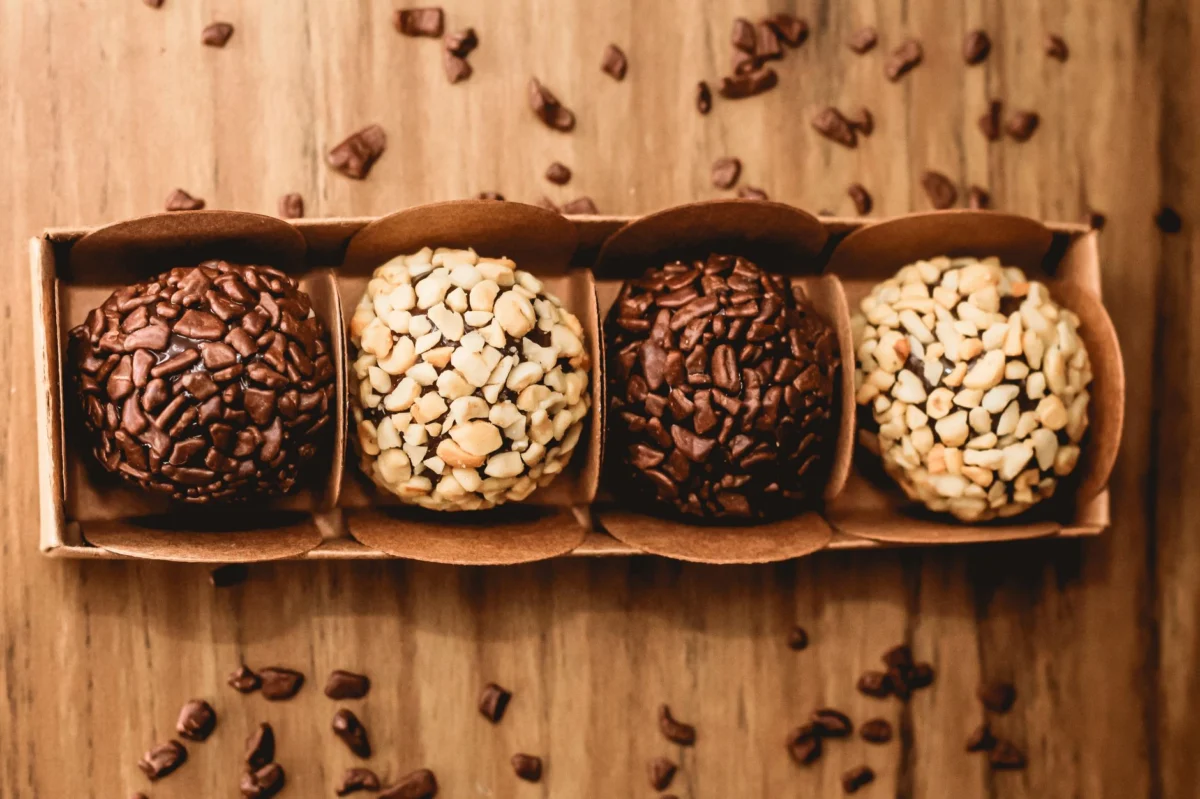
Easy desserts with 4 ingredients are appealing for a reason: they lower friction without necessarily lowering quality. The best versions are not lazy desserts; they are compressed ones. They strip away decorative complexity and focus on the core mechanics of dessert: sweetness, texture, fat, and contrast. That is why a short list can still produce something memorable.
The recent popularity of minimal-ingredient sweets reflects a practical shift in home cooking. People want faster desserts, fewer purchases, and less cleanup. But the category is worth analyzing critically, because a dessert with four ingredients or fewer is only impressive when each component earns its place. Otherwise, simplification becomes compromise.
Why four ingredients is enough for many desserts
A dessert does not need a crowded pantry to work. Most successful formulas rely on a small set of building blocks: sugar for sweetness, a fat source for richness, a structural element such as eggs or dairy, and a flavor driver like chocolate or vanilla. Add one controlled process—baking, chilling, whipping, or freezing—and the dessert is complete.
Structure, not just sweetness, is the real constraint
Most failures in 4 ingredient dessert recipes come from ignoring structure. Sugar can sweeten, but it cannot stabilize a mousse. Butter adds richness, but it does not create lift. Whipped cream creates volume, but it collapses if handled carelessly. The best recipes manage these tradeoffs intentionally rather than pretending they do not exist.
That is why many low-ingredient desserts borrow techniques from classic confectionery rather than casual home baking. A chilled cheesecake, for example, depends on emulsified dairy and controlled setting. A fruit-based sorbet depends on freezing behavior, not baking prowess. A simple shortbread depends on a high-fat dough and restraint.
What gets simplified, and what does not
The recipe shortens, but the physics do not. A good four-ingredient dessert still needs correct ratios, temperature control, and timing. Panna cotta looks effortless, yet its success depends on gelatin balance and refrigeration. Meringue seems minimal, but the technique is unforgiving. Simplicity removes clutter; it does not remove discipline.
Which dessert formats adapt best to minimal ingredient lists
Some dessert families are naturally suited to this format because they already rely on a dominant ingredient and a small amount of support. Others become unstable when reduced too far. The difference matters if you are choosing recipes for weeknights, parties, or quick prep.
| Dessert type | Why it works with four ingredients | Main weakness |
|---|---|---|
| No-bake cheesecake | Relies on cream cheese, sweetener, whipped cream, and a crust shortcut. | Can be too soft if the ratios are off. |
| Chocolate bark | Depends on one strong base ingredient plus a crunchy topping. | Quality is only as good as the chocolate. |
| Fruit parfait | Uses layering to create variety from a few ingredients. | Can feel trivial without texture contrast. |
| Shortbread-style cookies | Fat, flour, sugar, and salt create a clean, reliable formula. | Easy to overbake and flatten the flavor. |
| Frozen fruit dessert | Often needs only fruit, sweetener, acid, and a dairy or water base. | Texture suffers if the freezing step is mishandled. |
This is where equipment can substitute for ingredients. A food processor can turn dates, nuts, and cocoa into a coherent dessert base. A microwave oven can melt, bind, and finish certain recipes without adding a fifth ingredient. A refrigerator often does the heavy lifting by setting the structure after mixing.
The most common mistakes in simple dessert recipes
- Using weak ingredients: If the recipe has only four elements, there is no room for bland chocolate or watery dairy to hide.
- Confusing minimal with unfinished: A dessert should feel designed, not merely reduced.
- Ignoring contrast: Even a simple dessert needs crunch, creaminess, acidity, or temperature contrast.
- Overreliance on sugar: Sweetness alone does not create depth.
- Skipping temperature control: Chilled desserts and baked desserts fail for different reasons, but both depend on timing.
These mistakes are especially visible in recipes built around ice cream or fruit, because the final texture is immediately exposed. If the recipe is underdeveloped, there is nowhere for the flaws to hide.
How to make four ingredients taste deliberate
- Choose one dominant flavor. Chocolate, citrus, caramel, berries, or vanilla should lead.
- Use one texture contrast. Creamy with crunchy, soft with crisp, cold with warm.
- Keep the ratio tight. Minimal recipes fail fastest when measurements are vague.
- Use the best version of each ingredient. The smaller the list, the more each item matters.
- Respect the process. Whipping, chilling, folding, and baking are not interchangeable.
That logic explains why many cooks keep returning to simple dessert structures even when more elaborate recipes exist. A well-made four-ingredient dessert can feel cleaner and more modern than a longer recipe because its intention is visible on the plate.
FAQ: easy desserts with 4 ingredients
Are four-ingredient desserts actually cheaper?
Usually, yes, but only if the ingredients are ordinary pantry items. A short list can still be expensive if it depends on premium chocolate, specialty dairy, or imported flavorings.
Can these desserts be made ahead?
Many can. In fact, chilled desserts such as no-bake cheesecake, panna cotta, and frozen fruit desserts often improve with time because the structure firms up in the refrigerator.
Which ingredients matter most in a minimal recipe?
Fat and flavor usually matter most. In simple desserts, butter, cream, chocolate, fruit, and vanilla do more heavy lifting than filler ingredients ever could.
What four ingredients really prove
The strongest insight in easy desserts with 4 ingredients is not that dessert should be simpler; it is that simplicity exposes quality. When a recipe uses fewer components, every decision becomes more visible: the choice of fat, the level of sweetness, the method, and the texture finish. That is why minimal-ingredient desserts can look effortless while still demanding discipline.
What to watch next is the continuing shift toward no-bake formats, pantry-based sweets, and smaller recipes designed for households that do not want leftovers. The likely future is not more elaborate dessert engineering; it is more strategic simplicity. The unanswered question is whether home cooks will use fewer ingredients to make better desserts, or merely faster ones. The distinction matters, and the best recipes will keep proving it.
Frequently Asked Questions
Why do some 4-ingredient desserts taste complete while others feel too simple?
The difference is usually structure and contrast, not the number of ingredients. Strong desserts balance sweetness, fat, texture, and a clear flavor driver. If one ingredient is only doing one job and the ratios are right, the result feels intentional. If the recipe only reduces ingredients without preserving balance, it can taste flat or unfinished.
What ingredient is most often missing in failed minimal dessert recipes?
Texture support is often the missing piece. Many simple desserts have sweetness and flavor, but not enough structure to hold their shape or create contrast. That is why whipped cream, gelatin, eggs, crusts, or a crunchy element matter so much. Without them, the dessert may taste fine but still feel soft, dull, or one-dimensional.
Do no-bake desserts work better than baked ones when you only use four ingredients?
Not necessarily. No-bake desserts can be easier because chilling replaces oven work, but they also rely heavily on proper ratios and refrigeration. Baked desserts often have more built-in structure, which can make them more forgiving. The best choice depends on whether the recipe needs setting, lift, or a crisp finish.
How can equipment make up for having fewer ingredients?
Tools can do some of the work that extra ingredients would normally handle. A food processor can create a smooth base from nuts or dates, a microwave can melt and bind ingredients quickly, and a refrigerator can set a mixture into a stable dessert. In minimal recipes, technique and equipment often matter more than the pantry list.
Why do some fruit-based desserts need acid or dairy instead of just fruit and sweetener?
Fruit and sweetener alone can taste one-note or overly soft. Acid brightens the flavor and keeps the dessert from tasting dull, while dairy or another base adds creaminess and structure. Those extra elements help create contrast, which is especially important when the recipe has no room for many ingredients.