
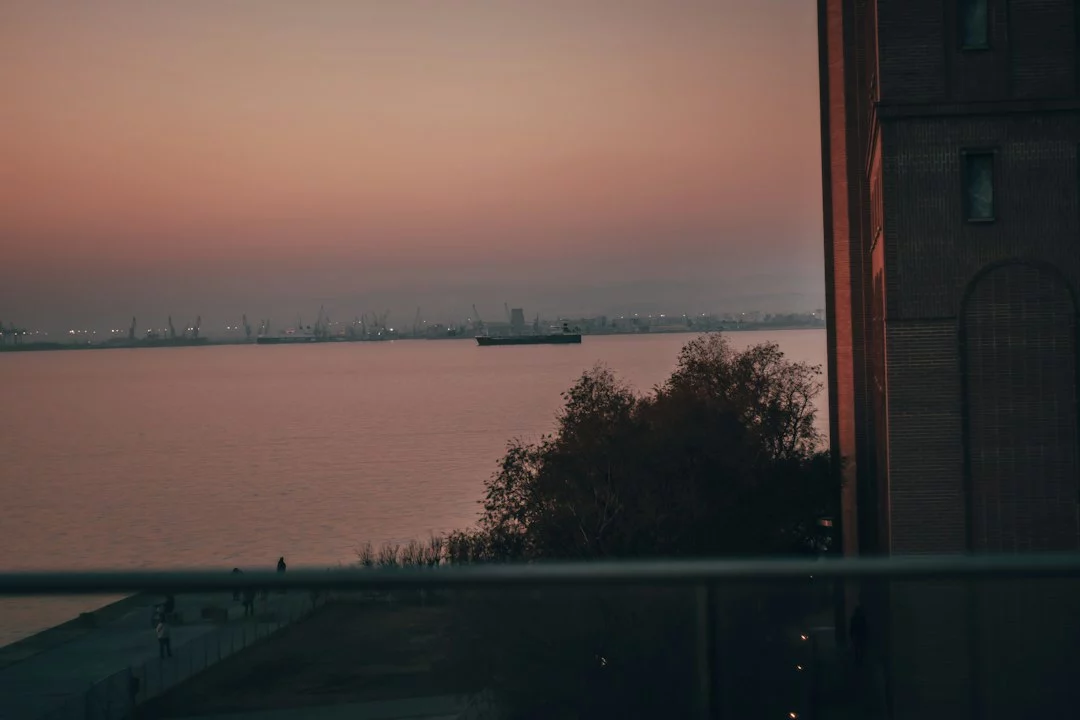
A Thessaloniki winter sun holiday makes sense for one simple reason: it offers the benefits many travellers want from Greece without pretending to be a beach resort in denial. The city is not trying to compete with island glamour. Instead, it delivers mild weather, a walkable centre, strong food culture, and prices that can fall sharply once summer demand disappears. That combination explains why the Greek city now keeps appearing in conversations about the best underrated winter-sun break.
The appeal is not cosmetic. Thessaloniki, on the Thermaic Gulf, has the density of a major city and the atmosphere of a place that has been continuously layered for centuries. It is Greece’s second-largest urban centre, but it rarely feels overmanaged or overpackaged. That matters in winter, when the absence of crowds is not a marketing slogan but the defining condition of the trip.
Why Thessaloniki fits the winter sun brief
Winter-sun travel is often sold as a thermal promise: warmth, beaches, and a tidy escape from cold weather. That framing is too narrow. In practice, many travellers want daylight, livability, and a setting where cafés, museums, and streets still matter when swimming is no longer the main activity. Thessaloniki fits that brief better than most Greek destinations because it is urban, not resort-led. Its climate is part of the story, but its structure is the real advantage. The city sits far enough south to avoid the severe winters of northern Europe, yet it is built for ordinary life rather than seasonal tourism.
The city also benefits from its position inside the historical region of Macedonia, where Greek, Roman, Byzantine, Ottoman, and modern Greek histories overlap in a way that is visible on the street. That density gives winter visitors something many island trips lack: reasons to stay outside all day even when the sea is not the main attraction. A cold day can still be a good day if the city can hold your attention.
The historical layers are the real product
Thessaloniki is not interesting because it is polished. It is interesting because it has survived too much history to be reduced to one era. The city’s monuments include the White Tower of Thessaloniki, the Arch of Galerius, the Rotunda of Galerius, the Roman Forum of Thessaloniki, and the Church of Saint Demetrius. Add the city’s early Christian and Byzantine monuments, and the case for winter travel becomes obvious: this is an open-air history lesson that does not depend on high temperatures.
The strongest argument for Thessaloniki is not that it is underrated. It is that it is structurally suited to off-season travel, and most travellers only discover that after they have paid summer prices elsewhere.
What the underrated label gets right — and what it hides
Calling Thessaloniki underrated is not wrong, but it is incomplete. The city still carries some of the friction that better-known Greek destinations have edited out: rough edges, dense traffic, uneven pavements, and a streetscape that can swing from grand to tired within one block. The graffiti and damaged shopfronts that first-time visitors notice are not trivial details. They are evidence that the city is lived in, not staged.
That is a virtue if you want authenticity, and a drawback if you want a resort-style environment. Thessaloniki is closer to a real working city than to a curated holiday zone. Its energy comes from institutions such as Aristotle University of Thessaloniki, from neighbourhoods like Ladadika and Ano Poli, and from a street culture that keeps functioning when tourism drops. If the phrase ‘best underrated winter sun holiday’ means anything, it should mean this: a city where the off-season improves the experience instead of exposing a weakness.
The price advantage is real, but not the whole story
The headline about £40 hotels is not the core argument, but it is not irrelevant either. Off-season pricing matters because it changes behaviour. When accommodation is cheaper, travellers can spend more on better food, longer stays, or day trips instead of paying summer premiums for the privilege of being crowded. The same dynamic applies to flights, restaurants, and local transport. None of this guarantees a bargain, and prices vary by dates and demand, but the direction of travel is clear: winter is cheaper than peak summer, often substantially so.
Still, cost alone does not make a destination worthwhile. Plenty of cheap cities feel cheap in the wrong sense: limited, empty, or exhausted. Thessaloniki works because the lower price comes with a genuinely better urban rhythm. The city is not being discounted because it is inferior; it is discounted because demand is more seasonal than its underlying quality would justify.
How to spend a winter day without wasting the city
Start on the waterfront
Begin with the promenade, not because it is the most historic place in town, but because it establishes the city’s proportions. The waterfront makes clear that Thessaloniki is a port city with maritime light, long views, and a horizon that changes the mood of winter. The Aristotelous Square area gives you the formal centre; the walk north or south along the bay gives you the city’s everyday face. In winter, the promenade is at its best precisely because it is not overrun. You can see the architecture, the sea, and the people using the space without the constant interruption of tourist congestion.
The nearby White Tower works as a visual anchor, even if you have no intention of turning every visit into a monument checklist. This is a city where landmarks help orient a walk rather than replace it.
Move inland for the city’s historical core
Once you leave the waterfront, the city becomes more layered. The Museum of Byzantine Culture gives context to the city’s religious and artistic history. The Hagia Sophia Church and the Church of Saint Demetrius show how Christianity, empire, and urban identity were intertwined here long before modern tourism arrived. The Roman Forum and the Rotunda are reminders that the city’s historical value is not a single attraction but a chain of layers.
That accumulation is what makes winter useful. In summer, a visitor can rush through these sites and then flee to the coast. In winter, the city rewards slowness. You notice how the Ottoman Empire and Byzantine legacies sit beside modern apartment blocks, and how Thessaloniki’s history is not preserved as a museum piece but embedded in ordinary streets.
Use food as an itinerary, not an afterthought
A serious winter trip to Thessaloniki should be planned around meals, because the city’s food culture is one of its strongest competitive advantages. Markets such as the Modiano Market and the historic Bezesteni area make that obvious, but the broader point is more important: the city encourages lingering. Breakfast, coffee, lunch, and dinner are not just refuelling stops. They are part of the travel pattern.
That is why the city works in winter. If the weather turns grey, the trip does not collapse. You move from one indoor or semi-indoor space to another: bakery, café, museum, market, bar. The rhythm is slower than island-hopping, but it is also more coherent. For many travellers, that is a better use of winter sunlight than chasing a beach that is technically there but functionally irrelevant.
Winter is when Thessaloniki feels most like itself
Some destinations become more generous off-season because they stop performing for visitors. Thessaloniki is one of them. The city’s value is not reduced when the temperature dips; it becomes easier to see. The streets are less crowded, the public spaces more legible, and the everyday life of the city more visible. That matters because it changes the psychology of travel. You are not queuing for access to a version of Greece designed for mass consumption. You are entering a city that functions on its own terms.
| Factor | Summer Greek resort break | Thessaloniki in winter |
|---|---|---|
| Crowds | High, especially in coastal hotspots | Lower and easier to manage |
| Main activity | Beach time and nightlife | Walking, eating, museums, neighbourhoods |
| Cost pressure | Usually higher | Often more forgiving |
| Atmosphere | Seasonal and tourist-led | Urban, local, and year-round |
| Risk | Overcrowding and heat | Cooler weather, but greater comfort for city exploring |
The table is blunt because the trade-off is blunt. If you need guaranteed beach weather, Thessaloniki in winter is the wrong answer. If you want a city break with light, history, and lower friction, it is one of the strongest answers in Greece.
Day trips and the wider region
The city also works as a base for travellers who want to widen the frame. Depending on the season and transport options, excursions to Mount Olympus, Vergina, Meteora, or parts of Halkidiki can extend the trip beyond the city centre. This is where Thessaloniki’s strategic value becomes clear: it is not only a destination, it is a gateway. For travellers who want a broader understanding of northern Greece, few winter bases are more practical.
That said, the temptation to over-plan should be resisted. Thessaloniki does not need to be used as a logistical hub to justify itself. Its core urban experience is enough.
Who should book it — and who should not
- Book Thessaloniki in winter if you want a city break with less pressure, lower costs, strong food, and a dense cultural core.
- Book it if you value walking, history, and café time more than beach clubs and packaged resort amenities.
- Avoid it if you need predictable hot weather, swimming as the main activity, or a polished resort environment.
- Choose elsewhere if your idea of a holiday depends on all-inclusive uniformity rather than local character.
The distinction matters because too many travel recommendations flatten every Greek destination into the same promise. Thessaloniki is not the right trip for every traveller, and that honesty is part of what makes the recommendation credible.
Frequently asked questions about a Thessaloniki winter sun holiday
Is Thessaloniki warm enough for a winter sun holiday?
It is better described as mild rather than hot. The point is not beach weather. The point is a climate that usually remains comfortable enough for long walks, outdoor meals on milder days, and a city break that does not feel trapped indoors.
How many days do you need in Thessaloniki?
Three full days is enough for the essentials if you move efficiently. Four or five days is better if you want to combine the historic centre, the waterfront, food culture, and one day trip beyond the city.
Is Thessaloniki better than Athens in winter?
That depends on what you want. Athens has more iconic ancient sites and a larger museum circuit. Thessaloniki is smaller, more compact, and often feels less exhausting. If your priority is a lower-friction winter city break, Thessaloniki has the stronger case.
What to watch next as Greece’s off-season appeal grows
The important question is not whether Thessaloniki deserves its reputation. It clearly does. The real question is whether more travellers will stop treating Greek cities as transit points and start treating them as destinations in their own right. If that shift happens, the market will change fast: better year-round hotel occupancy, stronger cultural programming outside summer, and more attention on cities that can absorb visitors without collapsing under them.
That is the deeper insight behind the ‘best underrated winter sun holiday’ label. Thessaloniki is not simply cheaper in winter. It is one of the few Mediterranean cities where the off-season exposes quality rather than lack. The next few years will show whether travellers understand that distinction, or whether they keep chasing the same crowded beach formula and calling it a holiday.
Frequently Asked Questions
Is Thessaloniki still a good winter sun destination if I am not going for beaches?
Yes. Thessaloniki works off-season precisely because it is not beach-led. The city is built around walkability, cafés, museums, historic sites, and neighbourhood life, so it stays interesting even when swimming is off the table. For travellers who value daylight, food, and urban exploring over resort-style weather, winter is often the better time to go.
How cold does Thessaloniki get in winter compared with northern Europe?
It is generally milder than much of northern Europe, which is part of its appeal, but it is not reliably warm enough to feel like a summer destination. The benefit is less about heat and more about comfortable, liveable weather for being outdoors. You can expect a city break climate that still allows long walks and sightseeing without severe winter conditions.
Why choose Thessaloniki over the Greek islands for an off-season trip?
Because the islands can feel quiet or even limited outside peak season, while Thessaloniki remains a functioning city all year. Its museums, historic monuments, neighbourhoods, and restaurant scene do not depend on beach weather. That makes it a stronger winter choice if you want atmosphere, variety, and value rather than a pared-back island experience.
Does the city feel too rough around the edges for a relaxing holiday?
It can feel more lived-in than polished, and that is part of the point. You may notice traffic, uneven pavements, graffiti, or worn shopfronts, especially compared with more packaged destinations. But those details are also why the city feels authentic. If you want a pristine resort environment, it may not suit you; if you want real urban energy, it likely will.
How many days do you need to make the most of Thessaloniki in winter?
A long weekend can cover the main historical sights and give you a feel for the city, but four to five days is better if you want to balance monuments, food, and neighbourhood wandering. Winter travel works especially well at a slower pace, because the city rewards time spent moving between sites, cafés, and streets rather than rushing from one landmark to another.