
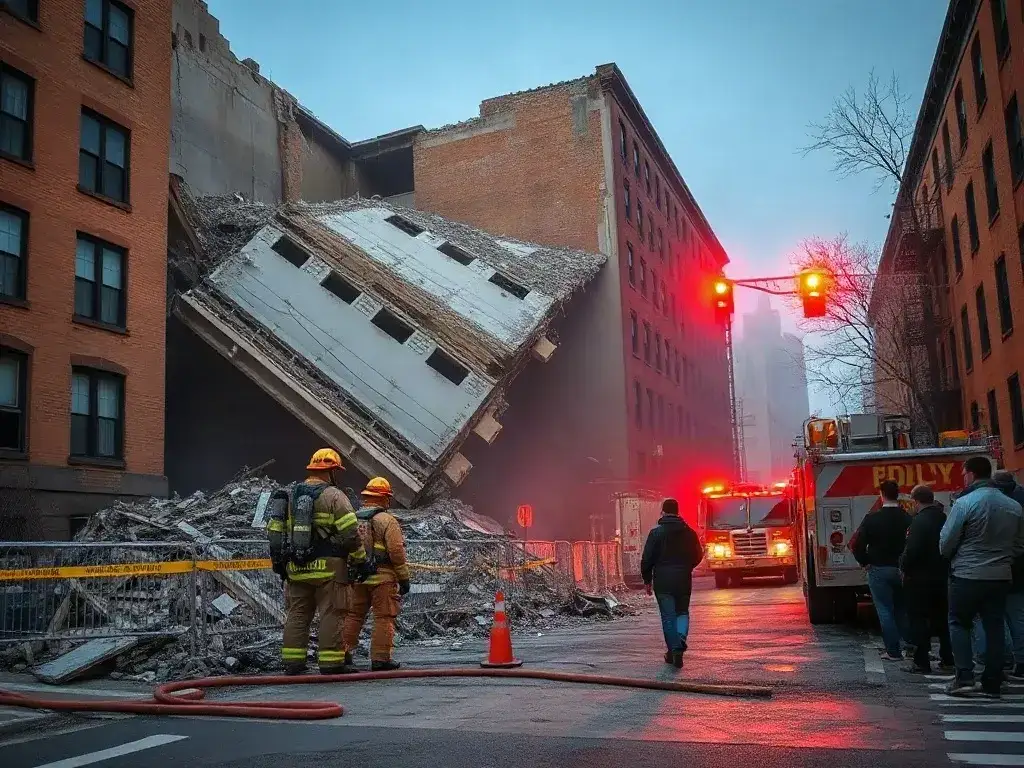
The Brooklyn building collapse that killed eight people, including two children, has left a neighborhood grieving and a city demanding answers. On Wednesday, a residential building fell into an adjacent construction site. Firefighters spent hours combing through the wreckage overnight and declared the operation over on Thursday, as authorities opened an investigation. This analysis sets out what is confirmed, what is still unknown, and why a building failing beside an active construction site raises questions that reach well beyond one address.
What We Know About the Brooklyn Building Collapse
The confirmed facts are stark and limited. Eight people died, two of them children. The building was residential, and it collapsed into a neighboring construction site in Brooklyn. The New York City Fire Department searched the debris through the night before ending the operation on Thursday. The cause has not been established, and any claim about it at this stage would be speculation.
Until investigators publish findings, the cause of this tragedy remains an open question. Being honest about that is not weakness. It is the first requirement of accountability.
Inside the Overnight Search of the Rubble
Why collapse rescues are so punishing
A collapsed residential building is among the hardest environments a rescuer can enter. Floors fall onto floors, and voids that might shelter survivors can shift without warning. Crews practice urban search and rescue, a discipline that combines careful debris removal, structural shoring, listening devices and cameras. Teams often use search and rescue dogs to find people beneath the concrete and timber.
The medical race against time
Survival in rubble depends on hours, not days. People trapped for long periods can also suffer crush syndrome, a dangerous condition caused by prolonged compression of muscle. Declaring an operation over is therefore among the heaviest decisions a commander makes. It means the search has shifted from rescue to recovery, and to the families who must now face the finality.
How Investigators Approach a Building Failure
Determining why a structure fell is slow, methodical work. It is the domain of forensic engineering, which reconstructs events from physical evidence, design records, inspection histories and witness accounts. Investigators will want to know how the collapsed building’s load-bearing walls and foundation were built and maintained, and what changed in the ground around it.
The construction-site question
Because the building fell into a neighboring construction site, the interaction between the two properties will almost certainly be examined. Excavation next to an existing structure can require underpinning and shoring to support neighboring foundations. Whether any such work was involved here has not been confirmed. Investigators will also weigh alternative explanations, including long-term deterioration, prior alterations or unrelated structural defects. Responsible analysis keeps all of these possibilities open until the evidence narrows them.
Who Regulates Safety and Who Is Accountable
In New York, building and construction oversight falls mainly to the New York City Department of Buildings, which enforces the building code. Worker safety falls under the federal Occupational Safety and Health Administration, which publishes official excavation safety guidance. Readers can check a property’s public records through the Department of Buildings website. The building collapse investigation may ultimately examine permits, inspections, contractor decisions and engineering sign-offs, and could lead to civil or criminal consequences if wrongdoing is found.
Lessons From Earlier Disasters
History shows how such investigations unfold. The Surfside condominium collapse in Florida led to years of technical analysis and reform debates. The Rana Plaza collapse in Bangladesh reshaped global conversations about building safety. In New York, the 2014 East Harlem gas explosion also showed how quickly an ordinary residential block can become a disaster scene. These events differ in cause, but each produced the same pattern: public grief, a long investigation, then pressure for systemic change.
What Residents and Neighbors Can Do
- Report warning signs such as new cracks, bulging walls, sticking doors or unusual noises by calling 311 or emergency services.
- Check permits for construction next to your building through the city‘s public records.
- Document changes with dated photographs, especially during nearby excavation.
- Ask landlords about structural inspections and maintenance history.
Frequently Asked Questions
What caused the Brooklyn building collapse?
The cause has not been determined. Authorities have opened an investigation, and findings may take months.
How many people died in the collapse?
Eight people were killed, including two children, according to reports on the disaster.
Why do collapse investigations take so long?
Engineers must secure evidence, analyze materials and soil, review records and model failure scenarios before reaching defensible conclusions.
The Question That Will Define What Comes Next
The most important insight is that a collapse like this is rarely a single moment of failure. It is usually the end of a chain of decisions, conditions and oversight gaps that may have been invisible for months or years. Watch for the release of permit and inspection records for both the fallen building and the neighboring site, for the investigators’ preliminary findings, and for any proposed changes to how construction near occupied homes is monitored. These findings could reshape practice well beyond Brooklyn. The central unanswered question is whether this tragedy was truly unforeseeable, or whether the warning signs were there. The answer will determine whether the city simply mourns eight lives or also acts to protect those living beside the next excavation.
Frequently Asked Questions
Has the cause of the Brooklyn building collapse been determined?
No. Authorities have only confirmed that eight people died and that the residential building fell into a neighboring construction site. The cause is still unknown, and investigators have not published findings. Any claim about why it fell at this stage would be speculation until evidence is analyzed.
Why does the adjacent construction site matter to the investigation?
Excavation next to an existing building can undermine its foundation unless underpinning and shoring are used. Investigators will examine how the two properties interacted. It has not been confirmed that such work was involved, and they will also consider deterioration, prior alterations or unrelated structural defects.
What does it mean when firefighters end the operation after a collapse?
It means the effort has moved from rescue to recovery. Survival in rubble depends on hours rather than days, and trapped people can suffer crush syndrome from prolonged muscle compression. Ending the operation is one of the heaviest decisions a commander makes, because it signals families must face finality.
Who is responsible for oversight of buildings and construction sites in New York?
The New York City Department of Buildings enforces the building code and oversees construction, while the federal Occupational Safety and Health Administration covers worker safety, including excavation guidance. Investigators may review permits, inspections, contractor decisions and engineering sign-offs, which could lead to civil or criminal consequences if wrongdoing is found.
Can residents check the records of a property after an incident like this?
Yes. The Department of Buildings website provides public records for New York City properties, which readers can use to review a building's permits, inspections and violations. These records can help residents understand a building's history, though they will not by themselves explain the cause of this collapse.
How long might it take to learn why the building fell?
Probably a long time. Forensic engineering reconstructs events from physical evidence, design records, inspection histories and witness accounts, which is slow, methodical work. Earlier disasters such as the Surfside collapse in Florida led to years of technical analysis and reform debates before conclusions were reached.