
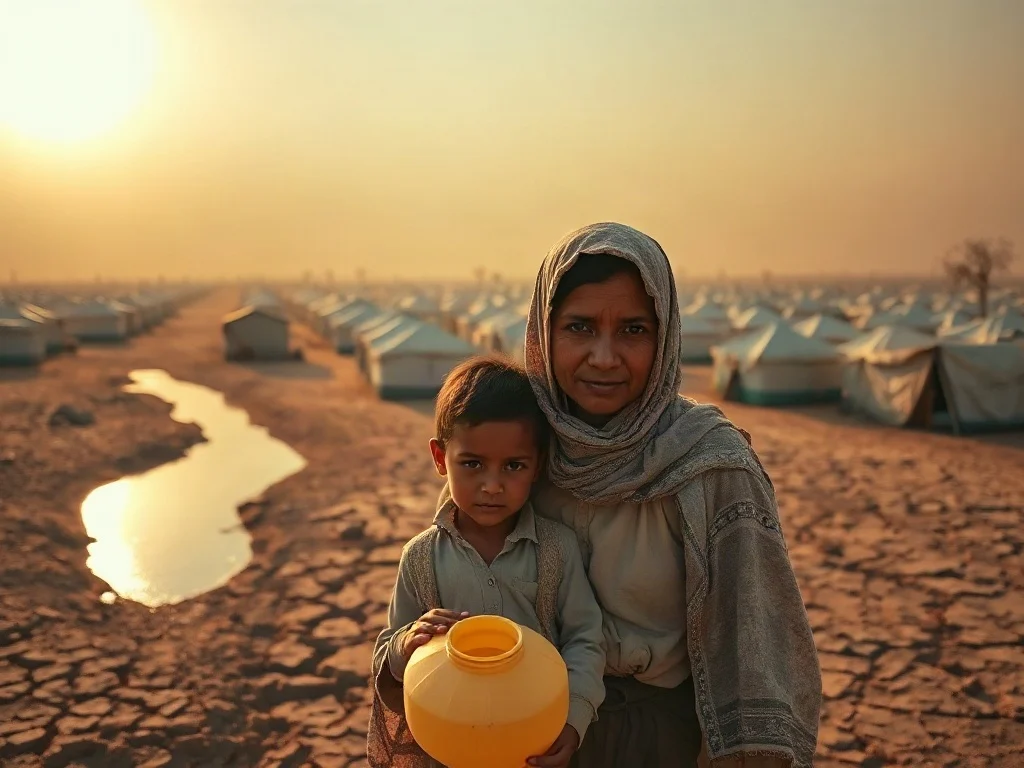
Nearly 90 million people uprooted by war, persecution and violence now live in countries highly exposed to climate hazards. That is roughly three-quarters of everyone forcibly displaced worldwide, according to the UN refugee agency. The warning on forced displacement and climate change arrives ahead of the COP31 climate summit in Turkey, and it describes a crisis that compounds itself: people who have already lost their homes are settling in places where drought, flood and extreme heat keep threatening what little they have rebuilt.
What the UNHCR Warning Actually Says
The United Nations High Commissioner for Refugees (UNHCR) reports that droughts, floods and extreme heat are making lasting solutions harder to find. The figure itself is striking. If nearly 90 million is three-quarters of the total, the global displaced population is well above 100 million. The key word is exposure. The finding does not say climate change caused every displacement. It says displaced people are disproportionately concentrated in climate danger zones, where each new shock lands on households with no savings, insecure land rights and limited access to services. Full data and ongoing analysis are available from UNHCR.
Why Displaced People End Up in Climate Danger Zones
Conflict and climate vulnerability overlap
Many of the world’s most fragile states are also among its most climate-exposed. Weak institutions leave little capacity for disaster preparedness, and conflict destroys the infrastructure that would otherwise cushion a bad harvest or a flood. Researchers often describe this as a threat multiplier effect, though the exact causal links differ from one country to another and remain debated.
Displacement pushes people toward risky land
An internally displaced person or a refugee rarely chooses where to settle. Cheap or unclaimed land is often flood-prone, degraded or intensely hot. A refugee camp built on a floodplain, or an informal settlement on a dry hillside, turns a humanitarian shelter into a long-term hazard.
How Droughts, Floods and Heat Block Lasting Solutions
Humanitarian agencies traditionally pursue three durable solutions: voluntary return, local integration and resettlement. Climate hazards undermine all three.
- Return becomes impossible when home regions suffer prolonged drought, desertification or recurring flooding that wipes out farmland.
- Local integration stalls when host communities are already stretched by water scarcity and rising prices, a pressure tied to food security shocks.
- Resettlement remains available only to a tiny fraction of those in need.
Each flood or heat wave can also trigger secondary displacement, forcing people to flee a second or third time and eroding any progress toward stability.
How Does Climate Change Cause Displacement?
Understanding how climate change drives displacement requires separating sudden and slow-onset events. Floods and storms displace people abruptly. Drought, heat and land degradation work gradually, eroding livelihoods until staying is no longer viable. Most movement stays within national borders, which matters legally: the 1951 Refugee Convention was written around persecution, not environmental harm. It offers no formal refugee status for climate impacts alone. Protection against non-refoulement can still apply when climate effects combine with conflict or violence, an area where legal interpretation is still evolving. The Global Compact on Refugees acknowledges environmental drivers but does not create binding obligations.
What COP31 in Turkey Needs to Deliver
The UNHCR message targets the Conference of the Parties process, where negotiators implement the Paris Agreement. Host country Turkey shelters one of the world’s largest refugee populations, which gives the summit unusual symbolic weight. Observers should watch whether negotiators:
- Direct climate finance toward fragile and conflict-affected states, where funding has historically been thinnest.
- Fund climate change adaptation for displaced and host communities together, rather than separately.
- Include displaced people in national adaptation plans and disaster-risk systems.
Practical Steps for Governments and Aid Organizations
Practitioners increasingly argue that humanitarian planning must treat climate risk as a baseline condition. Useful measures include:
- Climate-risk mapping before siting settlements, to avoid floodplains and water-scarce areas.
- Heat-resilient shelter and cooling access, since standard emergency shelters can become dangerous in extreme heat.
- Livelihood programs tied to drought-tolerant agriculture and local markets.
- Early-warning systems that reach people outside formal registration systems.
A common mistake is treating displaced populations as separate from host communities. Climate stress is shared, and solutions that serve both groups reduce tension and tend to be more durable.
Frequently Asked Questions
How many displaced people live in climate danger zones?
UNHCR says nearly 90 million forcibly displaced people, about three-quarters of the global total, live in countries highly exposed to climate hazards.
Are climate refugees legally recognized?
Not under the 1951 Refugee Convention. Protection may still apply where climate impacts intersect with conflict or persecution, but the legal picture is unsettled.
Why does COP31 matter for displaced people?
The summit shapes climate finance and adaptation priorities. Displaced people are often left out of both.
The Question the Summit Cannot Dodge
The most important insight is that displacement and climate risk are no longer two separate crises. They are one feedback loop: instability pushes people into exposed places, and climate shocks make instability harder to end. The decisive test at COP31 will not be the strength of the rhetoric but whether adaptation money actually reaches the camps, settlements and host towns where displaced people live. If it does not, expect more people to be uprooted a second time. Whether the world’s climate architecture can finally be built around those most exposed to it remains the largest unanswered question.
Frequently Asked Questions
Does the UNHCR finding mean climate change caused these 90 million people to flee?
No. The finding is about exposure, not cause. Most of these people were uprooted by war, persecution and violence. The point is that they now live in countries highly exposed to droughts, floods and extreme heat, so each new climate shock hits households that have already lost nearly everything.
Why do displaced people often settle in the most hazard-prone places?
They rarely get to choose. Cheap or unclaimed land is usually the only option, and it tends to be flood-prone, degraded or extremely hot. Camps on floodplains or informal settlements on dry hillsides can turn temporary shelter into a long-term risk for residents.
Can someone be recognized as a refugee only because of climate impacts?
Not under the 1951 Refugee Convention, which was written around persecution rather than environmental harm. However, non-refoulement protection can sometimes apply when climate effects combine with conflict or violence. Legal interpretation here is still evolving, and the Global Compact on Refugees creates no binding obligations.
How do climate hazards undermine the three durable solutions for refugees?
Return fails when home regions face drought, desertification or repeated flooding. Local integration stalls when host communities already struggle with water scarcity and rising prices. Resettlement reaches only a tiny fraction of people in need. Repeated shocks can also force secondary displacement, wiping out progress toward stability.
Why does it matter that COP31 is being hosted by Turkey?
Turkey shelters one of the world's largest refugee populations, so the summit carries unusual symbolic weight for this issue. Observers will watch whether negotiators direct climate finance to fragile and conflict-affected states, where funding has historically been thinnest, and fund adaptation for displaced communities.
Is the link between conflict and climate vulnerability well established?
Partly. Many fragile states are also highly climate-exposed, and weak institutions and damaged infrastructure reduce their ability to cope with disasters. Researchers often call this a threat multiplier effect, but the exact causal links differ from country to country and remain debated among experts.