
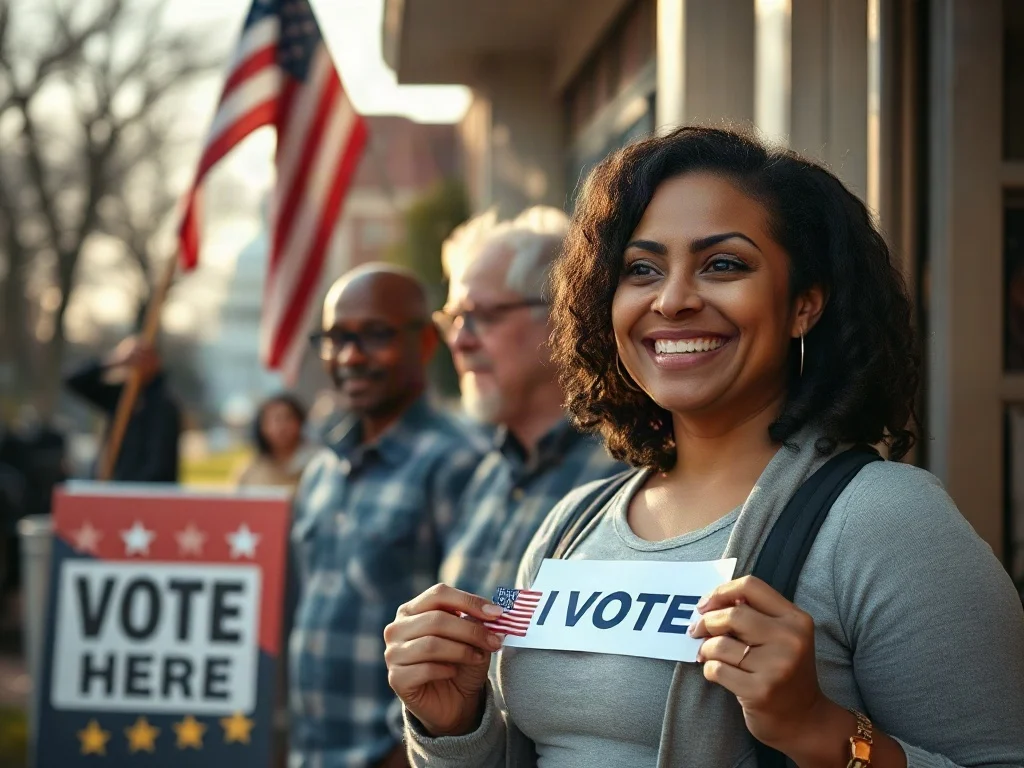
As millions of Americans vote, the US midterm results will decide more than which party wins bragging rights. They will determine whether the White House can legislate, whether it faces subpoenas, and whether the second half of a presidential term is defined by cooperation, confrontation or paralysis. The BBC’s North America correspondent has set out three scenarios for how the night could unfold. This analysis does not reproduce that reporting. It works through the three broad outcomes that structure any midterm election, and explains what each would change in practice.
The aim is a plain account of mechanics and consequences: what a majority in each chamber actually allows, where the real constraints sit, and which signals deserve attention while the votes are counted.
What the Midterms Decide and Why the Stakes Are High
Every seat in the House of Representatives is up for election, because members serve two-year terms. A party needs 218 of the 435 voting seats for a majority. Only about a third of the Senate is contested, since senators serve six-year terms. That is why the Senate result depends heavily on which seats happen to be on the ballot, while the House works as a more direct referendum on the national mood. Dozens of governorships and thousands of state legislative seats are also decided, and these shape the next round of redistricting and election administration.
History gives a baseline. In the large majority of postwar midterms, the president’s party has lost House seats. Republicans gained more than 60 seats in 2010, and Democrats gained roughly 40 in 2018. This is a tendency, not a law. The size of any swing depends on presidential approval, the economy, candidate quality and, increasingly, how few competitive districts exist.
Turnout adds uncertainty. Voter turnout in midterms is normally well below presidential years, so results depend on which party’s coalition is more motivated when the White House is not on the ballot. Polls struggle to model that electorate, which is a reason for caution about any single forecast.
Scenario One: A Split Congress and Divided Government
The most commonly discussed outcome is that the party out of power wins the House while the president’s party keeps the Senate, or the reverse. The result is divided government. It is the outcome that most closely fits the historical pattern, and it is often misunderstood as a recipe for pure gridlock.
What a House majority actually delivers
A House majority controls the Speaker’s gavel, the floor schedule and every congressional committee chair. That means subpoena power and the ability to open investigations into the administration. It also means the power to block spending bills, since appropriations need both chambers. A House under opposition control can force confrontations over a government shutdown or the debt ceiling, though both tactics carry political risk for whoever is blamed.
The House can also begin impeachment by a simple majority. Conviction requires a two-thirds Senate vote, so removal remains very unlikely without large defections from the president’s own party. Impeachment is therefore best understood as a political instrument rather than a realistic route to removal.
What it does not deliver
A split Congress rarely produces major new legislation. The opposition House cannot pass its agenda past a hostile Senate or a presidential veto. Meanwhile, the president’s party can keep confirming judges and officials, because the Senate’s advice and consent role needs only a simple majority. Divided government shifts the balance from legislation to oversight, executive action and the courts.
Scenario Two: The President’s Party Defies the Pattern
The second scenario is that the president’s party holds both chambers or loses very little. It is the least likely on historical evidence, but it is not impossible. It has happened when voters rallied around a president in a crisis or when the opposition was seen as weak or divided, as in 1998 and 2002.
The consequences would be significant. Unified control would let the governing party use budget reconciliation to pass tax and spending measures with a simple Senate majority. It would also protect the administration from investigations and keep the judicial confirmation pipeline running. Outside reconciliation, though, the Senate filibuster still requires 60 votes to end debate on most bills. Unified control therefore does not guarantee a broad legislative agenda. It guarantees that the governing party faces few external checks.
A narrow hold may be less comfortable than it appears. A slim House majority gives a handful of members enormous leverage, which has repeatedly made the Speaker’s job precarious. A party can win and still struggle to govern.
Scenario Three: A Sweep by the Opposition
The third scenario is that the opposition wins both chambers. This requires a strong national swing and a favorable Senate map, so it is the harder outcome to achieve. Its effects would be the most dramatic. The president would face hostile committee chairs in both chambers, and the Senate could slow or block judicial and executive nominees. Legislation would still be subject to a veto, so the opposition could pass bills as statements of intent but not as law.
The political dynamics matter as much as the arithmetic. A sweep would raise questions about the president’s standing inside their own party and would likely accelerate early jockeying for the next presidential race. It could also push the White House toward executive orders and administrative action, which are faster but more vulnerable to court challenges and to reversal by a successor.
Comparing the three outcomes
| Scenario | Legislation | Oversight | Nominations |
|---|---|---|---|
| Split Congress | Limited; mostly must-pass bills | Strong in the chamber the opposition holds | Continue if the president’s party holds the Senate |
| President’s party holds | Possible via reconciliation; filibuster still binds | Weak | Largely unobstructed |
| Opposition sweep | Largely blocked by veto | Strong in both chambers | Contested or stalled |
Why the Map Limits the Range of Outcomes
Forecasts of the national mood only partly predict seat counts, because the map has been shaped in advance. Gerrymandering and the sorting of voters by geography mean that relatively few House districts are truly competitive. A modest national swing can therefore translate into either a handful of seats or a large number, depending on how many contested districts sit near the tipping point.
The Senate map is a separate constraint. Because only a third of seats are up, a party can have a strong year and still be unable to flip the chamber if the competitive races are in unfavorable states. Rising political polarization compounds this, since fewer voters split their tickets and fewer states behave like a swing state. The practical lesson is that scenario two and scenario three are shaped as much by geography as by public mood.
How to Read the US Midterm Results as They Arrive
Results do not arrive evenly, and early numbers can mislead. Counting rules differ by state, and the share of ballots cast by early voting and mail varies. Some states report those ballots first, while others count them later. A lead on election night can shrink or grow as different batches are tallied, so the order of reporting matters as much as the totals.
Practical checkpoints for readers
- Compare against the baseline. Judge each result against the previous cycle in the same district, not against national narratives.
- Watch suburban and exurban districts. These are where national swings usually show first and where the House majority is typically decided.
- Check which votes remain. Before treating a lead as decisive, find out whether the outstanding ballots come from areas that lean toward one party.
- Treat projections as projections. Race calls by news organizations are statistical judgments. Official certification by state authorities is what makes results final.
- Expect close races to take days. A slow count is normal under state law and is not by itself evidence of a problem.
Official information on federal elections is available from the Federal Election Commission, and legislative detail is tracked at Congress.gov. Readers following state-level outcomes may also consult resources from the National Conference of State Legislatures. Related coverage on this site, such as an explainer on how Congress passes a budget, would give useful context here.
Common Mistakes When Interpreting a Midterm
- Overreading the popular vote. National vote share does not map neatly onto seats, especially in the Senate.
- Assuming a mandate. Narrow House majorities rarely amount to a mandate, even when the media describes them as one.
- Ignoring state races. Governors and legislatures control election rules and district lines for the coming decade.
- Equating control with outcomes. A majority is a precondition for action, not proof that a party can deliver its agenda.
Frequently Asked Questions
What happens if Congress is split after the midterms?
Legislation largely stalls beyond must-pass items such as funding. The chamber held by the opposition gains subpoena and investigative power, while the president’s party can still confirm nominees if it keeps the Senate.
How many seats does a party need to control the House?
A party needs 218 of 435 voting seats. Vacancies can lower the effective threshold, which is why the exact figure can differ slightly at any given moment.
Does the president’s party usually lose seats in midterms?
In the large majority of postwar midterms, yes. The size of the loss varies widely, and exceptions such as 1998 and 2002 show the pattern is not guaranteed.
When are the final results official?
Media projections can come on election night, but final results depend on each state’s counting and certification process, which can take days or weeks in close contests.
The Question the Results Will Not Settle
The sharpest insight from the three scenarios is that the headline outcome matters less than the margin. A narrow majority in either chamber produces a different kind of politics from a comfortable one: one dominated by small blocs of members, fragile leadership and brinkmanship over deadlines. The party that wins may therefore find itself less powerful than it expected, and the party that loses may find that blocking is easier than governing.
Watch three things in the weeks after the vote. First, the size of the House majority and the leadership fight that follows. Second, the first test of divided or unified control, which will come with the next funding deadline. Third, how the president responds, whether through compromise, executive action or confrontation. The unanswered question is whether a polarized electorate can still produce a result that either side accepts as a clear verdict. If the next count is as close as recent ones, the contest over what the results mean may last longer than the election itself.
Frequently Asked Questions
Why does the House result say more about the national mood than the Senate result?
All 435 House seats are contested every two years, so the outcome works as a direct national referendum. Only about a third of the Senate is up, so its result depends on which seats happen to be on the ballot that year, not just on overall voter sentiment.
Does winning the House let the opposition remove the president through impeachment?
Not realistically. The House can begin impeachment with a simple majority, but conviction and removal require two-thirds of the Senate. Without large defections from the president's own party, that threshold is almost impossible to reach, so impeachment works mainly as a political tool.
Does divided government always mean total gridlock?
No. Major new legislation becomes rare because an opposition House cannot pass its agenda past a hostile Senate or a veto. But power shifts toward oversight, subpoenas and investigations, executive action and the courts. The Senate can also keep confirming judges and officials by simple majority.
Why are midterm results hard to predict from polls?
Midterm turnout is normally well below presidential years, so outcomes depend on which party's coalition is more motivated when the White House is not on the ballot. Polls struggle to model that smaller electorate, which is why any single forecast deserves caution.
Is it really unusual for the president's party to avoid losing seats?
Yes. In the large majority of postwar midterms the president's party has lost House seats. Exceptions such as 1998 and 2002 occurred when voters rallied around a president in a crisis or when the opposition looked weak or divided.
Why do state-level races matter in a midterm election?
Governorships and thousands of state legislative seats are decided too. These offices shape the next round of redistricting and the way elections are administered, so their results can affect the political landscape well beyond the current term.