
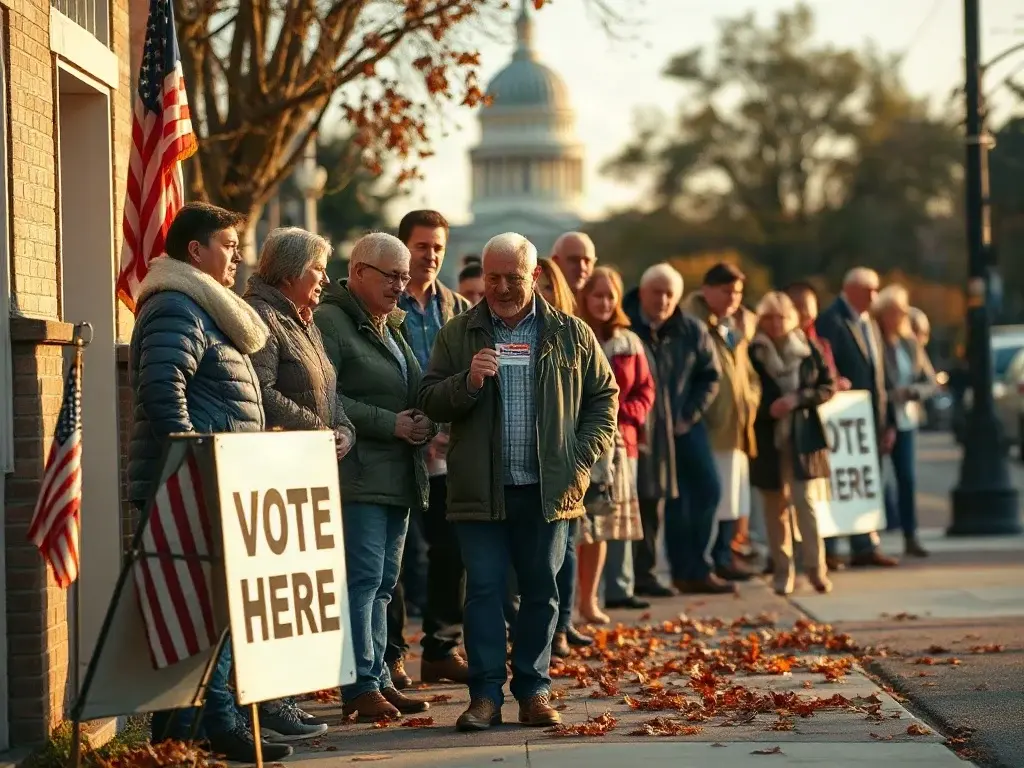
The 2026 midterm elections on 3 November 2026 will decide who controls Congress for the second half of Donald Trump’s current term. They will also fill dozens of governorships and thousands of state-level offices. As the BBC’s Maddie Gerber has set out in her explainer on what is on the ballot, the contest is not one national vote but a bundle of separate decisions, each with its own rules, incentives and consequences. This article breaks that bundle apart and separates what is structurally certain from what is only likely.
How the Midterms Work and Why They Matter
A midterm election takes place halfway through a presidential term. The president is not on the ballot, but the vote works as a referendum on the White House because it sets the terms on which the president can govern. The broader field is catalogued on Wikipedia’s page for the 2026 United States elections.
The historical pattern is well documented. In the large majority of postwar midterms, the president’s party has lost seats in the House of Representatives. The exceptions, such as 1998 and 2002, are few, and each had unusual circumstances. This is a pattern, not a law. Modern polarization, a small number of competitive districts and redrawn maps all weaken the old rule of thumb.
What Is on the Ballot in 2026: The Full Picture
Anyone asking what Americans are voting for should start with the offices at stake. The federal contests receive the most attention, but state offices often affect daily life more directly.
- All 435 seats in the House of Representatives, each with a two-year term.
- 35 seats in the Senate: the regular seats of one of the three classes of senators, plus special elections for seats vacated mid-term.
- 36 governorships, according to the 2026 gubernatorial elections overview.
- Thousands of state legislative seats, plus state offices such as attorney general and secretary of state, depending on the state.
- Local offices and ballot measures, which vary widely by state and county.
Because the 2026 cycle bundles so many decisions, no two voters face exactly the same ballot. That is one reason national polling on the midterms is a weaker guide than polling in a presidential year.
The House: A Fight Over Thin Margins
The House is the chamber most sensitive to national mood. Control requires 218 seats. Republicans currently hold a narrow majority, so a swing of a handful of districts could change who sets the agenda. The House originates tax legislation, controls the federal budget process alongside the Senate, and holds the sole power of impeachment.
The practical stakes are larger than the headline count. A Democratic House would gain subpoena power, committee chairs and the ability to block legislation, which would create a divided government. A Republican hold would mean continued unified control, with its own tensions over how much a very small majority can pass.
The Redistricting Wildcard
Redistricting is normally done once a decade after the census. In 2025, several states pursued unusual mid-decade redraws, and the resulting contest over maps drew litigation and political retaliation across party lines. Texas and California are the best-known examples. The details of each map and the state of each legal challenge change quickly, so readers should check current court and state sources.
The analytical point is stable even if the details are not. Gerrymandering reduces the number of genuinely competitive seats, so the national popular vote and the House result can diverge. A party can win more votes overall and still struggle to win a majority. Treat any prediction that ignores district lines with caution.
The Senate: Fewer Seats, Higher Stakes
The Senate map is narrower, but the Senate shapes the country’s long-term direction. Republicans hold a majority of 53 to 47, counting independents who caucus with Democrats. A party needs 51 seats for an outright majority, or 50 plus the vice president’s tie-breaking vote. The outcome decides confirmations for federal judges and cabinet officials, and it determines how far the majority can push legislation within the constraints of the Senate filibuster.
The full list of races is on the 2026 Senate elections page. Because only a few states are truly competitive, the national outcome depends heavily on candidate quality, local turnout and a handful of expensive campaigns. A Democratic majority is possible but requires flipping several Republican-held seats while defending its own. That is a demanding arithmetic, and honest analysis should say so.
Governors and State Offices: The Underrated Ballot
Many analysts devote too little attention to state races. Governors control budgets, sign or veto legislation, and often appoint officials who administer elections. State legislatures write the rules for voting and, in many states, draw district maps. Attorneys general decide which lawsuits to bring or defend.
The 2026 results will therefore shape the 2028 presidential contest. Decisions on voter identification, mail voting deadlines and ballot access are made at state level. Control of state government in a few key states will set the rules under which the next presidential election is run.
The Real Question: A Verdict on the Second Trump Term?
For many voters the ballot is, in effect, a judgment on the second presidency of Donald Trump. That is an interpretation, not an official fact, but it is how parties frame the race. The Republican Party wants a mandate for the current agenda. The Democratic Party wants to turn dissatisfaction into a check on executive power.
The issues most likely to feature are the cost of living, immigration, health care, trade policy and the balance of power between Congress and the presidency. This is a reasonable expectation based on how campaigns are framed, not a measured ranking. Issue salience can change fast, and local conditions often override national themes. A candidate’s personal brand and a district’s makeup often matter more than a national slogan.
Turnout: The Decisive Variable
Midterm turnout is lower than in presidential years, so outcomes depend heavily on which party’s voters are more motivated. Enthusiasm gaps, not persuasion of undecided voters, often drive the result. That is why primary elections matter too. The candidates chosen in primaries, often by a small and ideologically committed slice of voters, define the choices that remain in November.
How to Read the Coverage Critically
Midterm coverage generates a great deal of noise. A few practices help separate signal from spin.
- Check the district map, not just the national polls. Generic congressional ballot polling says little about seats shaped by redistricting.
- Distinguish competitive from safe seats. The number that decides control is small.
- Watch special-election swings carefully. They are informative but do not translate directly into November results.
- Look at turnout indicators. Early-voting data and primary participation are better guides than enthusiasm claims from campaigns.
- Treat forecasts as probabilities. A 65 percent chance is not a certainty, and forecasters have misjudged midterms before.
Common Mistakes Voters and Commentators Make
- Assuming the historical midterm penalty applies mechanically.
- Treating the House and Senate as moving together when their maps differ sharply.
- Ignoring state offices and ballot measures that affect voters more directly.
- Relying on a single poll rather than averages and fundamentals.
Practical Steps for Voters
Registration rules, deadlines, ID requirements and early or mail voting options vary by state. The federal government’s Vote.gov directs users to their state’s official election office, which is the authoritative source. Voters should confirm their registration well before the deadline, review their sample ballot to see every office and measure, and check the rules for returning a mail ballot.
Frequently Asked Questions
When are the 2026 midterm elections?
The general election is on Tuesday 3 November 2026. Primary dates, registration deadlines and early-voting windows differ by state, so check your state election office.
What are Americans voting for in the midterms?
Voters are choosing all 435 House members, 35 senators, 36 governors, and many state and local officials, along with ballot measures in some states.
How many seats does a party need to control Congress?
A House majority requires 218 of 435 seats. A Senate majority requires 51 seats, or 50 plus the vice president’s tie-breaking vote.
Why do midterms usually go badly for the president’s party?
Explanations include voter dissatisfaction, a more motivated opposition and the tendency of the electorate to seek balance. None of these is a guarantee, and redistricting and polarization have weakened the pattern.
What to Watch Beyond Election Night
The most important insight is that the 2026 midterms are less a single national verdict than a contest over the rules and institutions that will govern 2028. The House margin will show whether the president’s party still holds the political middle. The Senate result will determine judicial and executive appointments for years. State outcomes will shape how the next presidential election is administered.
Three questions remain open. First, will mid-decade redistricting lock in enough advantage to blunt a national swing? Second, will turnout fall along its usual midterm pattern, or will heightened polarization raise it? Third, will the losing side accept the result without prolonged legal and political disputes? A reasonable prediction is that the House will be competitive and the Senate harder to flip, but forecasts this far out are probabilities, not facts. The best evidence will come from primary turnout, special elections and court rulings on district maps in the months ahead.
Frequently Asked Questions
Is the president's party always going to lose House seats in the midterms?
No. Losing seats is the usual postwar pattern, but it is not a law. Exceptions such as 1998 and 2002 had unusual circumstances. Polarization, few competitive districts and redrawn maps also weaken the old rule of thumb, so predictions should not rely on history alone.