
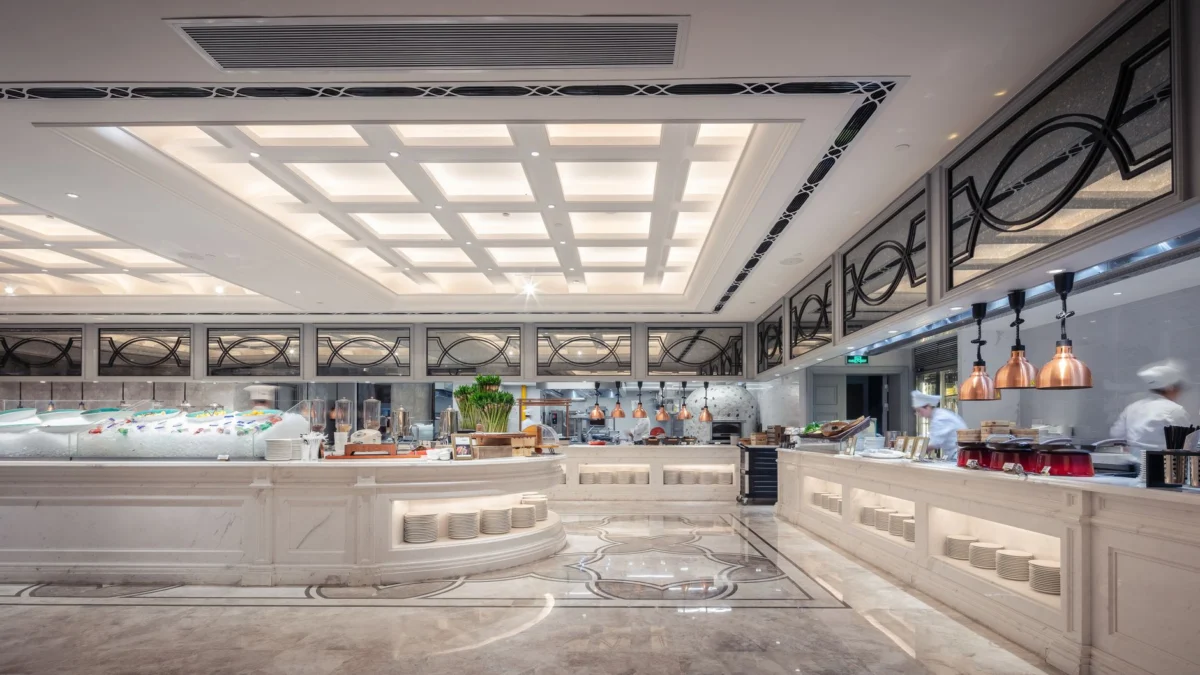
Cheap all-you-can-eat buffets are not a sign that restaurants have discovered magic economics. They are a sign that the operator has reduced uncertainty. A £7 breakfast spread or a £10 Chinese feast can exist because the business controls portion sizes, limits premium ingredients, pushes volume at specific hours, and leans on drinks or repeat visits to recover margin. The result looks generous. In practice, it is a tightly managed buffet format designed for disciplined cost control.
Cheap All-You-Can-Eat Buffets in Britain: How the £7 Model Actually Works
The phrase cheap all-you-can-eat buffets sounds almost contradictory. Unlimited food is supposed to be expensive to provide, yet the British market keeps producing low-ticket offers that attract families, workers, and late-morning crowds. The explanation is not generosity. It is structure. The more predictable the service, the easier it is for the business to protect itself from waste, labour spikes, and menu complexity.
What a cheap buffet really sells
The sale is not the plate; it is access. In a traditional restaurant, the kitchen makes a series of bespoke decisions for each order. In an all-you-can-eat format, the operator narrows those decisions and shifts the burden of choice to the guest. That is why the same model can support a fried breakfast in one town and a mixed Asian line-up in another. The core logic is familiar across casual dining: standardize the product, speed up service, and rely on high turnover.
Seen this way, the promise of cheap buffet dining is not luxury. It is convenience at a controlled price. The customer gets variety; the business gets predictability.
A buffet is not cheap because the food is cheap. It is cheap because the operator makes waste predictable and choice controlled.
Why £7 can still make sense
The price can look implausible until you break down the economics. In pricing strategies, low entry prices often work when the seller can recover margin elsewhere or when the first price point acts as a loss leader. Buffets exploit both ideas at once. The entry fee attracts traffic, while drinks, desserts, upsells, and repeat visits help cover fixed costs. The operator is not trying to maximize profit on every plate; it is trying to maximize the number of profitable visits per table per day.
The food mix is doing more work than the label
Low-cost buffets do not usually offer the same economics as à la carte dining. Instead, they lean on ingredients with low unit cost and high satiety: eggs, rice, noodles, potatoes, beans, bread, seasonal vegetables, and sauces built from bulk staples. Even when a menu looks broad, many dishes are variations on a small number of base preparations. That is a form of menu engineering, not generosity.
Breakfast and Chinese menus exploit different margin logic
An all-you-can-eat breakfast buffet works because breakfast items are batch-cooked, easy to hold, and familiar enough that most diners do not demand bespoke execution. A Chinese buffet works differently but just as efficiently: stir-fry bases, rice, fried items, and noodle dishes can be scaled with economies of scale. The kitchen can produce large volumes without redesigning each order. That is why these two formats dominate the low end of the market.
| Cost lever | Why it keeps price low | Trade-off for diners |
|---|---|---|
| Bulk staples | Low-cost ingredients stretch across many servings | Less premium meat, seafood, or specialist produce |
| Batch cooking | Fewer bespoke orders reduce labour intensity | Food may sit longer if turnover is weak |
| Limited drinks inclusion | Margins on beverages can subsidise the ticket price | The advertised price may not be the real bill |
| High-footfall windows | Lunch and breakfast peaks improve utilisation | Off-peak service can feel thin or stale |
The lesson is blunt: the ticket price is only low because the business has stripped out uncertainty and narrowed the range of things that can go wrong.
Where the model breaks down
Cheap buffet pricing is fragile. If footfall slips, the model becomes exposed: fixed rent, energy, staff, and waste costs do not shrink at the same pace as demand. A restaurant can survive a lower margin only if tables turn fast and portions remain controlled. That is why buffet rooms are often busiest at predictable windows and why some operators shorten their service times rather than discount further.
Freshness and holding time
The danger is not only taste. Food held under heat lamps or in steam trays deteriorates in texture, moisture, and visual appeal. The best operators fight this with smaller batches and faster replenishment. The worst leave customers staring at limp fried food and dry rice. The difference is operational, not cosmetic.
Hygiene and food safety
Self-service raises the standard food safety burden because many hands touch shared utensils, sneeze guards are not substitutes for discipline, and temperature control is harder to maintain across a long line. UK operators are still bound by basic hygiene rules, and diners should treat the buffet line as a test of process, not just taste. If trays look neglected, trust the visual evidence. For official guidance, the Food Standards Agency is the right place to check standards.
Waste is the hidden cost everyone pays for
Cheap buffets are often criticized for food waste, and the criticism is not trivial. Overproduction is built into the experience because abundance is part of the sales pitch. The better operators reduce waste by using smaller vessels, shorter batch cycles, and tighter forecasting. Still, the buffet model will always carry a waste risk that a made-to-order kitchen does not. That matters economically and ethically.
The buffet format therefore sits inside a broader hospitality industry problem: how to sell variety without letting unpredictability eat the margin. That tension explains why so many low-cost venues simplify the menu while keeping the room visually full.
How to judge a cheap buffet before you sit down
Consumers who want value should look for operational clues rather than advertisement copy. The market has already told you what matters: turnout, turnover, and temperature. A clean line and fast replacement are better indicators than a flashy menu board.
- Check whether drinks are included. If not, the real bill may be far higher than the poster price.
- Visit during a busy service window. High turnover usually improves freshness.
- Prefer shorter menus with visible replenishment over sprawling lines with stale trays.
- Look for clear separation between hot items, cold items, and desserts.
- Be cautious if the cheapest items are the most visible, because they may be used to anchor the value claim.
- Compare the buffet with a single well-made meal. If you are not very hungry, fixed-price may still beat unlimited access.
That logic is especially useful in towns where the cheapest buffet is also the most obvious. Low price alone is not value. Value is food quality multiplied by how much of it you actually want to eat.
Why breakfast buffets and Chinese buffets dominate the low end
The two most common low-price formats tell you a lot about demand. British breakfast buffets draw on the familiar architecture of British cuisine: eggs, bacon, sausages, toast, and baked beans are easy to portion and easy to standardize. Mixed Asian buffets, often marketed around Chinese cuisine, are equally effective because the customer expects variety and accepts that not every dish is made to order. In both cases, the promise is abundance without culinary precision.
This is why the phenomenon is not random. It is anchored in the way the United Kingdom eats out: price-sensitive diners want a clear ticket, families want low friction, and operators want menu formats that can be repeated across sites. The cheapest dining formats are rarely the most original ones. They are the ones with the least operational ambiguity.
When the menu is designed around repetition rather than improvisation, the business can protect itself better against labour shocks, ingredient inflation, and uneven demand. That is the hidden advantage of buffet dining: the kitchen is not chasing every customer preference; it is building a system that can be replicated.
In that sense, buffet dining is a branch of the broader hospitality industry, not an exception to it. The more standardized the service, the more the business can stretch each pound of input. That is also why some of the smartest operators keep the menu visually varied while keeping the purchasing list narrow.
The future of low-cost buffet dining
The next few years are unlikely to reward undisciplined buffet operators. Rising labor, rent, and energy costs leave little room for waste. At the same time, customer expectations are sharper than they were a decade ago: diners now inspect hygiene, demand clearer allergen information, and post real-time judgments online. That combination punishes mediocre execution. It also favors the operators who can use scale, process, and location intelligently.
Two trends are especially important. First, digital reviews make weak consistency visible quickly. Second, inflationary pressure forces restaurants to think harder about batch cooking, smaller menus, and tighter purchasing. The winners will probably not be the ones offering the biggest spread. They will be the ones offering a narrower spread with fewer errors.
For readers, the practical lesson is simple: the cheapest buffet is not automatically the best deal, but neither is the most polished one. The real question is whether the operator has built a system that can maintain acceptable quality while staying affordable. That balance is harder than it looks, and many restaurants fail at it long before the price point itself becomes a problem.
Frequently asked questions about cheap all-you-can-eat buffets
Are cheap all-you-can-eat buffets safe to eat at?
They can be, but safety depends on temperature control, staff discipline, and turnover. A clean line, frequent replenishment, and visible hygiene practices matter more than the menu description.
Why do Chinese buffets often seem cheaper than other restaurants?
Because the model suits batch production. Staples such as rice, noodles, vegetables, and fried items can be prepared in volume, which helps operators keep prices low without rebuilding the kitchen around each order.
Is a breakfast buffet better value than ordering one cooked breakfast?
Only if you will actually eat enough to justify the fixed price. For big appetites, a breakfast buffet can be efficient. For moderate eaters, a cooked breakfast may be better value and fresher.
Do buffets automatically create more food waste?
Not automatically, but the risk is built into the model. Good operators limit waste with smaller batches and faster turnover. Poor operators overproduce and throw away too much.
The real test of the buffet model is trust, not price
The most important insight is that cheap buffet dining survives only when the operator can convert abundance into control. Price is the headline; process is the business. As inflation, wages, and energy costs keep squeezing the hospitality industry, the surviving value buffets will likely be smaller in scope, faster in replenishment, and more disciplined about waste. The big unanswered question is not whether a £7 buffet can still exist. It is whether customers will keep accepting trimmed choice in exchange for a low ticket price once they realise how much engineering sits behind the word
Frequently Asked Questions
If the food is so cheap, how can a buffet avoid losing money on heavy eaters?
Buffets price for the average guest, not the maximum one. Most customers do not eat far beyond the expected amount, and many leave money behind in drinks, desserts, or repeat visits. The model works because the operator controls portions, uses low-cost staples, and depends on enough light and moderate eaters to balance out the occasional big plate.
Why do cheap buffets often focus on breakfast or Chinese food rather than other cuisines?
Those formats are easier to standardise at scale. Breakfast items can be batch-cooked and held safely, while Chinese buffet dishes often rely on rice, noodles, sauces, and fried or stir-fried bases that can be produced in volume. Both styles limit bespoke cooking, reduce labour pressure, and keep the menu flexible without becoming expensive.
Are the low prices mainly made possible by drinks sales?
Often, yes. The advertised buffet price may be designed to bring people through the door, while drinks, soft beverages, desserts, and add-ons help improve the total spend per customer. In some cases, the buffet itself is close to break-even, but the operator makes money through the rest of the visit rather than the food ticket alone.
Does a cheap buffet mean the ingredients are low quality?
Not necessarily, but the business usually relies on inexpensive ingredients that deliver volume and satiety rather than premium flavour or rarity. Eggs, rice, potatoes, beans, bread, and seasonal vegetables are common because they stretch well. The quality question is less about luxury and more about freshness, turnover, and how well the kitchen manages holding time.
Why can a buffet feel better at busy times than at quieter hours?
Because the model depends on turnover. When footfall is high, trays are replenished more often and food sits for less time, which usually improves freshness and variety. At quieter times, the same format can feel thinner because fewer dishes are being rotated, and the operator may reduce production to control waste and labour costs.