
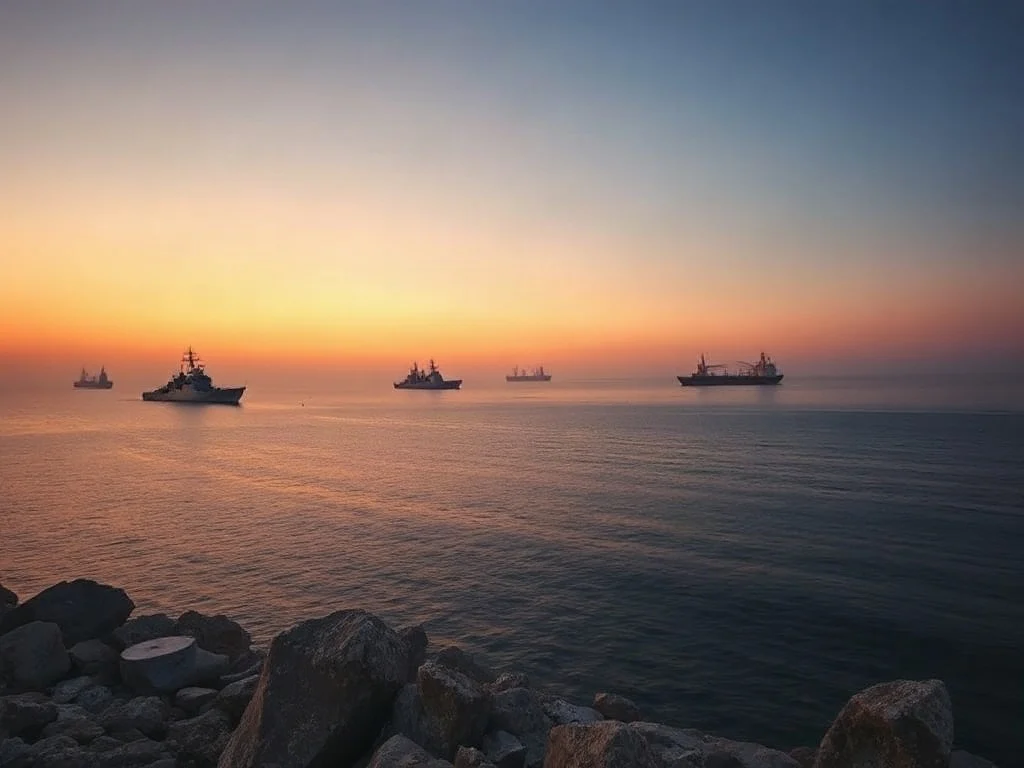
The report that the US strikes Iran on Qeshm Island, just ahead of the midterm elections, arrived with a carefully chosen description attached. According to CBS, the BBC’s US partner, American officials called the attacks limited and defensive. That is nearly everything the public record confirms so far. This article does not claim more. It examines what the wording signals, why the geography matters, how domestic politics could shape the reading of the event, and which indicators will show whether this is a contained episode or the start of something larger.
Early reporting on military action is where analysis most often outruns evidence. The framing offered by officials is a claim to be tested, not a fact to be repeated. The sections below separate what is established from what is inference.
What is known and what is not
Reporting confirms three points: strikes were carried out against targets on Qeshm Island, US officials characterised them as limited and defensive, and the timing falls ahead of the midterm elections. The source is CBS News, relayed through BBC News.
The available text does not establish:
- the specific facilities or assets hit;
- casualties on either side;
- what triggered the operation;
- whether Iran has responded or intends to;
- whether Washington regards the action as finished.
Each gap matters. A strike on a radar site, a missile battery or a naval facility carries a different meaning, and a different escalation risk, than one aimed at something else. Until independent confirmation arrives, “limited” and “defensive” remain the attacker’s own descriptions.
Why Qeshm Island matters
Qeshm Island is the largest island in the Persian Gulf and lies in the Strait of Hormuz, close to the Iranian mainland. The strait is one of the most important chokepoints for seaborne energy. The US Energy Information Administration has estimated that roughly a fifth of global petroleum liquids consumption passes through it.
A location that explains the framing
Iran’s forces, including the Islamic Revolutionary Guard Corps, have long treated the island chain around the strait as part of their coastal defence and maritime pressure capability. I am not asserting what was struck. The point is that any military activity near this waterway touches shipping, insurance and energy markets whatever the stated intent. A strike here is never purely local.
Decoding “limited and defensive”
The phrase does three jobs at once, and a critical reader should separate them.
The legal function
“Defensive” evokes the right of self-defence recognised in the United Nations Charter. Invoking it positions the action as a response to a threat or attack, not as the opening move of a campaign. Whether that holds depends on facts not yet public, particularly whether the targeted capability posed an imminent threat. Governments routinely describe pre-emptive or retaliatory actions as defensive, and the label settles nothing on its own.
The strategic function
“Limited” is a signal to Tehran. In deterrence theory, an attacker that wants to avoid escalation tries to communicate bounded aims: this is the extent of our action, and we do not seek a wider conflict. The message works only if the other side believes it and sees an incentive to respond in kind. If Iranian leaders read the strike as a down payment on more, the signal fails.
The domestic function
The same words reassure an American audience that the operation is not a new war. That matters in an election season, when voters and candidates are sensitive to anything resembling open-ended commitment.
Midterm timing: coincidence, calculation or constraint?
The headline links the strikes to the election calendar, so the question is unavoidable. The evidence for how elections influence military decisions is mixed, and it deserves care.
The case for a political reading
Political scientists have long debated diversionary foreign policy, the idea that leaders use external conflict to shift attention from domestic problems. Related is the rally around the flag effect, a short-lived rise in leader approval during international crises. Critics will point to the timing as circumstantial support.
The case against
The empirical record is weaker than the folklore suggests. Rally effects are inconsistent, tend to fade quickly, and depend on whether the public sees the action as successful and low-cost. A limited strike that triggers retaliation, casualties or higher fuel prices could hurt a governing party more than help it. Many analysts argue the election calendar is more often a constraint than an incentive, because leaders avoid actions with unpredictable downside close to a vote.
My assessment: the timing is worth noting, but it cannot support a causal claim. Without evidence about the decision process, the diversion hypothesis is an interpretation, not a finding. The more defensible observation is that a “limited and defensive” label suits a political environment where leaders want to appear firm without appearing to start a war.
Escalation risk and the historical record
Direct US–Iran military contact has a long history, and it shows how bounded actions can become unbounded. During the Tanker War of the 1980s, Operation Praying Mantis in 1988 was a one-day US naval response after a US warship struck a mine. It was designed as limited, and it largely was. Months of tension and miscalculation surrounded it, including the downing of Iran Air Flight 655 by a US warship, a reminder of how fog of war produces tragedy.
Iran’s likely option set
This is analytical inference, not reporting. Iran has several ways to respond, and they differ sharply in risk:
- Calibrated retaliation against US or allied assets, intended to restore face without widening the conflict.
- Maritime harassment of commercial or naval traffic, which raises costs for the wider region.
- Indirect action through partner groups, consistent with long-standing patterns in Iran–United States relations.
- Restraint, combined with diplomatic condemnation.
Which one Tehran picks will say more about the strike’s real character than any official description.
The congressional and legal question
Any US military action prompts questions about authority. The War Powers Resolution requires the president to notify Congress after introducing US forces into hostilities. Presidents of both parties have interpreted it flexibly, and limited strikes justified as self-defence typically draw the most contested claims of executive authority. Expect lawmakers, especially in an election season, to demand clarity on the legal basis, the intelligence behind the decision and the rules of engagement in force.
How to read what comes next
For readers trying to judge this story as it develops, a few checks are more useful than headlines:
- Look for independent confirmation. Satellite imagery, regional reporting and Iranian statements can corroborate or contradict US characterisations.
- Track the language shift. If officials move from “limited and defensive” to “if necessary, further action,” the framing is changing.
- Watch shipping indicators. Insurance rates, tanker routing and naval advisories often reveal perceived risk faster than diplomatic statements.
- Separate sources. Distinguish what officials said on background from what has been independently verified.
- Check the motive claims. Treat any assertion about electoral motives as opinion unless backed by documented evidence.
Common mistakes in covering and reading such events
The recurring errors are treating official adjectives as facts, assuming a short operation implies a short conflict, and inferring intent from timing alone. Each one converts an uncertain situation into a tidy narrative that the evidence cannot yet support.
Economic and diplomatic ripple effects
Even a contained action can move expectations. Energy markets price perceived disruption risk, not only actual disruption, and the proximity to the Strait of Hormuz makes that sensitivity acute. I will not speculate on price movements without data. Diplomatically, a strike complicates any negotiating track, including efforts that echo the Joint Comprehensive Plan of Action, because it gives hardliners on both sides evidence that confrontation is the only language the other understands.
Frequently asked questions
Did the US strike Iran?
According to CBS, as relayed by the BBC, US officials described attacks on Qeshm Island as limited and defensive. Details beyond that remain unconfirmed in the available reporting.
What does “limited and defensive” mean in military terms?
“Limited” suggests narrow targets, a defined duration and no intent to widen the conflict. “Defensive” suggests a response to a threat or attack. Both are official characterisations that need independent verification.
Why is Qeshm Island strategically significant?
It is the largest island in the Persian Gulf and sits in the Strait of Hormuz, a critical corridor for global energy shipments and a focus of regional military activity.
Were the strikes timed for the midterm elections?
No evidence in the available reporting establishes that. The timing is notable, but intent can only be inferred, and the research on election-driven military action is inconclusive.
Could the strikes escalate into a wider conflict?
It is possible. The outcome depends largely on Iran’s response and on whether either side misreads the other’s signals. Historical episodes show both contained and escalatory paths.
The question that outlasts the news cycle
The most important insight is that the adjectives matter less than the sequel. “Limited and defensive” is a hypothesis about the future that the attacker has stated and the other side will test. If Iran absorbs the blow, and Washington holds to its description, the episode may fade into the long list of bounded US–Iran incidents. If either side needs to demonstrate resolve before domestic audiences, the labels will become casualties of the next move.
Watch three things in the coming days: Tehran’s response and tone, whether US officials add conditions or warnings to their description, and what Congress demands to know. The unanswered question is not why the strikes happened now. It is whether a government can keep an action limited once the political cost of appearing weak is added to the strategic cost of appearing aggressive. The answer will define how seriously the next “limited” action is taken.
Frequently Asked Questions
Does calling the strikes "defensive" mean they were legally justified?
Not by itself. The word evokes the self-defence right in the UN Charter, but governments often label pre-emptive or retaliatory actions as defensive. Legitimacy depends on facts not yet public, especially whether the targeted capability posed an imminent threat. The label alone settles nothing.
Why does the location of Qeshm Island raise the stakes?
Qeshm is the largest island in the Persian Gulf and sits in the Strait of Hormuz, through which roughly a fifth of global petroleum liquids consumption passes. Any military activity there can affect shipping, insurance and energy markets, whatever the stated intent, so a strike is never purely local.
What does the word "limited" tell Iran?
It is a deterrence signal: the US is communicating bounded aims and no wish for a wider conflict. It only works if Tehran believes it and has an incentive to respond in kind. If Iranian leaders see the strike as a down payment on more, the signal fails.
Can we conclude the strikes were timed for political reasons because of the midterms?
No. Reporting only confirms the timing falls ahead of the elections. Research on diversionary foreign policy is mixed, and the article treats the link as a hypothesis to test, not a fact. Coincidence, calculation and constraint all remain possible readings.
What important details are still unknown about the strikes?
The reporting does not establish which facilities or assets were hit, whether there were casualties, what triggered the operation, whether Iran has responded or plans to, or whether Washington considers the action finished. Each gap affects how escalation risk should be judged.
How can readers tell whether this is a contained episode or the start of escalation?
Watch for independent confirmation of the targets, Iran's response, further US action, and any disruption to Hormuz shipping or energy markets. Until these appear, the "limited and defensive" description remains the attacker's own claim and should be treated as unverified.