
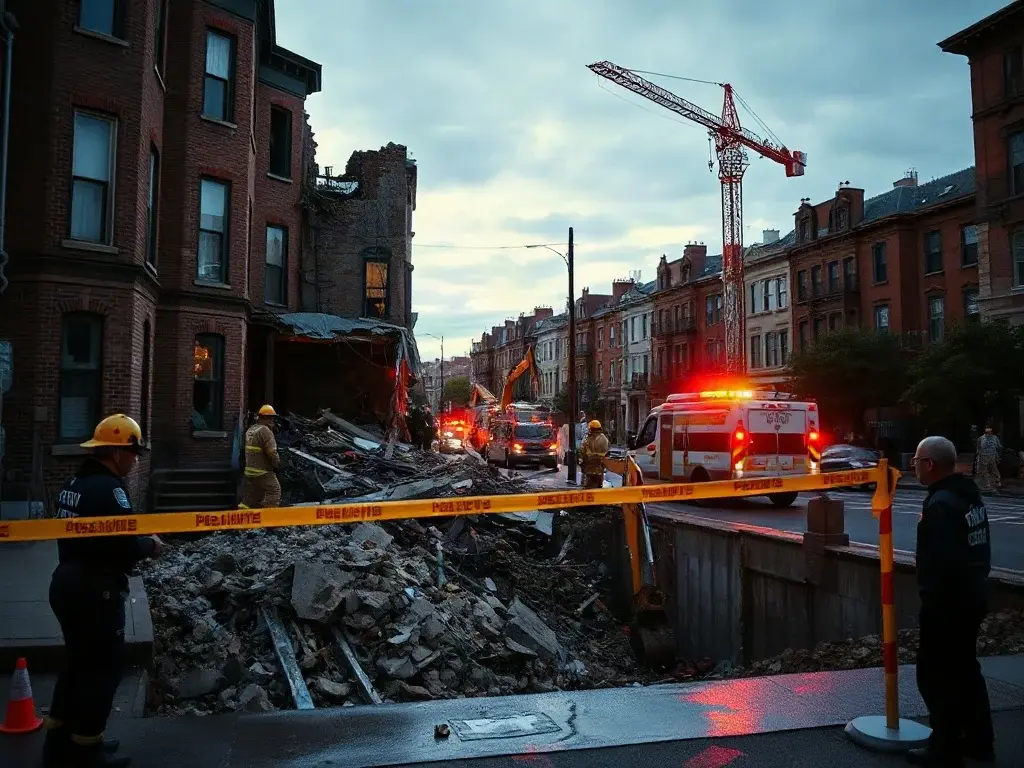
The Brooklyn building collapse on Wednesday, in which a residential structure fell into an adjacent construction site, is already being treated as one of the deadliest structural failures in recent New York City memory. Early reporting says two construction workers and two children were killed, yet the headline figure of eight deaths is higher than that breakdown accounts for. This analysis separates what is established from what is still unknown, explains the engineering and regulatory questions that matter most, and sets out what the investigation will need to resolve.
“Two construction workers and two children were killed when a residential building fell into an adjacent construction site on Wednesday.”
That sentence is the most reliable core of the story so far. It does not give a cause, a building history, or a timeline of the work next door, so anyone claiming certainty about why the building failed is speculating.
What Is Confirmed About the Brooklyn Building Collapse
The confirmed facts are few. A residential building in Brooklyn collapsed on Wednesday and fell into a neighboring construction site. Fatalities include construction workers and children. That detail matters because it suggests victims in two separate places: residents inside the failed building and workers on the site that received the debris.
The Casualty Discrepancy
The reported total of eight deaths does not match the four victims described in the summary line. Several explanations are plausible. The toll may have risen as search and rescue operations reached collapsed voids. The summary may list only some victim categories. Or early figures may have been revised. Readers should rely on counts confirmed by the city, and early tolls in structural collapses often change as crews work through debris.
What the Reporting Does Not Say
Nothing in the available summary establishes the building’s age, construction type, inspection record, or occupancy. It also does not say what work was underway next door, whether permits or stop-work orders existed, or whether any warning signs preceded the failure. Those gaps define the investigation.
Why a Building Falls Into a Neighboring Site
Buildings seldom collapse sideways into an adjacent lot without a trigger. Within structural failure analysis, direction of collapse is itself evidence. A building that falls toward an excavation suggests that something removed or weakened the support on that side. That is a hypothesis to test, not a conclusion.
Loss of Lateral and Foundation Support
Older Brooklyn residential buildings are commonly masonry structures resting on shallow footings. Their load-bearing walls depend on the soil beside and beneath the foundation. When a neighboring lot is excavated deeply, the soil on the boundary can shift unless it is held by shoring or a retaining wall. If the older foundation is not reinforced through underpinning, a small ground movement can become a large structural one.
Pre-Existing Deterioration
The second hypothesis is that the building was already compromised by water infiltration, deteriorated mortar, corroded steel, or unauthorized alterations, and that adjacent work only exposed the weakness. This is not a way to excuse the construction activity. In many forensic findings the cause is an interaction between a vulnerable structure and a stressor that a sound structure would have survived.
Secondary Stressors
Other candidates include vibration from pile driving or heavy equipment, groundwater changes from dewatering, ruptured utilities that saturate soil, and overloading from stored materials. None of these can be assumed without evidence.
| Hypothesis | What would support it | What would weaken it |
|---|---|---|
| Excavation removed support | Deep cut at the property line, missing or inadequate shoring, soil movement records | Documented underpinning and monitoring with no recorded movement |
| Pre-existing structural decay | Corroded or cracked load-bearing elements, prior violations, unpermitted alterations | Recent clean inspection and intact structural members in the debris |
| Vibration or groundwater change | Vibration logs, dewatering records, nearby heavy machinery use | No such operations on the day or in the preceding weeks |
| Overloading or unrelated failure | Evidence of added weight or a failed internal element | Failure originating on the construction-site side of the wall |
Regulatory Responsibility Around Adjacent Construction
In New York City, the Department of Buildings regulates construction and enforces the city’s building code, which includes provisions on safeguarding the public and protecting adjoining property during construction. The agency publishes permit and complaint histories through its official portal, and those records will be central here.
Worker safety is a separate track, overseen federally by the Occupational Safety and Health Administration, whose excavation and trenching standards are available at osha.gov. The overlap matters because the deaths include workers on the adjacent site. Two questions follow. Did the project protect its neighbor? Did it protect its own crew from a collapse that came from outside its boundary?
The Weakness in the System
My assessment is that oversight of adjacent work depends heavily on filings, self-reported monitoring, and complaint-driven inspection. A dense city can inspect only a fraction of sites at critical moments, and risk peaks during excavation and foundation work, a window of days or weeks. That is a structural limitation, not a verdict on any party in this case.
Precedents and What They Teach
Comparisons should be careful, because no two collapses share the same cause. Still, some past events show recurring patterns. The Surfside condominium collapse in 2021 showed how long-running deterioration can precede sudden failure and how long a forensic engineering investigation can take. The Sampoong Department Store collapse and the Rana Plaza collapse showed that warnings of structural distress were ignored before catastrophe.
The lesson is that catastrophic collapses are rarely caused by one decision. They usually involve a chain: a vulnerable structure, a stressor, missed warnings, and a gap in oversight. The Brooklyn inquiry should be judged by whether it examines the whole chain rather than stopping at the most visible link.
Rescue and Recovery Challenges
A building falling into an excavation creates a hostile environment for responders. The New York City Fire Department must stabilize unstable masonry, avoid triggering secondary collapse in the open pit, and shut off utilities, all while searching for survivors. Debris in a pit is harder to reach with heavy equipment and harder to shore safely. That is why the victim count can shift over many hours or days.
How Investigators Determine the Cause
Investigators typically work on several fronts at once:
- Evidence preservation: securing the site, photographing debris patterns, and preserving structural elements before cleanup.
- Document review: permits, engineering drawings, inspection reports, monitoring data, and prior violations for both properties.
- Soil and foundation analysis: examining how the ground behaved and whether support systems were installed to specification.
- Materials testing: checking mortar, steel, and masonry for degradation.
- Witness accounts: workers, residents, and neighbors who may have noticed cracks, noises, or movement beforehand.
Public findings can take months. The federal National Institute of Standards and Technology investigated Surfside over years, which is a reminder to treat early explanations cautiously.
Practical Lessons for Owners, Contractors, and Residents
For Contractors
- Treat construction site safety as including neighbors, not only your own crew.
- Survey adjacent buildings before excavation and install monitoring for movement, with defined stop-work thresholds.
- Have a licensed structural engineer sign off on underpinning and shoring for any older neighboring structure.
For Property Owners and Residents
- Document new cracks, sloping floors, sticking doors, or unusual sounds with dated photos, especially when work begins next door.
- Report concerns to the city through 311 and keep the complaint number.
- Check permit and violation records for neighboring projects through the Department of Buildings portal.
Common Mistakes
The most common errors are treating small cracks as cosmetic, assuming a permit means the work is being supervised continuously, and relying on a one-time pre-construction survey with no ongoing monitoring.
Likely Consequences and Developments
Some outcomes are reasonable predictions rather than confirmed facts. Expect scrutiny of the permit history for both properties, possible stop-work orders on nearby sites, and litigation over liability. If investigators find that excavation weakened support, pressure for stricter monitoring requirements near older masonry buildings is likely. If decay is the main cause, attention will shift to inspection regimes for aging residential stock. Either way, the outcome will turn on documents and physical evidence, not early narratives.
Frequently Asked Questions
What caused the Brooklyn building collapse?
The cause has not been established in the available reporting. Investigators are likely to examine whether adjacent excavation removed support, whether the building was already deteriorated, or whether both factors combined.
How many people died in the Brooklyn building collapse?
The headline figure is eight, but the details given account for four victims: two construction workers and two children. Check official city statements for the confirmed count, which may have changed.
Can construction next door make a building collapse?
Yes, under certain conditions. Deep excavation, inadequate shoring, vibration, or groundwater changes can compromise an older building’s foundation, especially if it was already weakened. Collapse is uncommon when proper protective measures are in place.
How long does a collapse investigation take?
Preliminary findings may emerge within weeks, but a full forensic determination often takes many months or longer.
The Question the Rubble Must Answer
The most important insight is that the direction of the fall points to the boundary between two properties, which is where responsibility is hardest to assign and enforcement tends to be weakest. The decisive question is not simply what failed, but who was monitoring the interface between an old structure and a new excavation, and whether any alarm sounded before Wednesday.
Watch for three things: the permit and inspection histories of both sites, any monitoring data recorded in the days before the collapse, and the official explanation of the gap between eight reported deaths and four identified victims. My reasoned expectation is that the final account will describe an interaction of factors rather than a single mistake. If so, the real test of the city’s response will be whether it closes the oversight gap at property lines, because that gap will remain after the debris is cleared.
Frequently Asked Questions
Why do the reported death toll and the victim breakdown not match?
The summary names two workers and two children, which is four victims, while the headline figure is eight. The toll may have risen as rescuers reached collapsed voids, or the summary may omit some victim categories. Early figures are often revised, so readers should rely on counts confirmed by the city.
Does the direction of the collapse reveal why the building failed?
It is an important clue but not proof. A building falling toward an excavation suggests that support on that side was removed or weakened. Investigators treat this as a hypothesis to test against soil movement records, shoring details and structural evidence, rather than as a conclusion.
Why are older Brooklyn masonry buildings vulnerable to nearby excavation?
Many are load-bearing masonry structures on shallow footings that depend on the soil beside and beneath them. Deep digging next door can shift boundary soil unless shoring or a retaining wall holds it. Without underpinning, even small ground movement can turn into serious structural failure.
If the building was already deteriorated, does that clear the neighboring construction work?
No. Forensic findings often show an interaction between a vulnerable structure and a stressor that a sound building would have survived. Water damage, corroded steel or unauthorized alterations may have made the building fragile, but adjacent work could still have been the trigger and remains subject to scrutiny.
What other factors besides excavation could have contributed to the collapse?
Investigators may examine vibration from pile driving or heavy equipment, groundwater changes from dewatering, ruptured utilities that saturate the soil, and overloading from stored materials. None of these can be assumed without evidence, and each would need to be supported by site data and records.
What information is still missing that the investigation must establish?
The available reporting does not state the building's age, construction type, inspection history or occupancy. It also omits what work was underway next door, whether permits or stop-work orders existed, and whether warning signs appeared beforehand. Those gaps define what investigators must resolve before any cause can be named.