
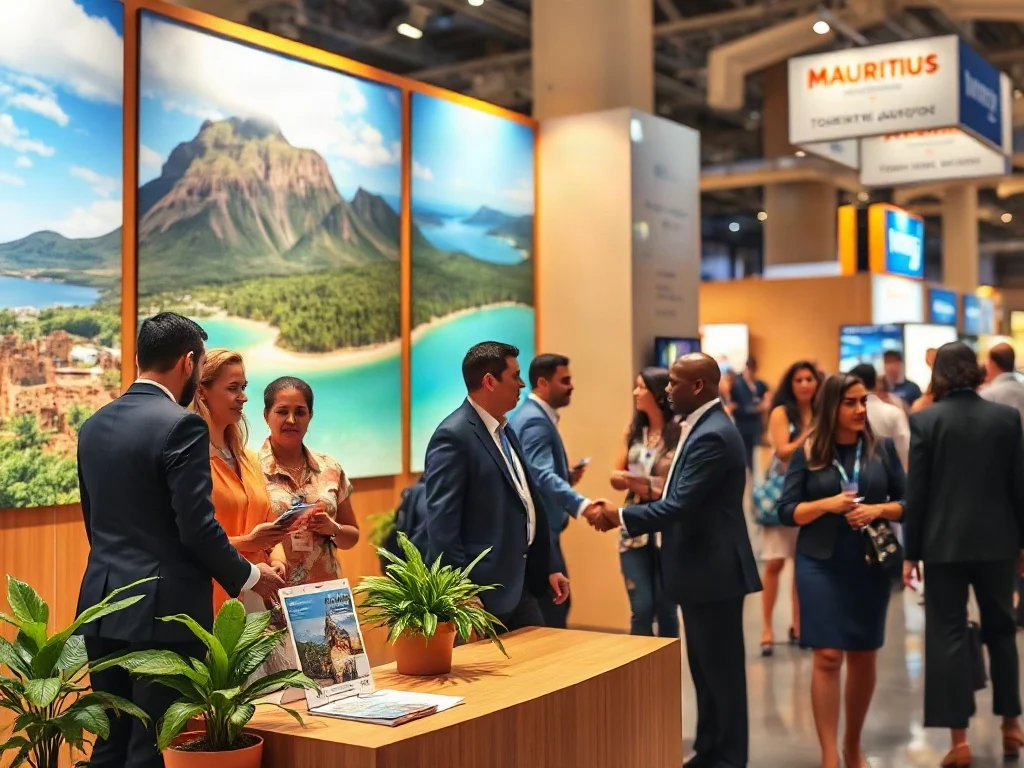
When the doors of World Travel Market opened between 3 and 5 November 2026, thousands of tourism professionals filled the halls of ExCeL London. Among them, the Mauritius Tourism Promotion Authority had a clear message. The MTPA at World Travel Market 2026 strengthened trade partnerships, set targets for the UK market for the coming tourism seasons, and introduced a new tagline, “One Island. A Whole World.” It also put the spotlight on the Beyond The Beach strategy, which aims to show international markets that Mauritius offers far more than white sand and turquoise lagoons.
This article looks at what the announcement means, why the choice of stage and message matters, and what both the travel trade and travellers should watch next. The announcement is short on detail, so facts are separated from interpretation throughout.
What the MTPA Announced at WTM 2026
Three points are confirmed by the announcement.
- Trade partnerships were reinforced. The MTPA used the event to deepen its relationships with the industry.
- Targets were set for the UK market. They apply to the upcoming tourism seasons.
- A new tagline was introduced: “One Island. A Whole World.” The MTPA also shared what is new on the island and highlighted the Beyond The Beach strategy for its international markets.
The announcement does not publish the numerical targets for the UK, nor does it itemise the new products. Any figures circulating elsewhere should be checked against official MTPA communications, available through the Mauritius Tourism Promotion Authority website. Where the detail is missing, what follows is analysis rather than fact.
Why World Travel Market Matters to an Island Destination
WTM is a business-to-business event. It is where tour operators, airlines, hoteliers and travel agencies negotiate the packages, flight capacity and marketing support that shape what holidaymakers see months later. You can find the organiser’s programme at the official WTM website.
For a destination marketing organisation like the MTPA, a stand at WTM is a working meeting place. A small island in the Indian Ocean competes for attention with larger, louder destinations. Face-to-face relationships with buyers are one of the few ways to earn shelf space in brochures and booking engines.
Why the UK Market Remains Central
The United Kingdom and Mauritius share a long relationship. The island was under British rule from the early nineteenth century until independence in 1968, and both countries belong to the Commonwealth of Nations. English is widely used in Mauritian administration and business, which makes the trip easy for British visitors.
That history does not guarantee demand. British travellers have many long-haul alternatives, including the Caribbean, the Maldives, Seychelles and East Africa. Setting targets for the UK tourism market is therefore a statement of intent. It signals that Mauritius sees Britain as a market to be actively won, not one that can be taken for granted.
What UK targets usually involve
The MTPA has not detailed its approach, but destination targets of this kind generally concern four things: arrivals, length of stay, seasonal spread and visitor spending. Because the announcement refers to “upcoming tourism seasons” in the plural, it is reasonable to read this as a multi-season effort. That is interpretation, not confirmed policy.
“One Island. A Whole World.” Decoded
A tagline is a promise compressed into a few words, and this one is notable for what it does not say. It does not mention beaches, luxury or paradise, the vocabulary that has defined island marketing for decades. Instead it points to variety within a compact space.
The wording fits the island’s character. Mauritius is a meeting point of African, Indian, Chinese and European influences, and it is home to the lively Mauritian Creole language. A traveller can move in a single day from a mountain trail to a bustling market in Port Louis to a quiet cove. The tagline turns that density of experience into the brand’s central idea.
The strongest destination brands do not sell a place. They sell the feeling of discovering more than you expected.
Inside the Beyond The Beach Strategy
The Mauritius Beyond The Beach strategy is the practical side of the new tagline. Beach holidays remain a pillar of Mauritian tourism, but a destination that relies on one product is exposed to competition and to seasonal swings. The wider story offers several routes to diversification.
Nature and wildlife
The Black River Gorges National Park protects forested valleys, waterfalls and some of the island’s rarest native species, including the pink pigeon. Mauritius is also the former home of the dodo, which gives its conservation story an unusual emotional weight. In the south-west, Chamarel draws visitors to its layered, multi-coloured earth formations.
This is where ecotourism and the broader principles of sustainable tourism become commercially relevant, not merely admirable.
Heritage and living culture
Two sites on the island are inscribed by UNESCO: Aapravasi Ghat (2006), linked to the history of indentured labour, and Le Morne Brabant (2008), a symbol of resistance to slavery. They give cultural tourism a depth that a purely resort-based holiday cannot match.
Food and flavour
Mauritian cuisine blends Indian, Chinese, African and French traditions. Street food, curries and sugarcane-based spirits turn a meal into a journey, and culinary tourism is one of the most travel-trade-friendly ways to extend a guest’s stay beyond the resort.
Active experiences
Hiking, diving and kitesurfing belong to the same adventure travel picture. Active products appeal to repeat visitors who have already done the beach and want a reason to return.
Opportunities and Risks
A broader proposition is attractive, but it is not free of challenges. The table below summarises the strategic logic. It is an analytical view, not an official MTPA statement.
| Strategic pillar | Potential benefit | Key challenge |
|---|---|---|
| Nature and wildlife | Attracts eco-minded and repeat visitors | Protecting fragile habitats from visitor pressure |
| Heritage and culture | Gives the island a distinctive story | Presenting painful history with respect and accuracy |
| Gastronomy | Spreads spending beyond hotels | Ensuring benefits reach local businesses |
| Active travel | Extends the visitor season and stay | Safety standards and quality of operators |
The sustainability question
Encouraging visitors to explore more of the island spreads economic benefits, but it also spreads pressure. The island’s coral reefs and forest reserves are valuable, and the risks associated with overtourism deserve attention even on a destination positioned at the premium end. Whether the strategy succeeds will partly depend on how well visitor flows are managed.
Connectivity and competition
Travellers need convenient access, and flight capacity to Sir Seewoosagur Ramgoolam International Airport, including services by the national carrier Air Mauritius and international airlines, will influence how far any UK ambition can go. Neighbouring island destinations are also investing in experiences beyond the resort, so differentiation must be real, not just rhetorical.
Practical Takeaways for Travel Professionals and Travellers
For tour operators and agents
- Build itineraries that combine a beach stay with two or three “beyond” experiences, such as a guided hike, a heritage visit and a food tour.
- Use the new tagline as a storytelling frame: variety, discovery and cultural richness.
- Ask the MTPA and local partners for the latest product updates, since the announcement says new offerings are being highlighted but does not list them.
For travellers
- Plan at least a few days away from the resort. The island is compact, so day trips are practical.
- Choose operators that respect protected areas and employ local guides.
- Consider travelling outside the busiest weeks to experience a quieter island and support year-round local businesses.
Common mistakes to avoid
- Treating Mauritius as a single-activity beach destination and cramming everything into a short stay.
- Assuming every “new” product has been quality-checked. Verify reviews and licences.
- Overlooking the cultural context of heritage sites, which deserve time and reflection, not a quick photo stop.
What Could Change in the Coming Seasons
Several developments are reasonable to expect, though none are confirmed. Destination marketing is moving from volume towards value. That means higher spending per visitor, longer stays and a more even distribution of benefits across regions. A message built around variety suits that shift. Travellers are also increasingly drawn to authenticity, wellbeing and responsible travel. If Mauritius can show credible progress on these fronts, “One Island. A Whole World.” could become more than a slogan.
Official data will be the real test. Visitor arrival and spending figures published by Statistics Mauritius will eventually show whether the UK targets are being met.
Frequently Asked Questions
What did the MTPA do at World Travel Market 2026?
It strengthened trade partnerships, set targets for the UK market for the upcoming tourism seasons, introduced the tagline “One Island. A Whole World.”, and highlighted its Beyond The Beach strategy and what is new on the island.
When was World Travel Market 2026?
It took place from 3 to 5 November 2026.
What does Beyond The Beach mean for Mauritius?
It is a strategy for presenting Mauritius to international markets as a destination of nature, culture, food and activity, in addition to its well-known beaches and resorts.
What are the best things to do in Mauritius besides the beach?
Popular options include hiking in Black River Gorges National Park, visiting the Chamarel coloured earths, exploring Le Morne Brabant and Aapravasi Ghat, tasting local street food and trying water sports such as kitesurfing.
Why is the UK important for Mauritius tourism?
The two countries have historical ties and share the English language and Commonwealth membership. Britain is also a large long-haul source market. The MTPA’s decision to set UK targets underlines the market’s strategic importance, although specific figures were not published in the announcement.
The Real Test Begins After the Stands Come Down
The most important insight is that Mauritius is trying to change the question travellers ask. The old question was which beach to choose. The new one is what else the island can offer. A tagline can plant that idea, but only the product, the partnerships and the visitor experience can make it stick.
Watch three things in the coming seasons. First, whether the UK targets are published and then met. Second, whether trade partners put “beyond the beach” experiences into mainstream packages instead of leaving them as optional extras. Third, whether growth in broader tourism is matched by careful stewardship of the reefs, forests and heritage sites that give the island its identity.
A reasonable prediction is that destinations in the Indian Ocean will increasingly compete on stories, not scenery alone. The unanswered question is whether Mauritius can turn a compact island into a world worth returning to, again and again.