
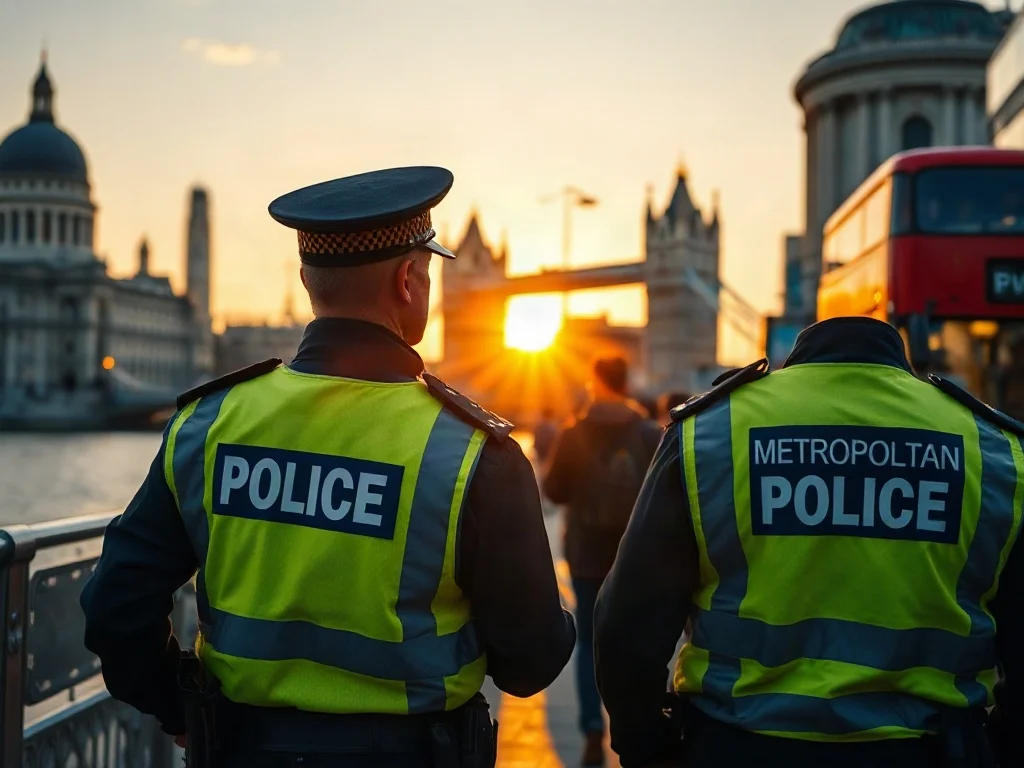
The James Cleverly interview on Guido Fawkes‘ video show asks a question many Westminster watchers consider almost heretical: can a Conservative win London again? The former Home Secretary sits down for a wide-ranging conversation covering Reform voters, the future of Sadiq Khan, his support for the Metropolitan Police and Commissioner Mark Rowley, and how to tackle crime in the capital. This article does not just recap the headlines. It sets out the political arithmetic, the policing context and the strategic tensions that give the conversation weight.
One caution before we start. The full conversation is on The Guido Fawkes Show, and only the topic list is summarised here. Where this article goes beyond those topics, it is analysis and context, not a claim about what Cleverly said.
What the James Cleverly Interview Covers
The published description lists five themes. Each one maps onto a live debate in British politics.
| Interview topic | Why it matters |
|---|---|
| A Conservative winning in London | The party has not held City Hall since 2016, and the capital is often treated as a no-go area for the right. |
| Whether Sadiq Khan will stand again | The incumbent’s decision shapes every rival’s strategy. |
| Winning Reform voters | The right-of-centre vote is split between the Conservatives and Reform UK. |
| Backing the Met and Mark Rowley | Public trust in policing remains fragile after several scandals. |
| Tackling crime in the capital | Crime and safety consistently rank among Londoners’ top concerns. |
Who Is James Cleverly, and Why Does His View on London Carry Weight?
James Cleverly is the MP for Braintree. He has held some of the most senior jobs in government, including Foreign Secretary and Home Secretary. He also stood in the 2024 Conservative leadership contest that was ultimately won by Kemi Badenoch.
His London credentials are real. Before entering Parliament he served on the London Assembly, where he scrutinised City Hall from the inside. That background gives him a more credible platform to discuss the capital than many national figures who treat London as a distant electoral problem.
Can a Conservative Win London Again?
The 2024 baseline
At the 2024 London mayoral election, Sadiq Khan won a third term, beating the Conservative candidate by roughly eleven percentage points. That is a sizeable margin, but not an impossible one for a well-run campaign in a favourable national climate. The last Conservative to win the Mayor of London job was Boris Johnson, who won in 2008 and 2012 and left office in 2016.
Why the voting system matters
The mayoral contest now uses first-past-the-post rather than the old supplementary vote, following changes in the Elections Act 2022. Under the old system, voters could give a second preference to a like-minded candidate. Under first-past-the-post, a divided right is a gift to the front-runner. This is the structural reason the Reform question is so important.
The Reform UK factor
Reform UK, led by Nigel Farage, has taken a significant share of the right-of-centre vote since the 2024 general election. For the Conservative Party, the strategic puzzle has two parts:
- Persuasion: offering former Conservative voters who moved to Reform a credible reason to return, particularly on crime, cost of living and public order.
- Arithmetic: recognising that in a London race, every vote that stays with a third party makes a Conservative victory harder.
The real difficulty is that the voters who might switch are not a single bloc. Some are former Conservatives angry about immigration and tax. Others are disillusioned Labour voters. Winning them back takes more than a slogan. It takes visible competence on issues like policing and transport.
Will Sadiq Khan Stand Again?
The interview also considers whether the incumbent will seek a fourth term. There is no statutory limit on how many terms a Mayor of London can serve, so that decision rests with Khan and the Labour Party. The next election is scheduled for 2028.
For any challenger, this uncertainty cuts both ways:
- If Khan stands: the Conservatives face a well-known incumbent with a long record to attack, but also a long record to defend against.
- If Khan steps aside: the contest opens up, and a new Labour candidate lacks his name recognition. That is the scenario in which a strong Conservative challenger could do the most damage.
Any prediction here is speculation. Candidate selection, national polling and the state of the Labour government will all influence the outcome.
Why Backing the Met and Mark Rowley Is a Strategic Choice
The policing backdrop
The Metropolitan Police is Britain’s largest police force, and it has faced a prolonged crisis of confidence. The murder of Sarah Everard by a serving officer triggered a wave of scrutiny. An independent review led by Baroness Casey later found serious cultural failings in the force, including institutional racism, misogyny and homophobia.
Mark Rowley became Commissioner in 2022 with a mandate to rebuild trust and root out officers who abuse their position. Backing him is therefore not just support for an individual. It is a statement that reform should come from within a professional policing structure, not from political interference.
Why the Mayor’s role matters
The Mayor is responsible for holding the Commissioner to account through the Mayor’s Office for Policing and Crime. The post sets budgets, priorities and the strategic direction of policing in London. A candidate who publicly backs the Commissioner is signalling continuity, but also accepting some responsibility for the outcomes.
That brings an obvious tension. Supporting the Met can win credibility with voters who want safer streets and respect for officers. It also carries the risk of seeming indifferent to the failures that damaged public confidence. The most persuasive position pairs firm support for officers with demands for high standards, and voters tend to respond better to specifics than to rhetoric.
How to Tackle Crime in London: What the Evidence Suggests
Crime in London is not a single problem. It spans theft and robbery, violence, knife crime, antisocial behaviour and online fraud. No mayor can solve all of these alone, and anyone promising a quick fix deserves scepticism. Still, several approaches have a credible evidence base.
Focus on places and people
Academic research on hot-spot policing, which concentrates patrols on the small number of streets that produce a disproportionate share of offences, generally finds crime reductions without simply displacing offending elsewhere. Targeting a small group of repeat offenders is another widely discussed strategy.
Use powers with care
Tools such as stop and search are among the most contested in British policing. Supporters argue they take weapons off the street. Critics point to disproportionality and the risk of eroding community trust. The practical lesson is that powers work best when they are intelligence-led, transparent and monitored.
Rebuild neighbourhood policing
Visible, consistent neighbourhood teams help police gather intelligence and strengthen the relationships that make crime-fighting possible. This is a cost-heavy approach, and it competes with demands from specialist units.
What to monitor
Readers who want to judge any candidate’s crime plan should ask for:
- Clear, measurable targets rather than general ambitions.
- Honest accounting of what the Mayor controls and what sits with national government.
- Published data, such as that available from the Metropolitan Police and the Greater London Authority.
- A plan for trust and legitimacy as well as arrests.
The Wider Strategy: Beyond Crime
Crime alone will not win London. The 2024 campaign showed how issues such as the Ultra Low Emission Zone expansion, housing costs and transport can shape the contest. A credible challenger must offer a rounded programme that addresses affordability, housing supply and the daily experience of commuting, alongside public safety.
The format of the interview also matters. Paul Staines‘ Guido Fawkes operation, known online as Order-Order and at order-order.com, reaches a politically engaged, right-leaning audience, many of whom are exactly the people a Conservative needs to persuade. Long-form video lets a politician speak without the compression of a broadcast soundbite, and it makes inconsistencies easier to spot.
Frequently Asked Questions
Where can I watch the full James Cleverly interview?
The full interview is available on The Guido Fawkes Show, published through the Guido Fawkes (Order-Order) video channels.
Can a Conservative win the London mayoral election?
It is difficult but not impossible. The party last won in 2012, and Sadiq Khan won in 2024 by a comfortable margin. A win would probably require a united right-of-centre vote, a strong candidate and a favourable national mood.
Will Sadiq Khan stand for a fourth term?
Nothing in the interview description confirms his plans, and there is no legal term limit. The decision rests with Khan and his party ahead of the 2028 election.
Why does James Cleverly back Mark Rowley and the Met?
The full reasoning is in the interview. In general terms, supporters of Rowley argue that the Met needs stability and a leader committed to reform while it rebuilds public trust.
How can crime in London be reduced?
Evidence points to targeted, intelligence-led policing, neighbourhood teams, action against repeat offenders and partnerships with councils and community groups. No single policy works in isolation.
The Question Behind the Interview: Can the Right Reunite in a City That Rarely Votes for It?
The most important insight from this conversation is that the headline question, whether a Conservative can win London, is really three questions. Can the right unite after Reform’s rise? Can a candidate restore trust in policing without defending its failures? And will Khan be on the ballot at all?
Watch three things over the coming months. First, whether the Conservatives and Reform move towards a working accommodation or harden into rivals. Second, how the Met’s reform record under Rowley is judged by Londoners rather than commentators. Third, whether Khan signals his plans early enough to shape the field.
A reasonable prediction is that the race will turn less on ideology than on credibility. London voters have repeatedly shown they will back candidates who look competent and in touch with the city, whatever their party. The unanswered question is whether any Conservative can prove that before 2028.