
When people search for the best family cruises, they are usually trying to solve a practical problem: how do you keep children entertained, give adults real downtime, and avoid turning a holiday into a chain of queues, hidden extras and compromise? That is why modern family cruising has moved far beyond the old idea of a simple cruise ship. The contemporary cruise line sells a managed family vacation, where the ship itself is the destination and the product is judged as much by entertainment design as by the itinerary.
The latest wave of launches, from Disney’s newest vessels to ships with giant waterparks, onboard funfairs and 11-deck slides, shows how intense the competition has become. The real question is not whether these ships are impressive. Many are. The question is whether spectacle actually makes a better holiday for families of different ages, budgets and travel styles.
Why family cruises changed from transport into entertainment ecosystems
Modern cruise holidays did not appear fully formed. They evolved from the older world of the ocean liner, when sea travel was primarily about getting from one place to another. Today’s family cruise market works differently. It is built around repeatable entertainment, predictable routines and the promise that parents can relax because the ship has already planned the day for them.
That shift matters because family buyers do not choose cruises in the same way they choose hotels. They want age-appropriate clubs, flexible dining, clear supervision rules and enough variety to stop arguments before they begin. A successful family cruise is not just bigger. It is better zoned. The layout, programming and service model all have to work together, or the ship becomes crowded rather than convenient.
Florida ports such as Port Canaveral and Miami illustrate the point. They are not simply embarkation points; they are launchpads for short breaks and school-holiday escapes, where the ship has to deliver enough value to compete with a land resort, a resort hotel and a theme-park break all at once.
In practice, the best family cruises are those that understand that the ship is part hotel, part attraction, part childcare system and part floating neighbourhood. That is a far more demanding brief than simply offering a pool and a kids’ club.
Disney still sets the benchmark for immersion, not just hardware
Among all family-focused operators, Disney Cruise Line remains the clearest example of a line that treats family travel as a complete design problem. Backed by The Walt Disney Company, it does not rely on large slides or brute force scale alone. Its competitive edge is immersive storytelling, tightly managed service and a brand language that children recognise immediately.
That matters because a theme park and a cruise ship share a useful principle: guests are happier when the environment gives them cues, rhythm and anticipation. Disney’s character-led dining, stage shows and youth clubs feel closer to a well-run amusement park experience than to a generic resort at sea. But unlike a land park, the ship also has to manage sleep, meals, movement and shared spaces over several days.
That is why a Disney Cruise Line family cruise is not automatically better for every household. It is usually better for families who value immersion, predictable quality and a premium, highly curated atmosphere. It is less convincing if the main priority is sheer physical play space at the lowest possible fare.
The best family cruise is not the one with the most toys. It is the one that reduces parental effort while still giving each age group enough stimulation to stay engaged.
Disney’s approach also shows the difference between attraction and utility. A child may remember the characters and stagecraft more vividly than a bigger slide. Adults, meanwhile, tend to remember whether the trip felt smooth. In cruise terms, smoothness is a feature, not a bonus.
The new arms race: waterparks, funfairs and 11-deck slides
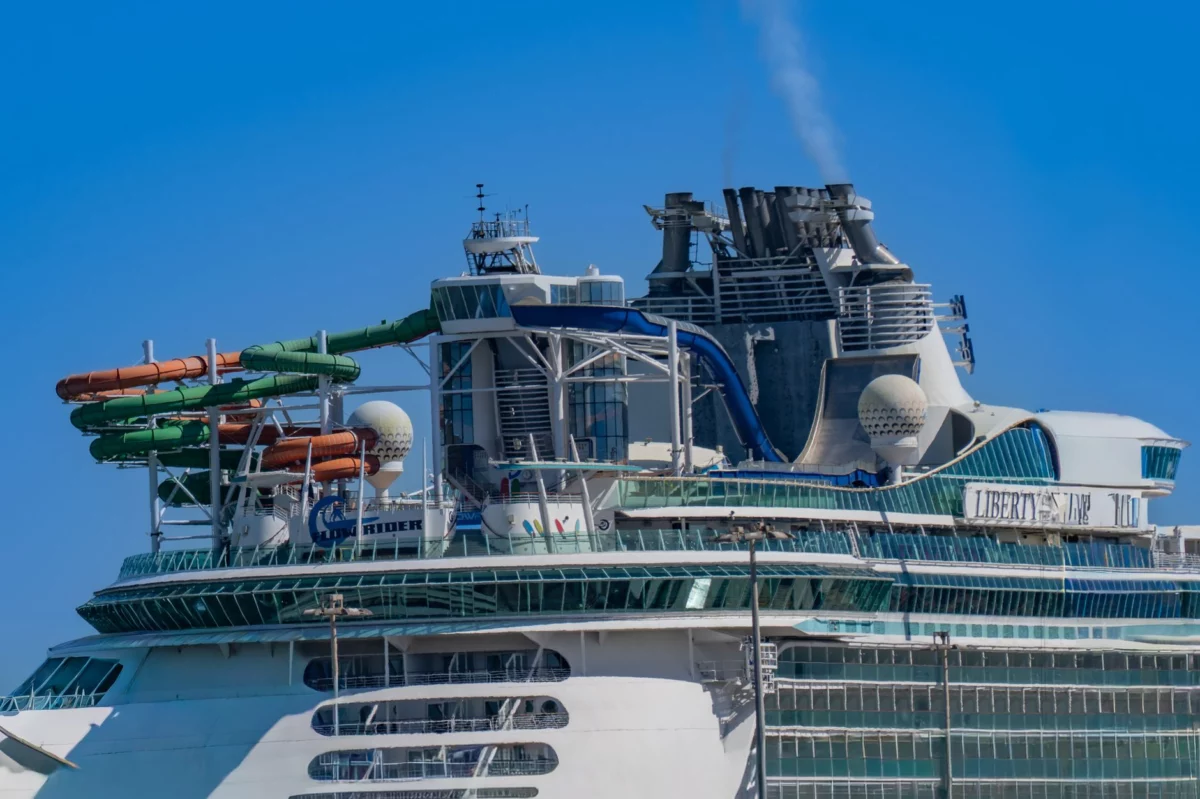
Other lines have responded by turning the ship into a more obvious spectacle. This is where the modern water park model comes in. Instead of treating the pool deck as a quiet leisure zone, cruise operators now build splash areas, raft rides, racing slides and multipurpose family zones that echo the logic of a funfair.
Royal Caribbean International is the clearest example of this scale-first approach, though it is not alone. The company’s big ships have helped redefine what a family cruise can look like: a place where the entertainment mix includes stage shows, sports zones, climbing, surf-style attractions and headline-grabbing slides. That is attractive to families with older children and teenagers, especially when the aim is to keep everyone busy without leaving the ship.
MSC Cruises has also leaned hard into the family market, offering big-ship facilities and broad appeal, while P&O Cruises tends to compete differently, with an easier fit for British families who want a more familiar boarding and dining rhythm. The common thread is that the ship is now expected to behave like a mixed-use leisure complex, borrowing selectively from the roller coaster logic of high-velocity thrill design without fully becoming a land park.
The downside is obvious. Once a ship becomes a floating attraction cluster, crowding increases, noise rises and the holiday becomes more dependent on booking systems, time slots and upsells. An 11-deck slide may be visually exciting, but it does not automatically improve flow, reduce stress or make a child feel safer. For some families, the spectacle is enough. For others, it is a distraction from the parts of the holiday that matter most.
That is the central tension in family cruising today: the product is getting louder, but not always more usable.
What makes a cruise ship good for families?
If you strip away the marketing language, what makes a cruise ship good for families? Four practical things matter more than the headline attractions: how the ship handles age groups, how it handles meals, how it handles cabin space and how it handles friction.
1. Age-specific programming that actually fits the child
The best ships split children’s activities by age in a way that feels meaningful rather than cosmetic. Younger children need supervision, predictable routines and quiet recovery time. School-age children need social play and variety. Teenagers need autonomy, not constant scheduling. A ship can have a large kids’ club and still fail if the age bands are poorly designed.
2. Cabins that reduce conflict
Family cabins matter more than many first-time cruisers expect. Connecting rooms, sofa beds, bunks and sensible storage can determine whether the trip feels restful or cramped. Families should pay close attention to deck plans, proximity to noisy venues and whether the room setup suits naps, early bedtimes or mixed-age sleeping patterns.
3. Dining that respects the family timetable
Flexible dining is not a luxury. It is a necessity. A family cruise works best when meals can happen without stress, when children’s menus are genuinely usable, and when adults can choose between casual and quieter dining. Many lines now promote convenience, but the real test is whether breakfast, lunch and dinner are predictable at peak holiday times.
4. Pricing that is transparent enough to trust
The printed fare is only the beginning. Specialty dining, drinks, shore excursions, Wi-Fi, photo packages and premium kids’ activities can change the real cost quickly. This is why families should compare not just advertised prices but the full holiday bill. A cheaper sailing can become expensive once the extras are added.
| Cruise line or style | Strength | Main trade-off | Best fit |
|---|---|---|---|
| Disney Cruise Line | Immersive storytelling, strong kids’ programming, polished service | Usually premium pricing | Families who value atmosphere and predictability |
| Royal Caribbean International | Biggest range of slides, activities and high-energy entertainment | Can feel busy and add-on heavy | Families with mixed ages, especially teens |
| MSC Cruises | Large-ship facilities and broad family appeal | Experience can vary by ship and region | Value-aware families wanting variety |
| P&O Cruises | Simple boarding, familiar style and useful short breaks | Less spectacle than the biggest US ships | First-time family cruisers and British holidaymakers |
| Carnival Cruise Line | Casual atmosphere and energetic onboard life | Can be noisy at peak times | Families prioritising affordability and pace |
That table is not a ranking in disguise. It is a reminder that the best family cruises are matched to the family, not sold as one universal answer. A multi-generational group will want different things from a family with toddlers, and neither should be forced into a one-size-fits-all ship.
Before booking, check the line’s official deck plans, age bands, daily schedules and dining rules. A sensible travel site should also connect this article to an internal guide on family cruise cabin choices, another on a cruise packing checklist and a third on shore excursion planning. Those are the pages that help readers convert interest into a practical booking decision.
Best cruise ships for families with teenagers are not always the same as the best ones for toddlers
This is where many booking mistakes happen. Parents often assume that more attractions automatically means a better cruise for children. In reality, the age profile matters more than the headline size of the ship. A toddler does not need an 11-deck slide. A teenager may not care about character dining. A pre-teen may want freedom, but not total independence.
For younger children, the best ships are the ones with obvious routines, shaded pools, short walking distances and strong club supervision. For teenagers, the winning formula is usually sports, social spaces, dependable Wi-Fi and enough low-pressure activities to avoid boredom. For adults travelling with both age groups, the key is whether the ship gives each generation a zone of its own.
That is why family-friendly cruise holidays succeed when they separate stimulation from noise. A good family cruise is lively without being exhausting. It has enough to do without forcing everyone into the same activity stream. The most common failure is not lack of entertainment; it is poor calibration.
FAQ: practical questions families ask before booking
Are Disney cruises worth the premium?
Often yes, if the family cares about immersion, service consistency and a smooth experience. They are less compelling if the only goal is to maximise physical attractions per pound spent.
Which cruise line is best for teenagers?
Usually the lines with the strongest activity mix, flexible social spaces and a genuine sense of freedom. Royal Caribbean is often the default answer, but the right fit still depends on budget, route and ship class.
How do I avoid overpaying for a family cruise?
Compare the total cost, not just the fare. Look at drinks, Wi-Fi, gratuities, kids’ clubs policies, flights, transfers and excursions. A cheaper headline price can hide a more expensive trip overall.
What should first-time family cruisers prioritise?
Choose a ship with clear age-group programming, sensible cabin layouts and easy dining. Do not chase the biggest slide first. Chase the least stressful overall experience.
The next battleground is not who can build the biggest slide
The most important insight is that family cruise competition is shifting from pure spectacle to operational intelligence. The future winners are likely to be the ships that manage crowding better, price more transparently and separate noise from relaxation more effectively. Bigger attractions will still matter, but they will not be enough on their own.
Over the next few years, expect cruise lines to keep borrowing from the logic of the theme park, while also facing pressure to make the experience more efficient and more sustainable. Environmental scrutiny, port limits and rising guest expectations will all push lines to justify every extra deck of hardware. The unanswered question is whether families will continue rewarding scale, or whether they will increasingly choose the ship that makes the least fuss for the most time.
That is why the real measure of the best family cruises may turn out to be surprisingly unspectacular: not the tallest slide, but the calmest day.
Frequently Asked Questions
Is the biggest family cruise ship automatically the best choice for a holiday with children?
No. Size can help, but only if the ship is well zoned and the programming works. A huge vessel with poor layout can feel crowded and tiring, while a slightly smaller ship with better clubs, dining flow and supervision can be much easier for parents to enjoy and for children to navigate.
What does Disney offer that ships with massive waterparks and mega-slides do not?
Disney’s edge is immersion rather than raw hardware. It combines character-led dining, storytelling, shows and youth clubs into a tightly managed experience that feels coherent from morning to night. That often reduces parental effort, even if another ship offers more dramatic attractions or larger outdoor play areas.
Are family cruises mainly designed for younger children, or can teenagers enjoy them too?
The best family cruises are built to work for several age groups at once. Younger children may respond to characters and clubs, while teenagers need independence, social spaces and activities that do not feel childish. A ship succeeds when it avoids forcing every age group into the same entertainment style.
Why do Florida ports matter so much when people choose a family cruise?
Ports such as Port Canaveral and Miami are important because they support short breaks, school-holiday trips and repeat family travel. That means the ship has to compete directly with theme parks and resort hotels. Families often choose based on how much value and convenience the onboard experience adds, not just the itinerary.
What is the biggest mistake families make when comparing cruise options?
Many focus on headline attractions and overlook the everyday experience: queues, dining flexibility, supervision rules and how easy it is to move around the ship. The best family cruise is usually the one that reduces friction. If the logistics are smooth, children stay engaged and adults actually get downtime.