
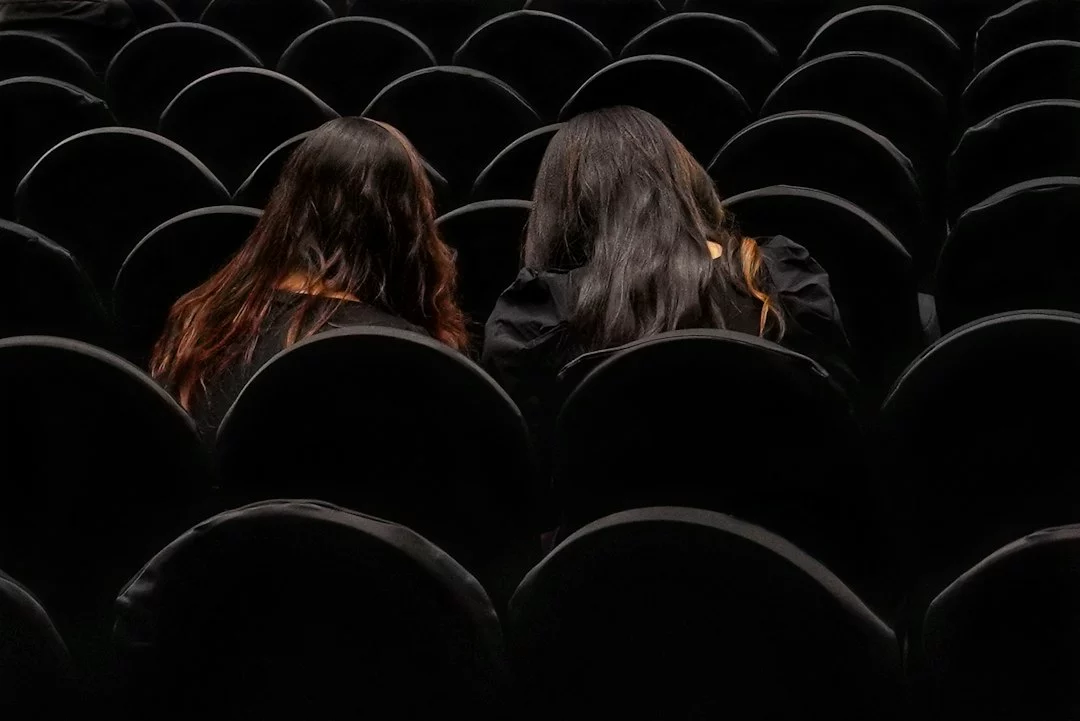
The best psychological horror movies do not simply frighten; they alter the viewer’s sense of what is real. That is why a ranking of the 23 most spine-chilling psychological horror movies is never just a popularity contest. It becomes a test of which films can weaponize memory, perception, and silence so effectively that the threat survives long after the credits end. The genre is less interested in bodies in pieces than in minds under pressure, and that shift in emphasis is what makes it so durable.
Why Psychological Horror Movies Stay in the Mind
What psychological horror really means
Psychological horror sits at the intersection of psychological horror and the broader horror film tradition, but it changes the rules. Instead of relying on monsters that can be neatly identified, it leans on suspense, ambiguity, and the slow erosion of certainty. Classic cinema gave the template its grammar. Alfred Hitchcock understood that dread is most potent when the audience knows just enough to anticipate danger, but not enough to resolve it. That is why Psycho still feels modern: it turns identity, domestic space, and split perception into weapons.
The genre also borrows from unreliable narration, gaslighting, and the uncanny, which is why the threat often feels intimate rather than external. The viewer does not just fear what is on screen; the viewer fears being mistaken, manipulated, or trapped inside another person’s broken logic. That is a very different emotional machine from a conventional slasher film. It is also why psychological horror often overlaps with body horror, surrealism, and expressionism without becoming identical to any of them.
Why the most disturbing films feel personal
The strongest entries in the genre do not present fear as a distant spectacle. They make it feel like an internal event. That matters because ordinary life already trains people to doubt their own perceptions: stress distorts memory, trauma fragments experience, and social pressure can make obvious truths feel negotiable. A film that understands this does not need constant shocks. It only needs a stable surface that slowly begins to fail.
Unreliable perception as a narrative engine
Many of the most effective films use restricted point of view to create epistemic panic. The audience knows something is wrong, but not where the distortion begins. Repulsion turns isolation into hallucination; Black Swan makes artistic perfectionism curdle into paranoia; The Babadook turns grief into a presence that cannot be ignored; Hereditary binds family trauma to a widening sense of fatalism. These films do not merely ask what is real. They ask what happens when reality is filtered through exhaustion, shame, and fear.
Sound, silence, and visual grammar
Psychological horror is often more dependent on craft than on explicit plot. A thin film score, an abrupt cut, or a held frame can produce more damage than a burst of gore. Directors frequently use visual distortion, including the Dutch angle, to make ordinary space feel unstable. In more severe cases, the frame itself behaves like a trap. That lineage reaches back to expressionist cinema and forward to contemporary indie horror. Even a so-called jump scare works best when it is not the point, but the punctuation mark at the end of a longer campaign of uncertainty.
When the monster is a metaphor
In many of the strongest films, the threat is not a creature but a condition. The killer in The Silence of the Lambs is frightening because intelligence and intimacy are fused into predation. Se7en turns urban decay and moral exhaustion into a procedural nightmare. The monster in these films is often guilt, obsession, or social rot made visible. That is why they endure: they can be reread through new anxieties without losing force.
| Core device | How it works | Representative films |
|---|---|---|
| Restricted viewpoint | Limits certainty and makes the audience doubt its own inference | Repulsion, Black Swan |
| Domestic threat | Turns the home, family, or caretaker role into a source of dread | The Babadook, Hereditary |
| Moral contamination | Shows evil spreading through systems, not just individuals | Se7en, The Silence of the Lambs |
| Style as psychology | Uses framing, color, and movement to imitate mental instability | Psycho, expressionist horror, surrealist horror |
Why rankings of psychological horror keep changing
Any list of the top psychological horror titles is inevitably unstable, because fear is historically contingent. Audiences in one decade reward one kind of breakdown; audiences in another decade reward another. A viewer raised on older studio thrillers may prefer suggestion and repression. A viewer formed by streaming-era, post-jump scare fatigue may value atmosphere and conceptual precision over blunt shocks. That is why a ranking of the 23 most spine-chilling psychological horror movies should be read as an argument, not an absolute verdict.
There is also a split between critics and casual viewers. Critics tend to favor formal control, thematic density, and the ability to sustain ambiguity. General audiences may respond more strongly to immediate emotional stakes, performances, and the clarity of the threat. Neither position is wrong. They are measuring different things. One measures craft; the other measures visceral effect. The best mind-bending horror films tend to succeed on both counts, but very few titles do so equally.
What the greatest films share beneath the surface
The classics of the genre often appear different on the surface, yet they share a few ruthless principles. They hide explanation until it matters, if they explain at all. They keep violence selective so that every incident carries weight. They trust actors to externalize inner collapse. And they understand that dread grows when the film refuses to tell the audience how to feel. Psycho remains lethal because its formal neatness sharpens the shock. The Silence of the Lambs remains effective because performance and intellectual menace are perfectly aligned. Black Swan remains unsettling because every aesthetic choice suggests a mind that is splitting under pressure.
- They delay certainty: the audience is allowed to suspect, but not settle.
- They make ordinary spaces unstable: kitchens, bedrooms, hallways, and rehearsal rooms become sites of threat.
- They use psychology as plot, not decoration: fear grows from character fracture, not from arbitrary chaos.
- They resist over-explaining: too much exposition kills the afterlife of the film.
How filmmakers can build real unease instead of empty shock
For filmmakers, the practical lesson is blunt: psychological horror fails when it confuses information control with vagueness. Ambiguity is not the same thing as incoherence. A film can leave viewers uncertain and still provide emotional logic. The most common mistake is to treat confusion as if it were suspense. Another mistake is to rely on noise, gore, or repetition because the script has not earned dread. Those tactics may produce momentary reactions, but they do not produce the slow burn that defines the genre.
A more disciplined approach is to build around a single pressure point and then escalate it with precision. In practice, that means choosing a psychological wound first and a monster second. It also means using the camera as an extension of the character’s perception, not as an indifferent observer. When the style and the psychology match, the result can feel invasive. That is the real standard. If the viewer exits the film still inhabiting the logic of the character’s fear, the movie has done its job.
- Start with a fear that can be dramatized visually. Grief, obsession, shame, guilt, and paranoia all translate better than vague menace.
- Let sound do some of the damage. Silence, muffled texture, and off-screen noise often work better than constant scoring.
- Use violence sparingly. In this genre, restraint usually hits harder than excess.
- Make the threat legible in retrospect. The audience should feel that the clues were there without feeling cheated.
What the next wave of psychological horror is likely to test
The future of the genre is not hard to forecast in broad strokes. Social isolation, algorithmic surveillance, artificial intimacy, and synthetic identity are already rich sources of anxiety. The next durable psychological horror films will probably not abandon the classics; they will update them. Instead of a haunted house, the threat may be a feed that learns a viewer’s vulnerabilities. Instead of a double, the threat may be a deepfake that is socially persuasive enough to outrun the truth. Instead of a repressed secret, the threat may be the inability to keep any private self at all.
That does not mean old formulas are obsolete. On the contrary, the genre keeps surviving because it can absorb each era’s fears without losing its core mechanism: doubt. If the best films of the past century taught audiences to mistrust corridors, basements, and family members, the next generation may teach them to mistrust interfaces, archives, and live video. The question is not whether psychological horror will remain relevant. It is which modern anxiety will finally become its definitive image.
FAQ: psychological horror movie questions readers actually ask
What is psychological horror?
It is a horror subgenre that focuses on mental instability, perception, guilt, paranoia, and emotional pressure rather than on overt monsters or constant gore. The fear comes from what the mind cannot easily organize.
Why are psychological horror movies so disturbing?
Because they attack the viewer’s confidence in interpretation. When a film makes ordinary spaces feel unstable and familiar relationships feel unsafe, the unease is harder to dismiss than a simple jump scare.
Are psychological horror movies scarier than supernatural horror?
Not universally, but often in a more lasting way. Supernatural horror can externalize fear into a creature or force. Psychological horror leaves the threat ambiguous and personal, which can make it linger longer for many viewers.
Which films define the genre most clearly?
Psycho, Repulsion, The Silence of the Lambs, Se7en, Black Swan, The Babadook, and Hereditary are among the most discussed reference points.
The real measure of fear is what survives after the screen goes dark
The most important insight is that psychological horror is not really about monsters at all. It is about interpretive collapse: the moment when the viewer realizes that certainty is fragile and identity is easier to fracture than to repair. That is why the genre keeps reinventing itself while remaining recognizably the same. New films will continue to change the props, the setting, and the technology, but the basic question will not change. What happens when the mind becomes the haunted house?
Watch the next wave of films for the objects they make suspicious. A phone, a recording, a family dinner, a mirror, a message thread, a camera feed: these are the new corridors and basements. The most enduring psychological horror movies will be the ones that make those ordinary tools of modern life feel unreliable. The unanswered question is whether the genre will keep finding fresh ways to dramatize anxiety, or whether reality itself will become so unstable that horror no longer needs to exaggerate it.
Frequently Asked Questions
What makes psychological horror different from a regular horror movie with a few scary scenes?
Psychological horror is built to destabilize certainty, not just to provoke a startle response. It focuses on perception, memory, guilt, and manipulation, so the fear comes from not knowing what is trustworthy. A regular horror film may rely more on external threats, while psychological horror makes the audience doubt the characters' minds and, by extension, their own reading of events.
Why do these movies often feel more disturbing than films with more graphic violence?
They feel more disturbing because they attack the viewer’s sense of stability rather than only their nerves. Graphic violence can be shocking, but psychological horror lingers by suggesting that reality itself is fragile. When a film makes ordinary spaces, relationships, or thoughts feel unreliable, the fear becomes personal and hard to dismiss after the scene ends.
Are jump scares important in psychological horror, or are they a sign of weak writing?
Jump scares are not automatically a weakness, but in strong psychological horror they usually serve as punctuation rather than the main effect. The real tension comes from slow uncertainty, silence, and growing unease. A well-placed scare works best when it interrupts a sustained feeling of dread instead of replacing it.
Why do family settings and homes appear so often in psychological horror films?
Because the home is supposed to be the safest place, so turning it into a source of fear creates immediate unease. Family relationships also naturally involve trust, dependence, and unresolved tension, which are ideal for stories about manipulation and emotional breakdown. That contrast between safety and threat makes domestic horror especially effective.
Why do some of these films stay with viewers long after the ending, even if the plot seems simple?
They stay because their real subject is not the plot twist but the emotional aftereffect. By using ambiguity, restricted perspective, and symbolic threats, they leave questions unresolved in the viewer’s mind. The film may end, but the uncertainty continues, forcing the audience to keep replaying what they saw and what it might have meant.