
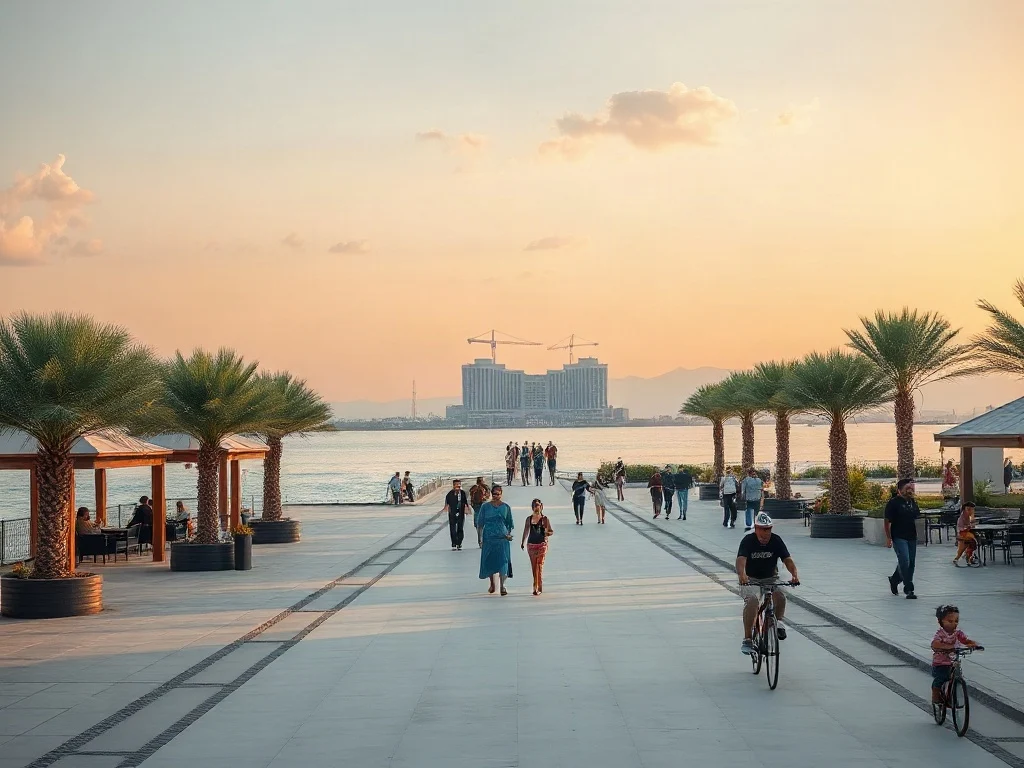
Ras Al Khaimah is no longer the quiet northern neighbour of the Gulf’s glossier emirates. It is a place of mountain ridges, mangrove-fringed shorelines and a growing island skyline, and it is racing to prove that ambition can become atmosphere. At the heart of that test sits Marjan Lifestyle, led by Chief Executive Officer Donald Bremner, whose remit, as framed in a recent Breaking Travel News interview, brings together hospitality, leisure, retail and community development. This analysis looks at what that remit signals, why it matters, and how the emirate can turn capital into communities people love. It draws on the themes the interview highlights rather than on direct quotations from it.
Why Ras Al Khaimah Is at a Defining Moment
Ras Al Khaimah is one of the seven emirates of the United Arab Emirates. It has long traded on a distinctive geography: a coastline on the Persian Gulf, desert interiors and the Hajar range, which rises to the UAE’s highest peak at Jebel Jais. The emirate has publicly set an ambition of around three million annual visitors by 2030, according to its tourism authority, a figure well above the roughly one million-plus visitors it has welcomed in recent years. Official plans are available through the Visit Ras Al Khaimah website.
That scale of ambition creates a paradox that every fast-growing destination eventually meets. Hotels, villas and headline attractions can be built on a construction timetable. Belonging, rhythm and repeat visitation cannot. A destination becomes durable only when the places between the landmarks, such as the café terrace, the promenade, the market and the beach path, feel alive on an ordinary Tuesday as well as on opening night.
What Does Marjan Lifestyle Do?
The question searchers ask most naturally is what Marjan Lifestyle actually does. Based on the description in the interview, it operates across four connected areas:
- Hospitality: hotels, dining and guest experiences that define the visitor’s first impression.
- Leisure: beach, wellness, entertainment and outdoor activities that give visitors reasons to stay longer.
- Retail: the commercial layer that serves tourists and residents alike.
- Community development: the neighbourhood-scale planning that makes a destination liveable.
Combining these under one leadership umbrella reflects a modern view of place-making. Traditional models split resort operators, retail landlords and residential developers into separate silos. An integrated approach lets one organisation think about how a morning swim, a school-run coffee and an evening dinner can share the same public realm. The concept is closely related to mixed-use development and to placemaking, the discipline of shaping public spaces around the people who use them.
The Wynn Al Marjan Island Effect
A catalyst with a clear timetable
No development looms larger over the emirate’s story than Wynn Al Marjan Island. Wynn Resorts is building an integrated resort on Al Marjan Island, an artificial archipelago reclaimed from the Gulf. The company has targeted an opening in 2027, and the project has been widely reported as the UAE’s first casino resort, operating within a regulated framework overseen by the national gaming authority. Updates are published by Wynn Resorts.
For a lifestyle operator, a project of this calibre is both gift and gauntlet. A global-brand resort brings international airlift interest, high-spending guests and a halo effect that lifts neighbouring assets. Yet it also raises expectations. Visitors who arrive for one flagship will judge the surrounding island, its restaurants, its beaches and its walkability by the same standard.
Opportunities and risks
- Opportunity: complementary offerings, such as family leisure, boutique dining and wellness, can capture guests who want something beyond a single resort.
- Opportunity: year-round residents create steady demand that smooths seasonal peaks.
- Risk: if everything is oriented towards the flagship, surrounding spaces can feel like an afterthought.
- Risk: rapid supply growth can outpace demand if arrivals do not rise as projected. Forecasts are predictions, not guarantees.
Protecting Natural Assets: The Foundation of Appeal
Perhaps the most telling emphasis in the interview is the importance of protecting the emirate’s natural assets. This is not a soft talking point. In a region where many destinations are built almost entirely from scratch, Ras Al Khaimah’s competitive advantage is that it offers real landscape: mangrove habitats, mountains, desert and a long shoreline. Rival hubs such as Dubai and Abu Dhabi compete on spectacle. Ras Al Khaimah can compete on texture.
Sustainable tourism in Ras Al Khaimah: what it requires
Genuine sustainable tourism goes beyond branding. In practice it involves:
- Setting capacity limits at sensitive sites, an application of the idea of carrying capacity.
- Protecting coastal ecosystems during and after construction, including buffer zones near mangroves.
- Managing water and energy demand, a serious consideration in an arid climate.
- Directing visitors towards ecotourism-style experiences that generate local income without degrading the resource.
The strategic logic is straightforward. If the landscape is the product, damaging it is a form of self-sabotage. Destinations that have suffered overtourism elsewhere show how quickly goodwill among residents and visitors can erode when growth outruns planning.
Designing for Visitors and Residents at the Same Time
Serving both groups is harder than it sounds, because their needs overlap but are not identical. The comparison below shows where thoughtful design can bridge the gap.
| Dimension | Typical visitor need | Typical resident need | Shared design response |
|---|---|---|---|
| Dining and retail | Novelty and signature experiences | Value, convenience and daily essentials | A tiered mix of destination venues and everyday outlets |
| Public space | Scenic, photogenic areas | Safe, shaded and comfortable routines | Shaded promenades and parks used throughout the day |
| Mobility | Easy airport and resort access | Reliable commuting and school access | Connected road, cycling and walking networks |
| Programming | Events and seasonal highlights | Community activities year-round | A calendar that blends festivals with local life |
The hospitality industry has historically optimised for guests who stay a few nights and leave. Residents stay for years, and they are the quiet guarantors of a destination’s vitality. A lifestyle operator that earns their loyalty creates a foundation that tourism cycles cannot easily shake.
Practical Lessons for Developers and Operators
Best practices worth borrowing
- Programme before you pour concrete. Decide what will happen in a space before deciding how large it should be.
- Phase retail to match population. Empty units damage atmosphere faster than a slower opening schedule ever could.
- Measure beyond occupancy. Track repeat visits, resident satisfaction, dwell time and local employment alongside room nights.
- Make nature part of the plan. Protected coastline and trails are infrastructure, not decoration.
Common mistakes
The classic error is building the iconic attraction first and treating the community as a later phase. Another is treating residents as an audience for marketing rather than as co-owners of the place. A third is assuming that a high-profile anchor will automatically lift every neighbouring business. Anchors lift ecosystems only when the ecosystem is ready to receive the footfall.
Debates and Open Questions
Not everyone agrees on the right pace or shape of growth. Supporters of rapid development argue that scale is necessary to attract airlines, investors and global brands. Sceptics counter that the Gulf’s earlier boom-and-correction cycles show the danger of oversupply. A third view, which is arguably the most useful, holds that the decisive variable is not speed but quality: destinations that curate and protect their character generally hold value better than those that simply add inventory.
There are also cultural considerations. A regulated gaming resort in a country with a conservative social framework demands careful stewardship of how the destination presents itself to families, residents and international guests. How well that balance is managed will shape public perception as much as any marketing campaign.
What Could Change Over the Next Few Years
Several developments are reasonable to expect, though none are certain:
- Opening-phase scrutiny. Once the flagship resort opens, performance data and visitor reviews will quickly reveal whether surrounding experiences keep pace.
- Rising sustainability expectations. Travellers, lenders and regulators increasingly ask for measurable environmental performance, not slogans.
- Competition across the Gulf. Neighbouring destinations are investing heavily, which will sharpen the need for differentiation.
- Residential maturation. As more communities fill, demand for schools, healthcare, local retail and transport will become as important to reputation as luxury hotels.
Specific projections about visitor numbers or revenue should be treated cautiously until confirmed by official data.
Frequently Asked Questions
What does Marjan Lifestyle do?
According to Breaking Travel News, its remit covers hospitality, leisure, retail and community development in Ras Al Khaimah, with an emphasis on building destinations that serve both visitors and residents.
Who is Donald Bremner?
Donald Bremner is the Chief Executive Officer of Marjan Lifestyle, and he was interviewed by Breaking Travel News about the emirate’s tourism and residential ambitions.
What is Wynn Al Marjan Island?
It is an integrated resort being developed by Wynn Resorts on Al Marjan Island in Ras Al Khaimah, with an opening targeted for 2027.
Why is protecting natural assets important for tourism in Ras Al Khaimah?
Landscape is one of the emirate’s strongest differentiators. Damaging coastlines, mangroves or mountain areas would weaken the very appeal that draws visitors and residents.
The Test Hidden Behind the Ribbon-Cutting
The most important insight from this story is that Ras Al Khaimah’s success will not be decided by the grandeur of its openings. It will be decided by what happens eighteen months afterwards, when the crowds thin, the novelty fades and the question becomes whether people still choose to come, and to stay. That is why the integration of hospitality, retail, leisure and community under a single remit is more than an organisational detail. It is a bet that places can be designed to mature gracefully.
Watch three signals in the coming years: whether resident communities grow lively and not just populated, whether the natural assets remain visibly protected as construction intensifies, and whether visitors return for the emirate itself rather than for a single marquee address. If all three hold, Ras Al Khaimah will have achieved something rarer than rapid growth: a destination with a character of its own. The unanswered question is whether the pace of building will leave enough patience for that character to form.
SEO DATA
Primary Focus Keyphrase: Marjan Lifestyle
Related Keyphrase 2: Wynn Al Marjan Island
Related Keyphrase 3: Ras Al Khaimah tourism development
Related Keyphrase 4: what does Marjan Lifestyle do
Related Keyphrase 5: sustainable tourism in Ras Al Khaimah
Primary Keyphrase Synonyms: Marjan’s lifestyle arm, Marjan lifestyle business, Marjan lifestyle division, Marjan’s hospitality and leisure unit, the Marjan lifestyle team
SEO Title: Marjan Lifestyle: Shaping Ras Al Khaimah’s Tourism Future
Meta Description: Marjan Lifestyle CEO Donald Bremner’s remit spans hospitality, leisure and community. See how Ras Al Khaimah can turn investment into lasting appeal.
URL Slug: marjan-lifestyle-ras-al-khaimah
Image Filename: marjan-lifestyle-al-marjan-island-waterfront-promenade.jpg
Image ALT Text: Families walking along a waterfront promenade on Al Marjan Island at sunset, with a resort under construction in the distance
Image Title: Al Marjan Island waterfront at golden hour
Image Caption: Waterfront promenades and community spaces are central to Ras Al Khaimah’s destination-building ambitions.
Search Intent: Informational (with news and current-event elements)
Recommended Internal Links (anchor ideas): Ras Al Khaimah travel guide; UAE hotel openings; sustainable travel in the Middle East; Gulf destination development news
Frequently Asked Questions
What areas does Marjan Lifestyle cover, and why does combining them matter?
Marjan Lifestyle works across hospitality, leisure, retail and community development. Bringing them under one leadership lets a single organisation plan how a morning swim, a coffee run and an evening dinner share the same public spaces, instead of leaving resort, retail and residential projects in separate silos.
How realistic is Ras Al Khaimah's goal of three million visitors by 2030?
The tourism authority has set the target at around three million annual visitors, up from roughly one million-plus in recent years. Reaching it requires more than new hotels. It depends on airlift, attractions and lively everyday spaces that encourage repeat visits, so progress is worth checking against official updates.
Why is Wynn Al Marjan Island both an opportunity and a challenge for lifestyle operators?
A global-brand resort can bring international airlift interest, high-spending guests and a halo effect for nearby assets. It also raises expectations, because visitors will judge the island's restaurants, beaches and walkability by the flagship's standard. Surrounding spaces risk feeling like an afterthought if planning centres only on the resort.
When is Wynn Al Marjan Island expected to open, and under what rules?
Wynn Resorts has targeted an opening in 2027 for its integrated resort on Al Marjan Island. It has been widely reported as the UAE's first casino resort and would operate within a regulated framework overseen by the national gaming authority. Wynn Resorts publishes project updates.
What does placemaking mean in the context of Ras Al Khaimah's growth?
Placemaking is the discipline of shaping public spaces around the people who use them. In Ras Al Khaimah it means making cafés, promenades, markets and beach paths feel alive on an ordinary weekday, not just at launches, so the destination keeps appeal beyond its landmark buildings.
Why do year-round residents matter for a tourism-driven island?
Residents create steady demand for shops, dining and leisure that smooths out seasonal peaks in visitor numbers. Their daily presence also gives public spaces a natural rhythm, helping an island feel like a real community rather than a set of attractions that depend only on tourists.