
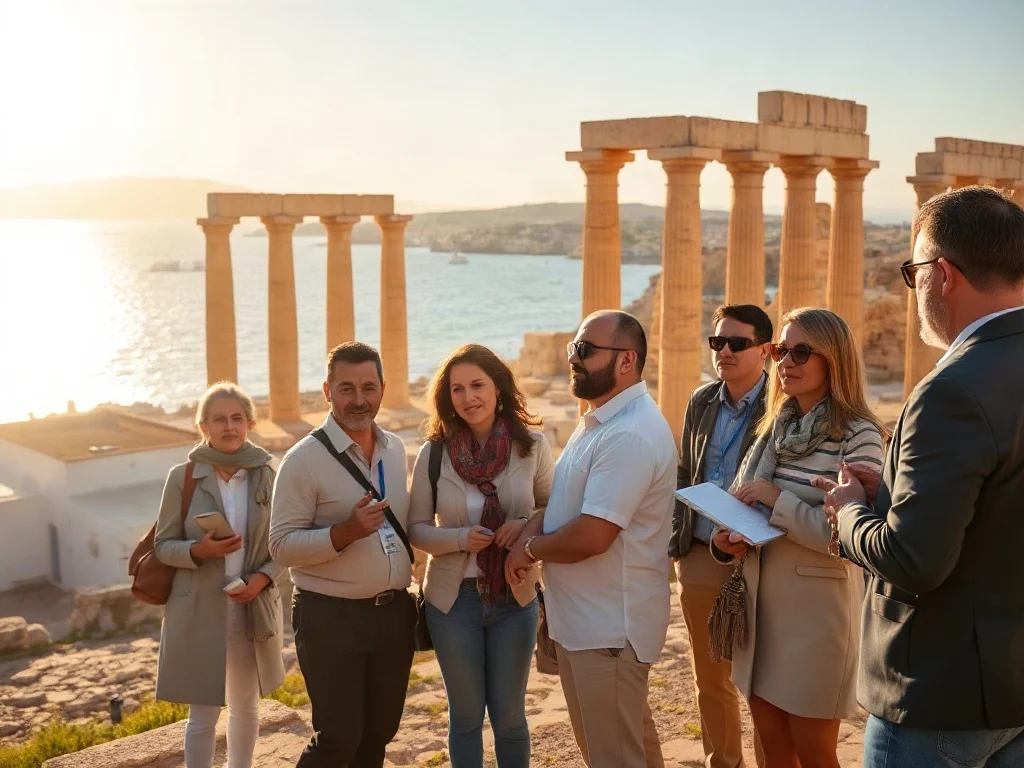
When a country decides to show the world something beyond its beaches, the choice is both a marketing decision and a statement of identity. Tunisia alternative tourism is about to get that moment. On 27–28 January 2027, the Cité de la Culture in Tunis will host the Tunisia Destination Forum & Marketplace 2027, where the country will present its cultural, natural and heritage experiences to international travel buyers. This article looks at what the forum signals, how alternative tourism works as a commercial product, and what buyers, operators and destination managers should watch as the event approaches.
Only the headline facts have been confirmed publicly: the dates, the venue and the focus on cultural, natural and heritage tourism aimed at international buyers. Details such as the buyer list, exhibitor numbers and programme are not covered here, and the analysis below separates what is announced from what is reasonable interpretation.
What the Tunisia Destination Forum & Marketplace 2027 Represents
A destination forum and marketplace is a business-to-business format. Instead of addressing holidaymakers directly, a destination speaks to the professionals who package, price and sell travel: tour operators, travel agencies and specialist programme designers. The marketplace element suggests structured meetings in which suppliers and buyers can discuss products and negotiate partnerships, though the exact format has not been detailed in the announcement.
The location is telling. Tunis is the capital of Tunisia, and a cultural venue like the Cité de la Culture reinforces the message that the country wants to be seen as a place of ideas, art and heritage as well as sun and sea. Hosting a trade event inside a cultural complex is a quiet form of storytelling before a single presentation begins.
Why a Business-to-Business Approach Makes Sense
Alternative tourism products are rarely bought on impulse. A multi-day itinerary that links a Roman site, a desert landscape and a craft village needs a specialist who understands logistics, guides, accommodation and seasonality. Convincing those intermediaries is often more efficient than convincing individual travellers one by one. A forum compresses months of relationship-building into two focused days.
Understanding Tunisia Alternative Tourism
The term alternative tourism is loosely defined, which is part of its appeal and its difficulty. It generally describes travel that differs from conventional mass tourism, with an emphasis on authenticity, local communities, landscapes, history and lower-density experiences. It overlaps with cultural tourism, ecotourism and sustainable tourism, but it is not identical to any of them. For Tunisia, the announced pillars are culture, nature and heritage.
Cultural Experiences
Culture in Tunisia is layered by centuries of Berber, Phoenician, Roman, Arab, Ottoman and French influence. That blend appears in Tunisian cuisine, in craft traditions, in music and in the architecture of old towns. For buyers, the commercial opportunity lies in turning this richness into repeatable, well-priced experiences, such as cooking classes, artisan workshops and guided neighbourhood walks, rather than leaving it as an abstract promise.
Natural Landscapes
The country’s geography is unusually varied for its size, running from Mediterranean coastline to the northern woodlands to the edge of the Sahara. Places such as Ichkeul National Park and the salt flats of Chott el Djerid illustrate how different the landscapes can be within a single trip. Nature-based products such as hiking, birdwatching and desert experiences appeal to travellers who want activity and space, but they also demand careful management of fragile environments.
Heritage and Historic Sites
Heritage is arguably Tunisia’s strongest card. Carthage, the Medina of Tunis, Dougga, Kairouan and the Amphitheatre of El Jem are all inscribed as UNESCO World Heritage Sites, and the full list for the country is available on the UNESCO World Heritage Centre website. Such recognition gives buyers a trusted shorthand for quality, which matters when they are building programmes for clients who have never visited the country.
Why International Travel Buyers Are the Real Audience
It is tempting to read a forum like this as a promotional showcase. It is better understood as a supply-chain event. Buyers are not simply admiring a destination; they are asking practical questions. Can groups be moved reliably between sites? Are there enough qualified guides in the languages their clients speak? Is accommodation available in smaller towns, not just in resort zones? Will the experience still feel authentic when sold at scale?
These questions explain why alternative tourism is both attractive and demanding. A sun-and-beach package relies on a few concentrated hubs. A heritage-and-nature circuit spreads visitors across regions, which can distribute income more widely but requires coordination between many small providers.
Reframing a Destination’s Image
Tunisia has long been strongly associated with coastal holidays, and tourism in Tunisia has historically been closely tied to that model. Diversifying the offer is a recognised strategy for reducing dependence on a single type of visitor. Whether it succeeds depends on how convincingly the destination can change perceptions among the buyers who shape what travellers see in brochures and online catalogues. This is an interpretation of the strategic logic, not a statement about the organisers’ internal goals.
Opportunities and Risks
Opportunities
- Regional spread: routes that link inland and coastal areas can bring visitor spending to places that see little tourism today.
- Longer, richer stays: themed itineraries can encourage travellers to explore more than one region.
- Seasonal balance: cultural and heritage products are less dependent on peak summer weather than beach holidays, which may help smooth demand across the year.
- Brand differentiation: a distinctive heritage identity can set Tunisia apart in a crowded Mediterranean market.
Risks and Limitations
- Quality consistency: one disappointing guide or poorly maintained site can undermine a buyer’s confidence in an entire product.
- Capacity and access: remote attractions need transport and lodging that match the expectations of international clients.
- Environmental pressure: popular natural and heritage sites can suffer from overtourism if growth is not managed.
- Perception and external shocks: travel demand is sensitive to safety perceptions, economic conditions and global events, as the COVID-19 pandemic demonstrated across the entire industry.
How Buyers and Tourism Professionals Can Prepare
For anyone planning to attend, or to compete for the same buyers, the value of a marketplace depends on preparation more than on presence. The following practices tend to separate productive events from expensive networking.
- Define a product, not a brochure. Buyers respond to clear itineraries with transparent pricing, group sizes and logistics rather than general descriptions of beauty.
- Bundle across categories. A circuit that pairs a heritage site with a craft workshop and a natural landscape illustrates the full alternative tourism proposition.
- Prepare proof. Photography, short video, guide credentials and sustainability practices help buyers justify the product to their own clients.
- Plan the follow-up. Many deals are lost in the weeks after an event. Schedule familiarisation visits, samples and written proposals before leaving the venue.
- Track outcomes. Monitor enquiries, proposals and bookings linked to the forum so future participation can be judged on evidence.
Common Mistakes to Avoid
The most frequent error is overpromising. Alternative tourism thrives on authenticity, and travellers who feel misled by polished marketing are quick to say so in reviews. Another is treating buyers as a single audience; a specialist cultural operator and a general leisure wholesaler need very different information.
What Could Shape the Next Few Years
Several broader trends favour the kind of positioning Tunisia is attempting. Many travellers say they want experiences tied to place, and destinations across the Mediterranean are competing to offer them. Digital booking platforms also make it easier for small providers to reach international intermediaries, though they raise the bar on transparency and reviews. These observations reflect general industry direction rather than forecasts specific to Tunisia.
Regulation and sustainability expectations are likely to matter more. Buyers increasingly ask about environmental practices and community benefits, and a destination that can document them will be better placed than one that relies on slogans. Whether the forum will introduce such themes into its programme has not been announced, but it would be a logical area of focus for a destination presenting nature and heritage products.
Frequently Asked Questions
What is the Tunisia Destination Forum & Marketplace 2027?
It is a tourism trade event scheduled for 27–28 January 2027 at the Cité de la Culture in Tunis. Its stated aim is to showcase Tunisia’s cultural, natural and heritage tourism to international travel buyers.
What is alternative tourism?
Alternative tourism refers to forms of travel that differ from conventional mass tourism, typically emphasising culture, nature, heritage, authenticity and smaller-scale or community-linked experiences. The definition varies between organisations and countries.
Who is the forum aimed at?
The announcement points to international travel buyers, meaning professionals who design and sell travel programmes. It is a business event rather than a consumer fair.
Which Tunisian attractions fit the alternative tourism model?
Heritage sites such as Carthage, Dougga and El Jem, historic medinas, desert and wetland landscapes, and local craft and food traditions all fit the cultural, natural and heritage themes announced for the forum.
The Real Test Begins After the Handshakes in Tunis
The most important insight is that a forum can open doors but cannot build a product. Tunisia already holds remarkable assets in heritage, landscape and living culture. The harder task is converting them into reliable, well-priced experiences that a buyer in another country can confidently sell to a client who has never set foot in the region.
Watch for three signals in the months around January 2027: how concretely the programme addresses itineraries and logistics, whether sustainability and local community benefits are treated as selling points, and whether buyers return for familiarisation visits instead of simply collecting brochures. The unanswered question is whether diversification can move from a showcase idea to a measurable shift in how travellers experience Tunisia. If it does, the two days in Tunis may be remembered less for the stands and speeches than for the partnerships that quietly began there.
Frequently Asked Questions
Is the Tunisia Destination Forum & Marketplace 2027 open to individual travellers?
No. The forum is a business-to-business event aimed at international travel buyers such as tour operators, travel agencies and programme designers. Individual holidaymakers are not the target audience. Travellers will see the results later, through new itineraries and packages that these professionals build and sell.
What details about the 2027 forum have actually been confirmed?
Only the headline facts are public: it takes place on 27–28 January 2027 at the Cité de la Culture in Tunis, and it focuses on cultural, natural and heritage tourism for international buyers. The buyer list, exhibitor numbers and full programme have not been detailed yet.
How is alternative tourism different from ecotourism or cultural tourism?
Alternative tourism is a loosely defined term for travel that departs from conventional mass tourism, stressing authenticity, local communities, landscapes and history. It overlaps with cultural, eco and sustainable tourism but is not identical to any of them, so buyers should check how each product is defined.
Why does Tunisia promote alternative tourism through intermediaries instead of directly to tourists?
Alternative products, such as multi-day routes linking Roman ruins, desert and craft villages, are rarely bought on impulse. They require specialists who manage logistics, guides, lodging and seasonality. Persuading these intermediaries is often more efficient than reaching travellers one by one, and a forum condenses months of relationship-building into two days.
Which Tunisian sites show the variety of experiences on offer?
Heritage highlights include Carthage, the Medina of Tunis, Dougga, Kairouan and the Amphitheatre of El Jem, all UNESCO World Heritage Sites. For nature, Ichkeul National Park and the Chott el Djerid salt flats show the contrast between northern wetlands and the edge of the Sahara.
What challenges come with selling nature-based tourism in Tunisia?
Hiking, birdwatching and desert experiences attract travellers who want activity and space, but they depend on fragile environments that need careful management. Buyers and operators must balance growth with protection, and turn cultural richness into repeatable, well-priced products rather than leaving it as an abstract promise.