
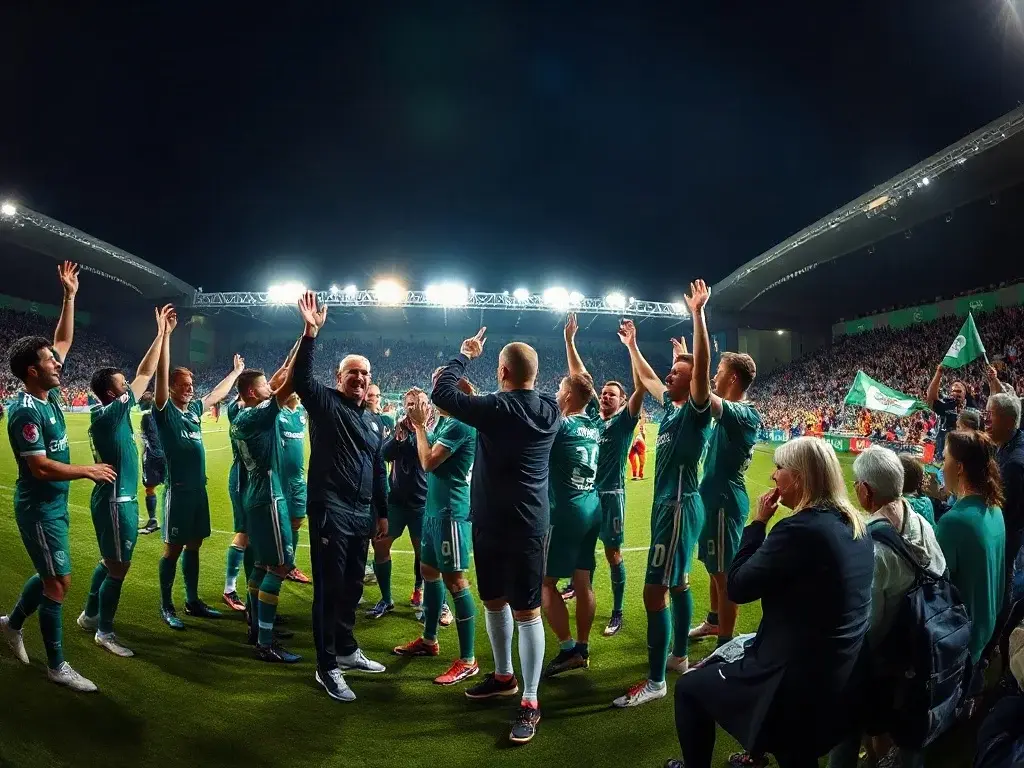
The Northern Ireland Nations League A promotion was secured the hard way: by coming from behind against Hungary to earn the draw the team needed. Manager Michael O’Neill credited the belief in his squad, and the headline reporting on the result also points to the influence of the bench. For a team from a small football association, reaching the top tier of European international football through a comeback, rather than a comfortable win, says a lot about how this group is built.
This analysis explains what the result means in competitive terms, why mentality and squad depth matter in must-not-lose fixtures, and what promotion to the top division of the UEFA Nations League changes in practice. It separates what is reported about the match from broader interpretation, and it avoids details that the available reporting does not confirm.
What Happened: A Comeback With a Specific Target
The core facts are straightforward. Northern Ireland trailed against Hungary, recovered, and finished level. A draw was the exact outcome they needed to go up to League A. O’Neill’s public reaction centred on belief: the idea that the players never accepted the original scoreline as final.
That framing matters because the fixture was not an open-ended contest. When a team needs one specific result, tactical decision-making changes. Trailing, they must chase the game without exposing themselves to a second goal, which would turn a manageable deficit into a harder task. Equalising while keeping defensive structure intact is more demanding than simply winning a game.
Why the Bench Matters in These Situations
International squads often have far less preparation time together than club sides. In that setting, substitutes become a strategic resource rather than a safety net. Fresh players can change the tempo, offer a different type of threat, or add energy when opponents tire. The reporting credits the bench as part of this story, which suggests the changes made during the match had a tangible effect on the outcome.
It is worth being careful here. A successful substitution is always judged in hindsight, and a draw can be shaped by many factors, including opposition decisions and small moments of fortune. Even so, a squad in which replacements are trusted to influence results is a sign of healthy depth.
Understanding the Nations League A Pathway
The UEFA Nations League was introduced to replace many low-value friendlies with meaningful fixtures between teams of similar strength. National teams are split into divisions, known as Leagues A to D, and play within groups. Results lead to promotion or relegation between divisions, so each campaign carries consequences beyond the matches themselves. The official competition hub on UEFA.com remains the authoritative source for the current format and regulations.
How Promotion Is Decided
Promotion is generally decided by group stage standings, with tie-break criteria applied when teams finish level on points. In some formats and cycles, promotion and relegation also involve play-offs. Because the exact rules have been adjusted between editions, readers should check the regulations for the specific campaign rather than assume that every promotion works the same way.
What the match itself shows is that a single point can be decisive. A draw is often treated as a neutral result, but in a tightly poised group it can be the difference between staying in a division and moving up.
The Role of Belief in a Promotion Campaign
O’Neill’s emphasis on belief deserves examination rather than being dismissed as a manager’s cliché. In sport psychology, the related concept of self-efficacy describes a person’s confidence in their ability to perform a task. Collective versions of that confidence are widely discussed in team sports, although measuring their direct effect on a single result is difficult.
A Track Record That Supports the Narrative
O’Neill is no newcomer to this kind of challenge. His earlier spell in charge of the Northern Ireland national football team included qualification for UEFA Euro 2016, a tournament in which the team progressed beyond the group stage. More background on his career is available in the entry for Michael O’Neill. That history helps explain why players may respond to his messaging in pressure moments: they have seen it work before.
Belief Is Not a Substitute for Structure
It would be misleading to attribute the result to mentality alone. Belief typically operates alongside organisation, set routines and clear roles. Teams that recover from a goal down generally do so because they stay compact, avoid panic, and keep creating chances, not simply because they feel confident. The best interpretation of the Hungary game is therefore that belief enabled the team to execute its plan, not that it replaced one.
The Opposition: Why Hungary Is a Meaningful Benchmark
Hungary’s national team has a long football tradition and has competed at recent European Championships. Taking a result from such a side, in a match where the opponent could also influence the group outcome, is more significant than securing points against a clearly weaker team. It suggests Northern Ireland can compete with established European sides when the stakes are highest.
There is also the factor of home advantage. Whether a match is played in front of supporters at Windsor Park or on the road changes the emotional context of a comeback. The reporting summarised here does not allow a precise assessment of that effect, so it should not be overstated.
What Promotion to League A Actually Changes
Tougher Opposition, Higher Visibility
League A is where Europe’s strongest national teams compete. Northern Ireland will face opponents with deeper talent pools, bigger budgets and more players in elite club environments. The promotion is a reward, but it also raises the standard of the weekly examination. Competitive fixtures against top-ranked nations offer experience that friendlies rarely replicate.
Rankings, Seeding and Qualification Routes
Nations League performance has been connected to later qualification processes for the UEFA European Championship and the FIFA World Cup, including through seeding and play-off routes. The details depend on the specific cycle, and they have changed over time. Anyone assessing the long-term benefit should consult the current qualification regulations and the UEFA national team coefficient system rather than rely on assumptions.
Commercial and Developmental Effects
Higher-profile fixtures can strengthen a national association’s commercial position, including broadcast interest and matchday revenue. The Irish Football Association publishes official news and fixtures at irishfa.com. No specific financial figures are given here because they are not part of the reporting this analysis is based on.
Risks and Counterpoints
Promotion is not an unqualified benefit. A common concern among analysts is that teams promoted into a stronger division can face heavy defeats, which may affect confidence and, in some cases, lead to rapid relegation. Smaller nations have a limited player pool, so injuries to key players can have an outsized effect.
- Squad depth: a bench that performs well against Hungary must now handle stronger opposition more often.
- Tactical adaptation: a pragmatic approach that works in League B may need refinement against elite pressing and possession sides.
- Expectation management: the success of promotion can create pressure that the previous underdog status did not.
There is also a fair debate about whether a draw-based promotion reflects dominance or resilience. Both interpretations can be true, and the answer depends on the broader group record rather than one night.
Practical Lessons for Coaches and Analysts
The result offers several transferable ideas for anyone involved in football management or performance analysis.
- Plan for scenarios, not only for the opponent. When a single result is needed, rehearse how the team behaves when behind, level or ahead.
- Treat substitutes as part of the starting strategy. Identify in advance which players change the game in specific situations.
- Protect emotional stability. Teams that concede first need clear, calm communication so they do not abandon their structure.
- Track marginal contributions. Measure the effect of substitutes on pressing intensity, chance creation and territory, not only on goals.
Frequently Asked Questions
What is Nations League A?
It is the top division of the UEFA Nations League, containing the highest-ranked European national teams. Teams in lower divisions can win promotion into it through group results, subject to the competition’s rules.
How did Northern Ireland secure promotion?
According to the match report, they came from behind against Hungary to secure the draw they needed. Manager Michael O’Neill highlighted the belief shown by the team.
Does promotion to League A help World Cup or Euro qualification?
It can influence seeding and qualification routes, but the exact benefits depend on the rules for each cycle. Check UEFA’s current regulations for confirmed details.
Why is the bench important in international football?
International teams have limited training time, so substitutes who understand their roles can change a game quickly without requiring major tactical rebuilding.
What This Promotion Really Tests Next
The most important insight from this result is that Northern Ireland did not win promotion by dominating; they did it by absorbing a setback and responding. That is a valuable trait, but League A will measure it more severely. Matches against elite sides will rarely allow a second chance after falling behind.
The key things to watch are how O’Neill manages squad rotation, whether the bench contributors of this campaign can maintain their impact against stronger opposition, and how the team balances ambition with defensive discipline. A reasonable prediction, not a certainty, is that results will be tight and that the side’s survival in the top tier will depend as much on depth and injury luck as on spirit. The unanswered question is whether belief, so effective in one decisive night, can become a lasting competitive edge when the opposition is consistently better on paper.
Frequently Asked Questions
Why was a draw against Hungary enough for Northern Ireland to be promoted?
Promotion in the Nations League depends on group standings, so a single point can decide a tightly poised group. The article says the draw was exactly the result Northern Ireland needed, which is why equalising mattered more than winning outright.
Is promotion to League A always decided by group standings alone?
Not always. Promotion is generally based on group stage standings, with tie-break criteria when teams finish level on points. In some formats and cycles, play-offs are also involved. Because rules have changed between editions, readers should check the regulations for the specific campaign on UEFA.com.
Why are substitutes more important in international football than in club football?
International squads usually have far less preparation time together than club sides. Substitutes therefore become a strategic resource rather than a safety net, able to change tempo, add a different threat or bring energy when opponents tire, which can influence tight results.
Can belief really influence a match result, or is it just a manager's cliché?
The article treats it as more than a cliché. Sport psychology describes self-efficacy, a person's confidence in their ability to perform a task, and collective versions are discussed in team sports. However, measuring its direct effect on one result is difficult.
Why is equalising harder than simply winning when a team needs one specific result?
A team that needs a draw while trailing must chase the game without conceding again, because a second goal would turn a manageable deficit into a much harder task. Equalising while keeping defensive structure intact demands careful tactical balance.
Can we say the substitutions caused Northern Ireland's comeback?
Not with certainty. The reporting credits the bench, suggesting the changes had a tangible effect, but substitutions are judged in hindsight and a draw can be shaped by opposition decisions and small moments of fortune. Still, trusted replacements indicate healthy squad depth.