
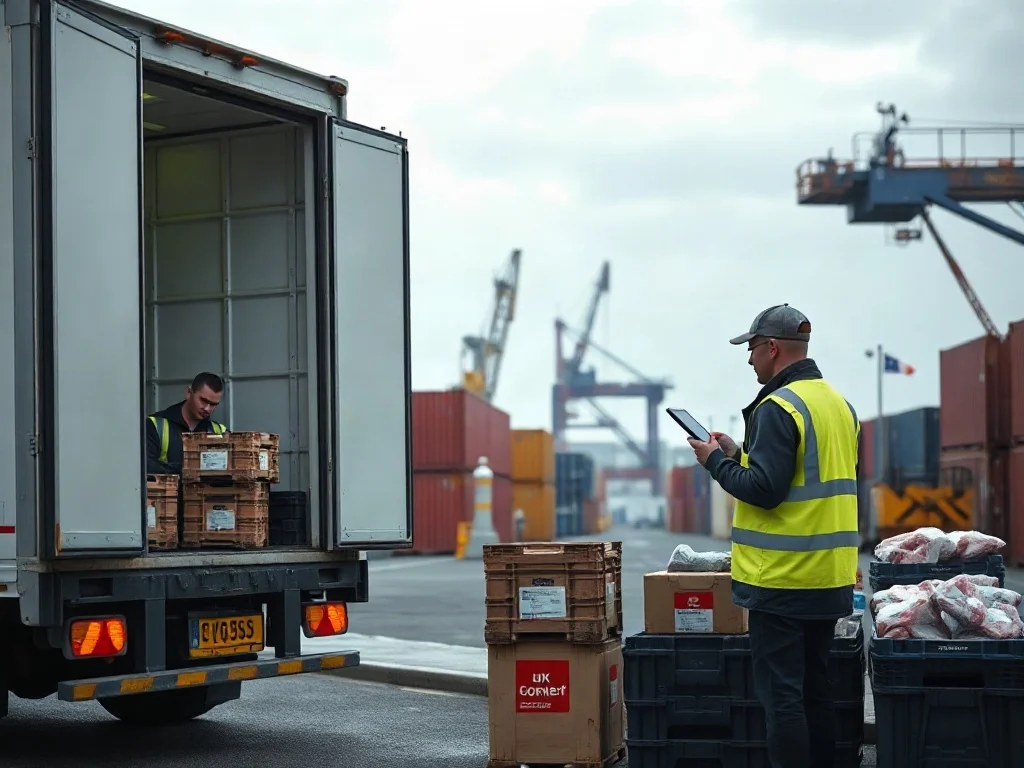
The debate over UK EU food rules has reached a defining moment. Hamish Falconer, the minister handling European affairs at the Foreign Office, insists that Britain would keep some influence over policy under a new deal with Brussels, even though it would have a ‘voice’ and no vote on the rules it follows. This article treats the proposal as a process. It traces how a food rule is made, how it would reach British shops and ports, and where UK influence would begin and end. It also shows where the political risks lie. The detailed treaty text was still being negotiated at the time of writing, so some mechanics below are described from the public framework and should be read as provisional.
Why the ‘voice but no vote’ formula matters
Since Brexit, food and farm exports to the EU have faced sanitary and phytosanitary (SPS) controls. These include veterinary certificates, inspections and documentary checks. They exist because the UK is now a ‘third country’ with its own regulatory system. They add cost, delay and paperwork, which falls hardest on small exporters of perishable goods.
The government’s answer is an SPS agreement under which the UK would adopt EU rules as they change. This is known as dynamic alignment. In return, most routine checks at the border would be reduced or removed. The trade-off is political as much as technical. The UK gets smoother trade but gives up the power to write rules in areas the agreement covers. Falconer’s argument is that Britain would still shape those rules through consultation, even though it could not vote on them.
Background: how the food border was built
The EU–UK Trade and Cooperation Agreement gave zero tariffs on qualifying goods but did not remove non-tariff barriers. It also left the UK outside the European Single Market, where food safety rules are harmonised and goods move without routine border checks. The Office for Budget Responsibility has assumed that Brexit will reduce long-run UK productivity by about 4 percent compared with remaining in the EU. Trade friction is a major part of that assessment.
Northern Ireland offers a working precedent. Under the Windsor Framework, EU food rules already apply there to keep an open land border with Ireland. Northern Ireland has no vote on those rules either, which is why critics call the model a democratic deficit. The wider SPS deal would extend a version of that logic to Great Britain.
How a food rule would travel from Brussels to a British shelf
The following sequence is based on how EU food law is made today and on the publicly described UK approach. It is not final treaty text.
- Risk assessment. Scientific advice comes first, often from the European Food Safety Authority. This is the earliest and most open stage for outside expertise.
- Proposal. The European Commission drafts legislation or implementing measures after stakeholder consultation and expert-group discussions.
- Adoption. EU member states and, for major laws, the European Parliament approve the text. This is the ‘vote’ the UK would not have.
- Alignment. The UK would then incorporate the rule into domestic law, with its legal route and timetable set by the agreement and by Parliament.
- Verification. Both sides would monitor compliance and use a joint committee to settle technical problems.
- Dispute resolution. Disagreements would go to arbitration. Where a dispute turns on the meaning of EU law, the Court of Justice of the European Union would have a role. This is the point most likely to cause friction at Westminster.
The ‘voice’ sits in steps one and two, and possibly in a structured dialogue after step three. It does not extend to the final decision.
Where UK influence is real and where it stops
Decision-shaping versus decision-making
The distinction between decision-shaping and decision-making is well established in EU practice. Norway, for example, takes part in the European Economic Area and can join Commission expert groups early in the process. It cannot vote in the Council or Parliament. Norwegian officials have often described this as meaningful but limited influence. Evidence from Switzerland’s relationship with the EU points the same way. Influence is greatest where a country brings specialist expertise and arrives early. It is weakest when a politically charged proposal reaches the final negotiation.
The limits
Three limits matter in practice:
- Timing. Once the Commission has published a proposal, changing it is hard. Effective influence has to come beforehand.
- Leverage. A voice carries weight only if the UK has data, laboratories and regulators that EU officials want to hear from. The Food Standards Agency and its scientific advisers are the obvious assets.
- Remedy. If the UK strongly disagrees with a new rule, its options are to accept it, ask for an exemption or accept consequences set out in the agreement. The detailed consequences matter and are still being negotiated.
Who gains and who bears the cost
The effects differ by sector. The table below sets out the likely direction of change, assuming the deal follows its announced design.
| Area | Current position | Under an SPS agreement (expected) |
|---|---|---|
| Exports of meat, dairy and fish to the EU | Health certificates and inspections | Fewer certificates and checks |
| Imports of EU food into Britain | Phased UK border controls | Simpler procedures |
| Setting UK food standards | Independent, with the power to diverge | Largely tied to EU rules in covered areas |
| Trade deals with third countries | Freer to liberalise food standards | Constrained by alignment |
Exporters and consumers
Exporters are the clearest winners. Perishable products lose value with every hour of delay. Fewer checks mean less spoilage, lower compliance costs and more predictable supply chains. For consumers, the benefit is likely to be modest. Lower trade costs may ease some prices, but supermarkets and processors will decide how much is passed on.
Farmers and standard-setters
Farmers have mixed interests. Many welcome easier exports. Others worry that EU rules, shaped by the Common Agricultural Policy and by Continental priorities, will not suit British conditions. UK ministers have also pursued domestic reforms, including gene-editing rules, that could clash with EU positions, so alignment may force a choice on those policies.
The political and legal flashpoints
Sovereignty and the role of the court
Opponents argue that following rules without voting on them is the opposite of ‘taking back control’. The government replies that sovereignty includes the choice to enter binding agreements, and that Parliament would keep the formal power to legislate. Both claims are partly true. The real question is whether that formal power could be used in practice without losing the benefits of the deal.
Trade policy with third countries
Alignment narrows the options for trade deals with food exporters that use different production standards. The precautionary principle in EU regulation is one source of difference from other major exporters. A UK that has aligned with EU rules cannot easily accept products that fall outside them, unless the agreement carves out exceptions.
Domestic politics
The Labour government under Keir Starmer presents the policy as a pragmatic reset. Critics on the right call it a step back toward EU membership. Some pro-EU critics say it falls short of the benefits of full single market participation. Falconer’s ‘voice’ argument is therefore aimed at two audiences with opposite worries.
Practical steps for businesses and trade bodies
Companies should not wait for the final treaty text to prepare. The following steps are practical and low-risk.
- Map your exposure. List which products fall under SPS rules and which certificates and checks cost you the most today. That is your baseline for judging savings.
- Engage early through trade associations. Because influence is concentrated in the consultation stage, industry bodies that provide technical evidence to UK regulators will matter more than lobbying after a rule is adopted.
- Track EU proposals, not only UK announcements. The European Commission’s food safety portal and the Food Standards Agency are the primary sources to watch.
- Plan for transition costs. Moving to dynamic alignment may require relabelling, reformulation or new testing, even if border checks fall.
- Avoid common mistakes. Do not assume all checks will vanish, and do not assume alignment covers every product category or every non-food regulation.
Readers can also look for internal resources on UK export documentation and Brexit trade updates on the same site to compare this proposal with current procedures.
Frequently asked questions
What does ‘voice but no vote’ mean for UK food rules?
It means UK officials and experts could take part in discussions and consultations as EU food rules are developed, but they would not vote on the final decision. The UK would then be expected to follow the outcome in areas covered by the agreement.
What is dynamic alignment?
Dynamic alignment means keeping domestic rules in step with EU rules as the EU updates them over time. It is different from copying the rules once and then going separate ways.
Would the UK rejoin the single market under this deal?
No. The proposal covers SPS rules, meaning food safety and animal and plant health, and a few other areas. It is not full single market membership, and it does not restore free movement of people.
Could Britain refuse a new EU food rule?
Formally, Parliament would keep the power to say no. But refusal would probably have consequences under the agreement, such as the loss of some trade benefits. The exact remedies depend on the final treaty text.
Does the Court of Justice of the European Union have power over the UK?
Its role is limited to questions about the interpretation of EU law that arise in disputes under the agreement. How far that goes in practice is one of the most contested parts of the proposal.
The test that will decide whether a ‘voice’ counts for anything
The most important insight is that the ‘voice but no vote’ model is neither a trick nor a triumph. It is a trade of formal power for practical benefit, and its value depends on execution. A voice that is heard in the first weeks of a policy’s life can change it. A voice that arrives after the Commission has published its proposal changes almost nothing.
Watch three things over the coming months. First, whether the final text guarantees UK access to Commission expert groups and the early stages of drafting. Second, whether the dispute mechanism leaves a credible, proportionate route for the UK to object. Third, whether the government can win the argument at home against critics on both sides. A reasonable prediction is that the first UK-sought exemption or serious disagreement over a rule, such as on gene editing, will show how much a voice is worth. The unanswered question is whether Britain will use its voice early and skilfully enough to make a vote unnecessary, or whether it will find itself accepting rules it had little chance to shape.
Frequently Asked Questions
Does dynamic alignment mean the UK must automatically accept every new EU food rule?
Not automatically. The UK would incorporate each rule into domestic law through a route and timetable set by the agreement and by Parliament. However, refusing a rule could trigger dispute resolution or counter-measures, so the practical room to say no would be limited.
At what stage could the UK actually influence an EU food rule?
Influence would sit mainly at the early stages: risk assessment, where bodies like the European Food Safety Authority provide scientific advice, and the Commission's drafting phase, which involves consultation and expert groups. A structured dialogue after drafting is possible, but the final adoption vote would remain with EU members.
How does the proposed model compare with Norway's position?
Norway, through the European Economic Area, can join Commission expert groups early and help shape proposals, but it cannot vote in the Council or Parliament. The UK's 'voice but no vote' idea follows a similar decision-shaping logic, though the final treaty terms were still being negotiated.
Why is the Court of Justice of the European Union such a sensitive issue?
If a dispute turns on the meaning of EU law, the Court of Justice would have a role in settling it. Many Westminster critics see this as limiting UK sovereignty, which makes it the step most likely to cause political friction over the deal.
How does Northern Ireland's experience relate to the wider SPS deal?
Under the Windsor Framework, EU food rules already apply in Northern Ireland to keep an open land border with Ireland, without a Northern Irish vote on them. Critics call this a democratic deficit, and the SPS deal would extend a version of that logic to Great Britain.
Would the SPS agreement remove all border checks on food exports?
No. The agreement is expected to reduce or remove most routine checks, such as veterinary certificates and inspections, but not necessarily every control. Details depend on the final treaty text, which was still under negotiation, so the extent of the reductions remains provisional.