
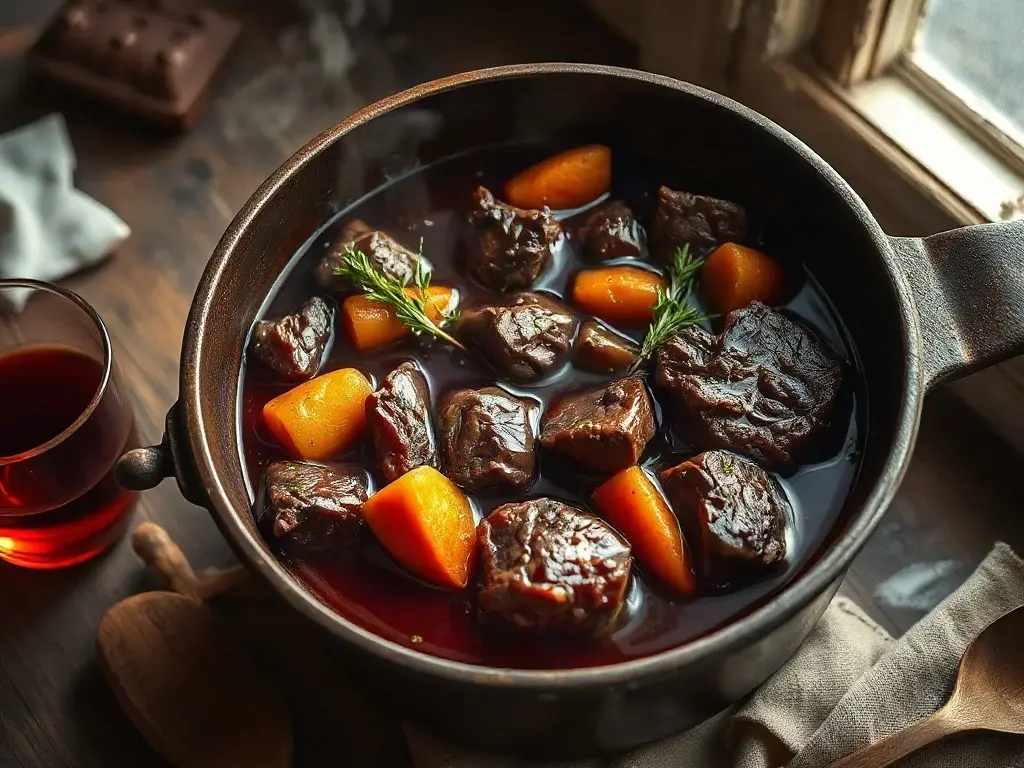
The best juice for beef stew is the one that supplies acid, sweetness and savory depth in measured amounts, a job usually given to wine or stock. A recent food-press headline promises that a familiar refreshing drink can rescue a flat pot of stew. The premise is sound, but the mechanism is widely misunderstood. The excerpt available here does not name the juice, so this analysis explains what juice actually does in a stew and where the folk claim that it “tenderizes” meat breaks down.
Why Beef Stew Needs Rescuing
Stew is built on braising: tough, well-worked cuts such as chuck are cooked slowly in liquid. Time converts collagen into gelatin, which gives the broth body. The same long cooking dulls volatile aromatics and leaves a pot that is rich, brown and heavy but lacks brightness. Most home stews do not fail from a lack of salt or fat. They fail from a lack of contrast.
What Juice Actually Does in Beef Stew
Acid Balances Richness
Fruit and vegetable juices are mildly acidic. A modest amount sharpens flavor the way a squeeze of lemon lifts a heavy sauce. Classic recipes already work on this principle. Boeuf bourguignon relies on red wine, and carbonnade relies on beer and a sweet-sour note. Juice is an alcohol-free substitute for the same function.
Sugar Builds Depth
Juice carries natural sugars that feed the Maillard reaction and caramelization when it reduces in the pot. Using it to deglaze the pan after browning the meat dissolves the fond and folds it into the sauce.
Savory Notes From Vegetable Juice
Tomato juice adds acid and umami, in part because of its glutamic acid. It does the work of tomato paste in a looser, more forgiving form.
Does Juice Tenderize Beef?
Largely no. Tenderness in a stew comes from heat and time acting on connective tissue. Acid marinades penetrate only the surface, and a stew’s long, hot cooking overwhelms whatever effect they have. There is also a trade-off: acid slows the softening of vegetables because it interferes with the breakdown of pectin, a point covered in standard food-science references such as Harold McGee’s On Food and Cooking. A very acidic stew can leave potatoes and carrots stubbornly firm. Any claim that juice makes meat “fall apart” should be treated skeptically. The defensible claim is about flavor.
Choosing the Best Juice for Beef Stew
Because the headline excerpt does not identify its juice, the useful approach is a framework rather than a single endorsement.
| Juice | Strength | Risk |
|---|---|---|
| Tomato | Acid plus umami | Sodium in commercial versions |
| Pomegranate | Tart, fruity complexity | Can dominate the pot |
| Apple | Gentle sweetness | Too sweet if unreduced |
| Orange | Aromatic brightness | Bitterness over long cooking |
| Prune | Dark, wine-like depth | Heavy, one-dimensional |
How to Improve Beef Stew With Juice
- Brown the beef in batches and remove it from the pot.
- Deglaze with about half a cup of juice, scraping up the browned bits, and let it reduce by half.
- Add stock and aromatics, then return the beef. Keep the juice to a minority of the total liquid.
- Taste near the end. If the stew still seems flat, add a small splash of fresh juice, which preserves brightness that long cooking would erase.
The quantities are practical guidance, not tested standards. Adjust to the size of the pot.
Common Mistakes
- Using sweetened juice cocktails, which push the stew toward dessert.
- Adding salty vegetable juice without reducing the added salt.
- Expecting juice to compensate for undercooked meat.
- Adding all the juice at the start, so its freshness is lost.
FAQ: Juice in Beef Stew
Does juice make beef stew more tender?
Not meaningfully. Slow cooking, not acid, converts collagen and softens the meat.
Can juice replace wine in beef stew?
Yes, as a flavor substitute. Pair it with a splash of vinegar if you want the sharper edge that wine provides.
How much juice should go in a stew?
A reasonable starting point is half a cup to one cup for a typical family-sized pot. Taste and adjust.
The Real Lesson Is Acid Timing
The most useful insight behind the juice trick is that stews are balanced late, not early. Acid added at the start is partly cooked away, while acid added at the end is perceived as freshness. The juice is incidental. Timing and restraint do the work.
One question remains open: how much of the effect is perceptible to diners compared with a splash of vinegar or wine? I am not aware of controlled tasting studies on the subject. The likely direction is a shift toward pantry-based acid in home cooking, driven by cost and alcohol-free preferences. Test it yourself by splitting a batch and finishing one half with juice and the other with vinegar.
Frequently Asked Questions
Why do my potatoes and carrots stay firm when I add juice to beef stew?
Acid slows the breakdown of pectin, the compound that softens vegetables as they cook. A very acidic stew can leave potatoes and carrots stubbornly firm. To avoid this, keep the juice to a minority of the liquid and add any fresh splash near the end of cooking.
Why add juice at the end instead of all at the start?
Long cooking dulls volatile aromatics and erases the brightness of fresh juice. Using some juice early to deglaze builds sweetness and depth, while a small splash of fresh juice near the end restores the lively, acidic contrast that a heavy stew often lacks.
Can I use any bottled juice or juice cocktail in my stew?
It is best to avoid sweetened juice cocktails, which push the stew toward dessert. Commercial tomato juice can also be salty, so reduce the salt you add elsewhere. Choose unsweetened juice and taste as the stew reduces before adjusting seasoning.
Which juice works best if I want a flavor close to red wine?
Prune juice offers dark, wine-like depth, though it can taste heavy and one-dimensional on its own. Pomegranate gives tart, fruity complexity but can dominate the pot. Pair either with a splash of vinegar to mimic the sharper edge wine provides.
How does using juice to deglaze the pan improve the stew?
After browning the beef, pouring in about half a cup of juice dissolves the browned bits, called fond, stuck to the pot. Reducing it by half concentrates the natural sugars, which feed caramelization and fold the savory flavor into the sauce.
Can juice fix a stew made with undercooked meat?
No. Tender beef comes from heat and time converting collagen into gelatin, not from acid. Juice only adjusts flavor. If the meat is tough, the only real fix is to keep simmering the stew gently until the connective tissue has broken down.