
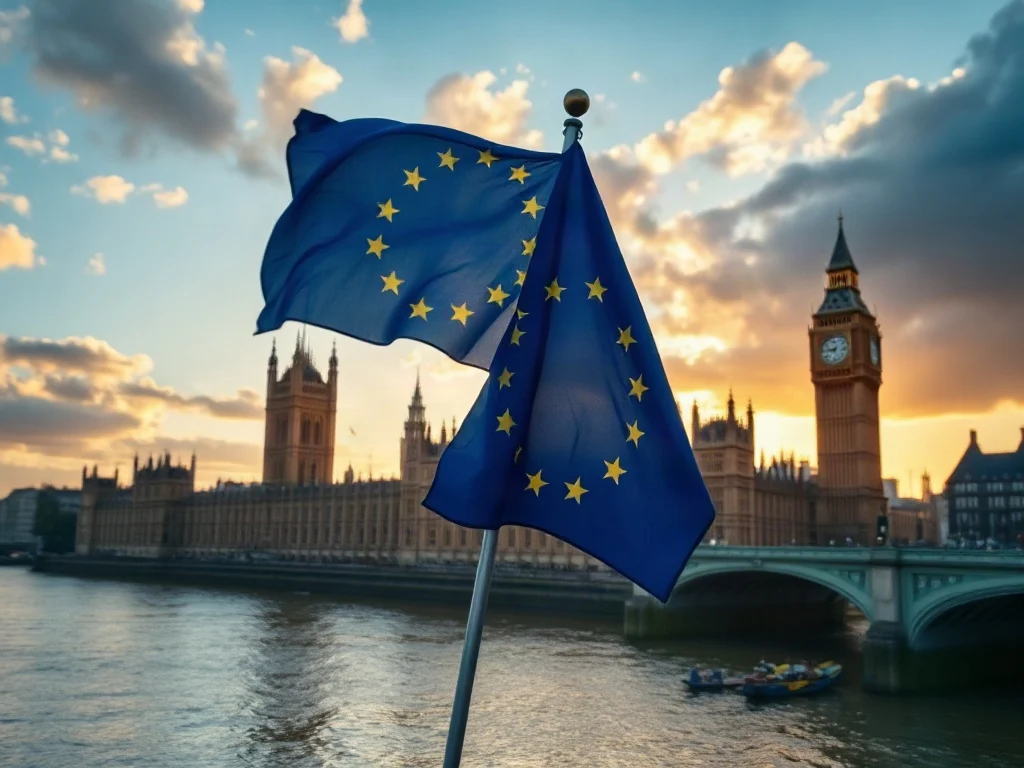
The Burnham EU deal is set to dominate Westminster, as the prime minister prepares to tell MPs that the agreement reached on Friday offers a “choice between a broken status quo or change”. According to the report, Andy Burnham will argue that the “landmark” agreement could make the next decade “much better” for the country. This article sets out what is confirmed, what is not yet public, and how to judge the claims as the details emerge.
What We Know About the Burnham EU Deal So Far
The confirmed facts are limited. A deal was agreed on Friday, the prime minister will brief the House of Commons, and he will frame the choice as one between a “broken status quo” and change. The source does not set out the full text, the sectors covered or any cost estimates, so any claim about specific provisions should be treated as unverified until the government publishes the agreement.
The wording is a political one. Describing the current relationship as “broken” is a argument, not a measurement, and the “much better” decade is a prediction, not an outcome. Readers should separate the rhetoric from the legal and economic substance.
Why the UK-EU Relationship Needed a Reset
The current terms stem from Brexit, which followed the 2016 referendum. Trade is governed by the EU-UK Trade and Cooperation Agreement, which removed tariffs on qualifying goods but left the UK outside the European Single Market and the customs union.
The cost of friction
Leaving the single market introduced non-tariff barriers: customs declarations, rules-of-origin checks and food and agricultural inspections. The UK’s independent fiscal forecaster, the Office for Budget Responsibility, has assumed that Brexit reduces long-run productivity, and there is a broad body of work on the economic effects of Brexit. The size of the effect is still debated, but few mainstream economists argue that new border friction is costless.
Building on the Earlier Brexit Reset
This agreement does not start from zero. In May 2025, the government of Keir Starmer and the EU announced a package that included a security and defence partnership and an intention to negotiate a shared approach to sanitary and phytosanitary measures for food and farming. Any new deal is likely to be judged on whether it goes further than that package. Whether it does so cannot be confirmed from the source material.
What Could a UK EU Trade Deal Change for Businesses?
Many readers will ask what the agreement means for firms, and the honest answer depends on the text. Based on the known pressure points in the existing relationship, these are the areas to check first:
- Food and agricultural trade: alignment on veterinary and plant health rules could reduce checks, but it may require the UK to follow EU rules without a vote.
- Customs and rules of origin: simpler paperwork matters most to exporters with complex supply chains.
- Mobility: arrangements for workers, students and travellers touch on freedom of movement, a politically sensitive area.
- Fisheries: access to waters is governed by the legacy of the Common Fisheries Policy and remains a flashpoint.
- Northern Ireland: any changes must be reconciled with the Windsor Framework.
The Trade-Offs Behind “Change”
Sovereignty versus access
Closer market access usually comes with regulatory alignment. Supporters see this as pragmatic: the UK already trades most with its closest neighbours. Critics see it as becoming a rule-taker, particularly if disputes are referred to the Court of Justice of the European Union. The central question is how much influence the UK secures in return for accepting those rules.
Political risk
The deal also has to survive politics. Opposition parties can attack it as a betrayal of Brexit, while pro-European voices may argue it does not go far enough. A prime minister who frames the choice as binary is attempting to make rejection look like support for the status quo.
How to Judge the Claim of a “Much Better” Decade
Treat the claim as a hypothesis and test it against evidence:
- Read the published text and the government’s impact assessment.
- Look for independent forecasts from the OBR and academic economists, rather than only ministerial figures.
- Check implementation dates, because benefits that arrive in several years are worth less politically and economically than those that arrive now.
- Note the dispute and exit mechanisms, which show how durable the arrangement is.
Official publications will appear on GOV.UK, and the European Commission is expected to publish its own account of the agreement.
Frequently Asked Questions
What is the Burnham EU deal?
It is the agreement reached on Friday that the prime minister describes as “landmark”. Full details have not been confirmed in the source material.
Does the deal mean the UK is rejoining the EU?
The source does not say so. It describes a deal, not membership, and it should not be read as a return to the single market or customs union unless the text states that.
When will the deal take effect?
No timetable is given. Parliamentary scrutiny and any ratification steps will shape the timing.
The Question That Will Decide Whether This Deal Lasts
The prime minister’s framing, a broken status quo against change, is designed to make the debate simple. The real test is more demanding: whether the agreement delivers measurable gains for exporters, consumers and public finances without creating a sovereignty backlash that unravels it. Watch three things in the coming weeks: the published text, independent economic assessments, and the reaction of MPs on both sides of the Commons. If the evidence supports the “much better” decade claim, the deal could settle the argument over Brexit for a generation. If the benefits prove thin or slow, “change” may simply become the next thing voters judge harshly.
Frequently Asked Questions
Has the full text of the Burnham EU deal been published?
No. The source only confirms that a deal was agreed on Friday and that the prime minister will brief MPs. The sectors covered, the legal wording and any cost estimates have not been set out, so claims about specific provisions remain unverified until the government publishes the agreement.
Is the claim of a 'much better' decade a fact or a forecast?
It is a forecast. Calling the current relationship 'broken' is a political argument, not a measurement. Judging it properly means waiting for the published text, independent economic assessments such as those from the Office for Budget Responsibility, and later evidence on trade, investment and productivity.
How does this agreement relate to the May 2025 Brexit reset?
The May 2025 package under Keir Starmer included a security and defence partnership and an intention to negotiate shared sanitary and phytosanitary rules for food and farming. The new deal will likely be judged on whether it goes further than that. The source does not confirm whether it does.
Why might closer access to EU markets be controversial?
Deeper market access usually requires regulatory alignment. Supporters call that pragmatic, given how much the UK trades with its neighbours. Critics fear the UK becomes a rule-taker, especially if disputes go to the Court of Justice of the European Union. The key issue is how much influence the UK gains in return.
Which sectors should businesses check first once the details emerge?
Firms should look at food and agricultural checks, customs and rules-of-origin paperwork, mobility for workers and travellers, and fisheries access. Northern Ireland businesses should also check how the changes fit with the Windsor Framework. The effect on each depends entirely on the final text.
Could the deal face political opposition at home?
Yes. Opposition parties may attack it as a betrayal of Brexit, while pro-European voices may say it falls short. By framing the choice as a broken status quo versus change, the prime minister is trying to make rejecting the deal look like defending the status quo.