
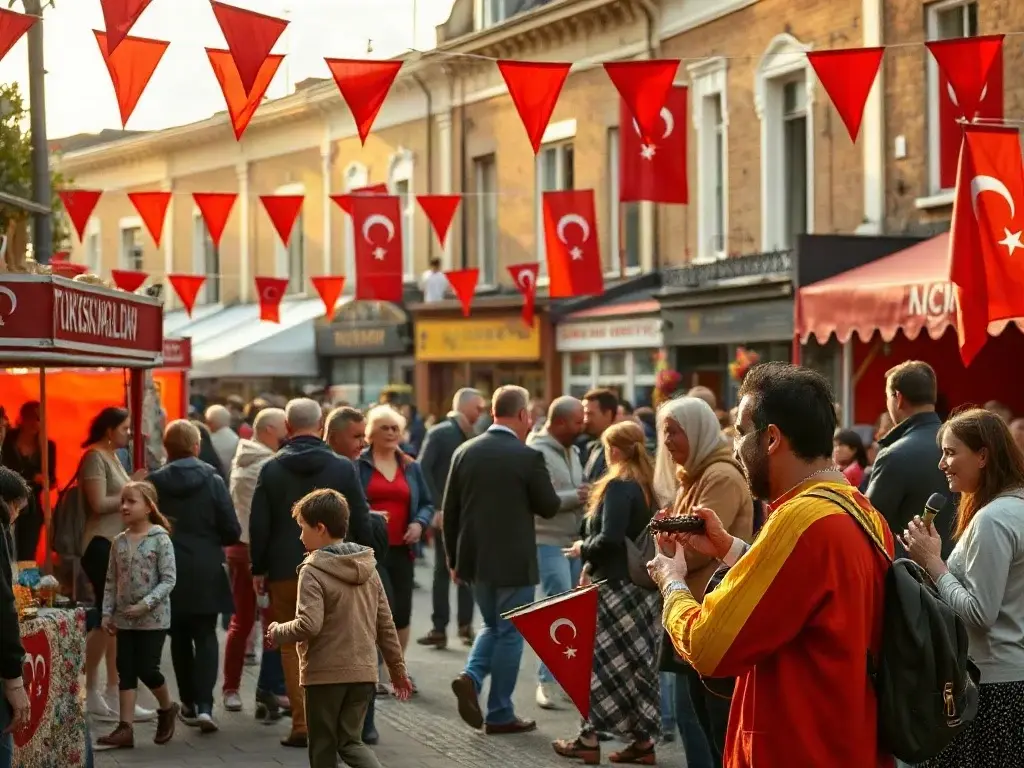
Finding reliable information about Turkish events in the UK is harder than it should be. Listings are scattered across Instagram stories, WhatsApp groups, mosque noticeboards, association newsletters and the occasional Facebook event that disappears once the date passes. A concert in Haringey, a children’s festival in Manchester and a language workshop in Cardiff may all be open to the public, yet most people only discover them by chance. This article sets out the case for a regular, curated roundup of Turkish cultural events, festivals and community gatherings in London and other UK cities. It also explains how such a resource should be built, verified and maintained, and why it can turn a one-off visitor into a returning reader.
The idea is simple: publish a dependable calendar, invite organisers to submit their own listings, and keep the information fresh enough that people check it every week or month. The execution is where most event directories fail, so the analysis below focuses on structure, data quality, search visibility and community trust.
Why a Roundup of Turkish Events in the UK Matters
The Turkish-speaking presence in Britain is diverse. The wider community includes people from Turkey, Turkish Cypriots, and many British-born younger generations who navigate several identities at once. The history of Turks in the United Kingdom stretches back decades, with migration from Cyprus accelerating in the mid-twentieth century and later waves arriving from Turkey itself. Population estimates vary widely depending on how the community is defined, so any claim about exact numbers should be treated cautiously.
What is less ambiguous is the demand for cultural continuity. Parents want children to hear the Turkish language outside the home. Newcomers want to find people who share their holidays. Curious Londoners want to try authentic Turkish cuisine beyond the restaurant menu. A single trusted calendar serves all three groups.
The gap in current information
Events tend to be promoted inside closed networks. That works for insiders, but it excludes newcomers, students, tourists and people from outside the community. It also makes it difficult for local councils, arts funders and journalists to see how much cultural activity actually exists. A public roundup creates visibility that benefits organisers as much as audiences.
What Counts as a Turkish Cultural Activity?
Defining scope early prevents the calendar from becoming either too narrow or unmanageably broad. A useful working definition covers any public or semi-public gathering with a clear Turkish, Turkish Cypriot or Turkish-diaspora cultural element. Typical categories include:
- Festivals and national days: events around Republic Day in October and National Sovereignty and Children’s Day in April, which often feature children’s performances.
- Religious and seasonal observances: community iftars during Ramadan, celebrations around Eid al-Fitr and Eid al-Adha, and Nowruz gatherings, which are shared with other communities.
- Music and dance: concerts of Turkish folk music, bağlama lessons, and halay dance nights.
- Heritage crafts and performance: marbling (ebru) workshops, Karagöz and Hacivat shadow-puppet shows, and Sufi whirling performances.
- Food and social events: baking days for baklava, Turkish coffee tastings, market days and charity dinners.
- Language, education and institutions: Turkish classes, book readings, film nights and programmes run by cultural bodies such as the Yunus Emre Institute, which operates cultural centres abroad.
Politically charged or private events deserve a clear editorial policy. A sensible approach is to list only events that are open to the public and culturally focused, and to state plainly that the site does not endorse any organiser.
Turkish Cultural Events London: The Core of the Calendar
London will naturally anchor the roundup. Turkish and Turkish Cypriot businesses and associations are concentrated in parts of north and east London, including the London Borough of Haringey around Green Lanes, the London Borough of Hackney, and the London Borough of Enfield. Searches for Turkish cultural events London are likely to be hyperlocal, so each listing should state the borough, nearest station and accessibility details rather than just ‘London’.
Organising by neighbourhood, not only by date
A purely chronological list is convenient for browsing but poor for planning. Offer a second view by borough or area so a reader in Enfield can quickly see what is nearby. Add filters for free events, family-friendly events, language of delivery (Turkish, English or bilingual) and indoor or outdoor settings.
Turkish Festivals and Community Gatherings in UK Cities Beyond London
Outside the capital, communities are smaller and more dispersed, which makes information gaps even more damaging. Cities such as Manchester, Birmingham, Cardiff and Edinburgh host university societies, cultural associations and occasional festival stalls. I would not claim any city has a fixed annual Turkish festival without confirmation from organisers, which is exactly why verified submissions are central to the model.
Regional coverage also benefits from partnerships. University Turkish societies, local libraries, multicultural festivals and city-council arts teams often run or host events but rarely coordinate promotion. Treat them as listing partners rather than competitors.
How Organisers Can Submit Listings
If readers ask how to submit a Turkish community event listing, the answer should take under three minutes. A short form works better than an email address because it enforces consistent data. Recommended fields include:
- Event name and a two-sentence description.
- Start and end date and time, with time zone handled automatically.
- Full venue address and postcode.
- Ticket price or a ‘free’ flag, plus a booking link.
- Organiser name, public contact method and website or social profile.
- Primary language and accessibility information.
- An optional image, with confirmation that the submitter holds the rights.
Verification and moderation
Open submissions invite spam and occasionally misinformation. Light-touch content moderation solves most problems: check that the organiser has a traceable public presence, confirm the venue exists, and ask repeat organisers to verify once so future listings can be fast-tracked. Any user-generated content policy should also address copyright, data protection for contact details, and a clear process for cancellations.
Technical Foundations: Search Visibility and Structured Data
An events resource only succeeds if people can find it. Each event should have its own page with a descriptive title, a unique summary and clear date and location in the visible text. Implementing Event structured data from Schema.org helps search engines interpret dates, venues and prices, and Google documents how to do this in its event structured data guidelines. Structured data does not guarantee rich results, but it removes ambiguity. Sound search engine optimization also means archiving past events instead of deleting them, since archived pages can keep earning traffic from annual searches such as a yearly Republic Day celebration.
Publishing an iCalendar feed lets readers subscribe in their own calendar apps. This is one of the most effective ways to encourage repeat visits, because the site stays present in the reader’s daily routine without any extra effort from them.
Turning One-Time Visitors into Regular Readers
A calendar is useful, but a rhythm is stickier. Publishing a monthly roundup on a predictable day, plus a short weekly ‘this weekend’ digest, trains the audience to return. Several tactics work together:
- Email digests: a short email newsletter segmented by city or borough.
- Seasonal landing pages: guides to Ramadan, summer festivals and national-day events that are updated each year rather than rewritten.
- Post-event content: photo galleries and organiser interviews, which add depth and reward organisers for contributing.
- Organiser dashboards: allow organisers to edit listings, which gives them a reason to return as well.
Measure success through returning-visitor share, newsletter sign-ups, submission volume and the proportion of listings from repeat organisers, rather than raw pageviews alone.
Common Mistakes and Risks
Stale listings
Nothing destroys trust faster than a cancelled event shown as upcoming. Set automatic expiry and send organisers a reminder to confirm details a week before the date.
Treating the community as a single bloc
Turkish, Turkish Cypriot, Kurdish and Alevi communities overlap but are not identical. Events associated with Alevism or particular regional traditions should be described accurately and in the organiser’s own words. Careless labelling can alienate the very groups the calendar hopes to serve.
Over-reliance on social platforms
Pulling data automatically from social media may breach platform terms and produces inconsistent results. Direct submissions and verified partner feeds are more sustainable.
Frequently Asked Questions
Where can I find Turkish cultural activities in the UK?
Check a curated events calendar, local Turkish and Turkish Cypriot associations, university societies and cultural institutes. Council arts listings and multicultural festival programmes often include Turkish performances too.
Can I list a free community event?
Yes. Free and low-cost events are among the most valuable listings, provided they are open to the public and include a venue, date and organiser contact.
Do I need to be a registered charity to submit?
No. Informal groups, volunteers, businesses and registered organisations can all submit, although verification may take longer for first-time organisers.
How far ahead should I submit an event?
Ideally four to six weeks in advance, which allows time for moderation, newsletter inclusion and search engines to index the page.
What the Calendar Will Reveal Next
The most important insight is that an events roundup is not merely a convenience; it is a form of cultural infrastructure. Once listings are gathered in one place, patterns emerge that individual organisers cannot see: which boroughs have plenty of weekend family activity but no language classes, which cities depend on a single volunteer-run festival, and which seasons are overcrowded while others are empty.
Over the next few years, expect better data to matter more than better design. Calendars that publish open, structured feeds will be easier for councils, venues and search engines to reuse, and organisers who maintain consistent listings will benefit most. The unanswered question is whether younger, British-born audiences will engage mainly through bilingual, hybrid and online-first events or return to traditional venues. The calendar itself, tracked honestly over several seasons, may be the best evidence available.
Frequently Asked Questions
Why does the article say event directories for Turkish activities often fail?
According to the article, the idea is easy but the execution is hard. Directories usually fail because of weak structure, poor data quality, stale listings and lack of community trust. Without regular updates, people stop checking the calendar, so it never becomes a weekly or monthly habit.
Should the calendar include political or private events?
The article recommends a clear editorial policy for politically charged or private events. The safest approach is to list only events that are open to the public and culturally focused, and to state plainly that the site does not endorse any organiser or their views.
Are exact figures for the Turkish community in the UK reliable?
No. Population estimates vary widely depending on how the community is defined, for example whether it includes people from Turkey, Turkish Cypriots or British-born descendants. The article advises treating any claim about exact numbers cautiously and avoiding overly precise statistics.
Who benefits from a public roundup besides people attending events?
Organisers gain visibility, and outsiders such as newcomers, students and tourists can find events they would otherwise miss. Local councils, arts funders and journalists can also see how much cultural activity really exists, which is hard to judge when events are promoted only in closed networks.
Do events need to be strictly Turkish to be listed?
Not strictly. The suggested definition covers any public or semi-public gathering with a clear Turkish, Turkish Cypriot or Turkish-diaspora cultural element. This allows shared traditions, such as Nowruz gatherings, which are also celebrated by other communities, while keeping the calendar focused.
What kinds of events could appear in the calendar?
The article lists festivals and national days, religious and seasonal observances such as community iftars, music and dance nights, heritage crafts like ebru marbling, food events, and language or education activities. Examples include Karagöz shadow-puppet shows, baklava baking days, film nights and Turkish classes.