
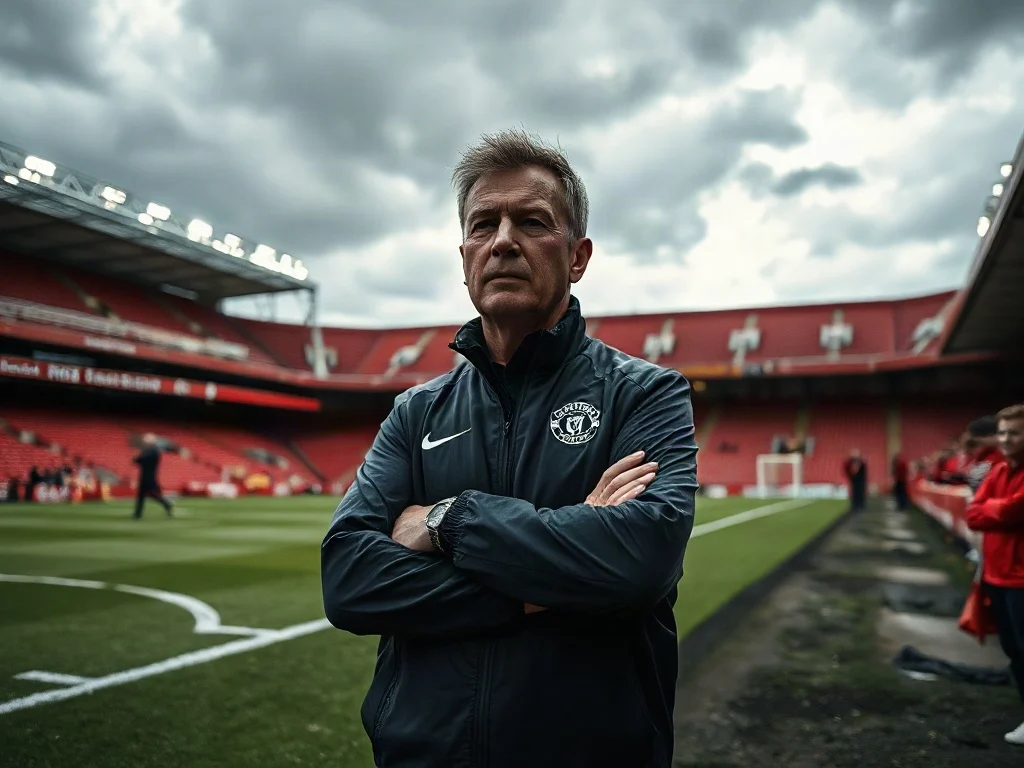
The reign of Pochettino at Manchester United has opened under heavy scrutiny. BBC Sport’s chief football writer Simon Stone described a “chaotic week, nightmare start and huge reality check” for the Argentine, noting that his time as Manchester United boss “could barely have got off to a more chastening start.” This analysis does not retell individual results, which the original report covers. It looks at why early turbulence at Manchester United carries so much weight, what Mauricio Pochettino‘s record suggests about how he might respond, and what supporters and analysts should watch next.
Why a Rough Opening Week Matters at Old Trafford
No club in English football magnifies a managerial debut like United. Since Sir Alex Ferguson retired in 2013 after 26 years in charge, every appointment has been judged against an almost unrepeatable benchmark. That makes the first weeks symbolic. They are read as evidence of whether the latest rebuilding project has a clear identity or is the next false dawn.
It is worth separating established facts from interpretation. The fact is that the reported start was difficult. Whether it reveals deep structural problems or the ordinary friction of a new coach meeting an unfamiliar squad is a judgment call, and the evidence needed to make it will accumulate over months.
Pochettino’s Track Record Before Manchester United
Pochettino arrives with a long CV, which helps in judging how he may handle a bad start.
- Early career: He built his reputation at Espanyol and then at Southampton, where he favoured intense pressing and developing young players.
- Tottenham (2014–2019): He turned Tottenham Hotspur into consistent top-four contenders and reached the 2019 UEFA Champions League final, which Spurs lost to Liverpool.
- Paris Saint-Germain: He won the Ligue 1 title in 2021–22 at Paris Saint-Germain, though his spell was marked by questions about managing a star-heavy dressing room.
- Chelsea (2023–2024): He took over a squad assembled at huge expense, finished sixth in the Premier League and left by mutual consent after one season. Late-season form was strong, but the early months were uneven.
- International football: He later took charge of the United States men’s national team.
The Chelsea precedent matters most. It shows Pochettino has experience of slow starts, public criticism and an unbalanced squad at a giant club. It also shows that recovery under him tends to be gradual rather than immediate.
The Post-Ferguson Pattern: Why United’s Starts Are So Revealing
United have cycled through several full-time managers since 2013. Their tenures offer a rough guide to how early impressions compare with eventual outcomes.
| Manager | Tenure | Notable context |
|---|---|---|
| David Moyes | 2013–2014 | Handpicked Ferguson successor; dismissed in April 2014 |
| Louis van Gaal | 2014–2016 | Won the FA Cup in 2016 but was dismissed shortly afterwards |
| José Mourinho | 2016–2018 | Won the League Cup and Europa League in 2017 |
| Ole Gunnar Solskjær | 2018–2021 | Began with an unbeaten interim run; no trophies |
| Erik ten Hag | 2022–2024 | Won the League Cup in 2023 and the FA Cup in 2024 |
The pattern is instructive. A strong opening, as under Solskjær, did not guarantee long-term success. A poor opening, as under Ten Hag in his first league matches, did not rule out trophies. The first week is a weak predictor on its own. What matters is whether the explanations offered for the early problems prove accurate.
Diagnosing a Nightmare Start: Four Questions
1. Is it a tactical problem or a squad-fit problem?
Pochettino’s best Tottenham teams relied on aggressive pressing, quick transitions and high-energy full-backs and midfielders. If the United squad lacks the athletic profile or the technical fit for that approach, early struggles may be structural rather than a matter of execution. Coaches can adapt, but adaptation usually costs points while it happens.
2. How much was disruption off the pitch?
The word “chaotic” in the headline suggests the week involved more than a poor performance. Off-field turbulence, whether around fitness, selection, transfers or internal communication, can affect results. Without the full details, the sensible approach is to avoid assuming a single cause.
3. How aligned are the manager and the club’s hierarchy?
Under the ownership influence of Sir Jim Ratcliffe and his company Ineos, football operations have been restructured, with greater emphasis on a centralised recruitment and sporting strategy. A modern head coach at United works inside that framework. A mismatch between the coach’s preferences and the club’s recruitment model is a recurring risk at clubs with director-led structures.
4. What do the underlying numbers say?
Results can mislead over small samples. Analysts typically look at expected goals, shot quality, pressing intensity and territory to judge whether a team is performing better or worse than its scorelines suggest. If the process metrics are sound, patience is more justified. If they are poor, the problem is probably more fundamental.
How Long Does a New Manager Need at a Club Like United?
There is no universal answer, but three considerations shape the realistic timeline:
- Squad overhaul: A coach inheriting a squad built for another system typically needs at least a full transfer window, and often two, to reshape it.
- European football: Playing in the UEFA Champions League or the UEFA Europa League adds fixture congestion, which cuts training time and makes tactical retooling harder.
- Expectation gap: At United, the tolerance for transition is lower than the structural reality demands. The club’s supporters, media and sponsors expect competitiveness quickly.
The practical benchmark is not points after a handful of matches. It is whether a coherent style is visible by the first winter break, and whether results begin tracking performance.
Practical Lessons for Supporters and Analysts
What to monitor
- Consistency of selection: Constant lineup changes can signal uncertainty about the best system.
- Defensive structure: Pressing teams that are poorly synchronised concede high-quality chances. Watch how many come from transition moments.
- Player development: Pochettino’s reputation rests partly on improving young players. Look for evidence of that in minutes and progression.
- Public messaging: The tone of post-match comments, from the manager and from the club, reveals how aligned they are.
Common mistakes in judging a debut
- Treating a single week as a verdict on a career built over decades.
- Ignoring fixture difficulty and injury context.
- Assuming a manager’s earlier success at one club transfers automatically to another.
- Confusing media narrative intensity with actual performance data.
Frequently Asked Questions
How has Pochettino started at Manchester United?
According to BBC Sport’s Simon Stone, the start has been chastening, with a chaotic first week and a stark reality check. The full detail is in the original report.
Is a bad start a sign a Manchester United manager will fail?
Not necessarily. The post-Ferguson era shows that opening form is an unreliable predictor. The more useful signals are tactical clarity, squad fit and the quality of underlying performances.
What are Pochettino’s strengths as a coach?
He is known for energetic pressing football, player development and building cohesive teams over time, as at Tottenham. His record also shows that results can take time at clubs with heavily rebuilt squads.
How long should Manchester United give a new manager?
There is no fixed rule. A reasonable minimum is a full season and two transfer windows, provided there is visible progress in performance.
The Real Test Starts After the Headlines Fade
The most important insight is that a nightmare start is information, not a conclusion. It tells United and Pochettino what is not working. It does not yet say whether the diagnosis, the squad or the structure around the coach can be fixed. Pochettino’s career shows he can recover from uncertain beginnings, but also that his fixes tend to arrive in stages rather than overnight.
The next few months should answer three questions. Does the team develop a recognisable identity? Do recruitment decisions reflect a shared plan between coach and club? And does the club’s patience outlast the pressure of Old Trafford’s expectations? The reasoned prediction, which remains a prediction, is that the outcome will depend less on one chaotic week than on whether the club avoids the habit that has defined its post-Ferguson years: changing course before a plan has had time to work. For further context on current form and fixtures, the official Premier League website and BBC Sport football coverage are reliable places to follow developments.
Frequently Asked Questions
Does a bad first week mean Pochettino will fail at Manchester United?
Not necessarily. The article shows the first week is a weak predictor on its own. Solskjær started strongly and won no trophies, while Ten Hag stumbled early and later won two cups. What matters is whether the explanations for the early problems prove accurate over the following months.
Why is the Chelsea spell the most relevant precedent for Pochettino's United job?
At Chelsea he inherited an expensively assembled, unbalanced squad and faced public criticism and uneven early months. He still finished sixth with strong late-season form. That suggests he can recover from slow starts, though the improvement tends to come gradually rather than immediately.
Could Pochettino's pressing style be a poor fit for the United squad?
Possibly. His best Tottenham sides relied on aggressive pressing, quick transitions and high-energy full-backs and midfielders. If United's players lack that athletic or technical profile, early struggles could be structural rather than execution errors. Coaches can adapt, but adaptation usually costs points while it happens.
Why are Manchester United's early weeks judged so harshly compared with other clubs?
Since Sir Alex Ferguson retired in 2013 after 26 years, every manager has been measured against an almost unrepeatable benchmark. Early weeks are therefore read symbolically, as evidence of whether the latest rebuild has a clear identity or is another false dawn.
How should readers separate fact from interpretation in the coverage of this start?
The established fact is that the reported start was difficult. Whether it reveals deep structural problems or the normal friction of a new coach meeting an unfamiliar squad is a judgment call. Evidence for that verdict will only accumulate over several months, not days.
What did Pochettino achieve at Tottenham and Paris Saint-Germain?
At Tottenham from 2014 to 2019 he built consistent top-four contenders and reached the 2019 Champions League final, losing to Liverpool. At Paris Saint-Germain he won the 2021–22 Ligue 1 title, though questions surrounded how he managed a star-heavy dressing room.