
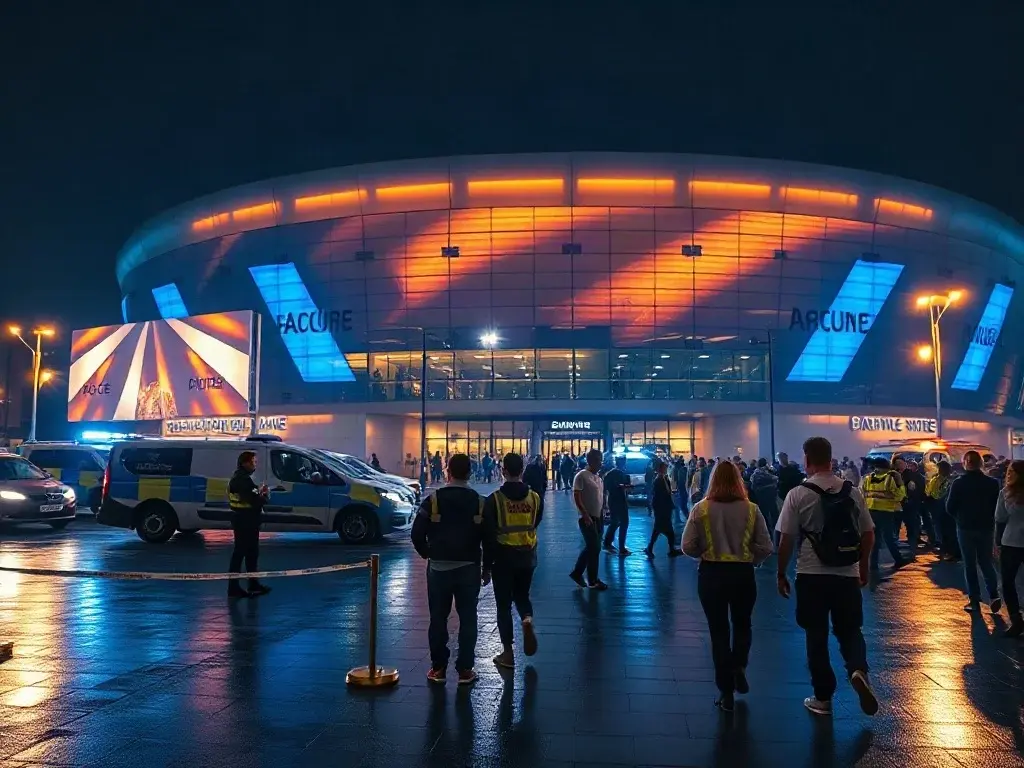
The Co-op Live evacuation during a performance by US rapper Don Toliver has raised fresh questions about crowd safety at large British venues. A major incident was declared after an ‘unknown substance’ was let off in the crowd at the Manchester arena, and one person was taken to hospital. Details were still limited at the time of the initial report, so this analysis separates what is confirmed from what is not, and explains what the response tells us about how arenas handle sudden emergencies.
What Is Confirmed About the Co-op Live Evacuation
Co-op Live was evacuated after an unidentified substance was released among spectators during a show by Don Toliver. One person was taken to hospital. A major incident was declared.
Several things have not been established in the available reporting: what the substance was, who released it, whether it was deliberate, and how many people were affected. Until authorities say more, any claim about its nature is speculation. Readers should be cautious about social media posts that name a substance or a motive.
Unknown Substance in a Crowd: Possible Explanations
When an unknown substance in a crowd is reported, the cause can range from the trivial to the serious. Common scenarios at live events include:
- Irritant sprays, such as pepper spray, which can cause coughing, eye irritation and panic in enclosed spaces.
- Other chemical irritants, including agents similar to tear gas.
- Harmless items such as smoke devices or aerosols that people mistake for something dangerous.
These are general possibilities, not findings about this event. The difficulty is that responders must treat the release as potentially hazardous until it is identified, and that caution is what drives an evacuation.
What a Major Incident Declaration Means
Many readers searching for this story want to know what happens when a major incident is declared. In the UK, a major incident is an event that requires special arrangements from emergency services, the NHS or local authorities. It is a precautionary and procedural trigger, not a measure of how many people were harmed.
Declaring one lets services such as Greater Manchester Police and the North West Ambulance Service mobilise extra resources, share information and coordinate quickly. A declaration can be made early on limited information and later scaled back. A single hospital admission alongside a declaration suggests caution about an unknown hazard rather than mass casualties, though that is an inference and not a confirmed fact.
Why Arena Evacuations Are So Difficult
Scale and Density
A modern arena holds tens of thousands of people. Co-op Live, developed by Oak View Group and the City Football Group, is among the largest indoor venues in the UK. Moving that many people through limited exits takes time, even with well-rehearsed procedures.
Panic and Information Gaps
The greatest danger in many incidents is not the original trigger but the reaction to it. Research on crowd collapses and crushes shows that dense, frightened crowds can become dangerous quickly. Clear announcements, visible stewards and calm staff are as important as the physical layout.
Memory of Past Events
Manchester has a painful history here. The 2017 Manchester Arena bombing shaped how the city, its venues and its emergency services think about concert safety. Many in an audience will understandably react fast to any sign of danger, and organisers must plan for that.
Arena Crowd Safety and the Regulatory Picture
The UK is introducing Martyn’s Law, which is designed to improve preparedness at public venues, mainly in relation to terrorism. This incident has not been linked to terrorism, and nothing in the available reporting suggests that it was. Even so, the law reflects a broader principle: venues should have tested plans for evacuation, invacuation and lockdown, and staff trained to follow them.
Practical Advice for Concert-Goers and Venues
For Audience Members
- Note the nearest two exits when you arrive.
- Follow steward instructions rather than the crowd.
- If you feel irritation in your eyes or throat, move towards fresh air and seek first aid staff.
- Do not rely on unverified online claims about what happened.
For Venues and Organisers
- Rehearse evacuations for unidentified-hazard scenarios, not only fire.
- Review bag checks and screening for aerosols and irritants.
- Prepare communication templates so that accurate messages reach the audience and the public quickly.
Frequently Asked Questions
What happened at Co-op Live during the Don Toliver show?
An unknown substance was let off in the crowd, the venue was evacuated, a major incident was declared and one person was taken to hospital.
Do we know what the substance was?
Not from the information available. Official confirmation from police or health services is needed before drawing conclusions.
Does a major incident mean many people were hurt?
No. It is a procedural designation that allows a coordinated response and does not by itself indicate the number of casualties.
The Question That Outlasts the Headlines
The most important lesson here may be how a venue responds to uncertainty. An unidentified substance is, by definition, a problem without an answer in its first minutes, and the quality of the response depends on decisions made under that uncertainty. The evacuation and the major incident declaration suggest that caution came first.
Watch for three developments: official identification of the substance, any police finding on whether the release was deliberate, and whether the venue or authorities review screening and evacuation procedures. If the cause proves to be a small act with large consequences, the debate may turn to how well venues can prevent or detect such items. If it proves to be accidental, the focus will move to communication and crowd management. Either way, the unanswered question is how quickly an arena of thousands can move from entertainment to emergency, and how well the public is told why.
Frequently Asked Questions
Has it been confirmed what the unknown substance at Co-op Live was?
No. Available reporting has not established what the substance was, who released it, whether it was deliberate, or how many people were affected. Only the evacuation, the major incident declaration and one hospital admission are confirmed. Social media claims naming a substance or motive should be treated as speculation until authorities say more.
Does a major incident declaration mean many people were seriously hurt?
Not necessarily. In the UK it is a precautionary, procedural trigger that lets emergency services, the NHS and local authorities mobilise extra resources and coordinate quickly. It can be declared early on limited information and later scaled back, so it is not a measure of how many people were harmed.
Why would an arena be evacuated if the substance might be harmless?
Responders must treat any unidentified release as potentially hazardous until it is identified. Irritant sprays can cause coughing and eye irritation, while smoke devices or aerosols may be mistaken for something dangerous. Evacuating is the cautious option, even if the cause later turns out to be trivial.
Is this incident linked to terrorism or Martyn's Law?
Nothing in the available reporting links the incident to terrorism. Martyn's Law is a UK measure to improve preparedness at public venues, mainly regarding terrorism. It is relevant only because it reflects the principle that venues need tested evacuation, invacuation and lockdown plans, and trained staff.
Why is evacuating a large arena like Co-op Live so difficult?
A modern arena holds tens of thousands of people who must pass through limited exits, which takes time even with rehearsed procedures. The bigger danger is often the crowd's reaction rather than the trigger, since dense, frightened crowds can become dangerous quickly. Clear announcements and visible stewards matter greatly.
Why do audiences in Manchester react so quickly to possible danger?
The 2017 Manchester Arena bombing left a painful legacy and shaped how the city, its venues and emergency services approach concert safety. Many audience members understandably react fast to any sign of danger, so organisers must plan for rapid, emotionally charged responses when something unexpected happens.