
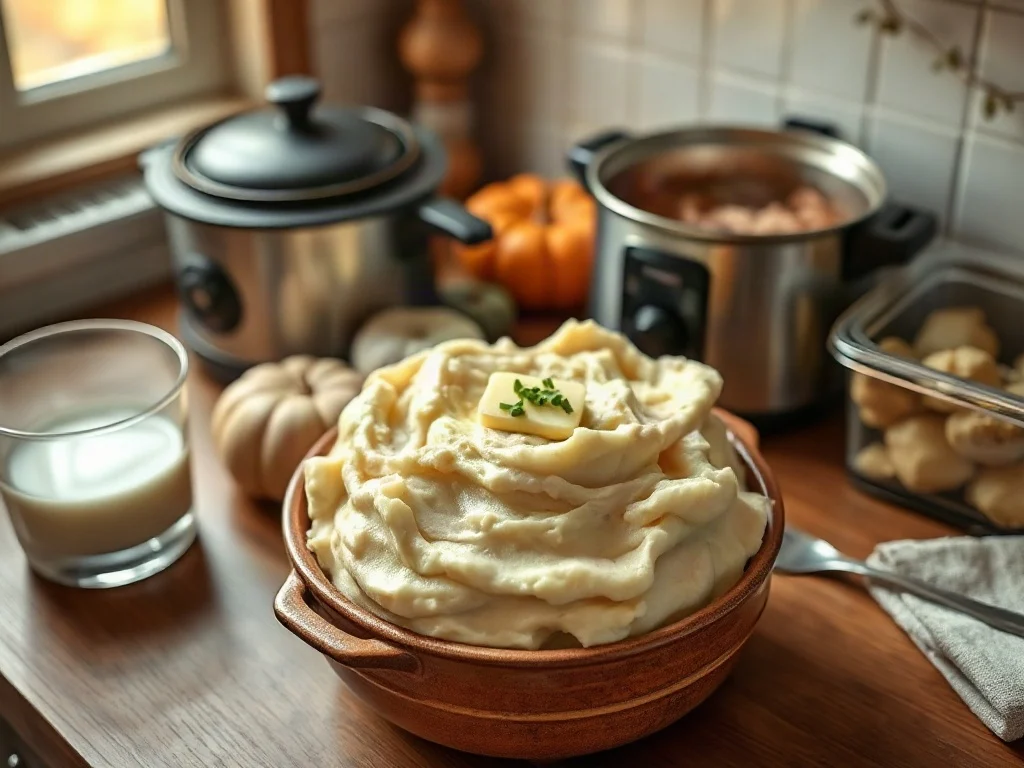
Learning to make mashed potatoes ahead of time is one of the most effective ways to cut stress on Thanksgiving, when oven space, stovetop burners and attention are all scarce. Professional caterers do it routinely. The real question is how far ahead you can prepare them before texture, flavor or safety suffer. This analysis separates what is food-safety fact from what is kitchen folklore, so you can build a realistic Thanksgiving prep timeline.
How Far Ahead Can You Make Mashed Potatoes?
The honest answer has two ceilings. The safety ceiling comes from the USDA, which advises that cooked leftovers kept in a refrigerator at 40°F (4°C) or below should be eaten within three to four days. The quality ceiling is lower. For light, fluffy results, one to two days ahead is the practical window, and many cooks prefer the day before.
Treat the USDA window as a limit, not a target. Potatoes held for four days are safe if handled properly, but they rarely taste like freshly mashed ones.
Why Mashed Potatoes Change Texture
Texture is a starch problem. When potatoes cook, their starch granules swell in a process called gelatinization. As the mash cools, the starch molecules realign, a change known as retrogradation. This makes cold mash firmer and drier, and it explains why reheated potatoes can feel stiff.
Variety and technique matter
High-starch varieties such as Russet Burbank give a fluffy result but are prone to turning gluey if overworked. Medium-starch types such as Yukon Gold hold up better to reheating because they are naturally creamier. A ricer or hand masher is gentler than a food processor, which ruptures starch cells and releases sticky starch.
Make-Ahead Methods Compared
| Method | Practical lead time | Main risk |
|---|---|---|
| Fully mashed, refrigerated | 1–2 days | Dryness, firming |
| Mashed with extra sour cream or cream cheese | 1–2 days | Tangier flavor |
| Frozen | Weeks, with quality loss | Grainy or watery texture |
| Held warm on the day | 1–2 hours | Skin forming, uneven heat |
Enriching the mash with fat and dairy before chilling is the most reliable defense. Fat coats starch and slows the dry, pasty texture that develops in the refrigerator.
Food Safety Rules That Are Not Optional
Cooked potatoes are a low-acid, moist food, which makes them a hospitable environment for bacteria. Pathogens linked to cooked starches and slow-cooled foods include Bacillus cereus, Clostridium perfringens and Staphylococcus aureus. Together, they are a reminder of why food safety practice matters for any foodborne illness risk.
- Refrigerate within two hours of cooking (one hour if the room is above 90°F).
- Divide large batches into shallow containers so they cool quickly.
- Reheat to 165°F (74°C), as USDA guidance recommends for leftovers.
- Do not leave mash sitting at room temperature while the turkey rests.
Official guidance is available from the USDA Food Safety and Inspection Service and FoodSafety.gov.
Reheating Without Drying Out
Caterers serving crowds rely on gentle, moist heat rather than blasts of dry heat.
Reliable reheating options
- Slow cooker: A slow cooker reheats and holds mash on low, freeing the stove and oven.
- Water bath: A bain-marie on the stovetop heats evenly and resists scorching.
- Microwave: A microwave oven works in short bursts, stirring between each one.
- Buffet service: A chafing dish holds served portions at safe temperature.
Whichever method you use, stir in warm milk, cream or melted butter as you go. Cold liquid cools the mash and can leave it uneven.
Frequently Asked Questions
Can you freeze mashed potatoes?
Yes, but with caveats. Cooked potato dishes made with plenty of butter and cream freeze better, though the texture may turn slightly grainy. USDA guidance suggests frozen food stays safe indefinitely at 0°F, but quality declines over time. Thaw in the refrigerator, not on the counter.
Can I make mashed potatoes the morning of Thanksgiving?
Yes. Mash them in the morning, refrigerate promptly, then reheat gently before serving. For many hosts this is the best balance of freshness and convenience.
The Real Lesson of Make-Ahead Potatoes
The central insight is that make-ahead success depends less on how many days you save than on how well you control fat, moisture and temperature. A one-day lead with extra dairy and careful reheating beats a four-day lead with careless handling every time.
Expect more cooks to adopt slow cookers and insulated holding methods as holiday menus grow more crowded. An open question is whether home cooks will embrace the same temperature discipline caterers use, such as a probe thermometer for every reheated dish. That habit, more than any recipe tweak, separates a safe, memorable side dish from a risky one.
Frequently Asked Questions
Is it safe to keep mashed potatoes in the fridge for four days if I plan to serve them on Thanksgiving?
The USDA says cooked leftovers are safe for three to four days at 40°F (4°C) or below, but that is a limit, not a goal. By day four mashed potatoes often taste stale and dry. For better results, make them one or two days ahead.
Why do my reheated mashed potatoes feel stiff and dry?
As mash cools, its starch molecules realign in a process called retrogradation, which makes it firmer and drier. Adding fat and dairy before chilling slows this. When reheating, use gentle moist heat and stir in warm milk, cream or melted butter.
Which potatoes hold up best when mashed in advance?
Medium-starch potatoes such as Yukon Gold tolerate reheating better because they are naturally creamier. High-starch Russets give a fluffier mash but turn gluey more easily if overworked. A ricer or hand masher is gentler than a food processor, which releases sticky starch.
What is the best way to reheat make-ahead mashed potatoes without a free stovetop or oven?
A slow cooker on low reheats and holds the mash while freeing your stove and oven. A microwave also works if you heat in short bursts and stir between each one. Whatever you use, bring the potatoes to 165°F (74°C).
Can I leave mashed potatoes out while the turkey rests?
No. Cooked potatoes are a moist, low-acid food where bacteria such as Bacillus cereus and Staphylococcus aureus can grow. Refrigerate within two hours, or one hour if the room is above 90°F. Keep them hot in a slow cooker or chafing dish instead.
Does adding sour cream or cream cheese really help when making mashed potatoes ahead?
Yes. Fat coats the starch and slows the pasty, dry texture that develops in the refrigerator, so enriched mash keeps better for one to two days. The trade-off is a tangier flavor, so adjust seasoning and add the extras gradually.