
The Huntingdon train attack has produced a detail that is hard to read and important to understand: some passengers reportedly thought the stabbing was a joke. The first person attacked also says he asked hospital staff, ‘am I going to die today?’ These two accounts sit at opposite ends of the same event. One shows how slowly the human mind accepts that violence is happening in an ordinary space. The other shows how quickly a victim has to face the consequences. This analysis looks at the psychology behind the disbelief, the structural security questions around rail travel, and the practical lessons for passengers. It relies only on what the available reporting supports.
What the Reporting Establishes and What It Does Not
The source material here is limited. It consists of a headline and a short summary: passengers thought the stabbing was a ‘joke’, and the first victim asked hospital staff whether he would die. Everything else in this article about those accounts is analysis, not additional fact. Wider details of the incident, such as the exact sequence of events, the number of people hurt and the legal position of anyone charged, should be checked against official police statements and court reporting.
That caution matters. Early coverage of violent incidents is often revised. Witness accounts are fragmentary by nature, and criminal proceedings carry a presumption of innocence until a court decides otherwise. The accounts of disbelief and fear are still useful. They are first-hand descriptions of how people experience the first seconds of a violent attack on public transport.
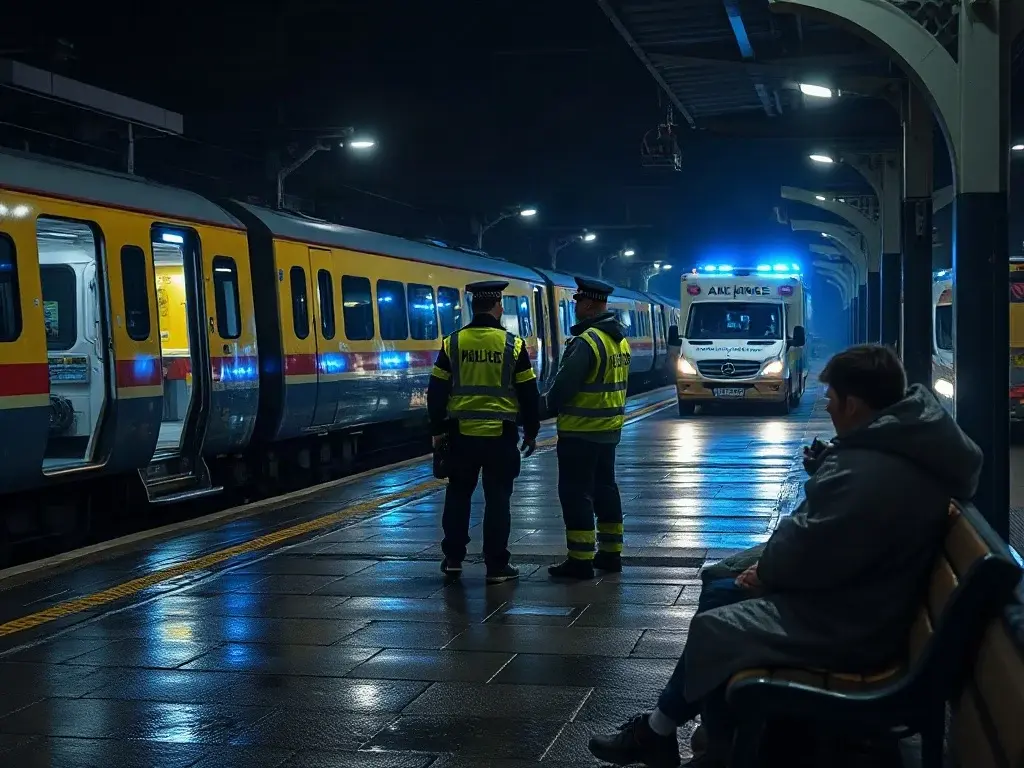
The incident took place on a long-distance service on the East Coast Main Line, run by London North Eastern Railway. The train was stopped at Huntingdon railway station in Cambridgeshire so that emergency services could reach the carriages. Policing on the national rail network falls mainly to the British Transport Police, working with local forces such as Cambridgeshire Constabulary.
Why Passengers Might Read a Stabbing as a Joke
The word ‘joke’ can sound like denial or foolishness. Behavioural science suggests it is closer to a predictable reaction. People interpret events using what they expect from a setting, and a commuter train is one of the most routine settings there is.
Normalcy Bias and Interpretive Lag
Normalcy bias describes a tendency to underestimate danger and assume things will continue as normal. Researchers still debate how strongly it operates in real disasters, and it is sometimes overstated in popular accounts. The underlying point holds up well: the brain tries to fit new information into an existing script. On a train, the available scripts include drunken horseplay, an argument, a prank or a staged stunt. A violent attack is not on that list until the evidence becomes unmistakable.
This interpretive lag is not a character flaw. Shouting, sudden movement and a commotion at the far end of a carriage all fit several innocent explanations. Real knife violence also looks different from film depictions. A stabbing can be fast and quiet, and the wounds may not be visible from a few seats away.
Pluralistic Ignorance and the Bystander Effect
Social context makes the lag longer. Pluralistic ignorance occurs when each person in a group privately feels uneasy but, seeing others stay calm, concludes that nothing serious is happening. Latané and Darley’s 1960s experiments, including the well-known smoke-filled room study, helped establish this pattern. Their wider work on the bystander effect and diffusion of responsibility showed that people in groups are often slower to act than people alone.
A critical note is needed. The case that popularised this idea, the killing of Kitty Genovese, was reported in ways later shown to be exaggerated. More recent analyses of recorded public conflicts suggest that bystanders intervene more often than the classic narrative implies. The honest conclusion is that disbelief is common and intervention does happen. Neither is guaranteed.
The First Victim’s Question: Fear in the Hospital Timeline
The first victim’s reported question to hospital staff, ‘am I going to die today?’, points to a different reality from the disbelief on the train. For the injured person there was no ambiguity. Shock, pain, blood loss and fear arrive together, and the question is a direct request for certainty from the people who can give it.
It also shows the work done by those who treat the victims. Emergency departments, ambulance crews and trauma centres manage physical injury, and they also manage a frightened person asking whether they will survive. Clear, honest communication at that point affects how a person later remembers the event.
Psychological Aftermath
Survivors and witnesses can develop an acute stress reaction in the days after an attack, and a minority go on to develop post-traumatic stress disorder. One neglected group is the passengers who first thought the stabbing was a joke. People who later learn that they misread a life-threatening situation can feel guilt or shame, even though the misreading was a normal cognitive response. Support services should include witnesses as well as the physically injured.
Rail Security: Open by Design, Vulnerable by Consequence
Any train stabbing raises a structural question about railway passenger safety. Britain’s mainline network is open by design. Passengers are not screened at stations, and most travel without any security contact. That openness is part of what makes rail useful, and it also leaves little room to prevent a determined attacker with a concealed weapon.
Policy discussion on knife crime usually concentrates on street offending, sentencing and retail controls. Rail incidents show the limits of prevention in a crowded, enclosed space where escape routes are short and the carriage may be moving. In that setting, response matters as much as prevention. Three factors shape outcomes:
- Speed of alerting: how quickly staff, control rooms and the 999 service learn what is happening.
- Ability to stop the train safely: a station stop gives responders access, while an unscheduled halt in open country does not.
- Onboard first aid: what passengers and crew can do before paramedics arrive.
Closed-circuit television helps investigators after an incident but does little to stop one while it is under way. Anyone who promises that surveillance alone will make trains safe is overselling it. A more honest approach would pair staff training, clear emergency procedures and public awareness with proportionate, intelligence-led policing.
How to React to a Stabbing on a Train
The Huntingdon accounts suggest that the first practical lesson is to treat an unusual commotion as possibly real until shown otherwise. Counter-terrorism police promote the Run, Hide, Tell guidance for violent incidents, and its logic applies to knife attacks as well. A reasonable sequence for a passenger is:
- Move away from the danger if you can do so safely, and do not film or crowd the area.
- Alert others clearly and loudly. Say ‘this is real’, which counters the assumption that it is a joke.
- Call 999 and give the train service, the carriage, the last station and the next stop. Staff may also use the communication cord or call the driver.
- Control bleeding only once it is safe. Apply firm direct pressure with clothing and keep the casualty calm and still. Basic first aid knowledge can matter in the minutes before paramedics arrive.
- Follow instructions from police and rail staff, and keep hands visible when armed officers arrive.
Guidance from the British Transport Police also encourages passengers to report suspicious behaviour early. Nobody is obliged to confront an armed attacker. Staying safe, calling for help and treating the injured are legitimate and often the most effective actions.
Common Mistakes
- Waiting for confirmation before calling emergency services.
- Moving toward a disturbance to see what is happening.
- Assuming someone else has already called 999.
- Removing a wound dressing to check it instead of adding pressure.
Reporting and Legal Responsibility
Coverage of an attack like this carries a duty that is often neglected. Victim testimony is valuable, but editors should avoid speculating about motive or guilt while proceedings are pending. In England and Wales the Crown Prosecution Service decides whether charges are brought. Where the allegation is attempted murder, courts are strict about prejudicial publicity. Responsible reporting should separate what witnesses experienced from what a court has found.
Frequently Asked Questions
Why did passengers think the Huntingdon stabbing was a joke?
The reports do not give a single reason, but behavioural science offers likely explanations. Passengers expect a commuter train to be safe, and early signs of violence can look like horseplay. When nobody else reacts, people tend to read the calm as evidence that nothing is wrong.
What should I do if someone is stabbed on a train?
Move to safety if you can, warn others, call 999 with your location and train details, and give first aid only when it is safe. Follow instructions from staff and police.
Is the bystander effect real?
Yes, in controlled settings, but it is less absolute than often claimed. Real-world records show that people frequently help, particularly when danger is clear.
Are UK trains safe?
Serious violence on trains is uncommon, but passengers are not screened. Safety relies on staff, policing and alert passengers, not on barriers.
The Real Lesson Behind the Word ‘Joke’
The most important insight from the Huntingdon accounts is the gap between the two experiences they describe. Some people near the violence could not believe it was real, while the victim had no doubt about it. That gap is where the most dangerous seconds pass, and neither passengers nor operators can fully close it. Better training, clearer announcements and public familiarity with basic emergency steps can narrow it.
The next stage to watch is the formal process. Court proceedings, any independent review of the response and operators’ decisions about staff training will show whether lessons are drawn or whether this becomes another incident that is mourned and then forgotten. One question remains open. If trust in a safe, ordinary carriage is what delays a passenger’s reaction, can rail travel preserve that trust and still prepare people for the rare moment when it fails? The answer will decide how many seconds the next group of passengers has.
Frequently Asked Questions
Is calling a stabbing a 'joke' a sign that passengers were foolish or indifferent?
No. Behavioural science treats it as a predictable reaction. People read events through what they expect from a setting, and a commuter train is highly routine. Shouting or a commotion fits innocent explanations such as horseplay or a prank, so interpretation lags behind the evidence.
Does normalcy bias fully explain why people react slowly to danger?
Not entirely. Researchers still debate how strongly normalcy bias operates in real disasters, and popular accounts often overstate it. The more reliable point is that the brain tries to fit new information into an existing script, and a violent attack is rarely on the list of scripts for a train journey.
Why might a stabbing be hard to recognise from a few seats away?
Real knife violence often looks different from film portrayals. An attack can be fast and quiet, and wounds may not be visible from a distance. Without obvious signs of injury, nearby passengers may see only movement and noise, which can be mistaken for an argument or a stunt.
Do people in a crowd always fail to help, as the bystander effect suggests?
No. Latané and Darley showed that groups can be slower to act through pluralistic ignorance and diffusion of responsibility. But the Kitty Genovese story that popularised the idea was exaggerated, and recent analyses of recorded public conflicts suggest bystanders intervene more often than the classic narrative claims.
How reliable are the details reported so far about the Huntingdon incident?
The reporting is limited to passengers thinking it was a joke and the first victim asking hospital staff if he would die. Details such as the sequence of events, the number injured and any legal position should be checked against police statements and court reports, as early coverage is often revised.
Which organisations are responsible for policing an incident like this on the rail network?
Policing on the national rail network falls mainly to the British Transport Police, which works with local forces such as Cambridgeshire Constabulary. In this case the London North Eastern Railway train was stopped at Huntingdon station so emergency services could reach the carriages.