
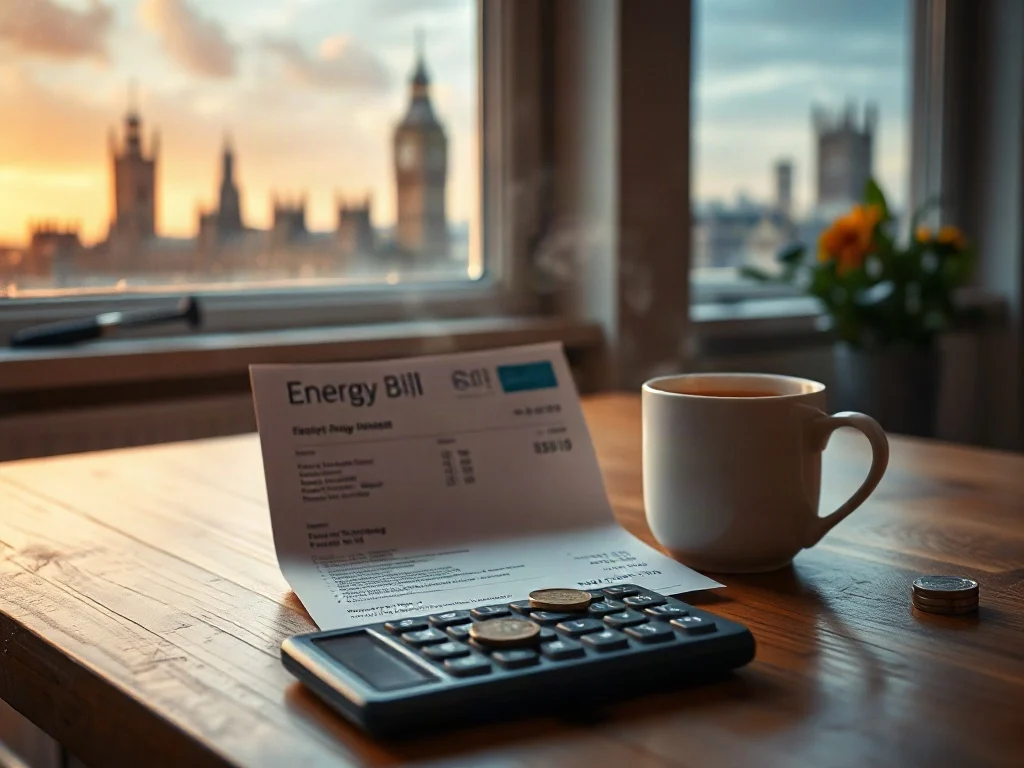
Rachel Reeves is not the chancellor in this account, so the figures and policy details below are drawn strictly from the framing of the news report that prompted this article: a first Budget under a chancellor named Healey, presented as a response to cost-of-living pressures and global economic turmoil. The headline measures, a £100 contribution toward household energy bills and a new tax on banks, define the immediate political argument. This analysis examines what such a package can realistically achieve, where it falls short, and why opposition parties argue it lacks the boldness the moment requires. The healey budget is best understood not as a single decision but as a set of trade-offs between short-term relief, fiscal sustainability, and the structural causes of high living costs.
Background and Context
A Budget in the United Kingdom is the chancellor of the Exchequer’s annual statement of tax and spending plans, delivered to Parliament and typically accompanied by a forecast from the Office for Budget Responsibility. Its significance rests on how it allocates finite fiscal space between competing demands. When inflation erodes real incomes, governments face pressure to offer direct support, yet every pound spent or foregone in revenue must be financed through borrowing or additional taxation. Readers approaching this subject should therefore separate three questions: what the measures cost, who benefits, and whether the policy addresses the underlying drivers of household strain.
Energy bills have been central to the UK cost-of-living debate since the spike in wholesale gas prices that followed the Russian invasion of Ukraine. Retail tariffs are regulated by Ofgem, the energy regulator, through the price cap mechanism, which adjusts quarterly. Consequently, one-off payments or bill credits operate as temporary transfers layered on top of a system whose prices are set by wholesale markets, network costs, and policy levies. A flat £100 payment is administratively simple and progressive in proportional terms for lower-income households, but it represents a small share of annual energy expenditure for many families and does not alter the unit cost of energy.
A bank tax, by contrast, targets institutions whose profitability has been boosted by higher interest rates. Banks earn wider margins between the rates they charge borrowers and the rates they pay depositors when the policy rate is elevated, and windfall-style levies have been used internationally to capture part of such gains. Governments in the UK previously introduced a bank surcharge on profits above a threshold, and the design of any new levy determines whether it falls on excess returns or on the broader balance sheet, with different implications for lending capacity.
Core Analysis
The Scale and Targeting of the £100 Energy Payment
The central analytical question is whether a £100 contribution meaningfully offsets the pressure it is designed to address. Household energy costs vary widely by property size, heating type, and region, so a uniform sum has a regressive distributional effect in relative terms: it is worth a larger share of income to low-income households but may be spent on the same essentials as any other transfer. Whether the payment is means-tested, universal, or limited to particular tariff types changes its incidence substantially, and the distinction matters for assessing its value for money.
Experts in public finance commonly distinguish between demand-side support, which lowers the price burden on households without changing supply, and supply-side interventions, such as investment in insulation, efficiency, and generation capacity. Direct payments are fast to deliver and politically visible but tend to be inflationary in tight markets if they boost demand without expanding supply. Critics therefore argue that targeted, recurring measures combined with energy-efficiency programmes provide more durable benefits than one-off transfers. Supporters respond that rapid relief is necessary when households face immediate arrears and disconnection risk.
The Bank Tax: Revenue Potential and Economic Risks
A levy on banks raises two distinct considerations: how much revenue it can plausibly generate and how financial institutions are likely to respond. Revenue depends on the tax base and rate; a levy calibrated to excess profits may produce variable receipts linked to market conditions, while a balance-sheet charge yields steadier income but can reduce credit supply. Economists generally observe that taxes on bank activity can be partly passed on to customers through wider spreads, reduced deposit rates, or higher loan pricing, meaning incidence is not fully borne by shareholders.
There is also a question of stability. Regulators have expressed concern that heavy bank taxation may encourage relocation of activity, reduce capital buffers, or divert investment toward less regulated lenders. Proponents counter that the financial sector has benefited disproportionately from the rate environment and that a windfall contribution is fair given public support during previous crises. The empirical evidence on pass-through and behavioural response varies across countries and periods, so forecasts for any particular levy should be treated with caution.
Competing Interpretations of Fiscal Strategy
Two broad interpretations of the package compete. The first treats it as a prudent, targeted response: modest support combined with a revenue measure that avoids broad tax rises on working households. The second treats it as insufficiently ambitious, arguing that a response to a prolonged cost-of-living squeeze requires larger, structural investment in energy infrastructure, wage growth measures, or housing costs, and that marginal transfers may be overwhelmed by price increases elsewhere. Neither position is purely factual; each rests on judgments about risk tolerance, the appropriate size of the state, and the time horizon over which relief should be measured.
Why Opposition Parties Call the Budget Timid
Opposition criticism typically focuses on scale and durability. Critics contend that a single payment does not address recurring pressures from energy standing charges, food inflation, rents, and stagnant real wages, and that the package does not restore public-service capacity. Some argue the bank tax is too narrow or too cautious, leaving substantial excess returns untaxed. These are substantive policy critiques rather than mere rhetoric, but they also reflect partisan positioning in a constrained fiscal environment where both larger spending and deeper tax changes carry political costs.
Exceptions, Edge Cases, and Unintended Effects
Any universal payment raises administrative questions: whether households on prepayment meters, in social housing, or with multiple occupants receive equivalent benefit, and whether the transfer is captured by landlords or energy suppliers in ways that offset its intent. Bank taxes can similarly produce edge cases, such as challenges in defining taxable profit for diversified groups or building societies with different structures. These implementation details often determine real-world outcomes more than headline figures.
Practical Applications for Households and Professionals
For households, the immediate practical step is to confirm eligibility and timing of any payment, check whether it appears as a bill credit or cash transfer, and review current tariffs, since the Ofgem price cap can change independently of budget announcements. Households should also evaluate whether switching tariffs or accessing energy-efficiency schemes produces larger savings than one-off support. For financial professionals and accountants, the relevant task is modelling how a bank levy would flow through to capital ratios, dividend policy, and product pricing, with sensitivity analysis for different pass-through assumptions.
Common mistakes include treating a one-off payment as a permanent income change, assuming a sector tax will be fully absorbed by shareholders, and relying on headline cost estimates without reviewing the Office for Budget Responsibility’s supporting documentation. Readers should monitor the detailed Budget Red Book, subsequent regulatory guidance, and independent assessments from institutes such as the Institute for Fiscal Studies, which publish distributional analysis.
Future Developments
Several developments will determine whether this Budget proves adequate. The trajectory of wholesale gas prices and the Ofgem price cap will largely set the scale of household pressure over the coming year. Parliamentary scrutiny may force amendments to the design of the energy payment and the bank levy. Regulatory responses from the Prudential Regulation Authority and the Bank of England will influence whether financial institutions adjust lending behaviour. Over a longer horizon, the question is whether policy shifts toward structural energy investment, such as insulation and low-carbon generation, which reduce exposure to price shocks, rather than repeated temporary transfers.
A reasoned expectation is that the Budget will be judged less by its headline sums than by whether real household incomes recover in the subsequent fiscal year. If inflation moderates and energy prices stabilise, a modest package may be viewed as sufficient. If prices remain elevated, pressure for larger interventions will intensify, and the bank tax may become a template for further revenue measures. The unresolved issue is whether the UK can finance durable relief without constraining the investment capacity that would reduce vulnerability to the next external shock. That tension, rather than the £100 figure itself, will define the policy’s legacy.
Frequently Asked Questions
Does the £100 energy payment actually lower what households pay per unit of energy?
No. A one-off £100 payment is a transfer layered on top of a system whose unit prices are set by wholesale markets, network costs and policy levies, regulated by Ofgem's quarterly price cap. It does not change the cost per kilowatt-hour. For many households it covers only a small share of annual energy spending, so its effect is temporary relief rather than a structural reduction in bills.
Who benefits most from a flat £100 bill contribution?
In proportional terms, lower-income households benefit most, because £100 is a larger share of their income and spending. However, a uniform sum is not targeted by need, and households with larger homes or electric heating may still face much higher bills. Whether the payment is universal, means-tested or limited to certain tariffs substantially changes who gains and how efficiently the money reaches those under the most strain.
Why would a tax on banks be used to fund cost-of-living support?
Banks tend to earn wider margins between the interest they charge borrowers and the rates they pay depositors when policy rates are high, so their profits can rise during inflationary periods. A levy aims to capture part of these gains and redirect them to households. How effective it is depends on its design: a tax on excess profits differs from one on the wider balance sheet, and the latter could reduce lending capacity.
Could a bank tax reduce lending to households and businesses?
It could, depending on how it is structured. A levy applied to the broader balance sheet raises the cost of holding assets and may lead banks to tighten credit, pass costs on through higher loan rates or reduce lending. A tax that targets only profits above a threshold is generally considered less likely to constrain lending, though it may still affect investment decisions and the banks' willingness to take on risk.
Are one-off payments a sustainable way to handle high energy costs?
Generally, experts see them as a fast but temporary fix. They are simple to deliver and politically visible, but they do not address the supply-side drivers of high prices or the energy efficiency of homes. In tight markets, direct transfers can also add to demand without expanding supply. Many analysts therefore favour combining short-term relief with recurring targeted support and longer-term investment in insulation and generation capacity.
Why do opposition parties say this Budget lacks boldness?
Critics argue that the package offers small, short-term measures that do not match the scale of the cost-of-living problem or the structural causes behind it. They contend that a modest one-off payment and a bank levy leave underlying issues such as energy supply, housing efficiency and wage pressures largely unaddressed. The debate centres on whether the fiscal room available justified more ambitious, sustained intervention.