
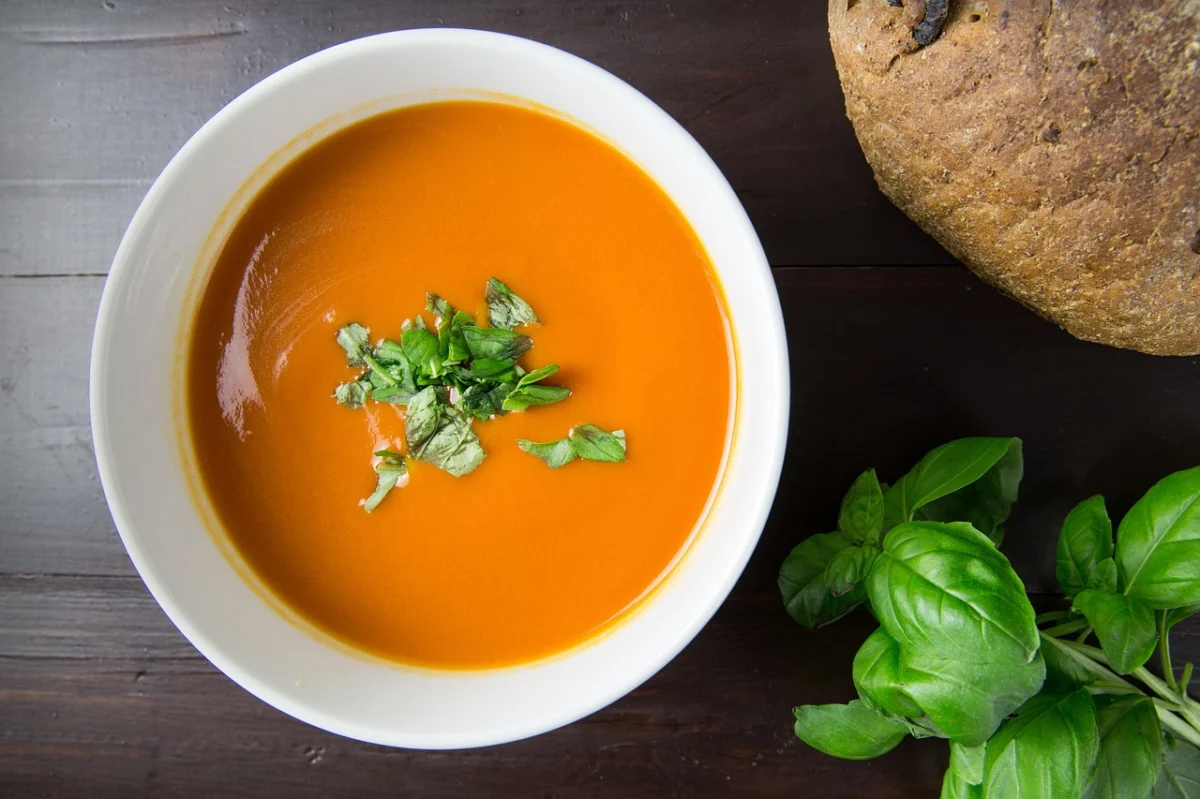
Marcella Hazan’s 15-minute soup looks almost suspiciously simple: five ingredients, one pot, and a result that feels far more deliberate than the clock suggests. That is why it matters. In a culture that often confuses complexity with quality, this recipe is a reminder that Marcella Hazan tomato soup succeeds because it is disciplined, not because it is elaborate.
Why the recipe works when so many fast soups do not
The appeal of this soup begins with the logic of Marcella Hazan herself: her cooking treated Italian cuisine as a system of restraint. She understood that a good soup depends less on technique fireworks than on proportion. Tomatoes provide acidity and sweetness, onion supplies savory depth, butter rounds out the edges, and stock turns a thin base into something that feels complete.
The real achievement is balance. Tomato soup often fails in one of two ways: it tastes aggressively acidic, or it tastes like diluted sauce. Hazan’s version avoids both by using fat and gentle heat to soften the tomato profile without burying it. That is classic culinary problem-solving, not nostalgia. The recipe works because each ingredient has a job and nothing is redundant.
The speed is not the trick; the method is
Calling it a 15-minute recipe can mislead readers into thinking speed is the point. It is not. The point is that the soup asks for almost no setup, but still respects flavor development. A cooked onion gives the broth a rounded sweetness. Butter gives the liquid body. Tomatoes bring concentrated tomato character, whether from quality canned fruit or well-chosen fresh tomatoes in season. If you finish with grated Parmigiano Reggiano, the soup gains a salty, nutty edge that deepens the whole bowl.
This is also why the recipe feels modern despite its age. It resembles the best kind of weeknight cooking: short ingredient lists, low cognitive load, and a result that does not taste like compromise. In the language of flavor science, the recipe quietly exploits umami, fat, and acidity in a tight loop. That is why it tastes fuller than the ingredient count suggests.
Hazan’s soup is not a shortcut version of a better recipe. It is the better recipe.
What the recipe assumes about ingredients
The recipe’s weakness is also its strength: it assumes good ingredients. That is easy to miss. A weak broth will make the soup flat. Bland canned tomatoes will make it dull. Overcooking the onion will make it murky. The dish is forgiving, but not magical. It cannot rescue poor pantry choices.
If you want a closer read on the flavor architecture, compare it with the broader tradition of soffritto-based cooking, where onion, fat, and gentle heat form the base of a sauce or soup. Hazan simplifies the pattern, but she does not abandon it. She strips away the aromatic clutter and leaves the structure visible.
That is why some cooks overcomplicate the dish with herbs, garlic, cream, or extra vegetables. Those additions can be pleasant, but they are not improvements in the strict sense. They change the recipe’s identity. The original formula is a lesson in subtraction: remove anything that competes with the tomato.
How to make it work in a real kitchen
For home cooks, the practical value is straightforward. This soup is a reliable answer to the question, what is the best five-ingredient weeknight soup when time is short but standards remain high? It is especially useful because it fits into ordinary pantry cooking without feeling improvised.
Best practices for consistent results
- Use the best tomatoes available to you, especially if you are choosing canned fruit in the off-season. San Marzano tomatoes are often recommended because their balance of sweetness and acidity suits sauces and soups.
- Cook the onion gently so it softens rather than browns. Bitter edges will flatten the final flavor.
- Blend carefully. A blender creates a smoother texture than a hand mash, but it can also over-aerate hot soup if handled carelessly.
- Salt late and taste twice. Tomatoes can absorb seasoning differently depending on brand and ripeness.
- Finish with Parmesan only if you want a sharper, more savory profile; otherwise let the soup remain clean and direct.
If you are making a dairy-free version, the recipe becomes more difficult to replicate faithfully because the butter is not just a garnish. It is part of the flavor architecture. A substitute may work, but it will not be the same soup.
Why people keep searching for this soup
The search interest around 15-minute tomato soup recipe and how to make Marcella Hazan’s tomato soup says something important about contemporary cooking. People are not only looking for convenience; they are looking for proof that convenience does not have to mean blandness. That tension explains the enduring appeal of Hazan’s work and the renewed attention around her recipes in digital food culture.
The fascination is partly historical too. Hazan remains one of the most influential voices in modern home cooking, not because she chased novelty, but because she clarified fundamentals. Her approach still reads as a rebuttal to unnecessary complexity. That is a rare kind of authority.
FAQ
Why is Marcella Hazan’s tomato soup so good?
Because it uses a small number of ingredients with precise roles. The tomato provides acidity, the onion adds sweetness, the butter smooths the edges, and the stock gives the soup body. Nothing is decorative.
Can you make it with fresh tomatoes?
Yes, but only when they are genuinely ripe and flavorful. Otherwise, high-quality canned tomatoes usually produce a better result because they are processed at peak ripeness.
Does blending change the recipe?
Yes, but only in texture. A blender or immersion blender makes the soup silkier, while a rustic mash leaves it looser and more casual. The flavor logic stays the same.
The larger lesson in a five-ingredient soup
The most important insight here is that Hazan’s soup is not just a recipe; it is an argument. It argues that speed, simplicity, and depth can coexist when the cook understands proportion. The next evolution in weeknight cooking will probably not come from adding more ingredients, but from being stricter about which ingredients deserve space in the pot. The unanswered question is whether home cooks will keep learning that lesson, or keep mistaking extra steps for better food.
Frequently Asked Questions
Why does this soup taste richer than a recipe with only five ingredients should?
Because the recipe is built around balance, not volume. Butter adds body, onion gives sweetness, tomatoes supply acidity and depth, and stock creates a rounded broth. The result feels richer because the ingredients reinforce one another instead of competing, which creates a fuller flavor than the short list suggests.
Can I use fresh tomatoes instead of canned ones, and will it still work?
Yes, but only if the tomatoes are truly ripe and flavorful. In season, fresh tomatoes can be excellent, but out of season they often taste watery and weak. Canned tomatoes are usually more reliable for this recipe because they deliver concentrated tomato flavor and consistent acidity, which are essential to the soup’s structure.
Why is gently cooking the onion so important if the recipe is so simple?
The onion is not just a background ingredient; it shapes the soup’s sweetness and savory base. If it browns too much, it can add bitterness and make the final flavor muddy. Gentle cooking softens the onion without overpowering the tomatoes, which is why the soup stays clean, bright, and balanced.
Is this soup supposed to be smooth, chunky, or somewhere in between?
Traditionally, it’s meant to be smooth or nearly smooth, with a texture that feels cohesive rather than rustic. That said, the exact finish depends on preference. Blending gives the soup a more polished result, while leaving small bits of tomato or onion can make it feel more homemade without changing the core flavor.
What changes the soup the most if I want to improve it without losing the original idea?
The biggest difference comes from ingredient quality, not extra additions. Better tomatoes, good stock, and real butter will have more impact than herbs, cream, or garlic. If you want to stay close to Hazan’s intent, focus on seasoning carefully, cooking the onion gently, and finishing with Parmesan only if you want added depth.