
The 4-day Turkey itinerary is not a test of how much you can cram into a short trip; it is a routing problem. Turkey is too large, too layered, and too transfer-heavy for a loose checklist. The most defensible plan for first-time visitors is Istanbul plus Cappadocia: two days on the imperial axis of the Bosphorus, then two days in the volcanic interior. This analysis is different because it treats time, logistics, and site density as the real constraints, not just the headline attractions.
How to See Turkey Well in Four Days

Background: why four days forces a narrow strategy
Turkey’s tourism market rewards focus. Istanbul alone can absorb a week if you are serious about Byzantine, Ottoman, and contemporary urban layers. Cappadocia adds a second system entirely: geomorphology, monastic heritage, underground settlements, and balloon logistics. Trying to add Ephesus or Pamukkale into the same window usually converts sightseeing into transfer management. The market reality is simple: domestic flights are efficient, roads are not.
The modern landscape also matters. Istanbul has two major airports and a large, traffic-sensitive urban footprint. Cappadocia’s access points are smaller, schedules are tighter, and weather can disrupt balloon operations with little notice. In other words, the shortest route is not the most valuable route; the route with the fewest failure points is.
4-day Turkey itinerary: Istanbul first, Cappadocia second
This sequence remains the strongest option because it matches arrival patterns and compresses movement. Istanbul is the international gateway; Cappadocia is a domestic hop away. That pairing reduces backtracking and preserves meaningful sightseeing time. It also gives the trip a better analytical shape: city, then landscape; monument density, then geological depth.
4-day Turkey itinerary logistics that protect your time
Book the domestic leg from Istanbul to either Kayseri or Nevşehir, then place the Cappadocia hotel within realistic transfer distance of your airport. Kayseri usually works well for flexibility; Nevşehir is often closer but more schedule-sensitive. The practical edge case is same-day airport switching in Istanbul, which is still a poor idea unless the layover is generous.

| Route | Strength | Main risk | Best for |
|---|---|---|---|
| Istanbul + Cappadocia | Balanced, efficient, high contrast | One domestic flight dependency | First-time visitors |
| Cappadocia + Ephesus + Pamukkale | Strong archaeological focus | Transfer intensity, limited recovery time | Repeat visitors or Kayseri arrivals |
Core analysis: what each day should actually do
Day one should stay in the historic peninsula. Hagia Sophia, the Blue Mosque, the Hippodrome zone, and Topkapi Palace form a coherent cluster. That matters more than popularity. Istanbul punishes cross-city zigzagging, especially when prayer times, security screening, and traffic are added to the equation. The right move is clustering, not chasing every landmark.
Day two should mix a slower Istanbul morning with departure. The Grand Bazaar and Spice Bazaar are useful not because they are exhaustive, but because they show how trade still structures the city. A late domestic flight is acceptable only if the hotel is near your exit airport and baggage handling is already settled.
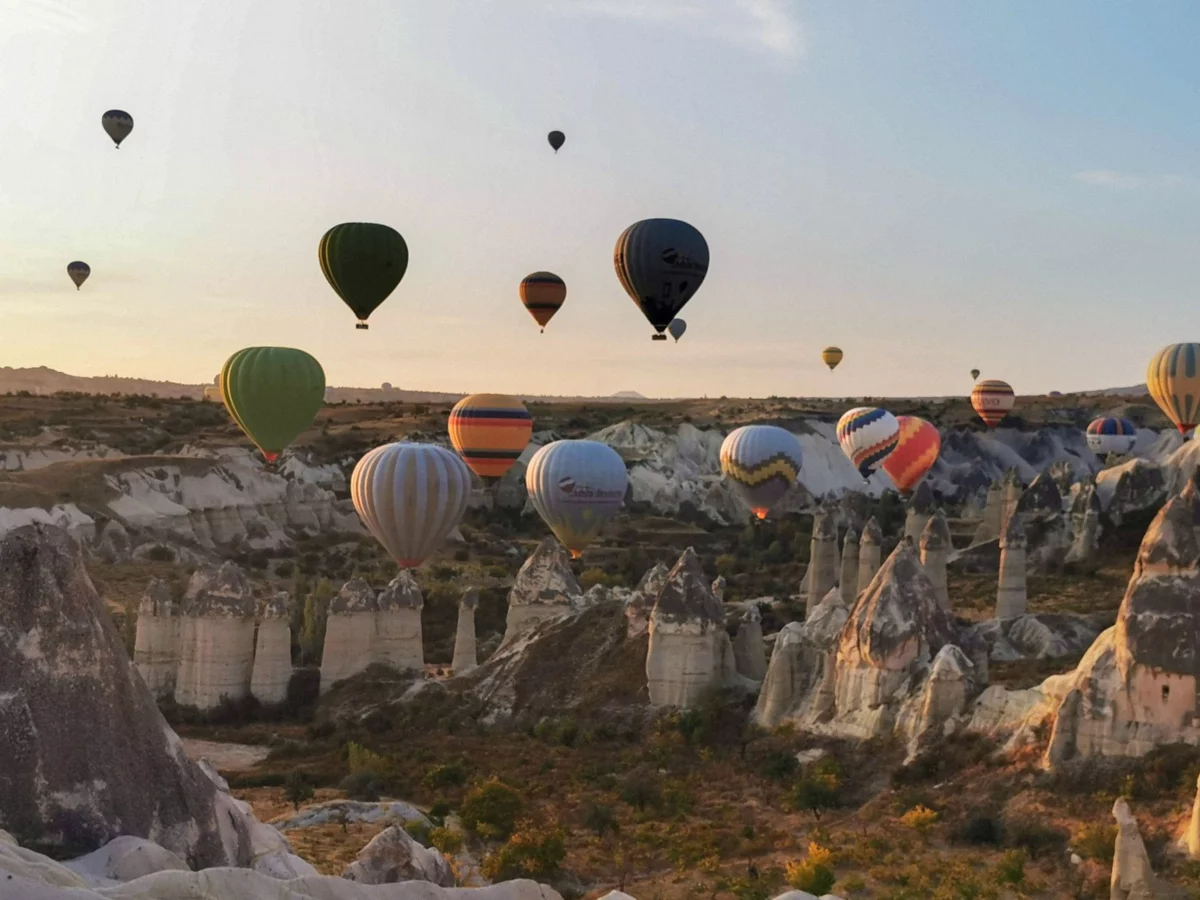
Day three belongs to Cappadocia’s northern circuit: Göreme Open-Air Museum, Paşabağ, Devrent Valley, and a pottery stop in Avanos if it does not dilute the route. Here, the critical insight is that Cappadocia works best as a landscape system, not a collection of isolated photo stops. The best sites are those that explain the geology, not merely decorate it.
Day four is for either a balloon attempt or a secondary terrain route, such as an underground city or a southern valley. The balloon is a high-value but probabilistic activity; if weather cancels it, the itinerary should still stand. That is why it should never be the only reason the trip exists.
Where the alternative viewpoint has merit
The Cappadocia-Ephesus-Pamukkale route is not wrong; it is just specialized. If your priority is Roman urbanism and thermal landscapes, that route can be more intellectually coherent than Istanbul. But it is weaker for first-time travelers who need food culture, historic context, and a sense of Turkey as a lived modern country. The trade-off is depth in archaeology versus breadth in national character.

Practical applications: how to execute the plan without wasting capacity
- Anchor each day to one district or one terrain system.
- Book flights before hotels if airport timing is tight.
- Assume balloon schedules are conditional, not guaranteed.
- Keep one meal window open for delay recovery.
- Use guided touring where site interpretation matters more than transportation.
Common mistakes are predictable: adding too many monuments on Day 1, overloading the Istanbul-to-Cappadocia transfer day, and treating the balloon ride as a fixed service rather than weather-dependent aviation. A stronger optimization technique is to separate high-certainty items from weather-sensitive ones. Put museums and historical sites in the guaranteed slots; place balloons and sunset viewpoints in the flexible slots.
Emerging developments and long-term implications
Turkey’s short-trip travel model is becoming more dependent on flight coordination, timed entry systems, and premium experiential products. That favors travelers who plan early and hurts those who expect improvisation to substitute for logistics. Regulatory scrutiny around aviation, crowd management at marquee sites, and local conservation pressures in Cappadocia will likely intensify, which may raise prices but improve reliability.
At the same time, digital booking layers are making compact itineraries more feasible. The opportunity is clear: travelers can now build a highly controlled four-day route without sacrificing quality. The risk is equally clear: over-automation can encourage packed schedules that look efficient on paper and fail on the ground.
Strategic takeaways for a short Turkey trip
If you only have four days, choose a route that respects the country’s scale rather than fighting it. Istanbul and Cappadocia remain the strongest pairing because they deliver contrast, historical density, and manageable transfer logic. Ephesus and Pamukkale deserve attention, but mainly when your arrival city, flight times, and travel purpose already support them. The future of the 4-day Turkey itinerary belongs to travelers who understand that selectivity is not a compromise; it is the only way the trip becomes legible.
Related reading: Related Topic 1, Related Topic 2, Related Topic 3, Related Topic 4, Related Topic 5
Authoritative references:
- UNESCO: Historic Areas of Istanbul
- UNESCO: Göreme National Park and the Rock Sites of Cappadocia
- UNESCO: Ephesus
- UNESCO: Hierapolis-Pamukkale
Frequently Asked Questions
¿Es buena idea intentar añadir Ephesus o Pamukkale a un itinerario de 4 días por Turquía?
En la mayoría de los casos, no. Aunque ambos lugares son valiosos, añadirlos a solo 4 días suele convertir el viaje en una cadena de traslados y esperas. Para una primera visita, el coste en tiempo y energía es demasiado alto. Istanbul y Cappadocia ya ocupan el margen real del viaje sin que la experiencia se degrade.
¿Por qué el itinerario recomienda Istanbul primero y Cappadocia después?
Porque encaja mejor con la lógica de entrada al país y reduce el retroceso logístico. Istanbul suele ser la puerta internacional, y desde allí un vuelo doméstico a Cappadocia es directo y eficiente. Además, empezar por la ciudad y terminar en el paisaje crea un ritmo más claro y menos vulnerable a interrupciones.
¿Conviene volar a Kayseri o a Nevşehir para visitar Cappadocia?
Kayseri suele ofrecer más flexibilidad de horarios y suele ser más fácil de encajar con un plan apretado. Nevşehir puede quedar más cerca del hotel, pero sus conexiones suelen ser más sensibles a los horarios. La decisión depende de tu vuelo y del hotel, pero en 4 días la robustez del itinerario importa más que la distancia mínima.
¿Qué pasa si el globo aerostático se cancela en Cappadocia?
Hay que asumir esa posibilidad desde el inicio, porque depende del clima y no puede darse por garantizada. Por eso el día 4 debe funcionar aunque no haya vuelo. Lo ideal es dejar como alternativa una ciudad subterránea, un valle secundario o una ruta paisajística que siga teniendo valor incluso si el globo no despega.
¿Es mejor visitar muchos lugares brevemente o agrupar pocas zonas bien conectadas?
Agrupar es claramente mejor. En Istanbul, cruzar la ciudad para sumar monumentos suele consumir más tiempo del que se gana. En Cappadocia ocurre algo parecido: el valor está en entender el conjunto geológico y patrimonial, no en encadenar paradas fotográficas sin contexto. Con 4 días, la densidad supera a la cantidad.