
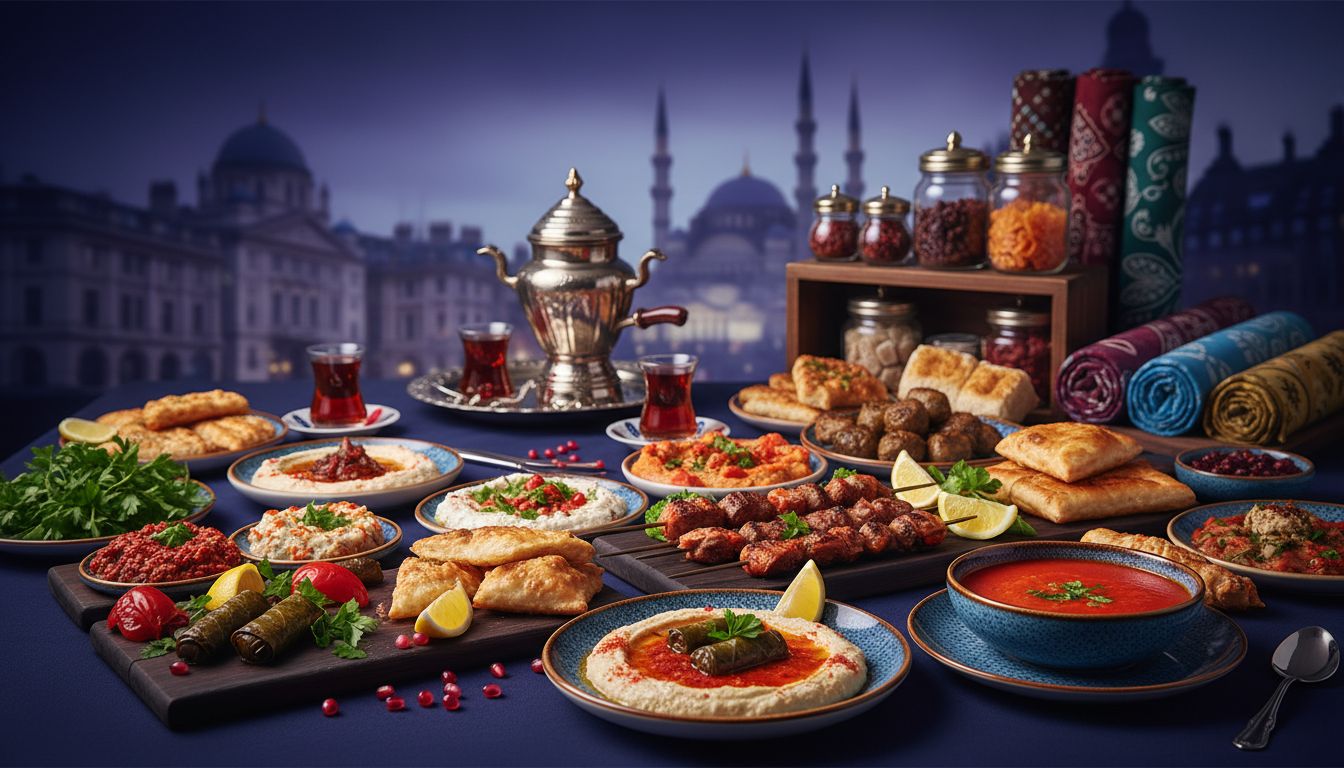
Across London, community life is being reshaped by a simple idea: bring support closer to the places people already trust. For many residents, that means local high streets, cultural venues, neighbourhood organisations, and familiar businesses becoming more than social meeting points. In areas shaped by Turkish and wider Istanbul-linked culture, this shift feels especially visible, because food, conversation, shopping, and practical help have long existed side by side.
That is why the story of Istanbul flavours and local services is really a story about how London’s community hubs are evolving. From Green Lanes to other mixed neighbourhood centres, the city is increasingly backing local spaces as connectors for skills, employment, inclusion, health, and advice. For Turkish business owners, community groups, and residents, this creates new opportunities to strengthen both economic life and everyday support.
London’s community-hub model is becoming more practical
City Hall has made it clear that community hubs are no longer seen as optional extras. Under the Mayor’s Building Strong Communities mission, the goal is that by 2025 all Londoners should be able to access a community hub for volunteering, support, and stronger local networks. That gives a clear policy direction: trusted local places should help people not only gather, but also find routes into wider services.
This matters in a city as large and varied as London. With more than nine million residents, over 300 languages spoken, and communities connected to every part of the world, one-size-fits-all service delivery rarely works well. In practice, people often respond better when information and help are available in places that already feel familiar, welcoming, and close to daily life.
For neighbourhoods with strong Turkish community links, this hub model feels intuitive. Many local people already use a small network of cafes, bakeries, barbers, grocers, community groups, and professional services as informal points of connection. What is changing now is that London is increasingly formalising that kind of neighbourhood support structure, turning local trust into a stronger bridge toward education, employment, wellbeing, and inclusion.
Why Green Lanes still matters as a community anchor
Any conversation about Turkish life in London usually returns to Green Lanes. It remains one of the capital’s best-known Turkish-food corridors, and national coverage still points to its dense concentration of Turkish-Cypriot restaurants, cafes, and baklava shops. The area is not just popular for eating out; it is part of how local identity is expressed, recognised, and sustained across generations.
Green Lanes has long been described as a kind of “Little Istanbul” or the epicentre of London’s Turkish-speaking communities. That description goes beyond the restaurant scene. The street has also been associated with jewellers, hairdressers, beauty salons, bakeries, bars, and many other everyday businesses that make a high street feel lived-in rather than simply visited.
Recent reporting still treats the area as a full high-street ecosystem. Restaurants remain central and busy, but there is also a wider debate about balance. Some residents worry that if hospitality becomes too dominant, other useful services can be squeezed out. That tension is important, because a healthy community hub needs evening energy and cultural identity, but it also needs room for advice, family services, professional support, and practical local amenities.
From dining destinations to trusted local spaces
The most important shift in London policy is that community spaces are now being linked to much more than culture alone. Recent Greater London Authority material highlights that hubs can provide advice, employability support, digital-skills opportunities, and health-based activities through trusted local spaces. In other words, the future of the neighbourhood hub is not just social; it is practical.
For Turkish-focused areas, this expands the role of familiar venues and institutions. A neighbourhood known for grills, bakeries, and tea houses can also become a place where residents hear about training, get signposted to benefits support, improve digital confidence, or connect with local health and wellbeing activities. People are often more willing to ask questions in spaces where they already feel seen and understood.
This does not mean every restaurant or shop becomes a service centre. Rather, it suggests a stronger local ecosystem in which businesses, charities, educators, and community organisations complement each other. A customer may first come for food or shopping, but nearby they may also find language support, careers advice, youth activities, or community-led events that increase participation and belonging.
Skills, jobs, and inclusion are moving closer to neighbourhood life
One of the clearest examples of this trend is the Skills for Londoners Community Outreach Programme 2025,26. The programme funds 30 community organisations from 1 September 2025 to 31 August 2026 to engage Londoners who face barriers to adult education and employment support. That tells us something important: the city recognises that many residents need outreach in local, accessible, trusted environments rather than distant or overly formal settings.
For multilingual communities, this matters even more. Census 2021 materials show London has the highest share of several non-English main languages, reinforcing why community-facing services must be easy to access and understand. While official Turkish population figures are often better captured through country-of-birth or language data than one simple citywide total, the broader point is clear: multilingual communication is a practical necessity, not a niche extra.
For business owners and local organisations in Turkish neighbourhoods, there is a real opportunity here. Partnerships with outreach providers, training organisations, and local networks can help connect residents to adult learning, work support, and digital access. A neighbourhood with strong footfall and strong social trust is often well placed to spread information quickly and effectively, especially when messages are delivered in culturally familiar ways.
Integration hubs show how local support is being connected up
Another useful sign of change is London’s No Wrong Door programme. Its four Integration Hubs have been extended into 2025,26, with the GLA describing them as a way to coordinate skills, employment, and wraparound support locally. The phrase “no wrong door” is revealing, because it suggests people should be able to enter support systems from different points without being bounced around unnecessarily.
That logic fits well with community high streets. Someone might first approach a local advice point, faith-linked group, neighbourhood centre, or trusted organisation with one issue, but actually need help across several areas at once, such as work, benefits, language, confidence, childcare, or wellbeing. Integration hubs aim to connect those needs more smoothly instead of treating them as separate problems.
For London’s Turkish and Istanbul-linked neighbourhoods, this is especially relevant because community life is often relational and place-based. People do not always begin by contacting a large institution directly. They may instead speak to someone at a local group, through a family network, or in a known area such as Green Lanes. If support systems are designed to connect better with those local starting points, outcomes are likely to improve.
Community spaces are also becoming part of inclusion and safety
City Hall’s recent 2026 funding announcement on hate crime and extremism adds another layer to the story. The Mayor is creating a network of 30 community spaces so diverse communities can access more services and learn from each other. That reflects a wider understanding that social cohesion is strengthened when communities share safe, active, and useful local places.
In practical terms, community spaces can reduce isolation while also helping people access support earlier. They can host workshops, information sessions, youth activities, women’s groups, digital support, and cross-community events. For migrant and multilingual communities, these spaces often work best when they feel rooted in real neighbourhood habits rather than imposed from outside.
This approach is relevant for Turkish communities not because the policy is ethnicity-specific, but because it is neighbourhood-specific. That distinction matters. The strongest official evidence in London today points to a model where local hubs serve multiple communities in a shared area. In streets and districts with strong Turkish presence, that can still mean Turkish businesses and organisations play a visible role within a wider, mixed local support network.
High streets and local economies are central to the next phase
The evolution of community hubs is also tied to economic planning. A 2026 delivery plan says London will work with boroughs and government to overcome barriers to growth in high streets, town centres, and other local hubs of economic activity. This is a strong sign that the future of community support and the future of local business are being discussed together rather than separately.
That is good news for areas where food culture drives footfall. Istanbul-inspired hospitality, from ocakbasi restaurants to dessert shops and cafes, brings people onto the street and helps create evening activity. But the strongest local economies are usually diverse. They combine dining with retail, personal services, professional expertise, community organisations, and flexible spaces that can host events or advice sessions.
For streets like Green Lanes, the challenge is not whether food should remain central. It clearly should. The challenge is how to make sure that the success of restaurants and cafes supports, rather than narrows, the wider mix of services. A resilient hub is one where someone can enjoy the flavours of home, meet neighbours, discover a local accountant or solicitor, ask about training, and still feel that the street serves everyday life in full.
What this means for Turkish businesses and residents in London
For Turkish business owners, these changes create a chance to think beyond visibility and towards community partnership. A successful business on a well-known high street already contributes to local identity and footfall, but it can also become part of a broader network that helps residents find trusted services. Even simple acts, such as sharing multilingual information, supporting local events, or collaborating with nearby organisations, can strengthen that role.
For residents, the benefit is convenience and confidence. Services become easier to discover when they are attached to places people already know. That might mean hearing about a skills course through a local organisation, finding digital help near a familiar shopping area, or being signposted to employment support through a community contact who understands local language and culture.
For directories, local media, and platforms connecting Turkish businesses in the UK, there is also a clear role to play. As London’s hubs evolve, people need practical ways to navigate what is available nearby. Listings, guides, neighbourhood features, and business profiles can help tie together food, professional services, community resources, and cultural life into one clearer picture of how a local hub actually works.
London’s neighbourhoods are showing that community identity and practical support do not have to exist in separate worlds. In places shaped by Turkish culture, the draw of Istanbul flavours remains powerful, but it increasingly sits alongside a wider local infrastructure of advice, learning, health, inclusion, and everyday services. That is not a break from the past; it is an expansion of what these areas have often done informally for years.
The direction of travel is clear: London is moving services closer to where people already gather. As community hubs continue to develop, streets like Green Lanes offer a useful model of what that can look like at ground level: food-led, multilingual, socially connected, and deeply local. For anyone interested in the future of Istanbul flavours and local services, the most exciting story is not only what people eat, but how neighbourhood life itself is being reconnected.