
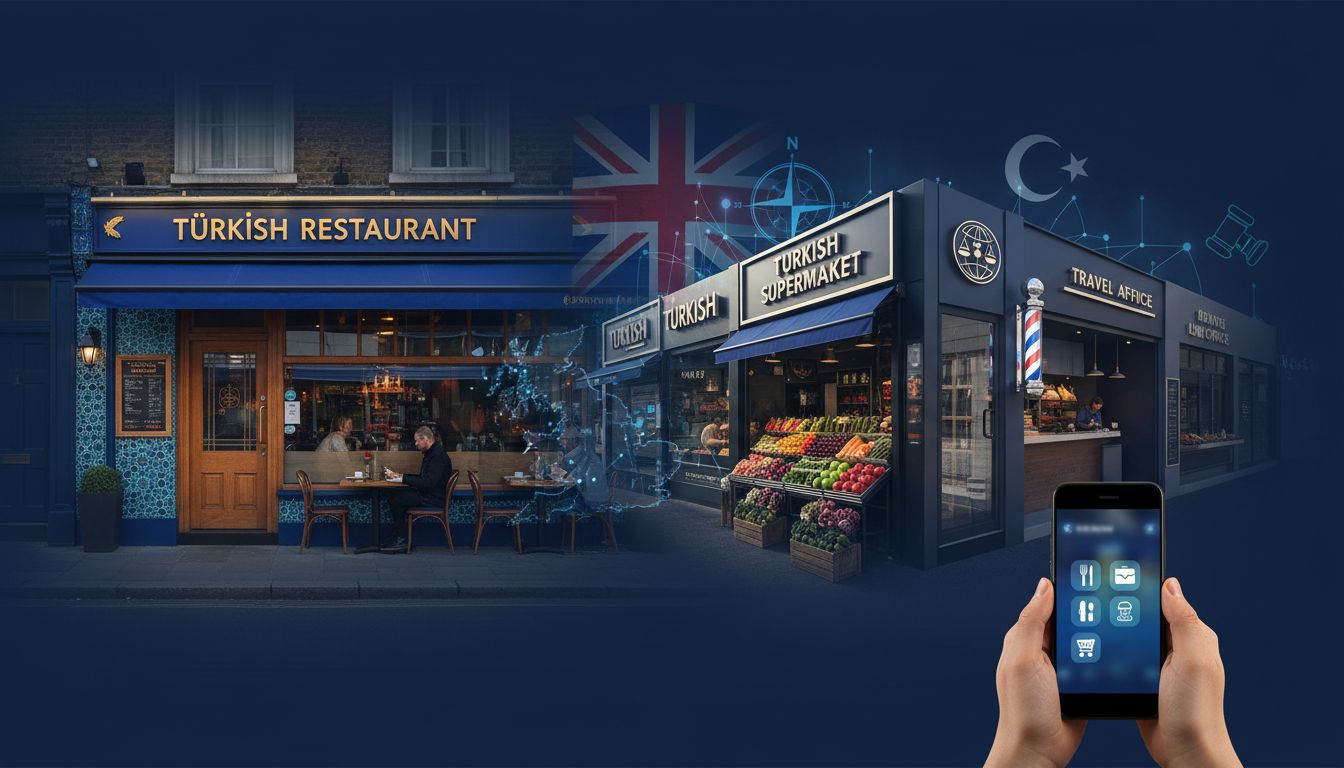
Finding authentic flavours and trusted community services in your neighbourhood can feel overwhelming, especially when you want more than clever marketing or a name that simply sounds familiar. For many people in the UK Turkish community, and for anyone looking for Turkish food, professionals, or local support, trust comes from a mix of quality, consistency, and real community connection.
The good news is that there are practical ways to look beyond appearances. By checking official local sources, paying attention to community ties, and knowing a few signs of food and service authenticity, you can make more confident choices about where to eat, shop, and get help close to home.
Start with official local sources
If you need reliable local help quickly, official government sources are a strong first step. USAGov advises people to use state and local governments to find contact information for local services, social service agencies, and other public resources. The principle is useful anywhere: start with official channels before relying on hearsay or social media posts.
This matters because many directories are helpful, but not every listing is fully verified. The City of Sacramento’s neighborhood directory, for example, clearly states that its listings are for information only and that the city does not guarantee accuracy or endorse listed groups. That is a useful reminder to treat directories as starting points, not final proof.
When searching for authentic flavours and trusted community services in your neighbourhood, use official council, borough, county, and community resource pages first. Then compare what you find with business websites, community recommendations, and recent contact details before making a decision.
Use directories wisely and always cross-check
Local and community directories can save time, especially when you are looking for Turkish grocers, caterers, tradespeople, advisers, or cultural groups. They bring together businesses and services in one place and can help you discover options you might otherwise miss.
Still, a directory entry alone does not always mean a service is endorsed or even fully up to date. Fairfax County’s service pages show how directories can point residents to programs and facilities, while Sacramento’s warning shows why cross-checking matters. A listing should lead you to verify the phone number, address, opening hours, reviews, and current activity.
A good habit is to check whether the business or service has a consistent presence across several places: its own website, social media, community listings, and perhaps a local directory. If the details do not match, or if there is no sign of recent activity, take that as a prompt to ask more questions.
Look for signs of a genuinely trusted service
A strong local service usually explains clearly what it does, who it serves, and how to contact it. Fairfax County Neighborhood and Community Services offers a useful example: it publishes a clear mission, public contact details, and a defined scope of programs for people across ages and abilities. That kind of transparency helps build trust.
Trusted community services often make it easy to understand their purpose. Instead of vague promises, they describe their programmes, eligibility, opening times, and points of contact. If a service is difficult to reach, unclear about what it offers, or avoids direct answers, that can be a warning sign.
Another practical check is whether a business has passed an external vetting process. According to the BBB, accredited businesses must agree to BBB Standards for Trust and pass vetting. While this is not the only sign of quality, it shows that independent standards and accountability can help you judge whether a provider deserves your confidence.
Community ties often reveal authentic local presence
One of the best ways to spot real local value is to see whether a business or service is connected to the community around it. CDC guidance on community engagement highlights that trusted messengers can include faith-based and community-based leaders, while ATSDR notes that community members themselves can be important channels for local information.
In practical terms, this means a restaurant, shop, adviser, or support service may be more trustworthy if local people actually know it, recommend it, and interact with it beyond one-off transactions. A Turkish bakery that supports local events, works with nearby organisations, or is regularly mentioned by community groups may offer a stronger sign of authenticity than a place with polished branding but no visible neighbourhood relationships.
This idea is also reflected in how local government service teams operate. Tacoma’s Neighborhood and Community Services works by partnering with community members, while Phoenix’s neighborhood office helps residents connect, identify needs, team build, coordinate, and advocate locally. Community collaboration is often a reliable marker that a service is rooted in real neighbourhood life.
How to judge authentic flavours beyond marketing
When it comes to food, authenticity is not just about décor, menus, or storytelling. It is also about ingredient integrity and whether a product matches what it claims to be. The FDA explains that food fraud can involve substitution, addition, omission, or concealment of ingredients in order to increase value or reduce cost.
That matters for anyone searching for authentic Turkish flavours. A product may look traditional, but if ingredients have been swapped or diluted, the taste and authenticity are not what they seem. The FDA also notes that product identity is protected by standards of identity and labelling rules, meaning foods sold under a certain name should actually meet that definition.
In simple terms, do not rely only on atmosphere or advertising. Ask where ingredients come from, read labels carefully in shops, and pay attention to whether sellers are transparent about sourcing, preparation, and product names. Authentic flavour is often a combination of origin, ingredients, and community reputation.
Pay attention to food integrity and recent authenticity warnings
Food authenticity is a measurable issue, not just a matter of opinion. The FDA says it uses analytical chemistry, DNA sequencing, and targeted sampling to identify species substitution and other forms of food fraud. That tells us that authenticity can be tested and verified, not merely guessed from branding.
A recent example shows why this matters. On 13 April 2026, the FDA released FY25 sampling results on honey adulteration and said the testing looked for undeclared added sweeteners such as syrups from sugarcane and corn. For shoppers, this is a useful reminder that even simple, traditional foods can sometimes be misrepresented.
If you are buying honey, olive oil, cheese, spices, or other staple products associated with Turkish cooking, look for clear labelling, reputable sellers, and businesses willing to answer questions. A trusted local food business should not be offended by reasonable questions about ingredients, origin, or how a product is made.
Neighbourhood organisations can help you separate real from performative
Healthy neighbourhood ecosystems are usually visible. CDC notes that involving local residents helps ensure community spaces represent and serve residents, and that partnerships with local neighbourhood groups can strengthen public places. This same logic can help you assess both food businesses and services.
Neighbourhood organisations can also act as a signal of real community presence when they have structure and accountability. Sacramento, for example, requires identified officers, regular meetings at least every three months, and defined boundaries for an organisation to be added to its directory. These kinds of details suggest continuity rather than a casual or temporary presence.
If a business or service is connected to active neighbourhood groups, cultural associations, or regular local events, that can be a positive sign. It suggests the organisation is known, visible, and part of an ongoing community network rather than simply trying to attract customers without building trust.
Choose services that reflect real local needs
Trust is not only about being visible; it is also about being relevant. A 2025 CDC article explains that community-engaged approaches can prioritise community strengths and help ensure resources match local needs. In other words, the best services are often shaped with the community, not just marketed to it.
This is particularly important because recent CDC survey material notes that lack of trust in local resources and low awareness can stop people from using services that might help them. A good provider recognises these barriers and works to reduce them through clear communication, outreach, and consistency.
For anyone looking for authentic flavours and trusted community services in your neighbourhood, this means asking a simple question: does this place genuinely serve local people, or does it only sell to them? Businesses and organisations that listen, adapt, and stay involved are often the ones that earn long-term trust.
In the end, finding quality close to home is about combining instinct with evidence. Start with official sources, use directories carefully, verify contact details and standards, and look for signs of real community participation. Whether you are choosing a Turkish restaurant, a local tradesperson, or a support service, trust grows when information is clear and relationships are visible.
Authenticity also deserves a wider definition. For food, it includes ingredients, labelling, and honest sourcing. For services, it includes transparency, accountability, and meaningful neighbourhood ties. When you look at both flavour and community presence together, you are much more likely to find local places that truly deserve your support.